
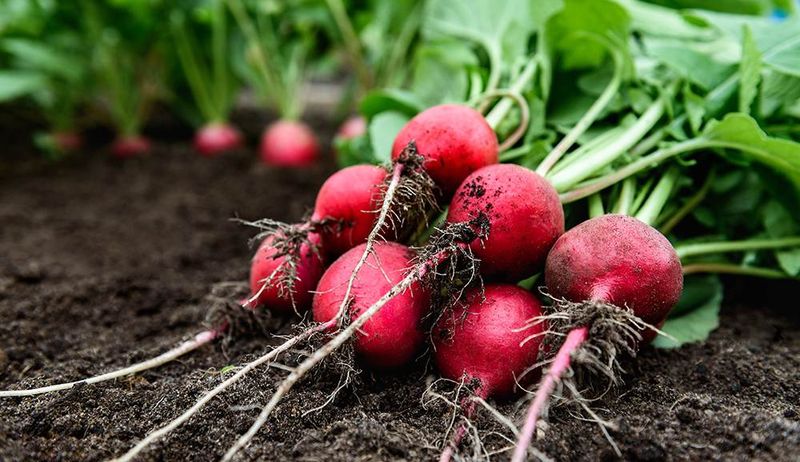
You pull a plump, shiny radish from the garden, slice it open, and find a spongy or hollow center. Nothing on the outside gave it away.
Many gardeners blame watering, but the story is more mixed than that. Here is how to tell the different radish problems apart and what to do about each one in a Southern fall garden.
A hollow center is not the same as a split root
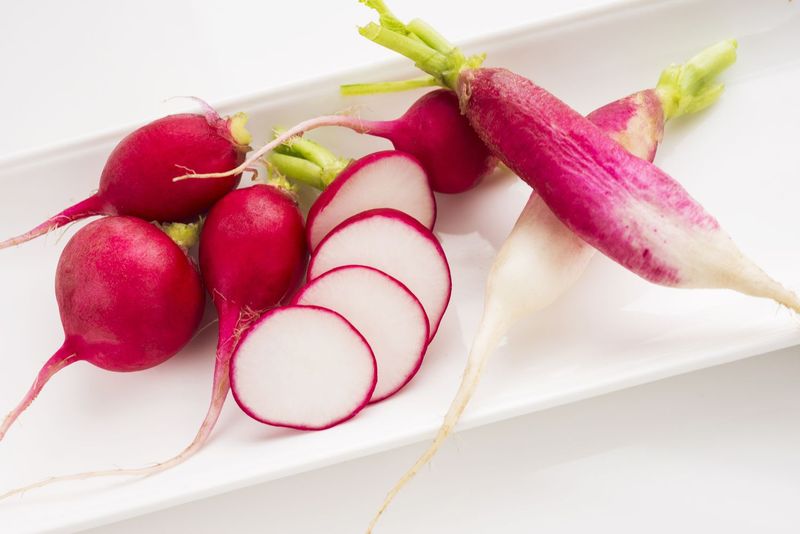
Picture a radish that looks perfect. The skin is smooth, the color is bright, and the shape is round.
Then you cut it open and the middle is pale, spongy, or has an empty pocket. That is the symptom we are talking about here.
It is easy to lump every radish flaw together, but they are different problems. A review of radish disorders treats pithiness, hollow roots, internal browning, and splitting as separate disorders with different associated conditions.
A split root is easy to spot because the skin opens up. Minnesota Extension links cracking to uneven moisture and ties tunnels in roots to wireworms.
Browning inside the root is another issue altogether.
So a smooth outside tells you very little. Cut a few roots open before you decide what went wrong, then match the clue to the cause.
Heat and late harvest have stronger links to pithiness
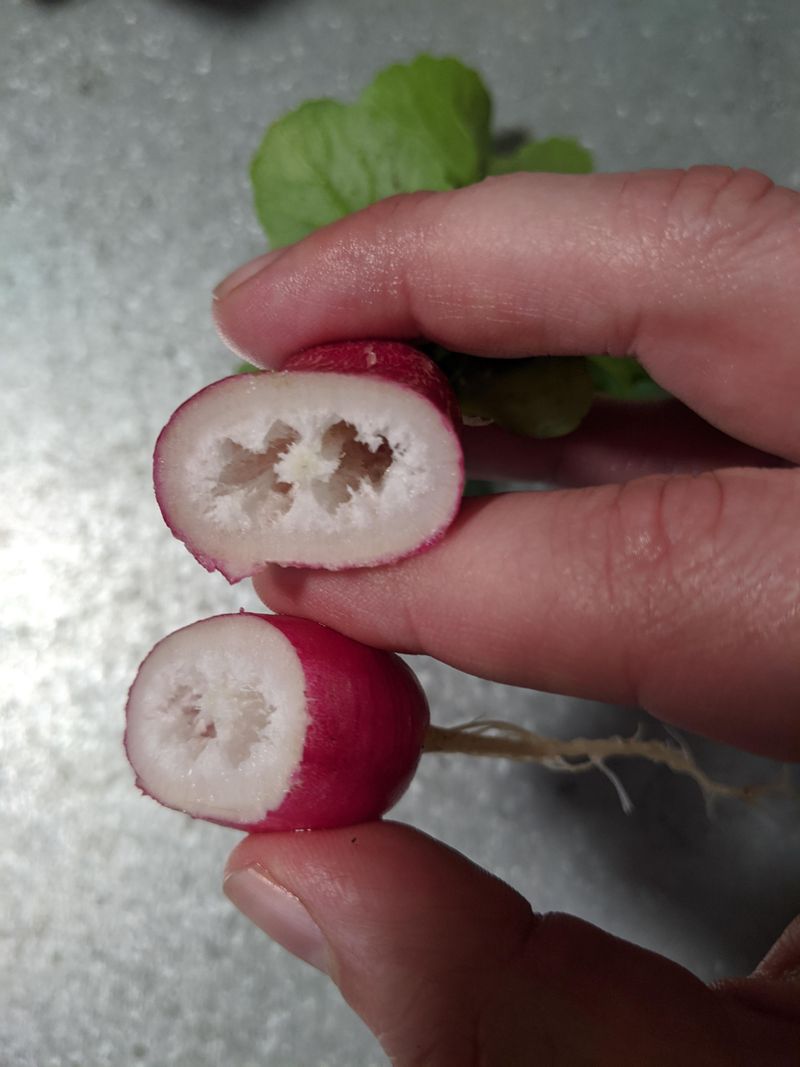
Here is the plain correction to the watering idea. Uneven watering is not established as the main reason radishes turn pithy or hollow.
Heat and waiting too long to harvest have better support.
Iowa State Extension guidance connects hot conditions and late harvest with pithy roots. Research on hollow roots, covered in the radish disorders review, points to high soil temperature while the root is thickening.
That matters in Florida and Texas, where a warm spell can hit an early fall planting. Radishes sown while soil is still hot may get stressed just as the roots swell.
These links are not a verdict on every radish. A hollow root may come from heat, age, variety, or a mix of things.
Use them as the first places to look, not as a certain diagnosis.
Fall planting dates depend on where you garden
Planting when the weather cooperates gives roots a better chance to thicken without a heat blast. Regional guidance can help you pick a window.
For common radishes, UF/IFAS lists September through March in north and central Florida and October through March in south Florida. For Central Texas, Texas A&M lists September as the fall planting time.
Treat these as regional guidelines, not guarantees. A warm October in your town may call for waiting a bit, while a cool snap may let you start earlier.
Variety matters too. The Florida dates apply to common radishes, and daikon has its own guide with similar but not identical timing.
Read your seed packet and plant to match what you are growing.
Steady moisture helps, but it is not a hollow-root cure
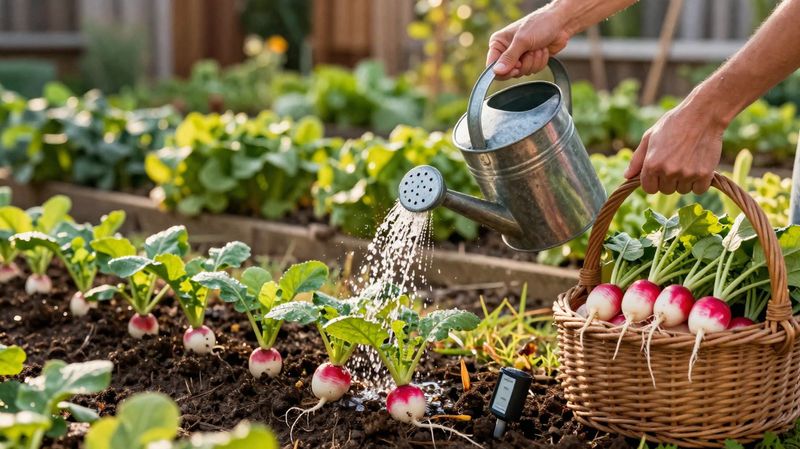
Water still plays a role, just a narrower one. Minnesota Extension points to uneven moisture, such as a heavy soaking or rain after a dry spell, as a plausible contributor to cracked or split roots.
Drought can also hurt flavor and texture.
While roots enlarge, aim for soil that stays consistently moist but not waterlogged. The university suggests deep watering and checking how far the water has soaked in with a trowel.
Utah State recommends frequent, uniform irrigation.
Skip the rigid daily schedule. Sandy Florida soil dries faster than Texas clay, and weather changes everything, so check the root zone with your finger or a trowel.
Do not just water more. Too much water can crust soil or lead to rot, and steady moisture may help quality but does not guarantee crisp, solid roots.
Check roots often and harvest at usable size
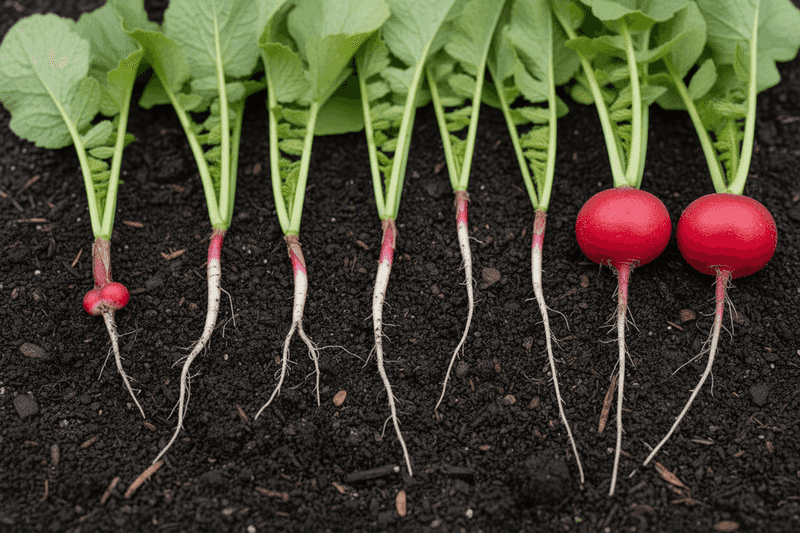
Radishes do not wait around. UF/IFAS gives 20 to 30 days for common radishes in Florida, and roots left too long can turn fibrous, woody, or pithy.
Start with your seed packet, which lists timing for your variety. Then check in on the bed every couple of days once roots begin to swell.
Gently brush soil from a shoulder and see how big it is.
Pull roots when they reach the usable size for that variety. A few extra days in cool weather may be fine, while the same delay in warm weather can cost you texture.
Do not apply one number to everything. Daikon and other types take longer, and growing conditions shift the clock.
Sow small batches every week or two so you are never racing a whole row.
Match the next step to the symptom
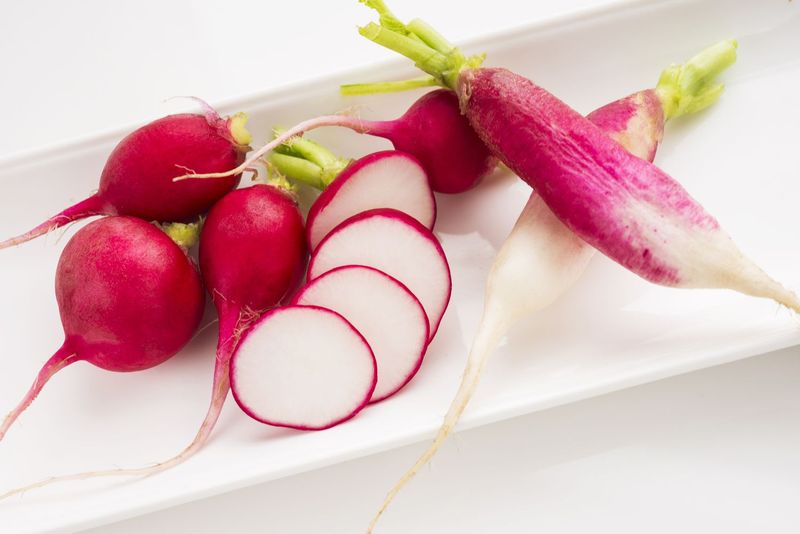
Use the symptom as your guide. If the inside is spongy or hollow, look at heat exposure and harvest timing first, as Iowa State guidance suggests.
If the root is split, review swings between dry and wet, since Minnesota Extension ties cracking to uneven moisture. Steady, not soggy, soil and prompt harvest are sensible habits, as university guidance notes, though neither is a guarantee.
Watering matters, but it does not explain every hollow radish.