
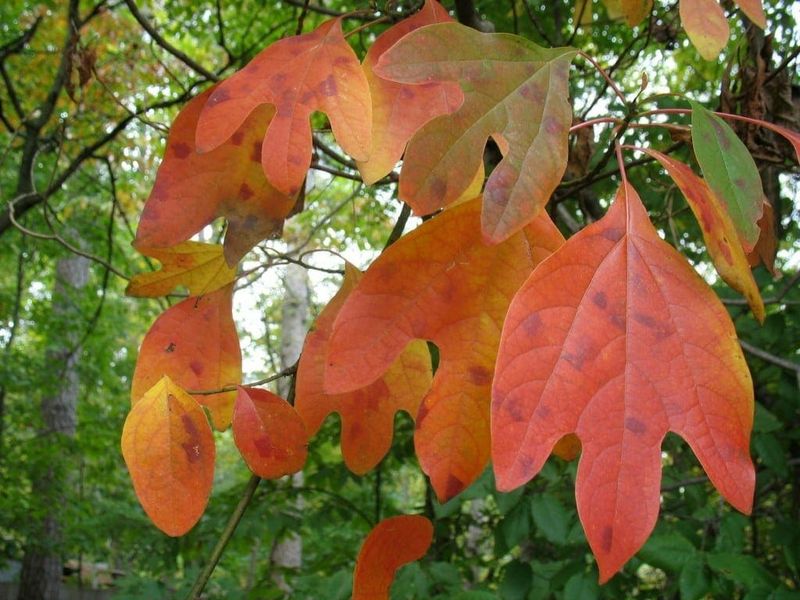
Few native trees offer something for caterpillars in summer and something for people to admire in autumn. Common sassafras, with its mitten-shaped leaves, can do both in a North Carolina yard.
Its leaves feed spicebush swallowtail caterpillars, and its fall foliage can light up a corner of the landscape. Here is what to expect, and what to plan for, before you plant one.
Common sassafras pairs wildlife value with seasonal interest
Plenty of native trees look nice, and plenty of them feed wildlife, but few manage both in a way you can actually see. Common sassafras (Sassafras albidum) is one that does.
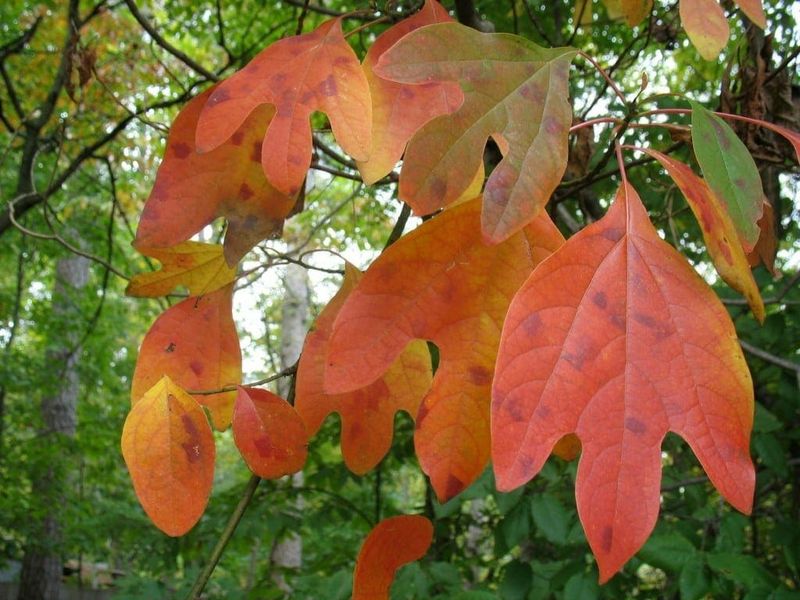
NC State Extension’s plant profile notes that it supports spicebush swallowtail caterpillars and that its leaves can turn yellow, orange, and red in fall.
Those two features make it a good fit for homeowners who want a yard that works for native wildlife and still earns its place in the landscape. The leaves alone are a conversation starter, since they come in three shapes on the same tree: an oval, a mitten with one thumb, and a mitten with two.
A few honest expectations help here. Planting a sassafras makes a host plant available, but it does not guarantee that a butterfly will find your tree and lay eggs on it.
Fall color varies too, so one year’s display may look different from the next. Think of it as a smart, low-fuss addition that gives wildlife a chance and gives you something to watch.
Spicebush swallowtail larvae are noticeable, not monarch-sized
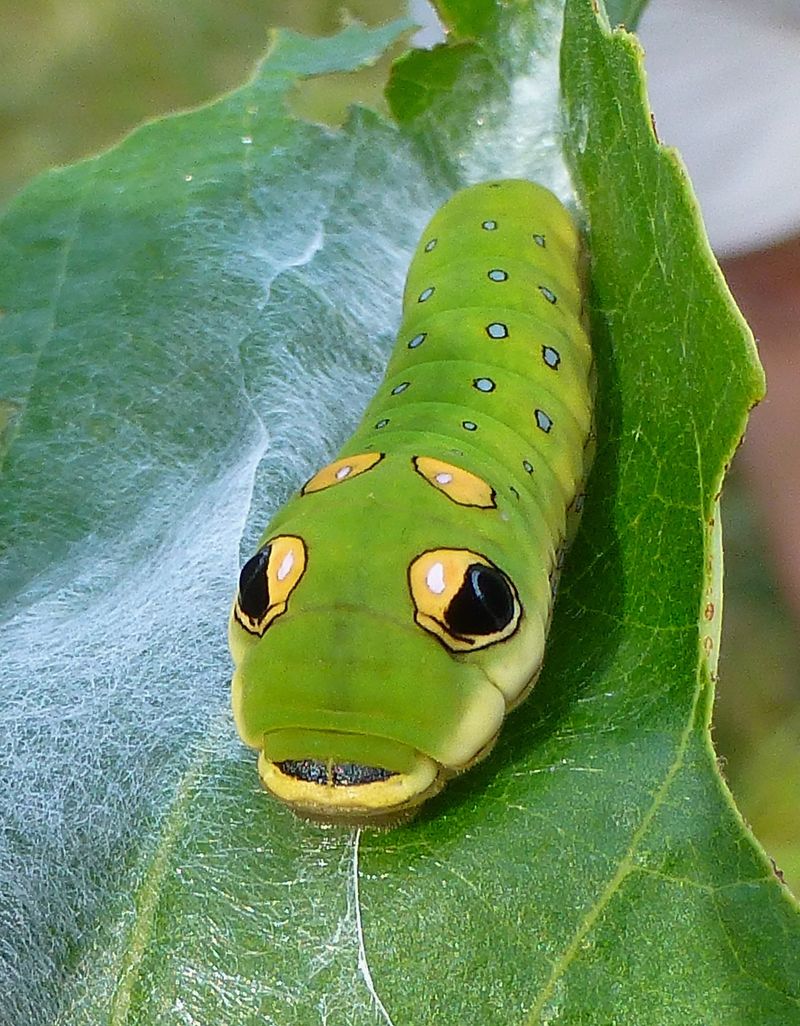
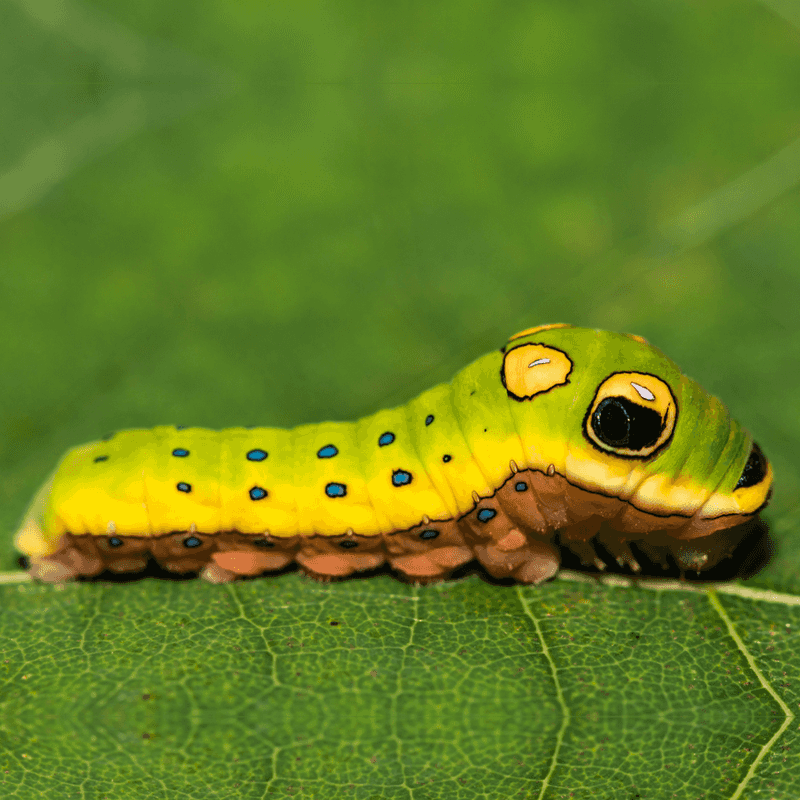
Spicebush swallowtail caterpillars are easy to remember once you spot one. They are plump and green with big false eyespots that make them look like tiny snakes.
NC State Extension lists sassafras among the plants they feed on, along with spicebush, sweet bay, and tulip tree.
These caterpillars have a clever habit. They fold a leaf over and hold it together with silk, creating a shelter where they rest between meals.
If you see a curled sassafras leaf, peek inside before you assume something is wrong.
Calling them monarch-sized overshoots the numbers. University of Missouri Extension gives a spicebush swallowtail caterpillar length of about 1.5 inches.
Monarch caterpillars run larger, with University of Nevada Extension reporting nearly 2 inches and Texas A&M reporting 2 and three quarters inches. Large and conspicuous is the fairer description.
Size also says nothing about how often you will see them. UF/IFAS points out that host plant choice depends on locality, so a sassafras in your yard may host caterpillars one season and sit empty the next.
Fall color can include yellow, orange, and red
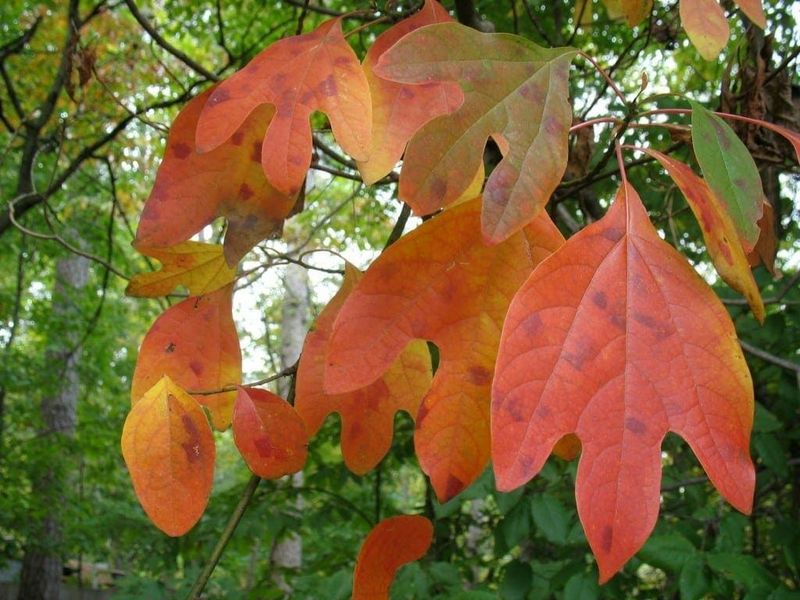
Autumn is when sassafras steps into the spotlight. According to NC State Extension, the foliage can turn yellow, orange, and red.
A single tree may show several of those shades, or lean toward one.
That range is worth planning around. Gold is only part of the picture, and no source promises a uniform hue across the whole canopy.
Weather, site, and the individual tree all play a role, so the display you see in one October may not match the next.
The mitten-shaped leaves add to the show, because the odd shapes stand out when they turn color. Plant it where you will notice it from a window, a porch, or a path you walk often.
A spot against evergreens or a dark fence can make the warm shades pop.
Check sassafras’s fit for your part of North Carolina
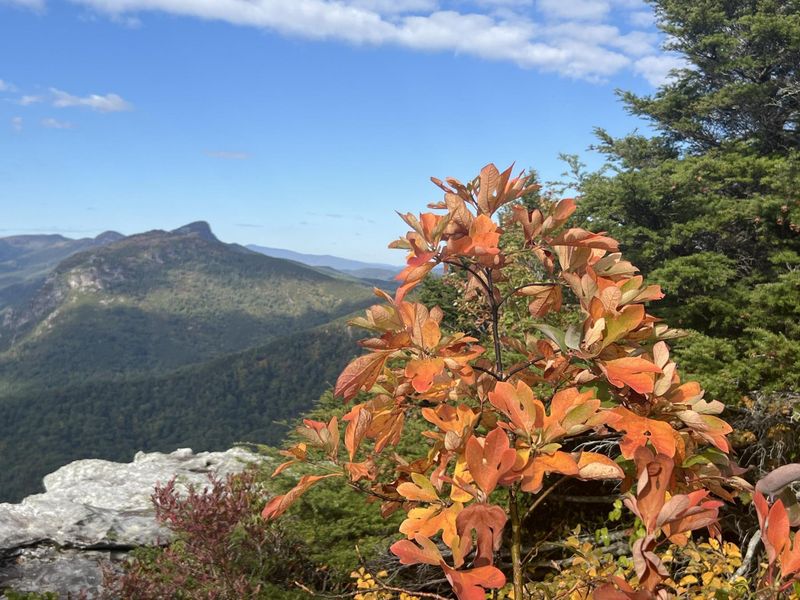
Sassafras grows across North Carolina except in the higher mountains, per NC State’s Plant Toolbox, which lists it for the Coastal Plain, Piedmont, and Mountains. If you garden in Wilmington, Raleigh, or Charlotte, it is a sound candidate.
If you live at high elevation in the western mountains, look closely at your site before buying.
Being in the right region is a starting point, not a promise. Soil drainage, sun, and available space still decide how well a tree does in your particular yard.
Walk the spot at different times of day and check how water behaves after a hard rain.
Sassafras also occurs in parts of Florida and Texas, but the advice here is written for North Carolina. Readers in those states should not copy it directly.
UF/IFAS advises choosing host plants according to locality, so check with a local extension office first.
Choose good drainage and plan for suckers
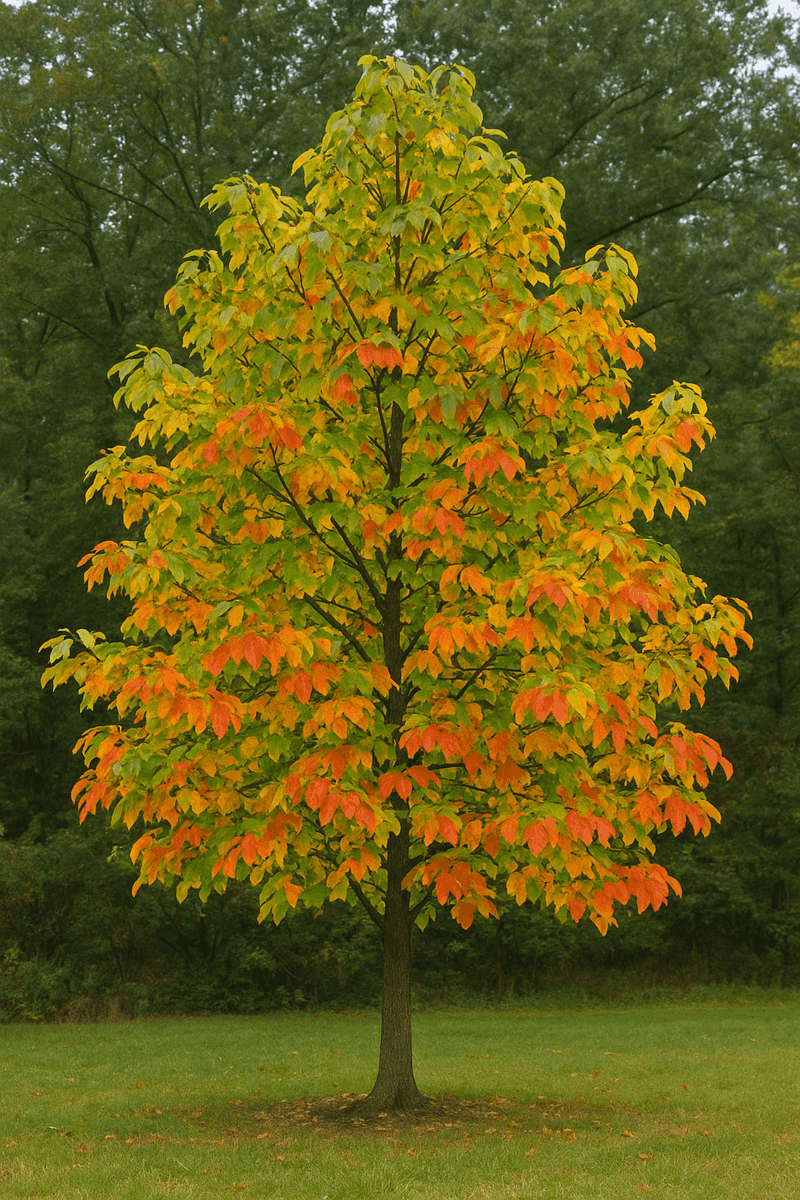
Sassafras tolerates sun to partial shade and prefers well-drained soil. NC State Extension says it favors sandy, acidic soil but adapts to other soils as long as drainage is good.
A slope or raised area can be a smart choice if your yard holds water.
Plan for suckers before you plant. Sassafras often sends up new shoots from its roots and can form thickets over time.
If you want a single trunk, you can remove suckers as they appear. If you have room, a small grove can become a layered, wildlife-friendly corner.
Give some thought to where you put it, because moving it later is hard. Established trees are difficult to transplant because of a large taproot.
Start with a small, young plant and put it in its final spot the first time.
Fruit is another detail to keep in mind. Male and female flowers occur on separate trees, and only female trees produce the showy blue fruit on red stalks.
A single tree is not guaranteed to fruit, so treat berries as a bonus.
A simple weekend plan works well. Check drainage, pick a sunny or lightly shaded spot, set aside space for suckers, and plant once.
Welcome ordinary caterpillar feeding
A few chewed leaves are the price of admission for a host plant. NC State Extension describes these caterpillars as harmless and their feeding as usually minor.
Skip the sprays and let ordinary leaf damage be.
Adult butterflies need nectar, so pair your sassafras with flowers they can use, as UF/IFAS suggests. That helps your yard serve the whole life cycle, though it does not ensure visits or egg-laying.
Enjoy sassafras for its leaves and its shape, and leave the root bark tea and oil alone. Those preparations are not recommended.
A tree that feeds quiet wildlife and then puts on a show is a fair trade for a few ragged leaves.