
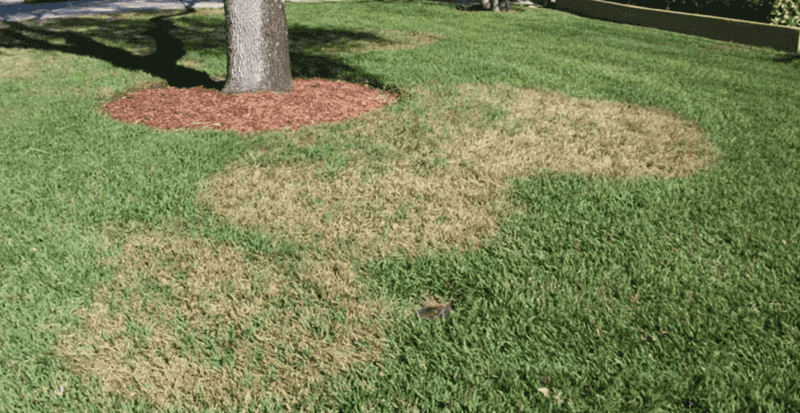
Cool nights and damp days can bring odd brown or yellow rings to a Texas St. Augustine lawn. It is easy to call them brown patch and reach for a spray right away.
But the right name, and the right timing, make a big difference in what actually helps. Here is how to look closely, cut the risks, and know what to expect by spring.
Large patch is the clearest term for this disease on St. Augustinegrass
Plenty of Texas homeowners say “brown patch” for any round dead spot in the lawn. Texas A&M uses a more specific name.
According to Texas A&M’s large patch fact sheet, “large patch” is the common name for this Rhizoctonia disease on warm-season grasses like St. Augustinegrass, while “brown patch” is used more often for the same kind of fungus on cool-season turf.
Not every source keeps the names apart. University of Florida guidance notes that large patch is sometimes called brown patch, yet says “brown patch” more accurately describes a separate turf infection that shows up in summer.
So the two terms are not interchangeable in every setting. For a Texas St. Augustine lawn, large patch is the clearest label for this disease.
A name does not tell you what is happening in your yard, though. Cool, wet fall weather and a round brown spot fit large patch, but they do not prove it.
Other problems can leave similar marks, so treat the label as a starting point and check the lawn before you act.
Inspect the edge of a patch for useful clues
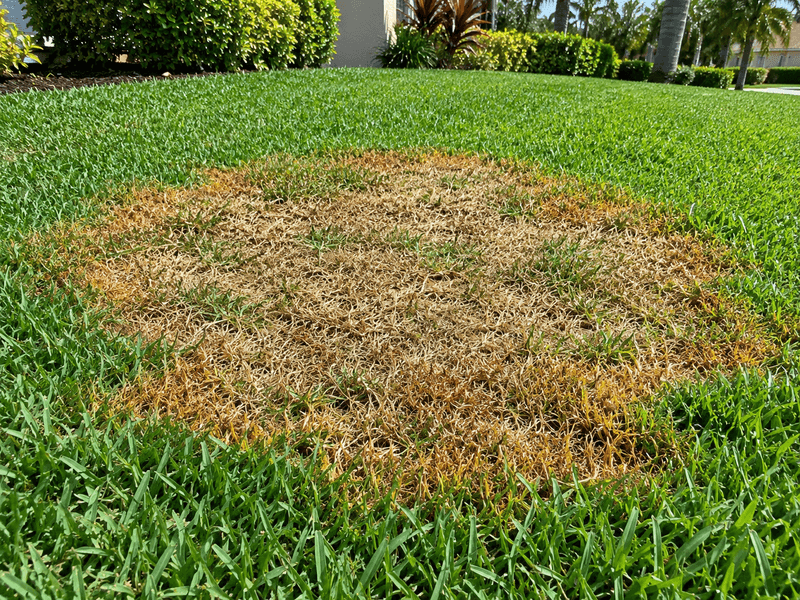
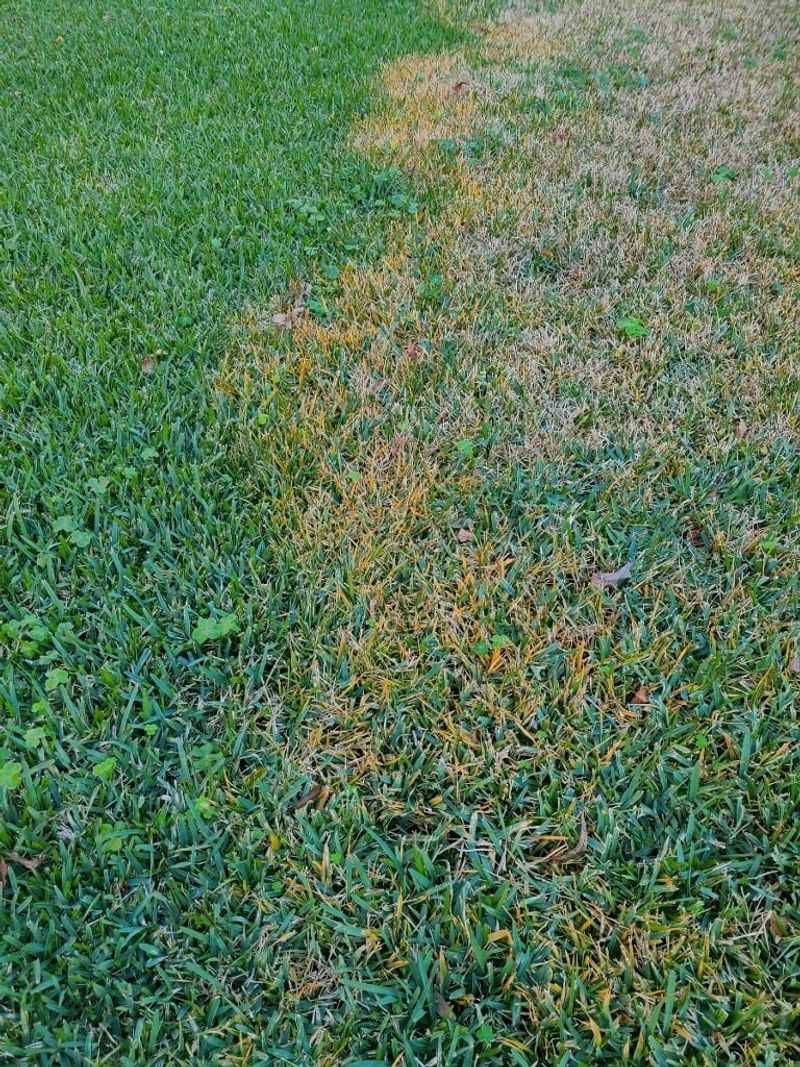
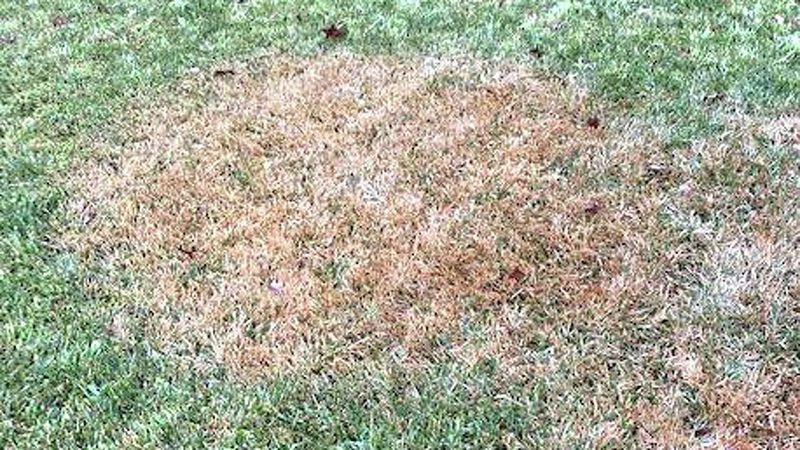
The edge of a patch tells you more than the center. Walk to the margin where green turf meets damaged turf and look for a yellow or orange border.
Then grab a few shoots at that edge and tug gently. Texas A&M’s diagnosis guide describes diseased shoots that pull easily from the sheath and show dark, rotted tissue or lesions.
You may also notice a smell. UF/IFAS notes that the rotted base of the plant can have an odor.
A circular shape, a colored margin, and easy-to-pull rotted shoots all point toward large patch.
Still, these clues support a diagnosis without proving one. Texas A&M warns in its St. Augustinegrass management guide that disease and insect damage can look alike, and UF/IFAS says herbicide injury can resemble large patch too.
Think back on whether you sprayed weed killer recently, and check the base of the grass for insects.
If the signs do not fit, or you cannot tell what is going on, take a sample to your county Extension office or a lawn diagnostic lab. A correct answer beats a guess, especially before you spend money on a treatment.
Reduce fall conditions that favor disease
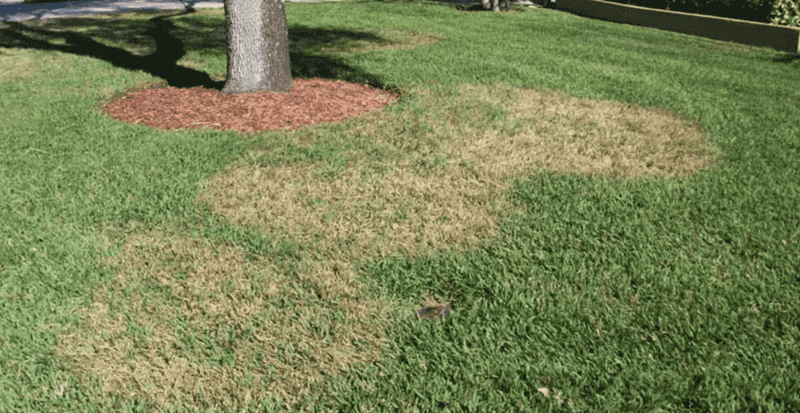
Large patch likes cool, wet turf. Texas A&M lists poor drainage and too much fertilizer as factors that make it worse.
So the most useful fall moves are about taking away the damp, soft conditions the fungus enjoys.
Start with water. Fall lawns need less than summer lawns, so skip the automatic schedule and water only when the grass shows it needs a drink.
When you do irrigate, run the system early in the day so leaves dry out sooner. If water pools in low spots, look at fixing the grade or drainage where that is practical.
Next, check the fertilizer. Late nitrogen pushes soft, lush growth, which is the wrong thing heading into cool weather.
Texas A&M’s current St. Augustinegrass guidance says the final nitrogen application should typically be at least four to six weeks before your county’s historic first frost date. Keep mowing at a height suited to St. Augustinegrass as well, rather than scalping it.
These steps lower risk. They do not cure turf that is already damaged.
Skip dethatching or cultivating in fall hoping for a quick fix, since the same guidance recommends cultivation in spring or early summer when the grass is actively growing and can recover.
Consider preventive fungicide only when the lawn’s history supports it
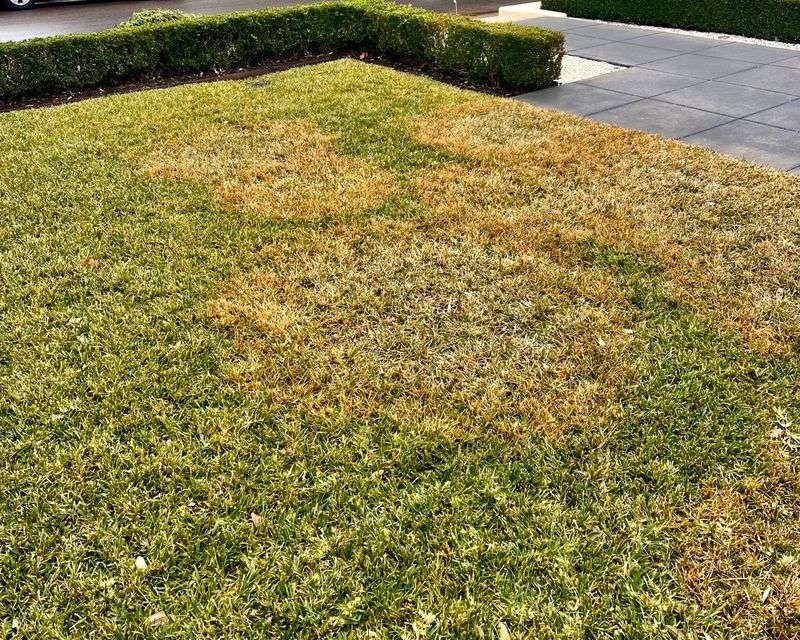
Fungicide is not a routine step for every lawn. If your yard has had large patch in past years, it may be worth considering.
Texas A&M’s St. Augustinegrass maintenance calendar points to preventive treatment as soil temperatures fall into the 50 to 70°F range, and the Texas A&M disease guide describes fall treatment before or just as disease begins as the more effective timing.
Treat that range as a guide, not a universal rule. The Texas A&M fact sheet discusses disease activity below 70°F, while UF/IFAS describes large patch more broadly below 80°F.
Your local weather, soil temperature, and your lawn’s own record all matter more than a single number.
Timing is the catch. Texas A&M reports that fungicide has limited efficacy once symptoms have appeared, so spraying visible rings should not be expected to speed up spring fill-in.
If you decide to treat, use only a product labeled for the disease and for residential lawns, and follow the directions and precautions on it. As the EPA explains, pesticide labels are legally enforceable.
Some fungicides are not labeled for home lawns at all.
Spring recovery depends on how much turf survives
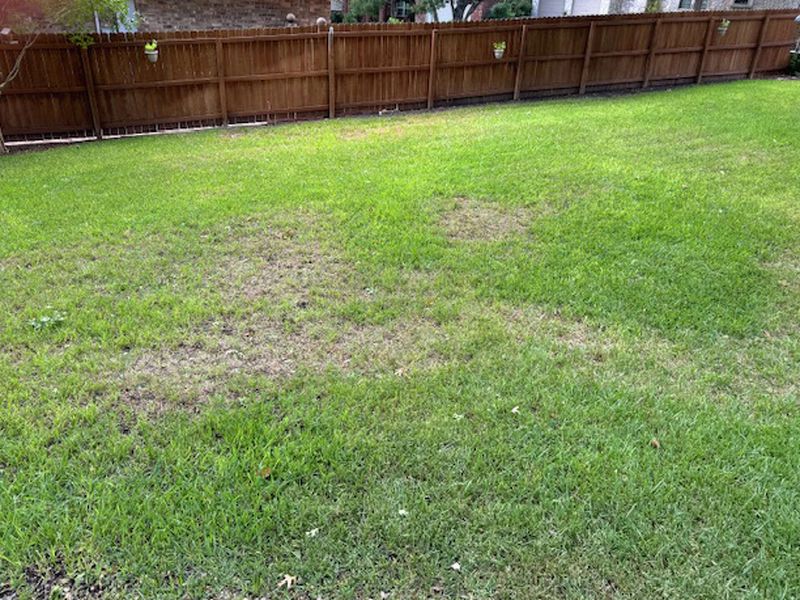
St. Augustinegrass spreads by above-ground runners called stolons. According to Texas A&M, that habit lets healthy turf creep sideways into damaged spots when growing conditions are good.
A ring with plenty of living grass around it has a real head start.
How much grass survives is the key. Texas A&M’s large patch fact sheet says light symptoms may fill in as temperatures rise, but extensive crown or root damage may not recover and can call for resodding.
Look for firm, living stolons along the patch edge in spring. If you find none, patching with sod may be the better path.
Expect some patience too. A brown area can stay visible into spring even after the disease slows down, since dead grass does not turn green again.
Seeing brown does not always mean the fungus is still active.
Fall care and fungicide may help limit damage, but neither can promise a faster green-up. The result comes down to how badly the lawn was hurt and how well the remaining grass grows once warm weather returns.
Match the response to the diagnosis and the lawn’s history
Think of it as a short sequence. Check the patch edges and rule out lookalikes.
Ease up on extra water and late nitrogen. Weigh preventive fungicide only if your lawn has a history of large patch and the timing fits.
Then judge recovery by how much turf is still alive.
Each step can lower risk, per Texas A&M’s guidance, but none can confirm the cause or guarantee a quick spring fill. Keep a note of where rings appear each year, because that record is your best tool for next fall.
A brown ring is a question, and the lawn answers slowly.