
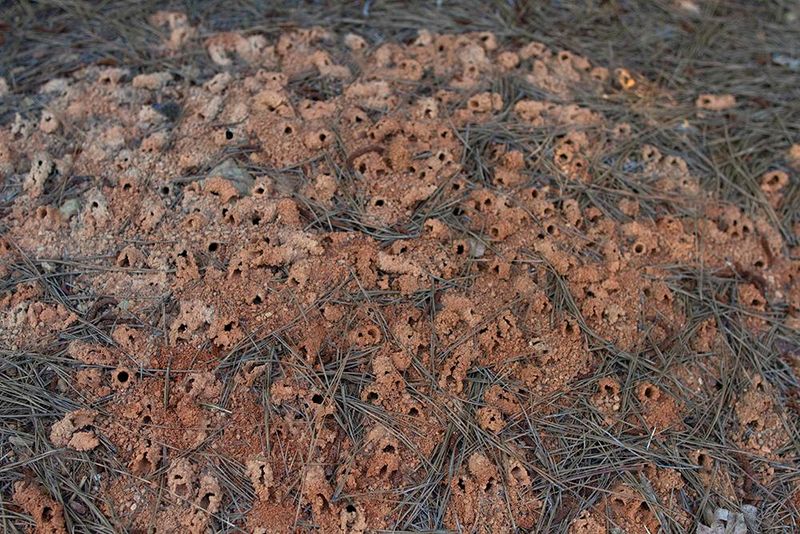
You walk out to a bare garden bed and spot a scatter of pencil-sized holes with little piles of loose soil beside them. In North Carolina, those holes may be doorways to native bees that nest underground.
They may also belong to something else, so a little care goes a long way. Here is how to read the clues, protect a likely bee patch, and know when to call for help.
A small hole is a clue, not an identification
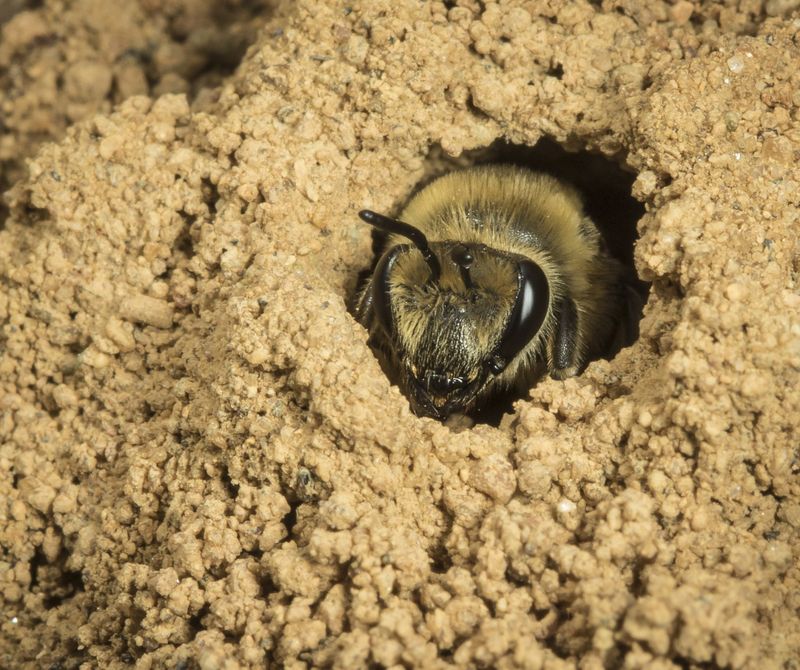
Picture a bare patch of dirt with a handful of round openings, each about as wide as a pencil, and a tiny crater or mound of loose soil next to it. That look fits what NC State Extension describes for ground-nesting bees.
But the same extension source cautions that these nests can be mistaken for the nests of other insects.
So the hole itself is a clue, not an answer. A small entrance and a soil mound cannot tell you which insect dug it.
They also cannot tell you what is happening underground.
The safest way to learn more is to watch from a distance. Stand a few steps back on a calm, sunny day and see whether insects are flying in and out.
Notice their size, color, and how they move. A quick glance from the porch can tell you a lot without any risk.
Resist the urge to lean in close, poke a stick into the opening, or dig around to see who lives there. Other insects, including some that defend their nests, also use ground holes.
If you cannot tell what is coming and going, treat the spot as an unidentified nest and leave it undisturbed while you gather more information.
Why mining bees use sparse patches of soil
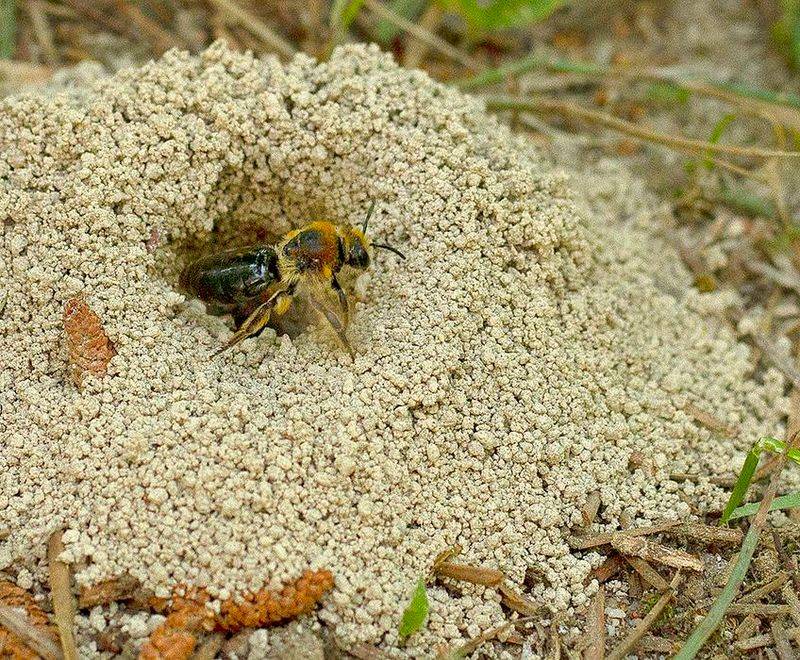
Mining bees are just one group of ground-nesting bees in North Carolina. NC State also lists cellophane, sweat, and digger bees, and their habits differ.
So it helps to avoid calling every soil-dwelling bee a mining bee.
Mining bees often nest in clusters, in patchy or sparsely vegetated ground, according to NC State Extension. A crowd of holes can look like a busy colony, but these bees are solitary.
Each female typically digs and provisions her own nest, even when her neighbors are only inches away.
Sparse cover matters because the bees need to reach bare soil. A thin spot in a bed, a sunny edge of a path, or a gap where little grows can give them that access.
Well-drained soil is often part of the picture. The Xerces Society’s nesting resources also point to exposed, accessible ground as important nesting habitat for many native bees.
It is tempting to read the holes as a sign of great soil, but they do not work that way. They show that the spot has conditions some ground-nesting bees can use.
They are not a soil test. For fertility, pH, or nutrients, a standard soil sample through your county Cooperative Extension office is the better tool.
The nest keeps developing below ground in winter
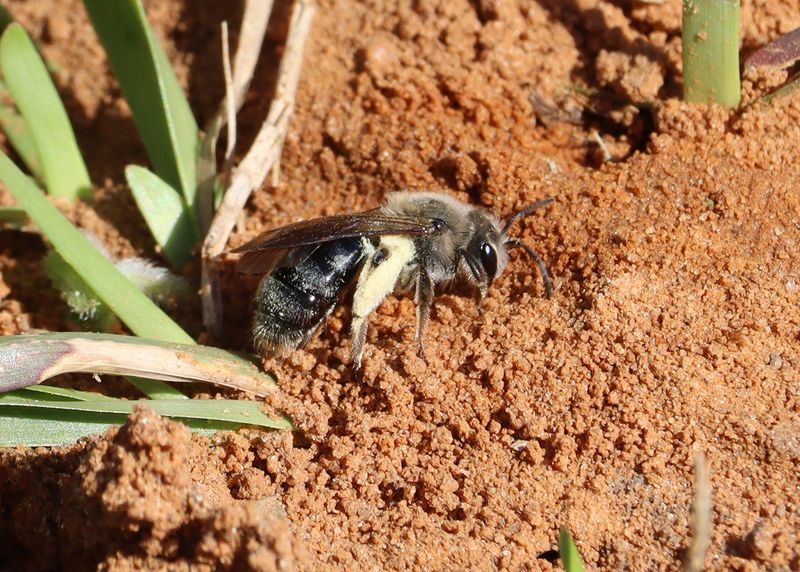
A bare bed in January can look empty, yet NC State’s account of mining bees describes a lot going on below the surface. Females provision underground brood cells, and the larvae keep developing in the soil through the year.
The next generation emerges the following spring, and the same nesting sites may be reused, according to NC State Extension.
Timing is why late winter matters. Mining bees are often active in North Carolina from late February or early March, and they are among the earliest ground nesters you may notice.
Other ground-nesting bees follow different schedules, so a quiet patch in March does not rule out bees that fly later.
Winter does not make digging safe. If you know a patch hosts mining bees, NC State advises against digging up the soil there at any time of year, because young bees may be developing beneath it.
There is one limit to keep in mind. A visible opening does not reveal which species is below or what life stage it is in.
You do not need to know that to make a simple choice. If you want to keep a likely bee patch, put the shovel, tiller, and bulb-planting plans somewhere else.
Protect the patch without putting the whole yard on hold
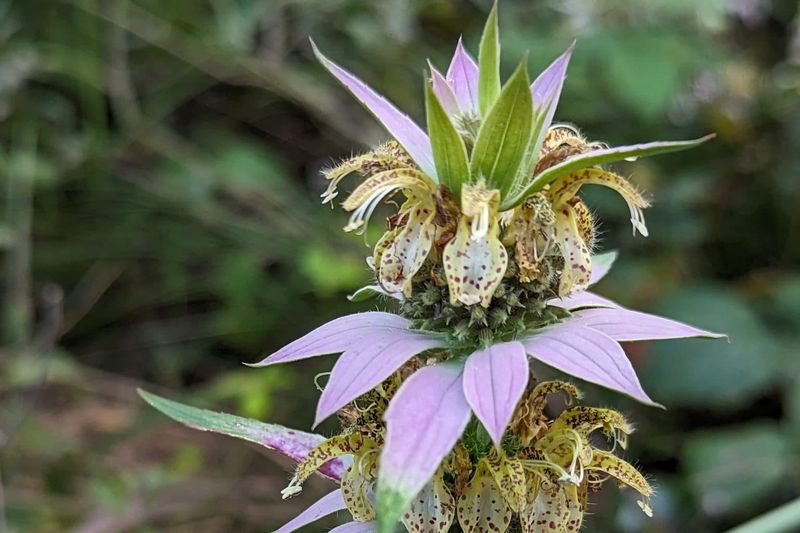
Helping ground-nesting bees does not mean freezing your whole garden. Focus on one spot, the patch you actually want to preserve.
Leave it undug and untilled, since NC State specifically advises against digging up soil where ground-nesting bees may be developing.
Next, skip the thick mulch on that spot. A deep layer can block access to bare ground, and the Xerces Society notes that mulch can reduce nesting habitat for ground-nesting bees.
If supporting these bees is your goal, leave the patch open and mulch the rest of the bed as usual.
You do not have to stop all winter chores. The sources reviewed support avoiding soil disturbance and keeping some bare ground, but they do not show that ordinary surface raking alone harms nests.
Clearing leaves from a path or tidying other beds is fine. Just avoid scraping, digging, or burying the nesting spot itself.
For guidance on seasonal cleanup in general, the U.S. Fish and Wildlife Service offers tips for winterizing a pollinator garden.
A few practical ideas: mark the patch with a small stake so family members and helpers know to avoid it, plant new bulbs and shrubs elsewhere, and keep foot traffic light. That small circle of untouched ground is the whole assignment.
Could an underground nest be yellowjackets?
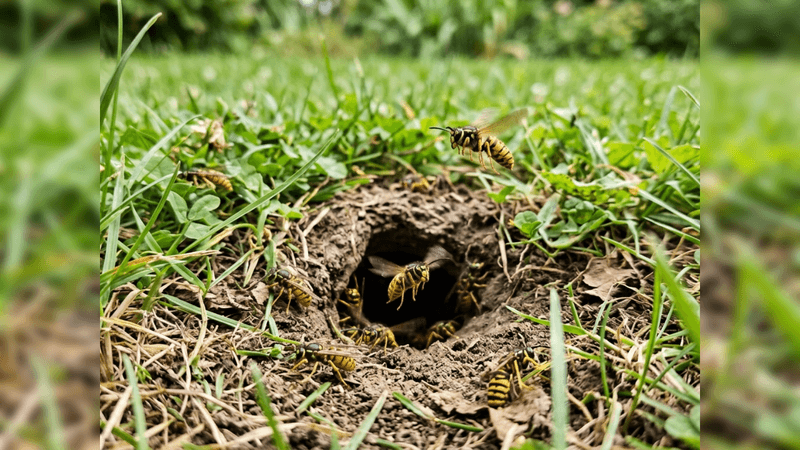
Not every busy hole in the ground belongs to a bee. NC State notes that ground nests can be confused with those of other insects, and its yellowjacket guidance says these wasps can nest underground and that workers defend the nest.
That is why a hole with traffic going in and out deserves respect until you know what is using it. Low-concern descriptions of mining bees do not carry over to an unidentified insect.
NC State also recommends identifying the occupants before any removal.
Do not investigate by digging, do not plug the entrance, and do not pour anything into the hole. Each of those can provoke defensive insects or harm beneficial bees for no good reason.
If the nest is near a doorway, a walkway, a play area, or any heavily used part of the yard, get help with identification. The same goes if yellowjackets seem possible at all.
Your county NC Cooperative Extension office or a qualified pest professional can tell you what you have and what, if anything, needs to be done. In the meantime, keep children and pets away and watch from a safe distance.
Let identification guide your next move
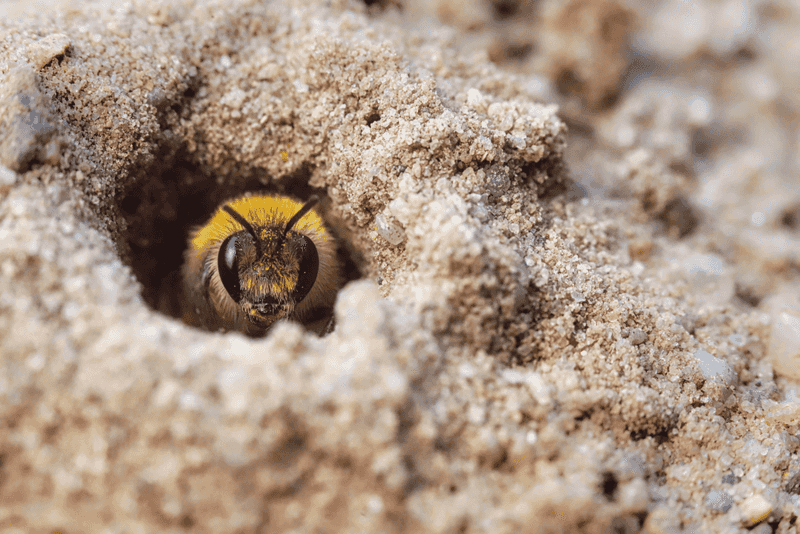
Start by watching from a distance. If the patch looks like a good spot for bees, protect it by skipping digging, tilling, and thick mulch, as NC State suggests.
If the insects could be wasps, or the nest sits where people walk, ask for help instead of disturbing it, since yellowjackets can nest underground.
The holes may point to useful bee habitat, but they cannot name the insect or grade your soil. A small patch of bare dirt can hold more questions than answers, and that is a fine reason to leave it be.