
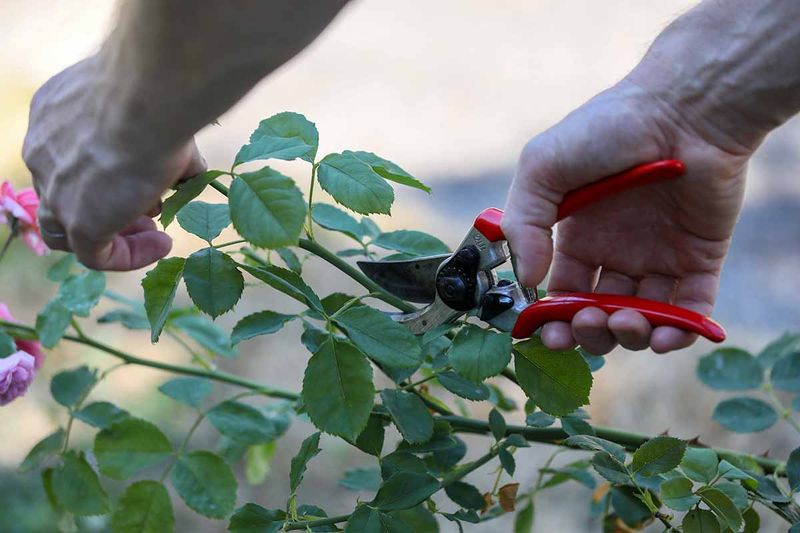
A climbing rose can give you a lot of green stems, and it is tempting to wonder if some of them could become new plants. Sometimes they can, but it takes the right kind of cane, a clean setup, and some patience.
Roses are also stubborn about rooting, so think of this as an experiment instead of a sure thing. Here is how to give it a fair try without harming the rose you already love.
Protect the climber before you take a cutting
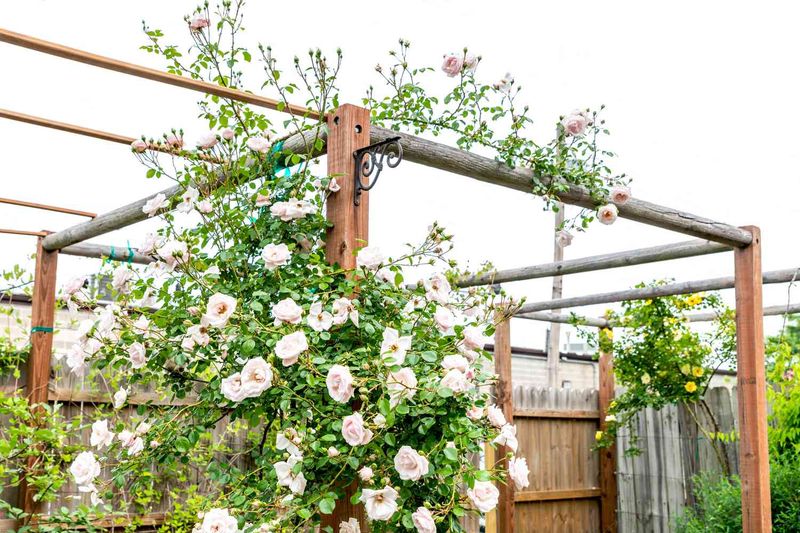
Your climbing rose already does a lot of work for you, so keep its flowering canes safe. Pruning a healthy climber only to collect cutting material can cost you blooms, so skip that plan.
Climbing roses are not all alike. Some bloom once a year and others repeat through the season, so which canes to keep depends on the variety.
Texas A&M pruning guidance says climbers are pruned after they flower.
Region matters too. Texas A&M advice for Central Texas is to wait until climbing roses have flowered before pruning.
UF/IFAS says a major Florida pruning is generally in January or February, and South Florida may need two prunings.
So there is no blanket fall-pruning rule. Use cuttings from trimming you were already planning to do, and let your own rose’s habit set the schedule.
Match the stem to a propagation method
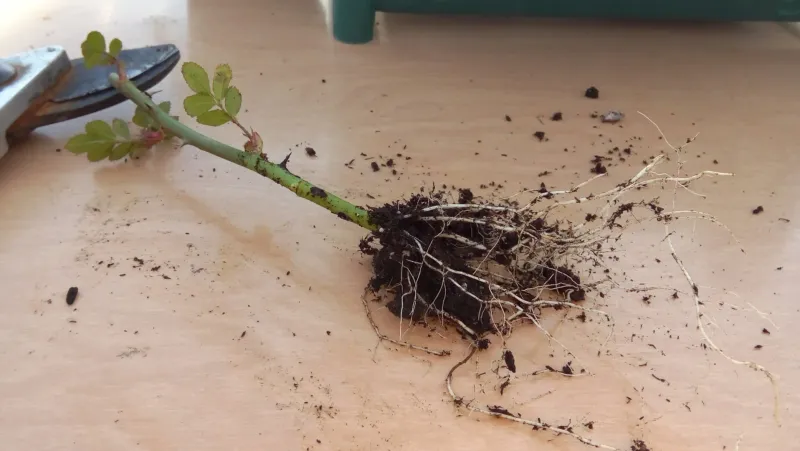
Before you cut anything, look at the stem. Its stage tells you more than the calendar does, and a cane that suits one method may be a dead stick for another.
UC guidance describes a healthy, current-year stem that has flowered and is still slightly flexible, with several leaf nodes. It warns that old, very woody stems are challenging to root.
Other sources describe dormant-wood propagation, where mature winter-resting stems are handled with a hardwood-cutting method. Iowa State Extension covers rose propagation in its own way.
These are separate approaches, and neither is the one right recipe. If a cane is soft and floppy, diseased, or hard and gray, set it aside.
Pick the method that fits the stem in your hand.
Treat propagation as a trial, not a sure thing
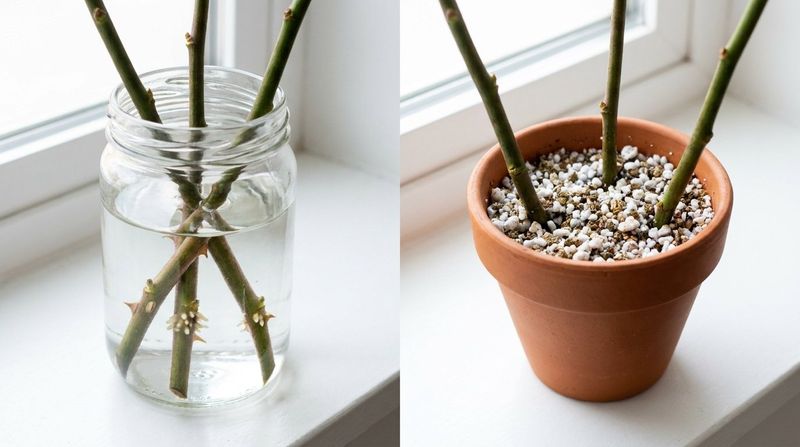
Rooting roses is hit or miss, so go in expecting some losses. Results change with the cultivar and with growing conditions.
A study of hardwood cuttings covered ten shrub and pillar rose cultivars. Only two produced good-quality rooted cuttings at meaningful rates.
That does not describe every climbing rose, but it shows how uneven rooting can be.
The practical answer is to take several cuttings instead of betting on one. Choose healthy, disease-free canes, as UC guidance suggests.
Label each pot with the date and the plant it came from. If a few fail, you still learn something about what your rose and your conditions allow.
Prepare cuttings in a clean, well-drained medium
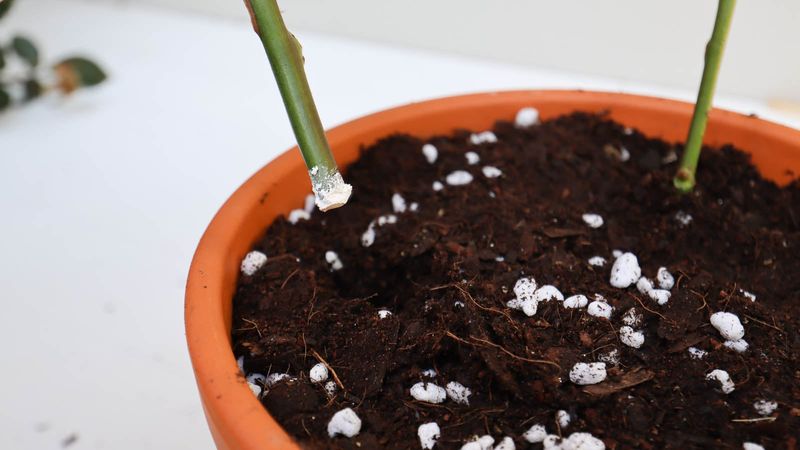
Start with clean tools and a clean pot. Fill the pot with a moist, well-drained propagation medium so the base of each cutting is not sitting in muck.
The UC Davis rose propagation instructions call for cuttings about 6 to 8 inches long. On leafy cuttings, strip the lower leaves.
Then poke a pencil-width hole in the medium and slide the base in, so you do not scrape the stem.
Rooting hormone is optional. If you use it, follow the label and dip the base as directed.
It is an aid and not a promise, since the hardwood cutting study found commercial rooting stimulants did not reliably improve results across cultivars.
Maintain humidity without waterlogging the cuttings
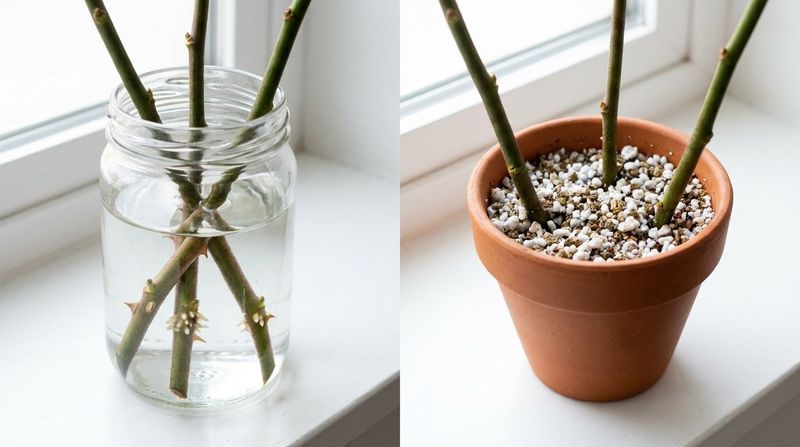
After planting, the job is mostly steady care. Cuttings have no roots yet, so they lose moisture fast and need a humid spot.
The UC Davis method keeps cuttings humid, in bright indirect light, with a medium that stays moist but not waterlogged. Direct, hot sun can cook a cutting, so a bright shaded porch can be a better choice than an open yard.
Check the medium often. If it feels soggy or smells sour, ease off on watering.
If it dries out, give it a drink.
Keep to those basics and avoid fussy extras. Some cuttings will still fail, and that is normal with roses.
Separate root development from garden readiness

Roots forming and a plant being ready for the yard are two different milestones. Mixing them up is how many new rose starts get lost.
UC Davis says roots may develop in about four weeks under its method, but describes roughly six months before a rose is suitable for landscape planting. UC guidance gives about six to eight weeks for roots.
Timing depends on method and conditions, so a garden-ready plant by spring is not something to count on.
New leaves alone do not prove roots. A cutting can leaf out on stored energy and then stall.
Wait for firmer signs, such as resistance when you tug lightly or roots showing at the drainage holes.
Know what an own-root cutting can reproduce
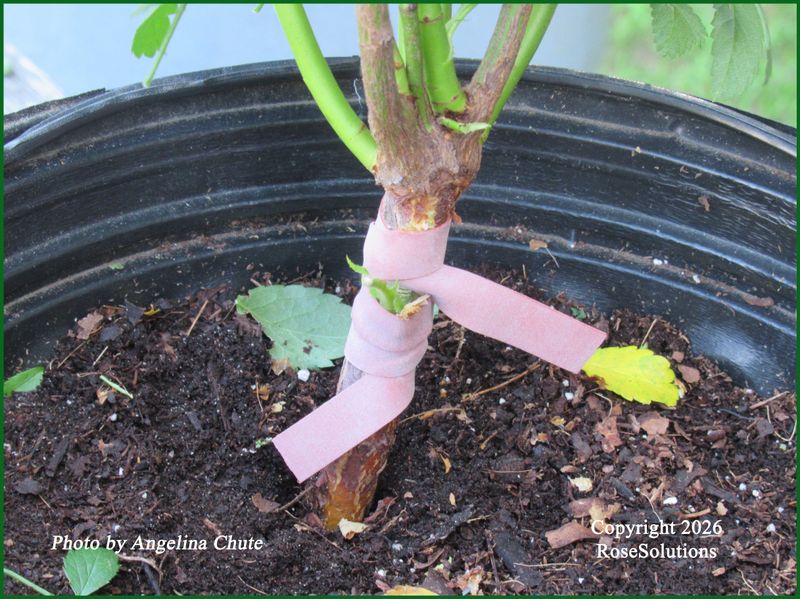
A cutting grows on its own roots. Many modern roses are grafted onto a rootstock, and UC guidance notes that the rootstock can add hardiness or disease resistance.
A cutting from the flowering cane will not carry those rootstock benefits, so your new plant may behave differently in your soil.
Before you propagate a named variety, check whether it is covered by a plant patent. The USPTO explains that plant patents cover asexual reproduction, including rooting cuttings, and generally last 20 years from the filing date.
If a patent applies, get permission where required. This is general information, not legal advice.
Look at the plant tag or ask the grower. A rose is worth a few minutes of homework.