
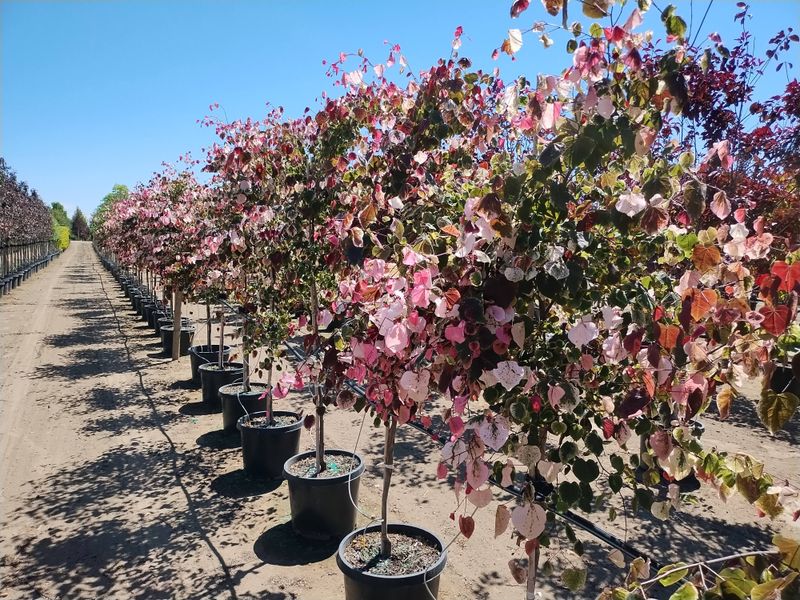
Bradford pear is everywhere in spring, but many homeowners end up unhappy with it. A California native tree called western redbud offers a different kind of spring color, with pink-to-magenta flowers instead of white ones.
It is not a perfect swap, and this article is honest about what is known and what is not. If you are thinking about planting this fall, here is how to decide and how to get a new tree off to a good start.
Bradford pear’s spring show comes with documented drawbacks
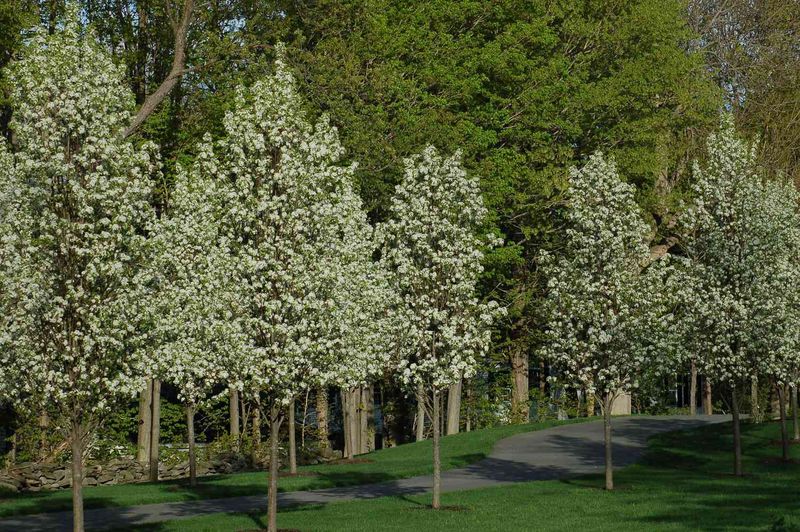
Bradford pear earned its place in neighborhoods because it blooms hard and fast. White flowers cover the branches in early spring, and for a couple of weeks the street looks like a postcard.
The trouble shows up around the show. NC State Extension describes Bradford pear flowers as unpleasant-smelling, and it also documents weak branch unions and frequent breakage.
Those weak spots are why so many of these trees lose limbs in wind or heavy rain.
Keep in mind that these points are about Bradford pear specifically. They do not mean every individual tree will fail, and some owners live with one for years without a problem.
But if you have already watched a limb come down or grown tired of the smell, it is reasonable to start thinking about a replacement.
A mature Bradford pear is a big job to take out. Large trees can drop heavy limbs in unpredictable directions, and the same extension source notes that Callery pears may resprout after cutting.
Rather than tackling it yourself, call a certified arborist or a licensed tree service. They can handle the removal safely and advise on follow-up that fits local rules and product labels.
A tree that comes out in summer can also be replaced in fall, which is a good time to plant in California. That timing is worth planning around, and the rest of this article builds on it.
Western redbud offers a different kind of spring display
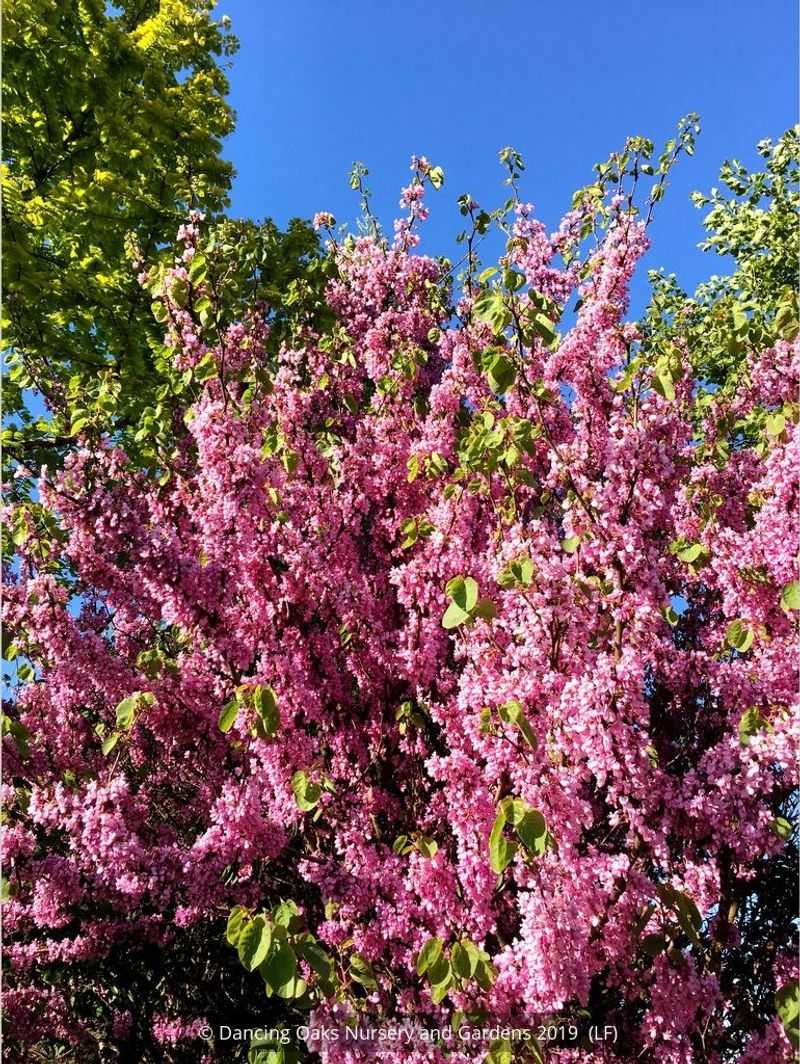
Western redbud, known botanically as Cercis occidentalis, is a native of California. It is also found in Arizona and Utah, which is one reason this article sticks to California yards rather than suggesting it for every region.
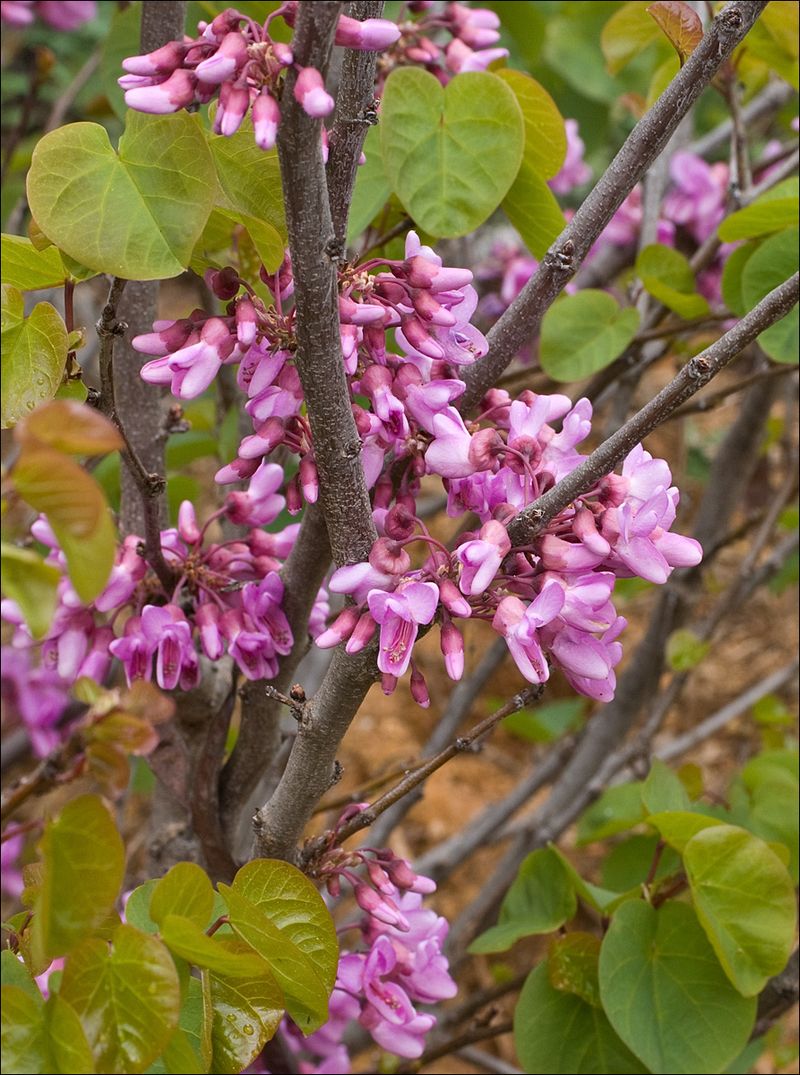
Gardeners will find it described as a small tree or a large shrub. The UC Master Gardener Program of Sonoma County notes its showy magenta-to-pink spring flowers and its suitability for California landscapes.
Size estimates vary depending on who you ask. The USDA plant guide gives a range of about 7 to 20 feet tall, while the UC Davis Arboretum lists 15 to 20 feet tall and 10 to 15 feet wide.
Your own plant may land anywhere in that spread, depending on soil, water, and sun.
It also will not look like a Bradford pear. The flowers are pink to magenta, not white, so think of it as a different spring picture rather than a copy.
If you love the bright white look, this will feel like a change. If you like color that stands out against bare winter branches, it may be a better fit.
Because it can grow with several trunks or as a broad shrub, plan for a rounder, looser shape than the upright pear you may be removing. Give it elbow room and it will reward you.
Its early flowers bring color and pollinator value
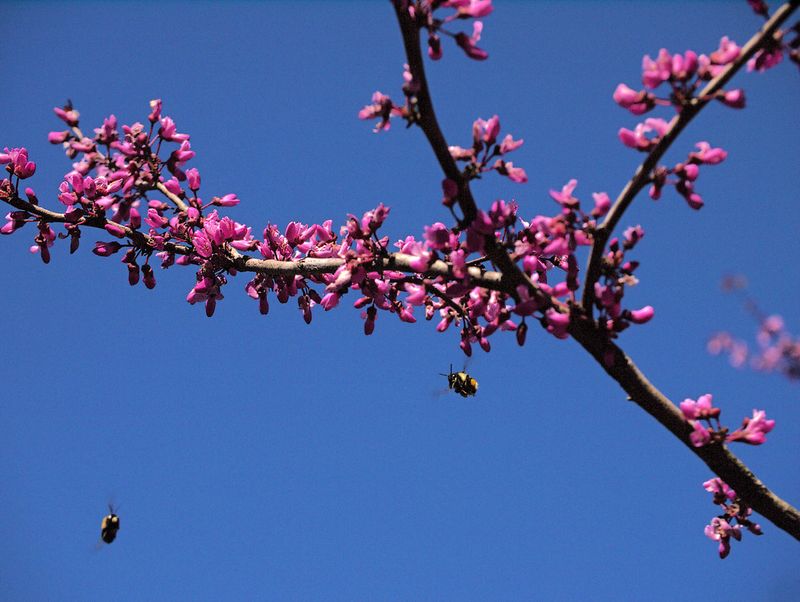
Look closely at a redbud branch and you will see small, pea-shaped flowers packed along the wood. They open before the leaves do, so the color sits right on bare stems.
Timing depends on where you live. The UC Davis Arboretum lists bloom in February and March, while UC Master Gardener sources in Tulare and Kings Counties give a broader February to April window.
Think of it as late winter into spring, with local weather nudging the dates earlier or later.
Do not expect a long show from any single plant. According to the USDA plant guide, an individual shrub may flower for roughly two weeks.
Those early blooms matter to wildlife. The same USDA guide and the UC Davis Arboretum both note that the flowers provide nectar or pollen for bees and other beneficial insects.
In late winter, when little else is open, that can be a useful early meal.
Still, a pollinator-friendly flower does not make a tree right for every spot. A redbud planted in soggy ground or deep shade will struggle no matter how many bees visit.
Choose the site first, then enjoy the wildlife as a bonus.
The evidence does not promise scentless flowers or unbreakable limbs
Some headlines promise a native tree with flowers that do not smell and limbs that never split. Those are big claims, and the reviewed sources do not back them up.
Bradford pear is the documented problem. NC State Extension records its unpleasant-smelling flowers and weak branch unions.
For western redbud, the profiles we reviewed describe the flowers but never say whether they have a noticeable scent. So we can say only that redbud is not documented as having Bradford pear’s notorious odor, not that nobody will ever smell it.
Limbs are the same story. Nothing we found compares storm failure in redbud to other trees.
A multi-stemmed habit is not proof of weakness, and it is not proof of toughness either.
What you can do is look at structure. General guidance in NC State’s storm damage advice flags weak unions and codominant stems as potential failure points.
The UC Davis Arboretum suggests selecting outward-facing leaders and pruning old branches during winter dormancy.
Good choices at planting and thoughtful pruning can improve structure, but they are not a guarantee. If a storm is forecast, treat a redbud like any other tree and check it afterward.
Fall planting gives a California native time to establish
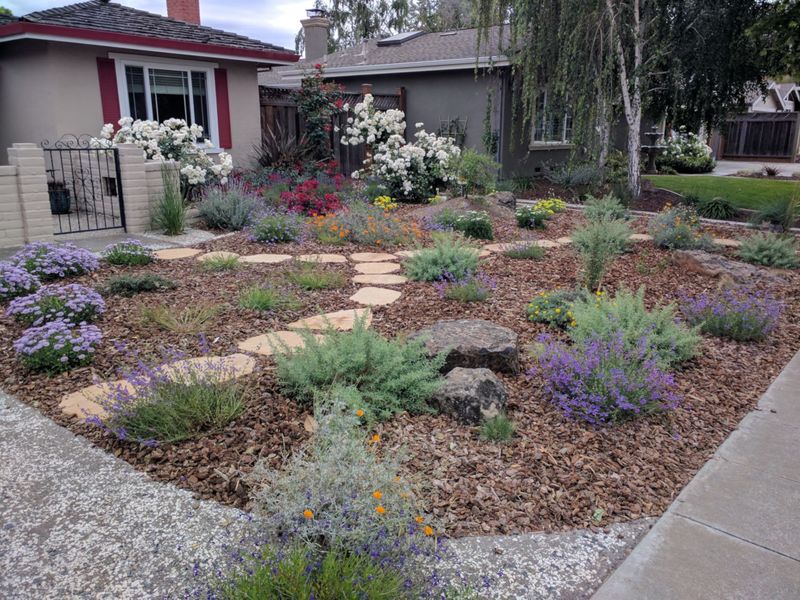
California gardens run on a wet-winter, dry-summer calendar, and that shapes when native plants go in the ground. Planting near the start of the rainy season lets roots grow while winter moisture is available, well ahead of the first hot, dry months.
That idea is spelled out in UC ANR’s fall planting guidance for California natives, and it is echoed in the Sonoma County Master Gardener notes on natives.
Rain helps, but it is not a replacement for checking in. A light shower may wet only the surface, and a dry spell between storms can leave a new root ball parched.
Poke a finger a few inches into the soil near the plant now and then, and water if it is dry.
Before you buy, walk the yard and look at the site. Notice whether water drains away after a storm or puddles.
Check how many hours of sun the spot gets, and whether a south-facing wall, a slope, or a coastal breeze changes conditions. The UC Master Gardener redbud profile calls for well-drained soil, so drainage deserves special attention.
A statewide planting window is a helpful guide, not a promise. A mild coastal yard and a hot inland valley will not behave the same.
Choose the redbud’s form and plant it for its actual site
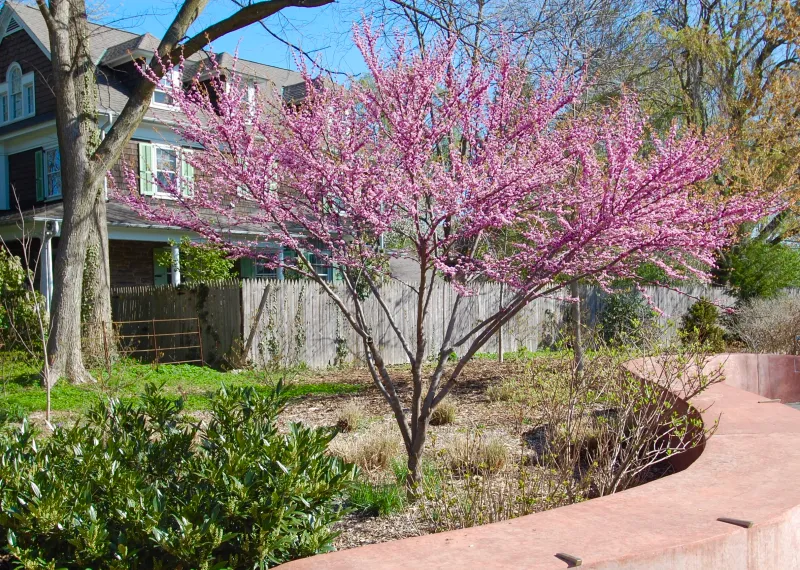
Walk through a nursery and you may find redbuds that look nothing alike. Western redbud can grow as a single-trunked tree, a multi-trunked tree, or a shrub, so the pot in front of you may not turn into the tidy single-trunk tree you picture.
Decide how you plan to use it. A multi-trunked form can soften a corner or screen a fence, while a single leader suits a spot where you want to walk or park beneath it.
The UC Davis Arboretum recommends selecting outward-facing leaders for structure, so look for stems that angle away from the center rather than crowd each other.
Next, match the tree to the ground. The Sonoma County Master Gardener profile asks for well-drained soil.
If a hole fills with water and stays that way, pick another spot or consider a raised planting area.
When it is time to plant, follow the basics from the UC Marin Master Gardeners. Water thoroughly after planting.
Keep the root flare, where the trunk widens at the base, visible above the soil line. Spread mulch around the tree but keep it away from the trunk.
Layout and spacing depend on your yard, so measure for the size range you read about earlier rather than copying a standard plan.
Plan for summer care and seasonal cleanup
Think of the first couple of years as a partnership. The UC Marin Master Gardeners advise watering as needed through establishment, which can stretch up to two growing seasons.
How often depends on your soil and climate, so watch the tree instead of following a fixed schedule.
Later, the plant tolerates occasional or moderate dry-season watering, according to the UC Master Gardener profile. That same source cautions that the hottest inland sites may still need some summer water.
So “plant it and never water again” is not a safe plan.
Cleanup is smaller than with many trees, but it is not zero. Western redbud is deciduous and drops its leaves for winter after showing fall color.
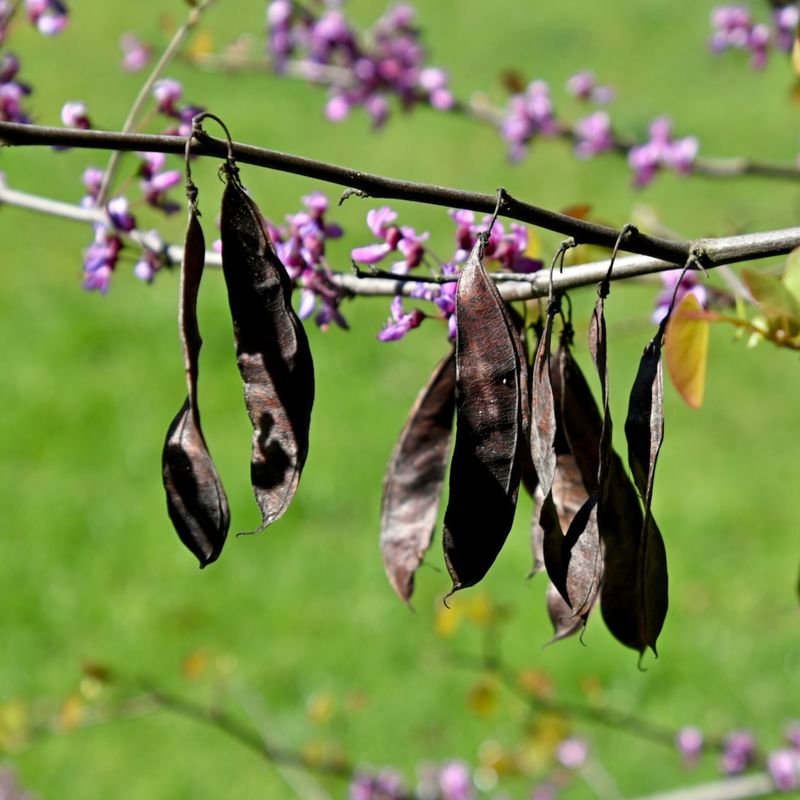
It also produces flattened seed pods, which, as the USDA plant guide notes, can persist into winter. Plan on a rake and a few pods in the beds.
Overall, western redbud is a promising California-native flowering alternative to Bradford pear. It is not proven to be odorless, break-proof, or mess-free.
Plant it where it can spread, and the first bloom after a rainy winter will tell you quickly whether the swap was worth it.