
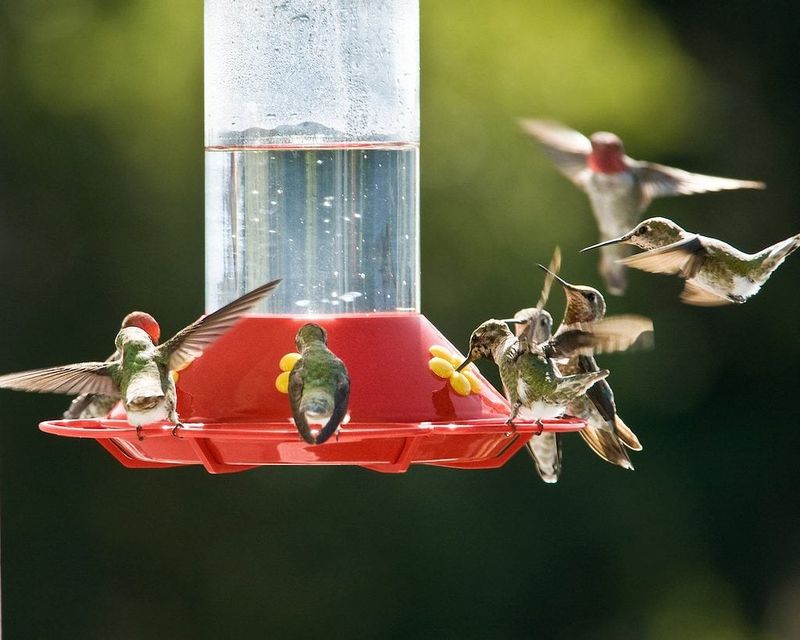
You glance at the hummingbird feeder and the nectar that looked crystal clear a few days ago now has a hazy, milky look. In warm Southern falls, that change can happen faster than many people expect.
Knowing where heat and sun fit in helps you decide what to do next. A few simple habits can keep your feeder fresh and your visitors well served.
Warmth and direct sun can cloud nectar sooner
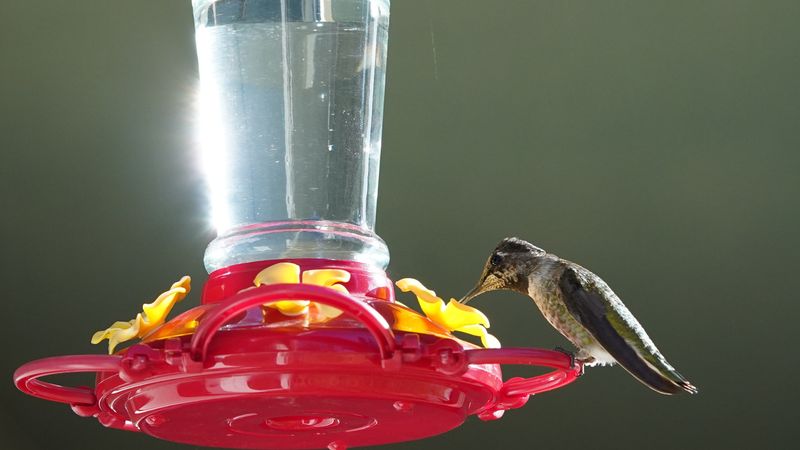
Warmth and direct sun can make feeder nectar lose its clarity sooner, though they do not explain every cloudy feeder. A feeder in a shady, breezy corner can cloud up too, and one in sun can stay clear for a while.
Think of heat and light as speed-ups, not as a guaranteed cause.
One of the best-known clues comes from an Oklahoma study of feeder clarity. Researchers followed 12 feeders in one Oklahoma City neighborhood from June 30 to October 6.
Clarity declined sooner in full sun than in full shade, and accumulated warmth mattered as well.
Keep the limits in mind. The study measured how clear the nectar looked, not whether it reached a level proven harmful to birds.
It also did not produce a universal number of days or a safe-versus-unsafe cutoff, so a feeder in a Texas backyard and one in a Florida courtyard may follow different timelines. The practical takeaway is simple: warm, sunny spots call for closer watching.
Cloudiness is a reason to act, not a diagnosis
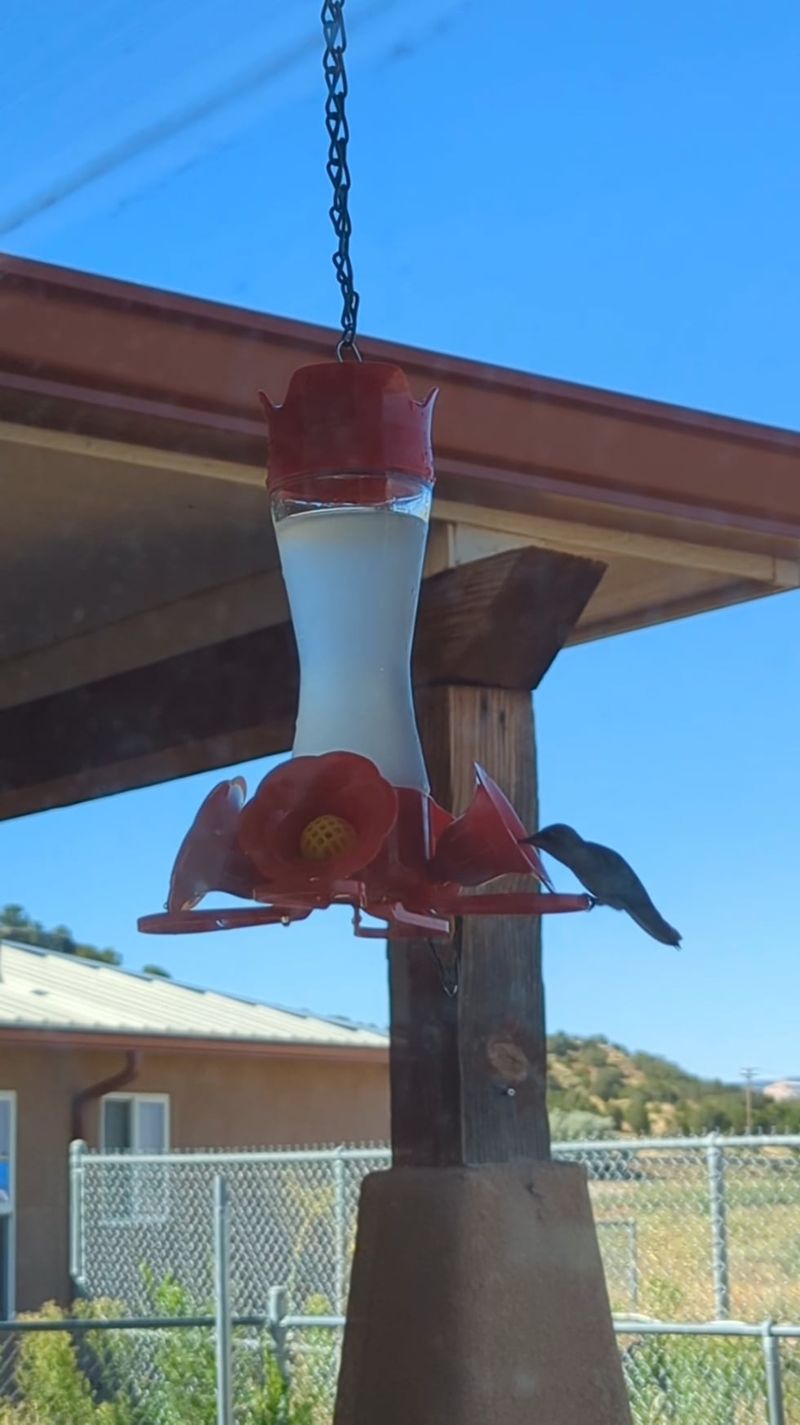
Cloudy nectar is a signal to pour it out and clean the feeder. It is not proof that the nectar is toxic or that a specific germ is growing in it.
Visible mold is the same: discard it and start fresh.
Nobody knows exactly how much bacteria it takes to harm a hummingbird. A Maryland Extension answer names bacteria as a likely cause of cloudiness while noting that the harmful level is unknown.
That is a good reason to be cautious, not a reason to panic.
Research on microbes keeps things in proportion, too. A peer-reviewed study found that microbes can move among birds and shared food sources, but it concluded that feeders and flowers were not abundant sources of bacterial or fungal pathogens.
So a hazy feeder is no cause for alarm. Dump it, scrub it, and refill it with fresh nectar.
Choose shade and keep the feeder accessible
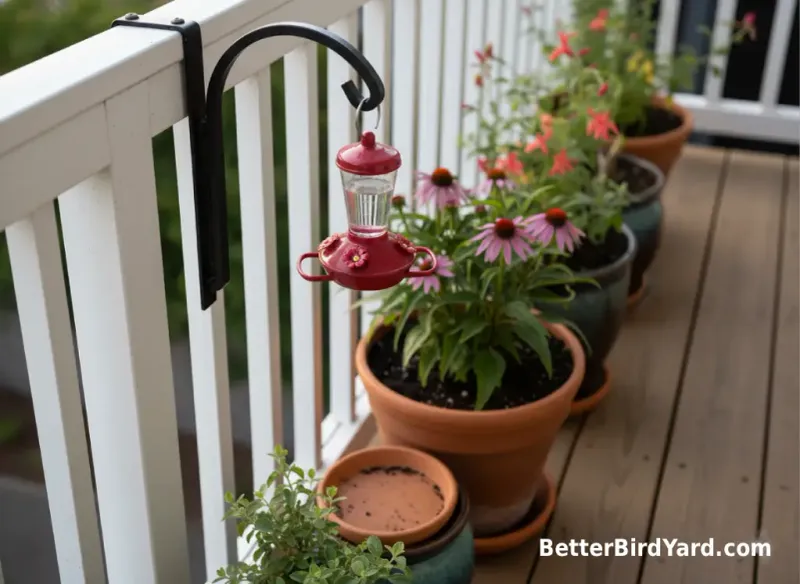
Shade is one of the easiest upgrades you can make. UF/IFAS Extension says shade can slow fermentation, and Cornell Lab’s All About Birds also advises keeping feeders out of direct sun because the solution spoils faster there.
A porch eave, the north side of a tree, or a spot beneath a pergola can all work. What suits your yard depends on how the sun moves across it, so watch the spot at midday and again in late afternoon.
Shade slows the process, but it will not stop it. You still need to look at the nectar regularly.
Pick a place you can reach without a ladder. If a feeder is awkward to get to, it tends to get cleaned less often.
Also avoid spots where rain can drip into the ports and dilute the nectar.
Change nectar according to heat and visible condition
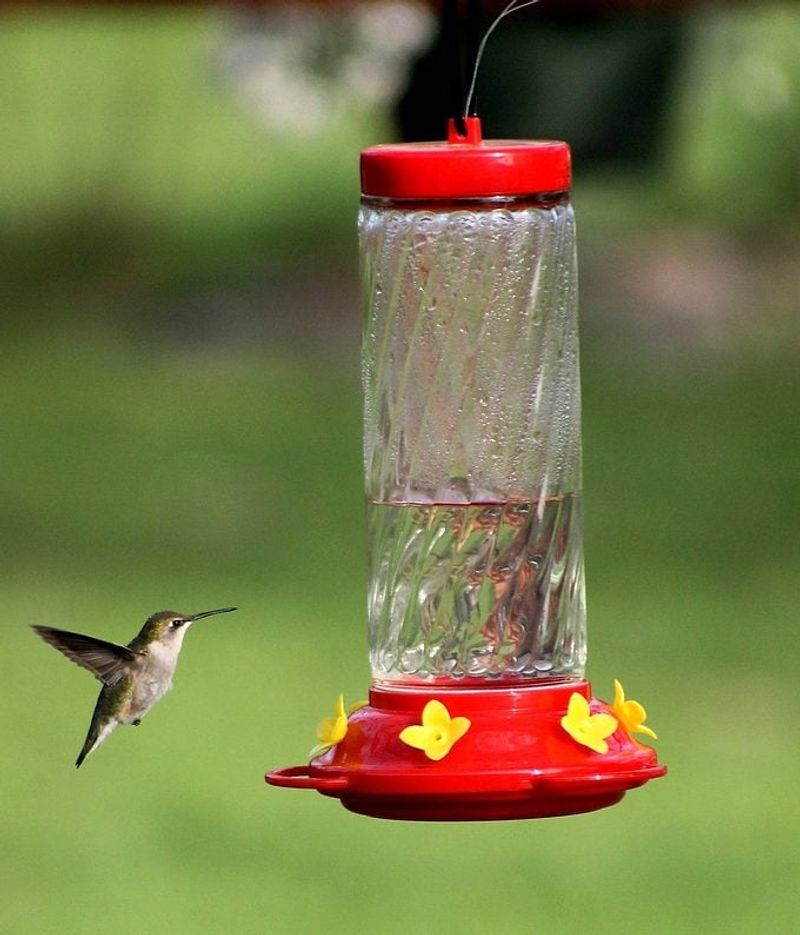
Hot weather calls for a quicker routine. Audubon advises emptying and cleaning the feeder daily or every other day when it is hot.
For less-hot conditions, UF/IFAS offers a 3 to 5 day baseline and says to change nectar more often in heat or direct sun.
Treat those numbers as guidance, not promises. A feeder can look clear on day two or hazy on day one.
Go by the weather, not the calendar. A 90-degree October afternoon in Houston or Tampa deserves the same care as July, because fall alone does not set the schedule.
Whatever the plan says, act on what you see. If the nectar is cloudy or you spot mold, pour it out right away instead of waiting for the next scheduled change.
Mix a fresh batch with the right ingredients
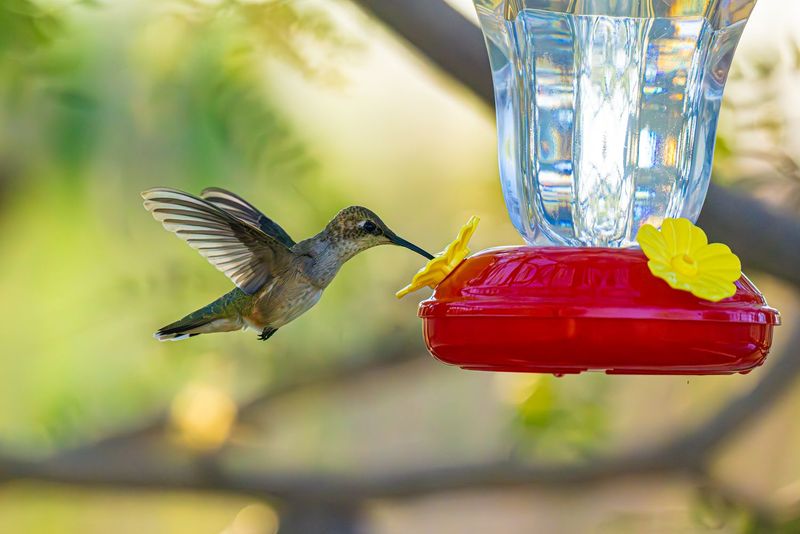
Homemade nectar takes only two ingredients. Use one part refined white sugar to four parts water, so one cup of sugar goes with four cups of water.
Both UF/IFAS and Audubon say to boil the solution to dissolve the sugar. Let it cool fully before filling the feeder, since warm liquid is a poor match for a plastic or glass reservoir and a hungry bird.
Leave a few things out of the pot. Skip red dye, honey, brown sugar, molasses, and artificial sweeteners.
Plain white sugar and water is all the feeder needs.
Extra nectar can go in a clean, covered container in the refrigerator. Making a small batch each time keeps you from reusing old liquid.
Empty, scrub, rinse, and dry the feeder
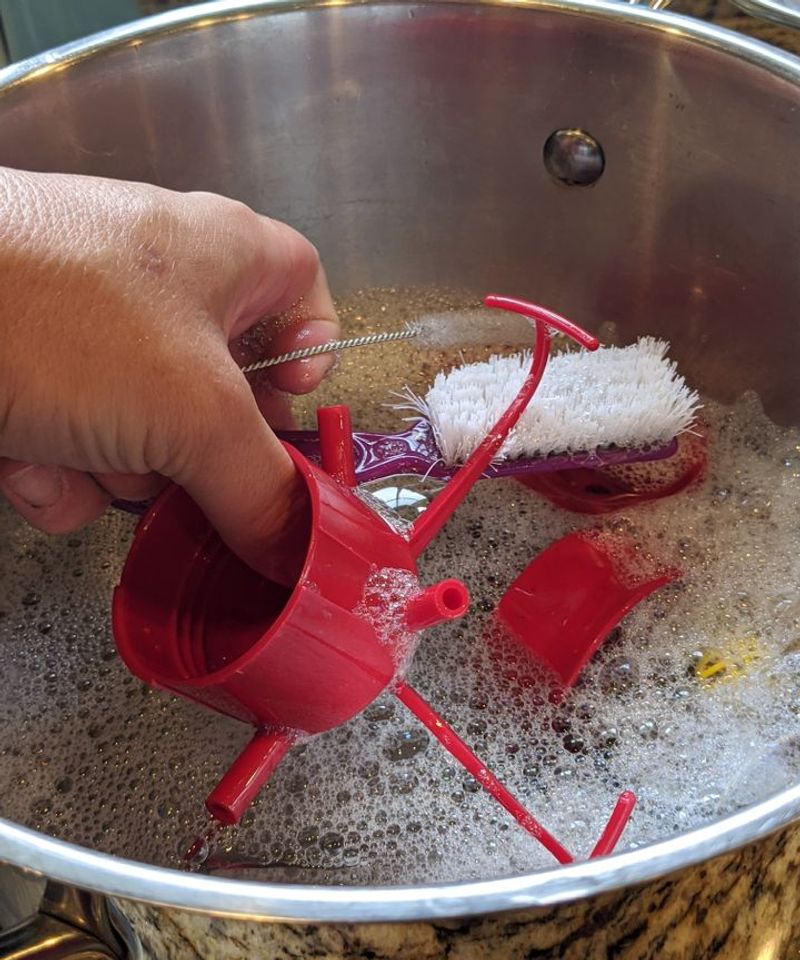
Start by emptying the feeder and taking it fully apart. Scrub the reservoir, the seams, and each feeding port with a brush, since those tight spots hold residue.
UF/IFAS recommends hot water and a bottle brush.
Rinse thoroughly, then let every piece dry before you refill it. A feeder that is clean and dry gives the new nectar the best start.
Reputable sources do not agree on cleaning agents. UF/IFAS advises against soap and bleach for hummingbird feeders, Audubon suggests hot water with hydrogen peroxide or weak vinegar, and Cornell Lab allows soap or dilute bleach when followed by a careful rinse and full drying.
Check the maker’s directions first, then stick with one reputable method. Never mix cleaning products together.
A clear feeder in the fall light is a small daily win.