
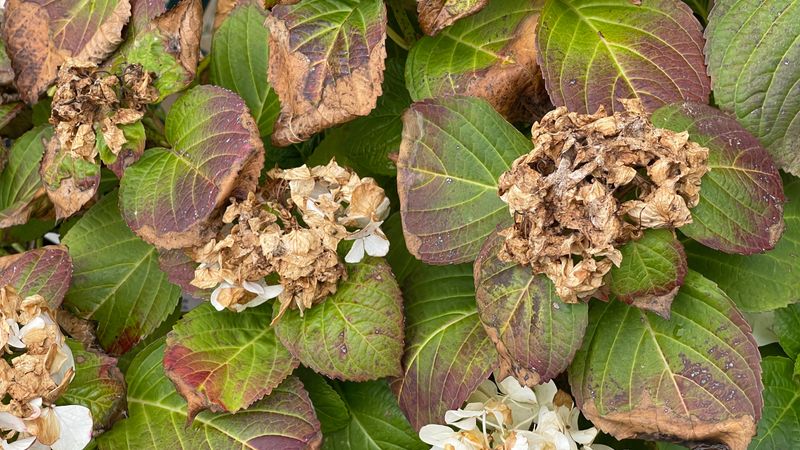
Those crispy brown hydrangea heads in your yard can look like a plant in trouble. Most of the time, they are just blooms reaching the end of their season.
The bigger worry is the pruning shears, because the wrong cut at the wrong time can trim away next year’s flower buds on some types. Here is how to tell what is normal, what is not, and what to cut or leave alone.
Brown, papery blooms often signal normal aging
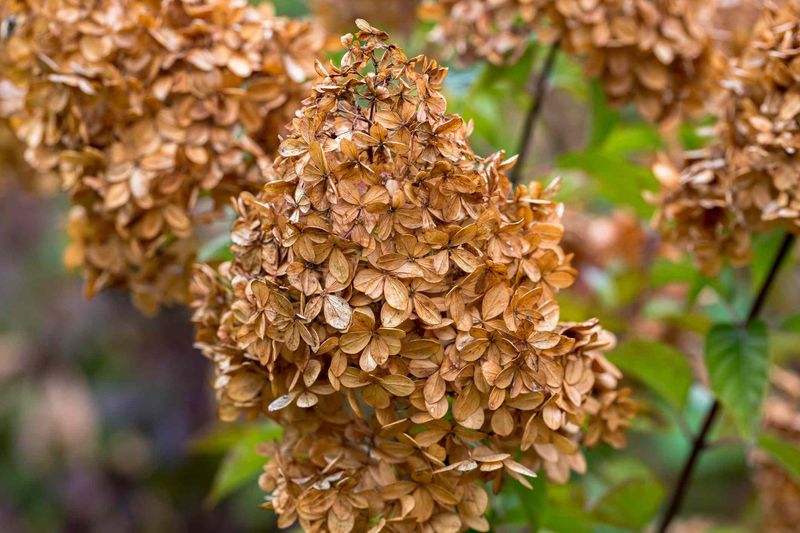
Walk out to your hydrangeas in October and the blooms may look crisp, tan, and tired. That is usually a normal last stage for a spent flower head, and it does not mean the shrub is dying.
Color changes vary by variety. According to University of Maryland Extension guidance, some flowers fade through green, pink, or red before they dry to brown, while others skip straight to tan.
The headline over this article says that cutting off brown blooms now costs you next summer’s flowers. That is too broad.
The risk depends on the type of hydrangea and where the cut is made, and the next sections sort that out.
For now, take a breath and look at the whole plant. If the leaves are changing color on schedule and the stems are firm, a papery head is simply a bloom that has finished its job.
When is browning more than fading?
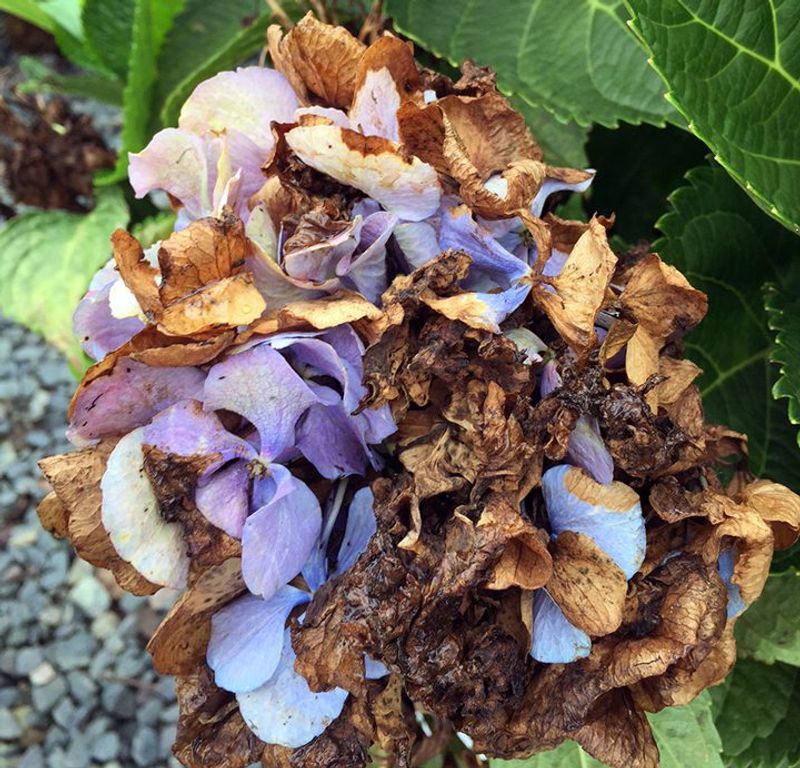
Gradual fading from the edges or across the whole head, late in the season, fits normal aging. Browning that shows up early, in irregular blotches, or after water-soaked spots deserves a closer look.
Maryland Extension notes that Botrytis can cause water-soaked spots that expand into brown blotches, especially in long stretches of cloudy, rainy weather. Humid Southern summers can create those conditions.
Heat, strong sun, or too little moisture can also cause blooms to brown early or scorch. Maryland’s hydrangea problem guide describes scorch and leaf symptoms that help separate these causes.
Do not diagnose from a brown petal alone. Ask three questions: when did the browning start, what pattern does it follow, and what do the leaves look like?
Scorched leaf edges point toward heat or drought, while spreading spots point toward disease.
Upkeep matters too. Removing heavily affected heads and checking water habits may help, though no single step guarantees a fix.
Identify the hydrangea before pruning
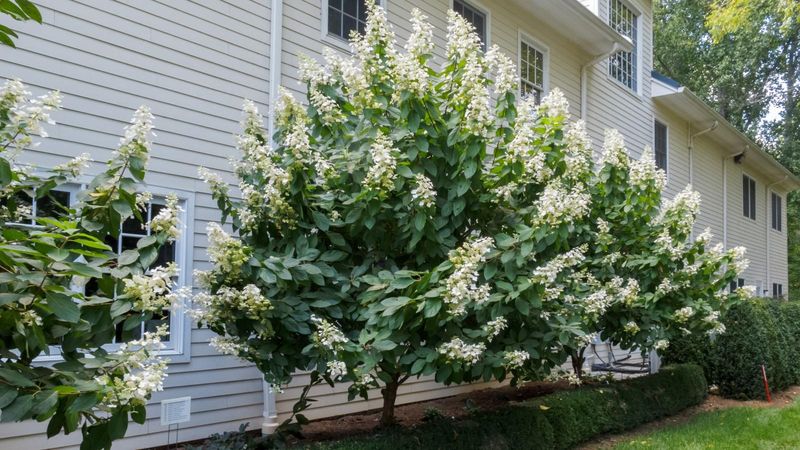
Pruning advice only works if you know what you are pruning. Hydrangeas fall into two camps based on when they form flower buds.
Mississippi State Extension explains that bigleaf (mophead and lacecap), oakleaf, and mountain hydrangeas generally bloom on old wood, meaning stems grown the year before. Smooth and panicle types bloom on new wood grown this season.
Leaf shape is a handy clue. Oakleaf hydrangeas have big lobed leaves like an oak.
Panicle types often have cone-shaped blooms, and smooth types such as Annabelle have rounded white heads.
Do not assume every plant in a group acts the same. As UGA Extension advice puts it, pruning depends on the type, and some bigleaf cultivars rebloom on both old and new growth.
If you cannot name your plant, check the plant tag, your purchase records, or ask a local extension office before you cut.
A flower-head snip is not the same as a stem cut
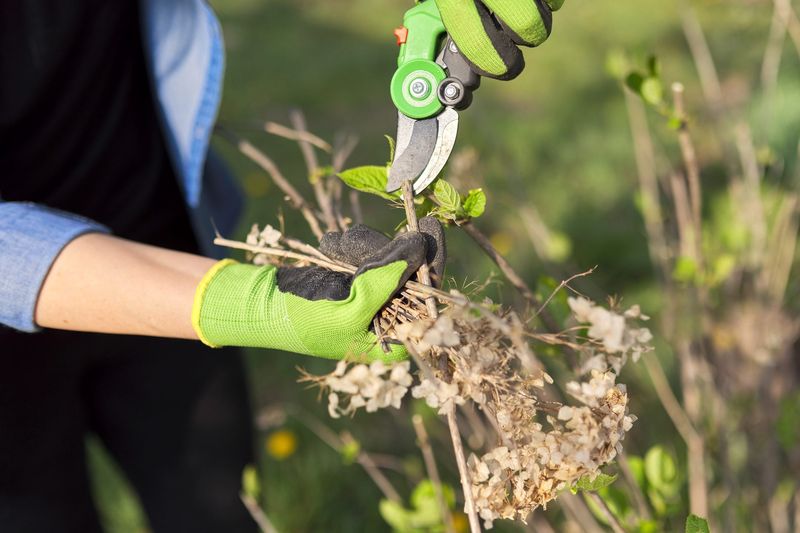
Here is where the title goes wrong. Cutting off a dead flower head and cutting back a flowering stem are two different jobs.
If you want a tidier shrub, Maryland Extension advises cutting just below the old flower head, not farther down the stem, where buds may be removed. A careful snip at the base of the bloom may leave next season’s buds intact.
Picture a stem with a brown head on top. Snip the head and a short bit of stem below it, and the nodes lower down stay put.
Cut a foot down, and you may be taking off bud-bearing wood on an old-wood type.
You can also skip the job entirely. Leaving the heads on is fine if you like how they look, and many gardeners enjoy the dried blooms in winter.
So deadheading is not automatically harmful. The cut location is what counts.
Protect old-wood stems from fall cutbacks
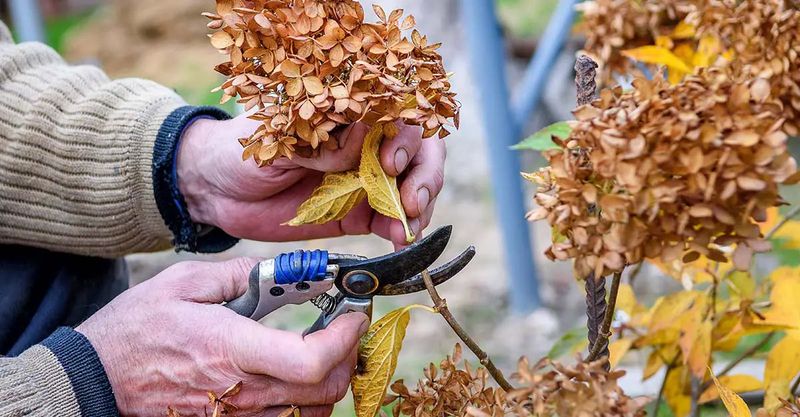
On old-wood hydrangeas, next summer’s flowers are already on the way. Mississippi State Extension says those buds begin forming in August, so by fall they sit at stem tips and nodes.
That is why fall cutbacks or shaping can reduce flowering. Trimming stem tips on a bigleaf or oakleaf hydrangea may take the buds with them.
Timing guidance is specific to the type. UGA Extension recommends pruning bigleaf hydrangea after flowering and avoiding pruning after August 1.
Florida guidance from UF/IFAS also recommends pruning bigleaf types after flowering and keeping productive old stems. Treat these as advice for those plants, not one calendar for every Southern yard.
In fall, leave healthy stems alone. If something is dead or broken, remove only that.
New-wood hydrangeas follow a different schedule
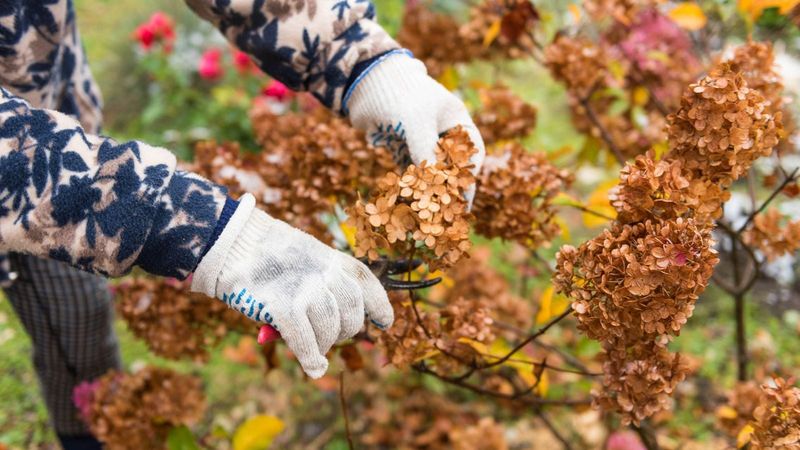
Smooth and panicle hydrangeas play by other rules. They bloom on new wood, so the stems they grow next spring carry the flowers.
According to UGA Extension, these types can generally be pruned in late winter or early spring. The same guidance says panicle types can also be pruned in fall or winter.
That means a panicle hydrangea with brown cone-shaped heads in November is a different case from a mophead next to it. Cutting one back does not carry the same bud risk as cutting the other.
Keep each schedule tied to its type. Mississippi State Extension lists smooth and panicle hydrangeas among the new-wood bloomers, and old-wood types should still be left intact in fall.
If you grow both kinds, prune them on separate days, with a plant tag or note in hand so the shears do not wander.
Preserving buds helps, but cannot guarantee flowers
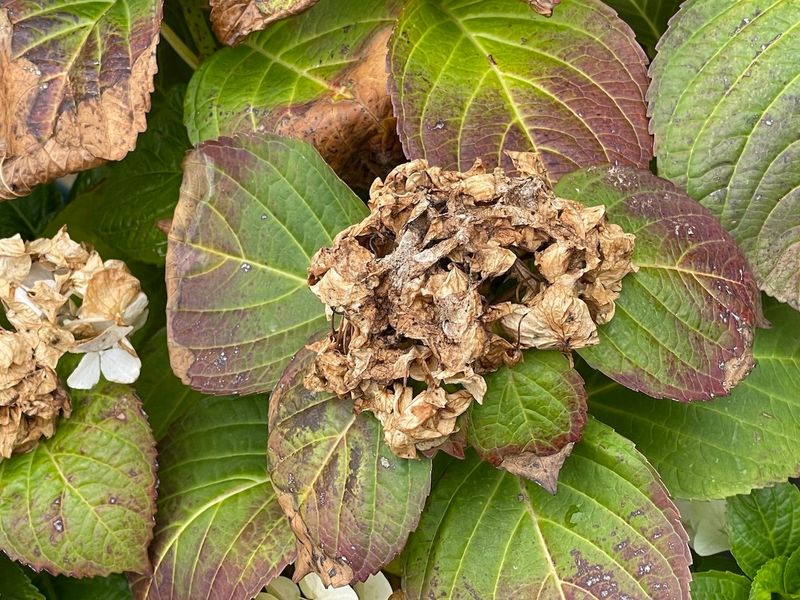
Your plan is simple. Identify the hydrangea, leave old-wood stems intact in fall, and either keep the spent heads or snip just below them.
Even so, intact buds are not a promise. Mississippi State Extension points to cold injury, drought, shade, and excess nitrogen as other reasons old-wood hydrangeas may bloom poorly.
A skimpy summer does not prove your deadheading was the cause.
Location matters as well. UF/IFAS says bigleaf hydrangeas are best suited to North and Central Florida, where they need shade, moisture, and cool winters.
Texas yards differ, so match your plant to your own conditions.
A brown head is often just a bloom taking a bow, and the buds are quietly working behind the scenes.