
A bare patio in a California summer can feel like a frying pan by noon. Planting a tree seems like the obvious fix, but the wrong pick can send roots under your slab, into your sewer line, and straight into a costly repair bill.
The good news is that some trees grow quickly, handle dry summers, and keep their roots well behaved. Here are eight smart choices that can give you shade sooner while protecting your concrete, your pipes, and the wildlife that visits your yard.
1. Desert Willow
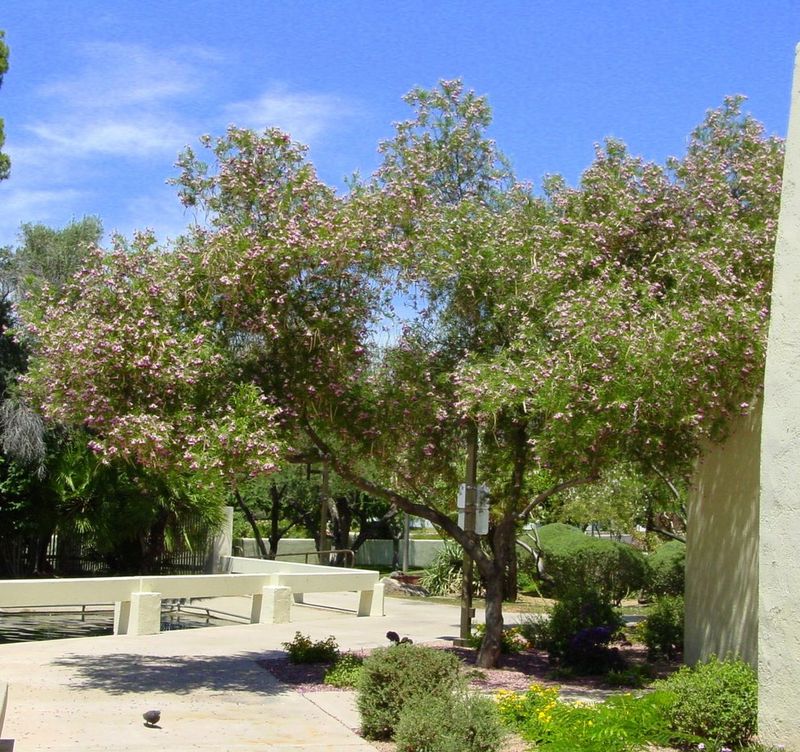
Hummingbirds seem to find a blooming desert willow within days of its first flower. That alone earns it a spot near any California patio, but the real bonus sits underground.
Desert willow (Chilopsis linearis) is native to the Southwest, including desert parts of Southern California. Its roots tend to grow deep in search of water rather than spreading wide along the surface, which can lower the risk to nearby slabs and lines.
It can add two to three feet a year in warm inland spots once established.
Expect airy, filtered shade instead of deep darkness. Many homeowners actually prefer that, since it keeps a patio cooler without making it gloomy.
Plant it at least 8 to 10 feet from the slab, water deeply but rarely, and it rewards you with orchid-like flowers from late spring into fall.
2. Western Redbud
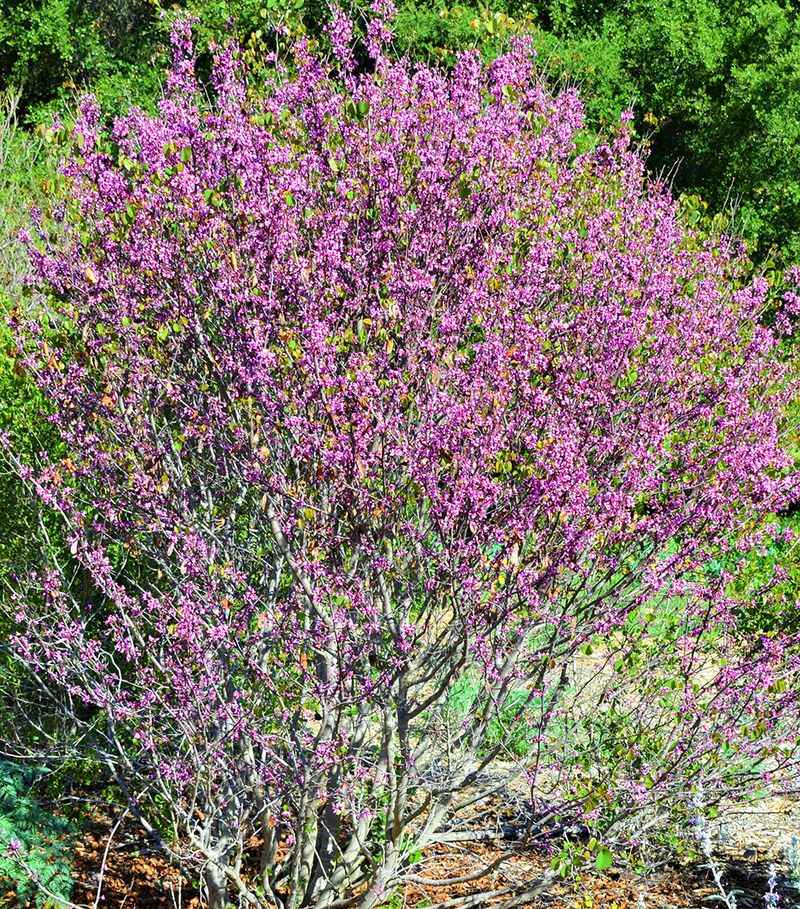
Magenta blossoms on bare branches in early spring make western redbud one of the most photographed natives in the state. Behind the show, it is a polite neighbor for hardscape.
Cercis occidentalis usually stays 10 to 20 feet tall, often as a multi-trunk small tree. Its root system is modest and not known for heaving concrete, so it works well in tighter yards.
Native bees, including mason bees, feed on the early flowers, giving your patio area real wildlife value.
Growth is moderate rather than lightning fast, so give it a few seasons. Once established, it needs little summer water and actually prefers being left a bit dry.
Heart-shaped leaves cast pleasant dappled shade, and the fall color can surprise you in colder valleys.
3. Palo Verde ‘Desert Museum’
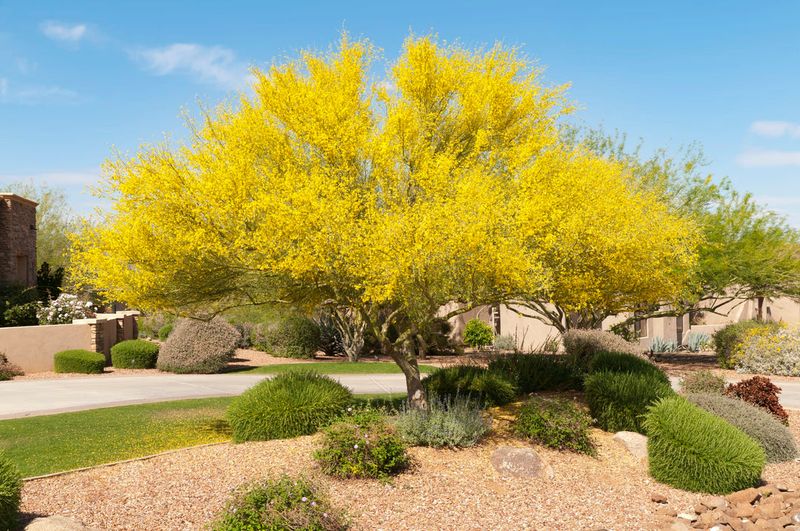
Green bark is the giveaway. The hybrid palo verde called ‘Desert Museum’ photosynthesizes through its trunk and branches, which helps it shrug off brutal heat in places like Riverside, Palm Springs, and the Inland Empire.
Speed is where it shines. In good conditions, it can shoot up three feet or more a year and reach 20 to 25 feet tall with a broad canopy.
Unlike some older palo verde types, this hybrid is thornless, so bare feet on the patio stay happy.
Roots tend to run deep with infrequent watering, which is exactly how you should treat it. Frequent shallow sprinkling can encourage surface roots, so water slowly and deeply instead.
Spring brings a blanket of yellow flowers that bees work hard, and the light shade lets lawn alternatives or groundcovers grow underneath.
4. Chitalpa
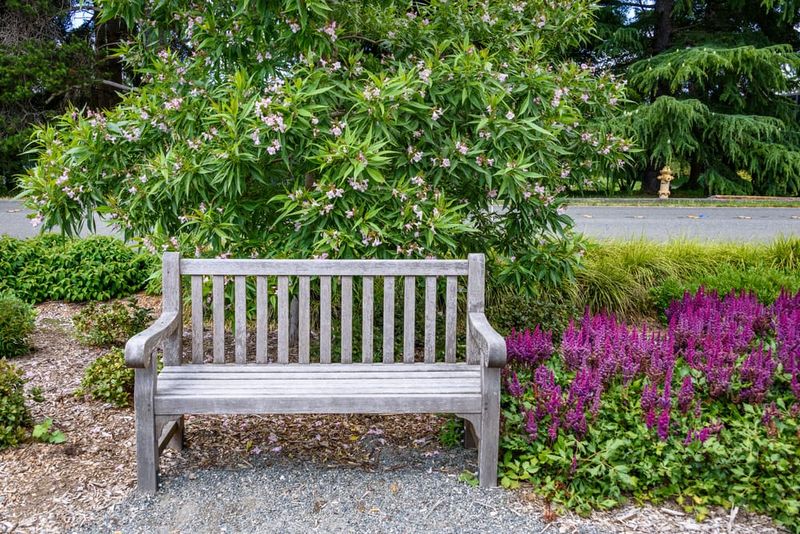
Picture a desert willow crossed with a catalpa, and you have chitalpa. The hybrid blends the toughness of one parent with the bigger, frillier flowers of the other.
Chitalpa often grows fast, reaching around 20 to 30 feet with a canopy just as wide. That width matters for patios, since one tree can cover a whole seating area.
Pale pink or white blooms appear through much of summer, right when you are spending evenings outside.
Its roots are generally considered non-invasive, though giving it 10 feet or more from foundations is still wise. It does best in hot, dry inland areas and can struggle with mildew in foggy coastal spots.
Deep watering every couple of weeks in summer usually keeps it going strong.
5. Crape Myrtle
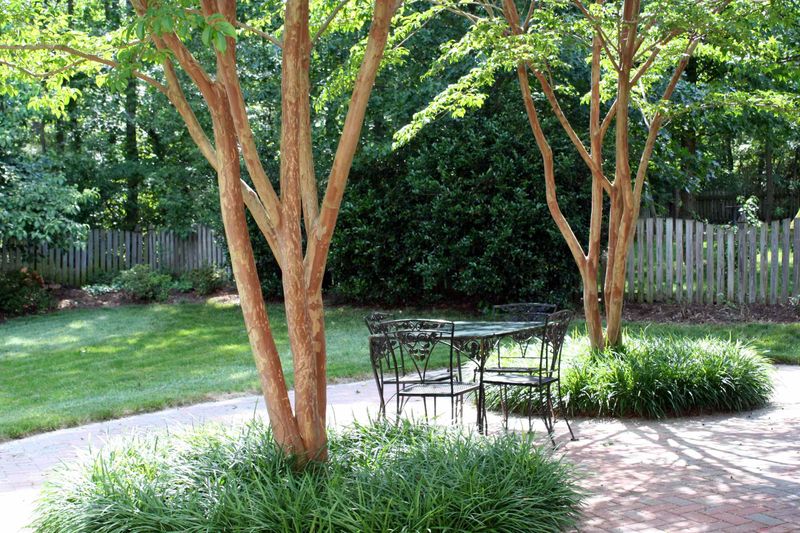
Smooth, peeling bark in shades of cinnamon and gray makes crape myrtle look good even in winter, when the leaves drop and sunlight warms your patio again.
Here is why it lands on this list. Crape myrtle roots are fibrous and fairly shallow but rarely aggressive, so they usually do not lift sidewalks or chase sewer lines.
Tree-form varieties such as ‘Natchez’ or ‘Tuscarora’ can reach 20 feet or more and add a few feet a year with steady summer water.
Choose mildew-resistant types, especially near the coast. Skip the harsh chop known as crape murder, since it ruins the natural shape and weakens branches.
Valley heat in places like Sacramento and Fresno brings out the brightest summer blooms.
6. Strawberry Tree
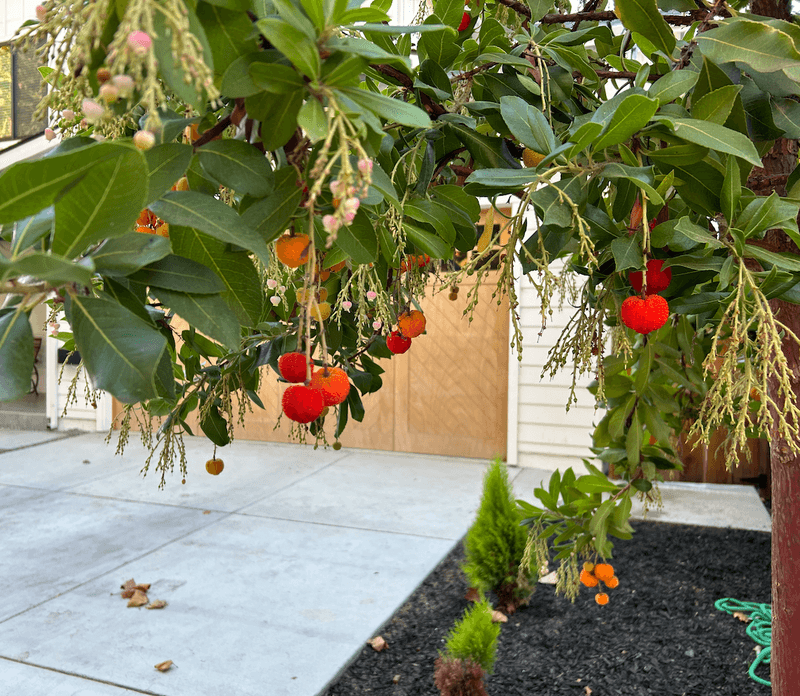
Bell-shaped flowers and red, bumpy fruit can hang on a strawberry tree at the same time, which gives it a cheerful, almost holiday look in fall and winter.
The variety ‘Marina’ is a favorite across California, from San Diego to the Bay Area. Its twisting, reddish trunk feels like a cousin to native madrone and manzanita, yet it is far easier to grow in a home yard.
Roots are known to be well mannered, making it a common pick for street and patio plantings.
Growth is moderate, often 1 to 2 feet a year, topping out around 25 feet. Hummingbirds and bees visit the flowers during the cool season when little else is blooming.
One small note: dropped fruit can stain light pavers, so place it where the canopy shades seating but not your brightest stone.
7. Fruitless Olive
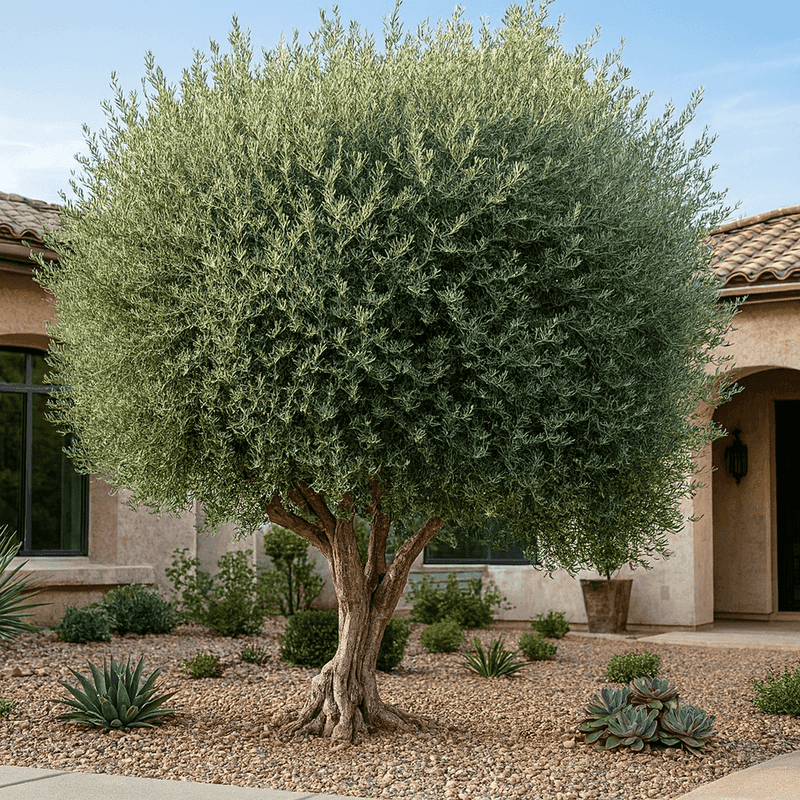
Silver-green leaves rustling over a patio instantly feel Mediterranean, and in California that look fits the climate perfectly.
Fruitless olives like ‘Swan Hill’ or ‘Wilsonii’ skip the messy, staining fruit and much of the allergy-causing pollen. They handle drought well once rooted, which matters under local watering rules.
With regular water early on, young trees can fill out within a few seasons.
Roots are usually not a big threat to slabs when trees are watered deeply and spaced 10 feet or more away. Olives are also fairly fire-resistant compared to oily trees like eucalyptus, though no tree is fireproof.
Keep lower branches pruned and the area under the canopy clear if you live in a hillside fire zone.
8. Catalina Ironwood
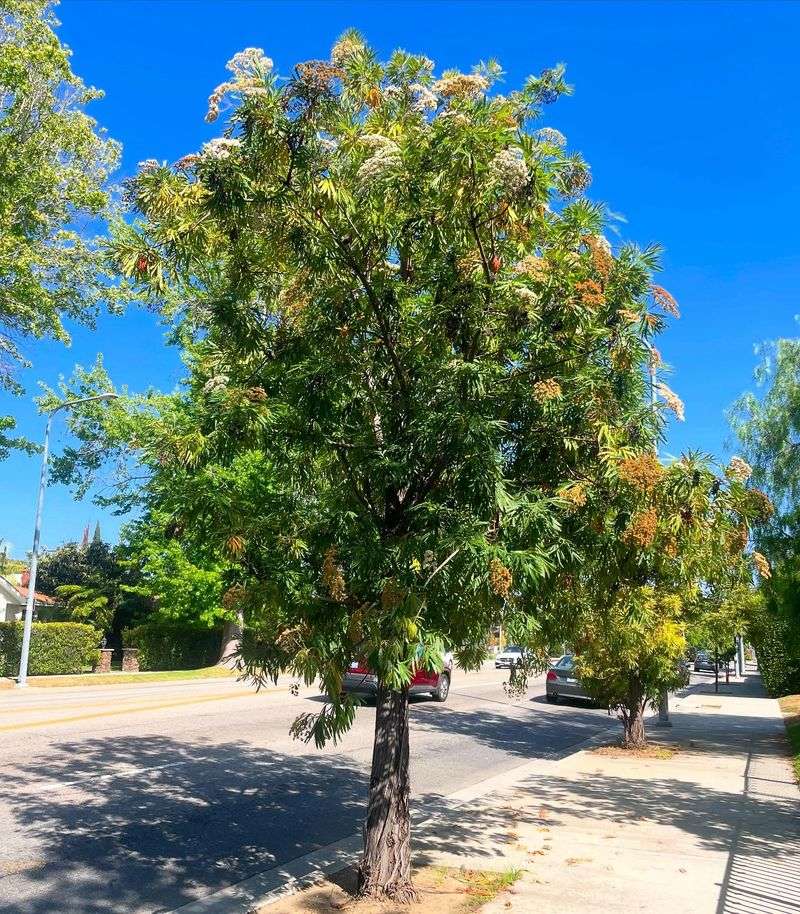
Few trees on Earth grow wild only on a handful of islands, and Catalina ironwood is one of them. It is native to the Channel Islands off Southern California, and it brings a rare native story to your yard.
Fern-like leaves and shaggy, red-brown bark give it a look that guests always ask about. In coastal gardens it can grow quickly, often 2 to 3 feet a year, forming a narrow, upright canopy around 25 to 35 feet tall.
That slim shape suits patios where space is tight.
Its roots are generally not considered aggressive, but plant it at least 10 to 15 feet from hardscape because it can get tall. Water deeply during its first summers, then cut back.
Inland heat can stress it, so it is happiest within reach of ocean air.