
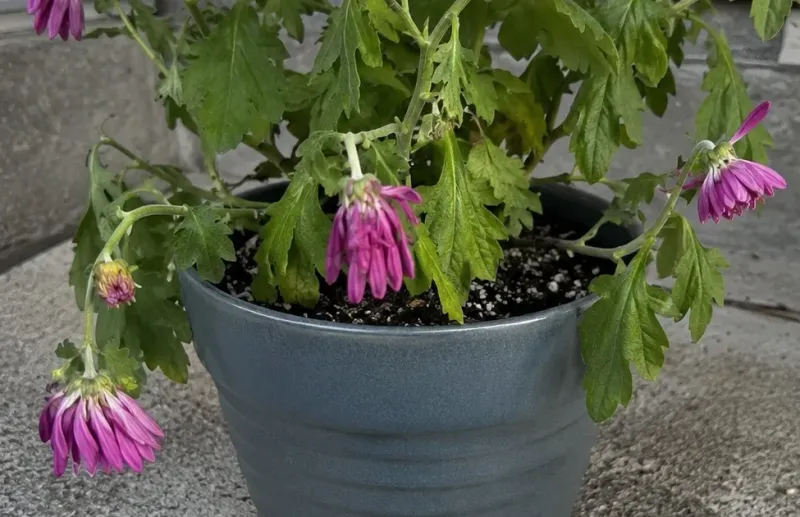
A porch mum that looks perky at breakfast and limp by 3 p.m. can make any gardener nervous. The droop feels like a clear signal, but it can point in more than one direction.
Sometimes the pot is bone dry, and sometimes the mix is still damp. A quick check of the potting mix can tell you which problem you are facing.
Wilt is a symptom, not a watering diagnosis
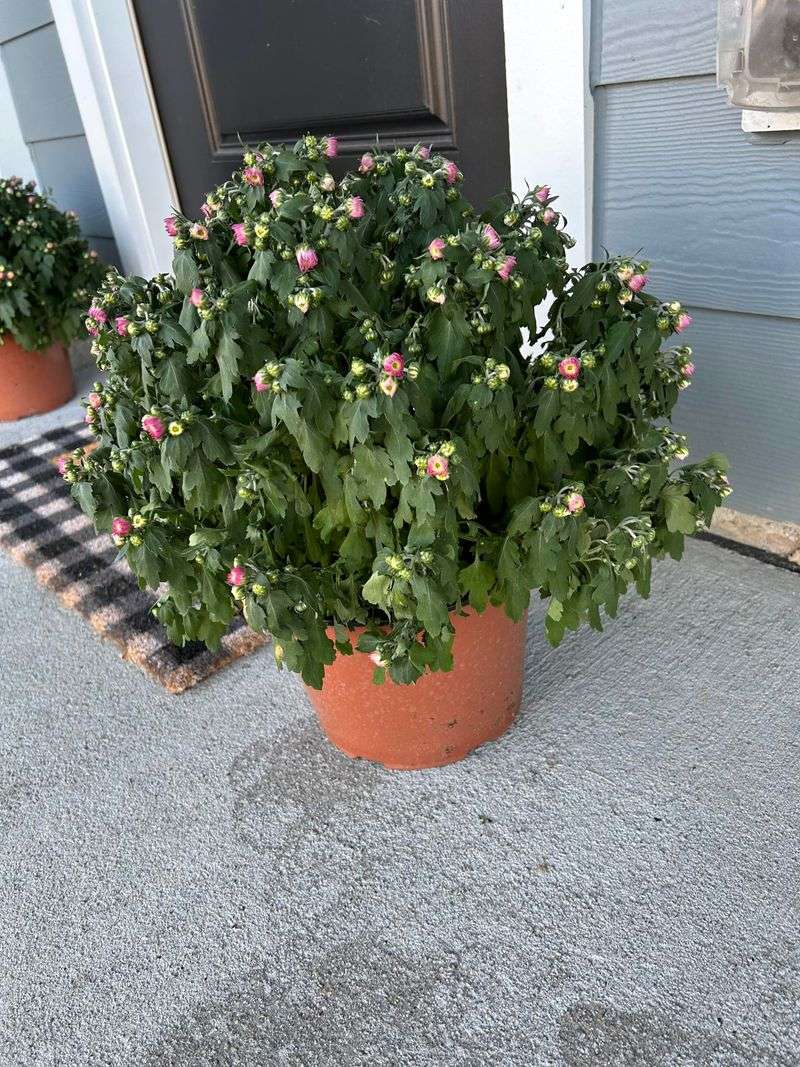
Plenty of gardeners blame one watering mistake when a mum droops, but wilt does not point to a single cause. On a hot afternoon, leaves can lose water faster than roots can replace it, even when the potting mix still holds moisture.
Virginia Cooperative Extension notes that both too little water and soggy, damaged roots can make container plants wilt.
The opposite can be true as well. A mum in a small pot can dry out fast, and a dry pot will make the plant sag just as quickly.
N.C. Cooperative Extension advises watering when the mix is dry and says mums in hot weather may need water twice a day.
So the droop alone cannot tell you whether to water or hold off. Treat it as a clue that sends you to the pot.
The potting mix, not the leaves, gives the answer you need before you pick up the hose.
Check below the surface before you water
Surface soil can fool you. The top may look dusty and dry while the root zone below stays damp, or a crust may hide a pot that is truly parched.
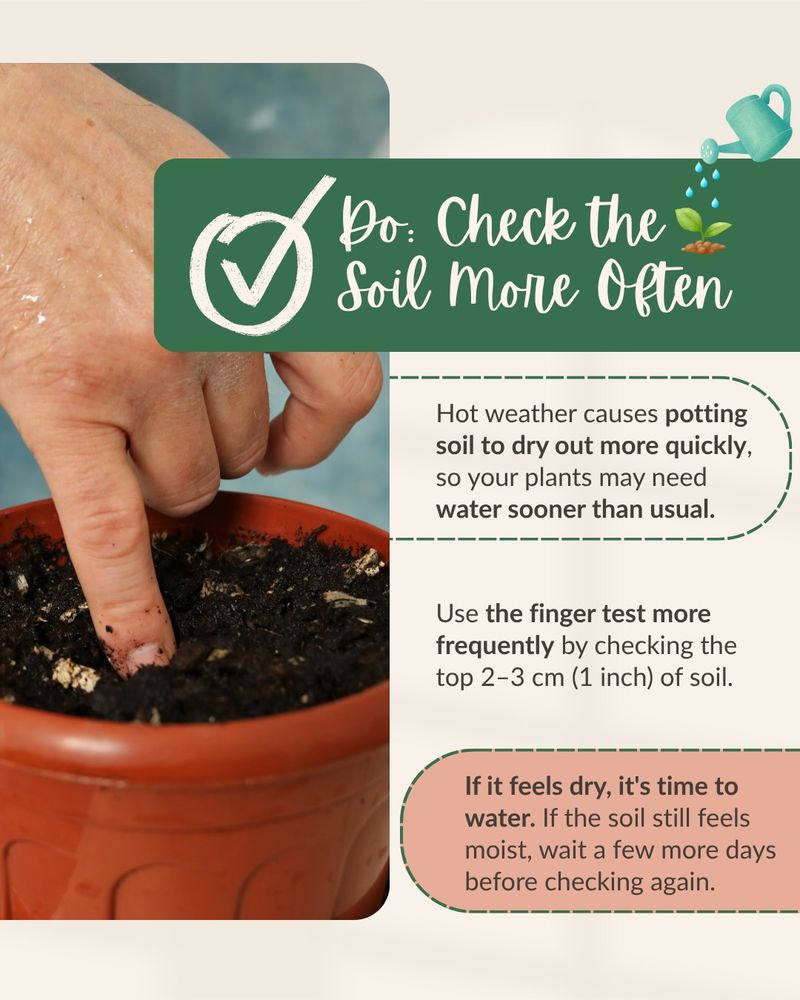
Push a finger two inches down into the mix near the plant and feel what is there.
Dry and crumbly mix means the mum needs a drink. Cool, damp mix means the roots have water available.
N.C. Cooperative Extension suggests this finger check and also points out that lifting the pot can help.
Try the lift test once when the mum is freshly watered and again when the mix is dry. A soaked pot feels heavy, and a dry one feels surprisingly light.
After a few days you will know the difference by hand.
Whatever you find in the mix decides the next step. Dry means water, and damp means wait.
When the mix is dry, water the whole root ball
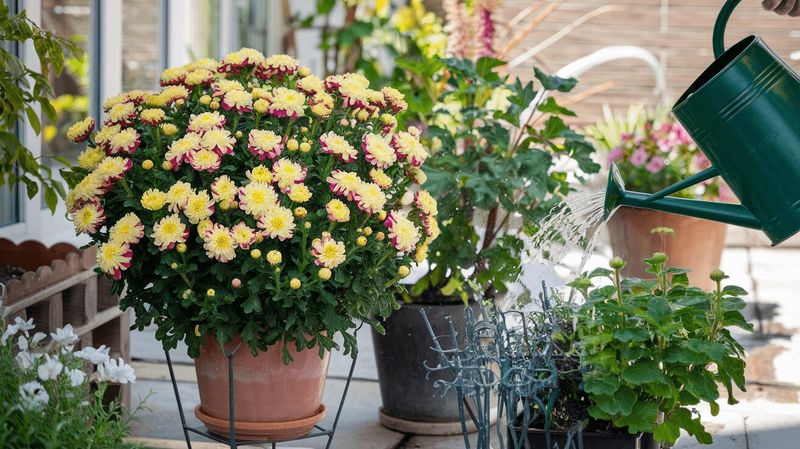
A quick splash on top is not enough for a dry mum. Water slowly at the base until the whole root ball is moistened and extra water runs out of the drainage holes.
Ohio State University Extension recommends this kind of thorough watering for mums.
If water races down the side of a very dry pot, pause and pour again a few minutes later so the mix can soak it up. Aim at the soil, not the flowers, which also helps keep leaves from staying wet for long.
Drainage matters just as much. UF/IFAS container guidance stresses drainage holes so extra water can escape.
Check that the holes are open.
Then empty any saucer or decorative cover that has collected runoff. A pot left standing in water can keep the mix soggy for days.
When the mix is moist, wait and observe
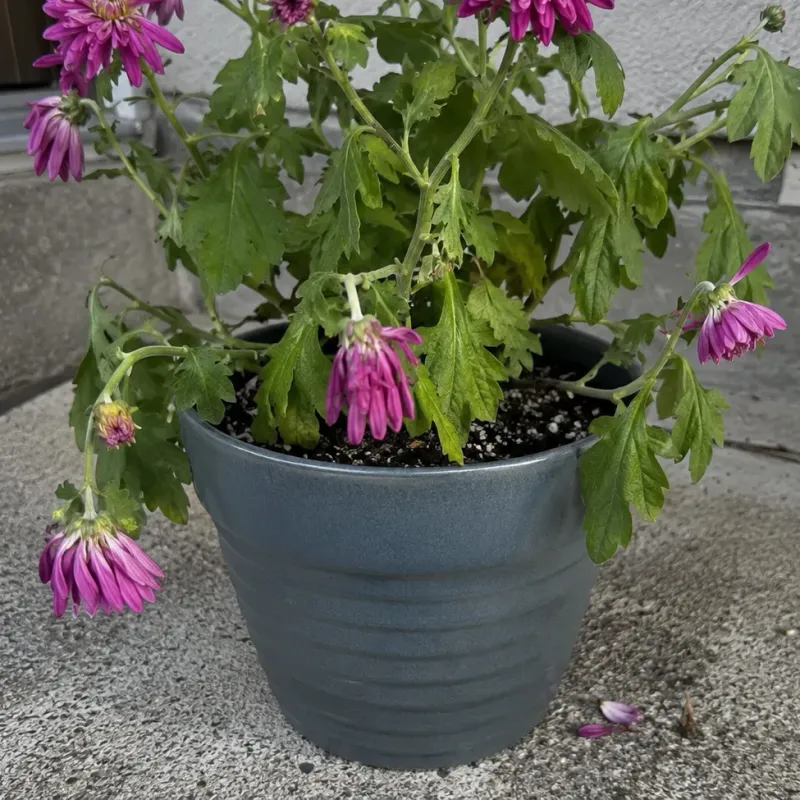
Picture a mum that droops at 4 p.m. but has cool, damp mix two inches down. More water is not the fix here.
The roots have moisture, and the leaves are simply losing water faster than the roots can deliver it in the heat.
Virginia Cooperative Extension explains that wilting can come from a mismatch between water loss and uptake, not only from dry mix. Adding water on top of damp mix can push a pot toward saturation.
Instead, look at the plant again in the evening and first thing in the morning. A mum that perks up overnight was most likely reacting to the day’s heat.
One good morning does not settle everything, so keep checking the mix over the next few days. If the plant stays limp while the mix stays wet, the next section covers what to look for.
Persistent wetness can signal root trouble
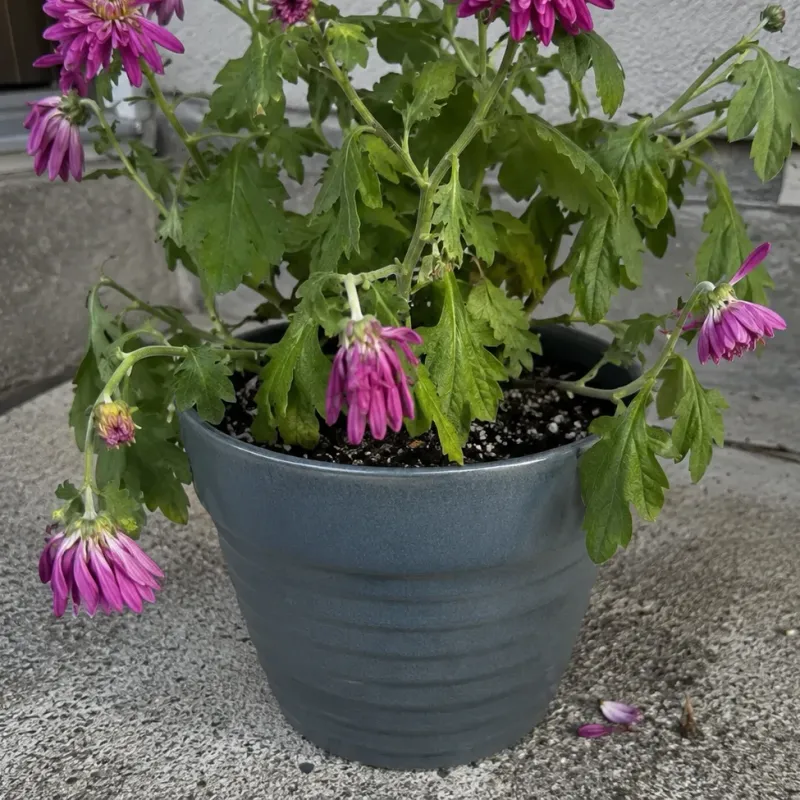
Temporary midday wilt is one thing. A mum that keeps drooping, morning included, in a heavy pot with mix that never dries out deserves a closer look.
Mums like steady moisture, but steady is not the same as soaked. Saturated mix leaves little air around the roots, and damaged roots cannot take up water well.
Virginia Cooperative Extension lists this as one reason a container plant can wilt even with plenty of water present.
To investigate, slide the plant out of the pot. Healthy roots are usually light and firm, while dark, mushy roots are a warning sign, as described in UMass Extension’s mum fact sheet.
Wilt by itself does not prove rot. Look at the pot weight, the mix, and the roots together before deciding.
In hot weather, check often instead of following a schedule
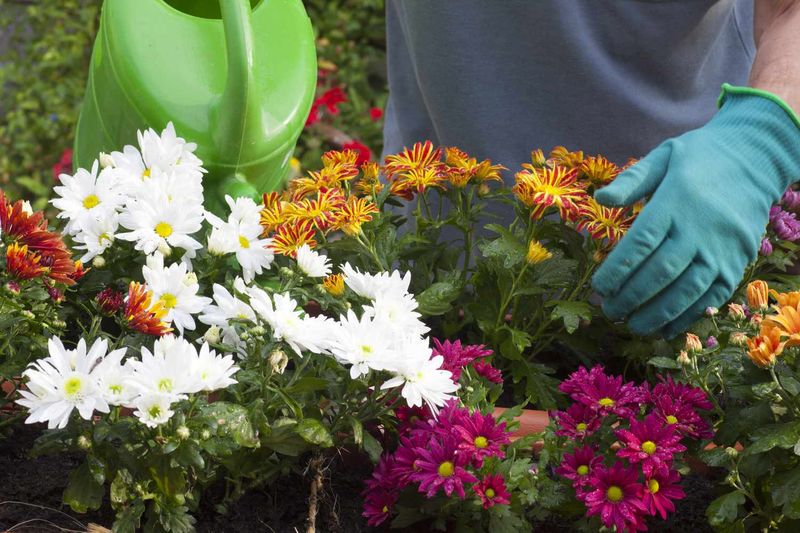
No single timetable fits every mum. Pot size, mix, temperature, and sun exposure all change how fast a container dries, which is why Iowa State University Extension frames container watering around checking, not a calendar.
During hot early fall days across the South, that may mean a check in the morning and another in the afternoon. N.C.
Cooperative Extension notes that container mums in hot weather may need water twice daily. Only water when the mix says so.
Texas gardeners can also use heat protection. Texas A&M AgriLife Extension advises moving mums into shade when temperatures reach 90°F.
That is a short-term fix for a heat spike.
Mums themselves still like light. UF/IFAS says garden mums prefer full sun but can thrive with morning or afternoon sun.
Your fingers will tell you more than any schedule.