
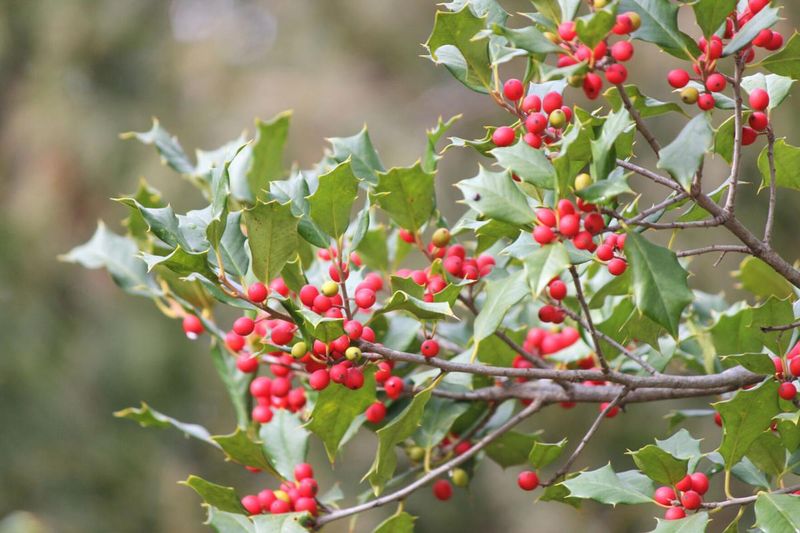
An empty bird feeder does not have to mean an empty yard. Florida native shrubs can offer berries, shelter, and places to rest when winter food is harder to find.
Plant a few with different fruiting seasons, and you can give songbirds more reasons to visit without refilling a feeder every morning.
1. American beautyberry
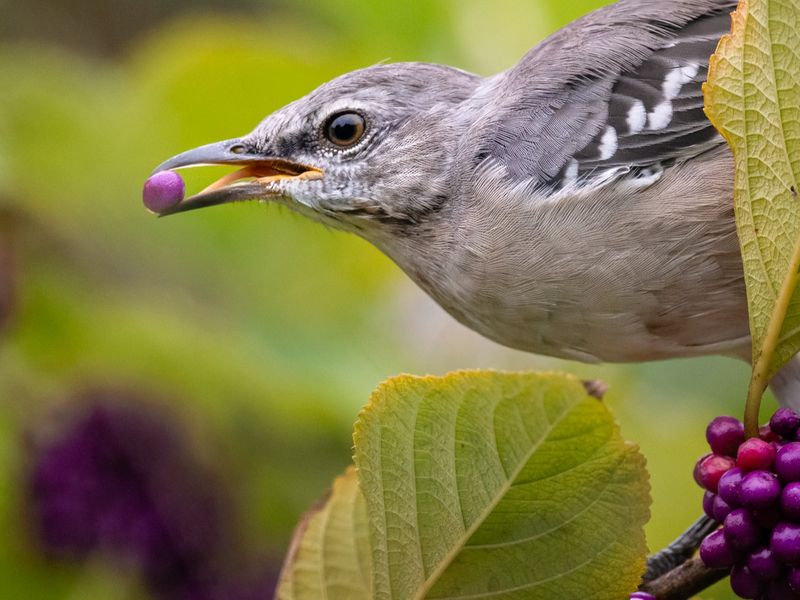
Those bright purple berry rings look almost too bold to be real. American beautyberry earns its place in a bird garden by putting on a show in fall, then offering fruit that can linger into winter if wildlife has not eaten it first.
Mockingbirds, catbirds, and other fruit-eating birds visit its loose, arching branches.
Give beautyberry room to spread, since a mature plant often reaches about 3 to 8 feet tall and wide. It suits a relaxed border or the edge of a wooded yard better than a tightly clipped hedge.
In Florida, it generally grows well in sun to partial shade and handles many soils, including sandy ground, once established. Water a new planting through its first dry spells so roots can settle in.
Fruit is not guaranteed to last all winter, especially where birds find it early. That is why beautyberry works best beside shrubs that hold berries longer.
Its leaves may drop or thin during cooler weather, making the purple clusters easy for both birds and people to spot. If the plant gets leggy, prune in late winter before new growth starts, but skip heavy fall trimming that would remove its winter food.
2. Yaupon holly
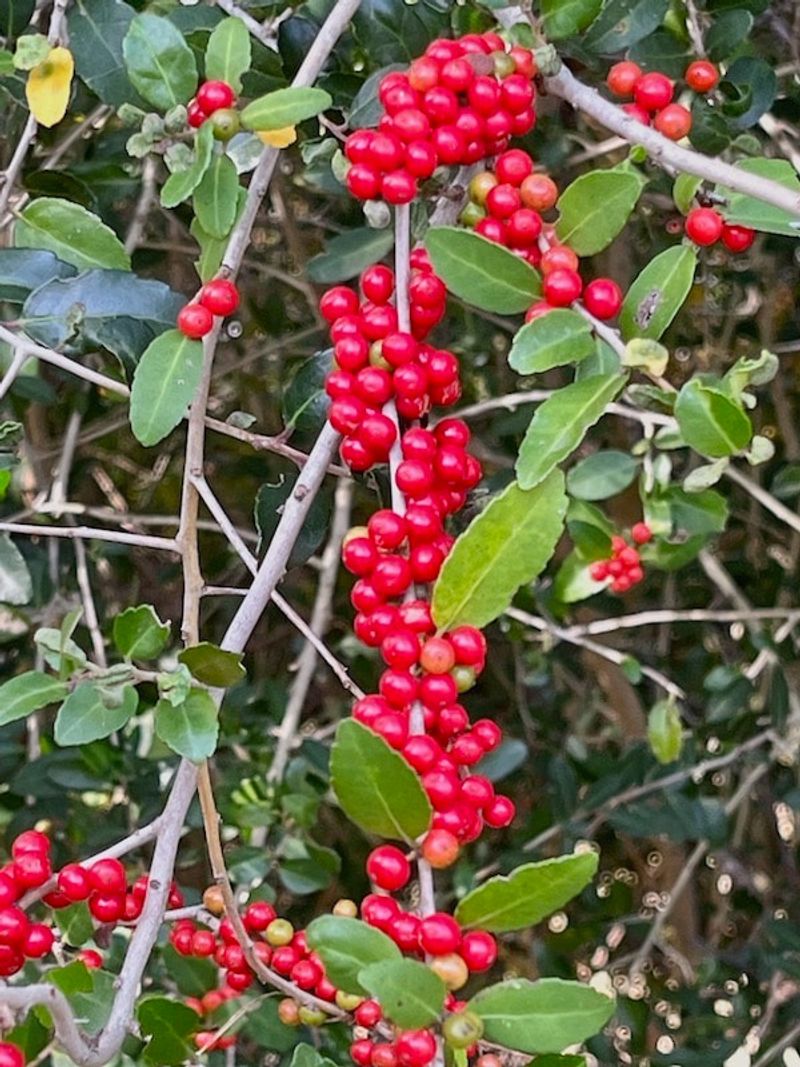
A feeder can be bare by breakfast, but a fruiting yaupon holly puts food right in the branches. Its small red berries commonly persist into winter, drawing birds such as robins, mockingbirds, and cedar waxwings when they move through the area.
Dense evergreen foliage also gives smaller birds a place to duck out of sight.
Yaupon is one of the most flexible choices on this list. Depending on the selection and pruning, it can serve as a rounded shrub, a screen, or a small tree.
It tolerates sun or partial shade and adapts to a range of Florida soils, including well-drained sandy sites. Once established, it handles dry periods better than shrubs that need constantly moist ground.
Keep it away from a narrow walkway unless you plan to prune for clearance.
Check the plant label before buying: yaupon hollies have separate male and female plants, and only females produce berries. A female also needs pollen from a nearby male yaupon.
If winter fruit is your goal, shop while plants are bearing berries or ask a native nursery for a known female selection and advice on pollination. Let some branches grow naturally rather than shearing every new tip into a flat wall.
3. Wax myrtle
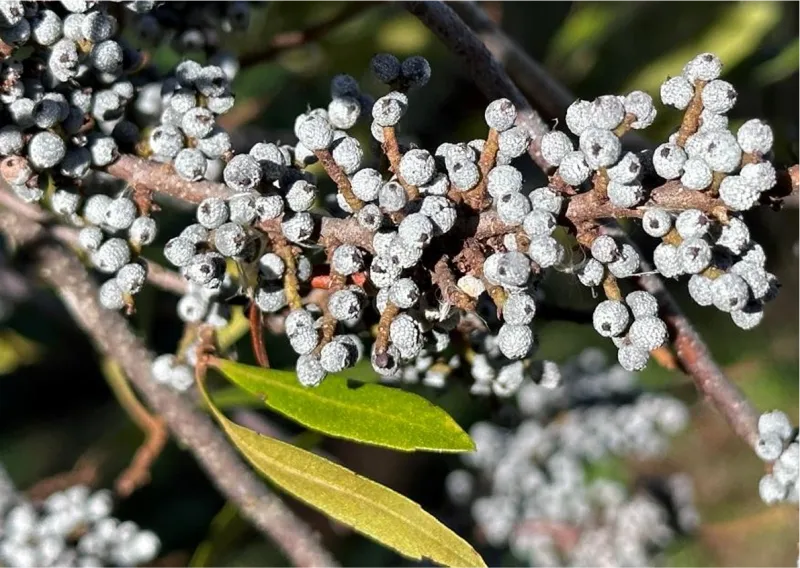
Not every bird is looking for a bright red berry. Wax myrtle offers small, pale blue-gray fruits with a waxy coating, a useful food source for birds such as yellow-rumped warblers.
Its leaves stay green, and its quick, bushy growth can turn an exposed fence line into a sheltered feeding spot.
Think of wax myrtle as the roomy, practical choice for a Florida yard. It can grow into a large shrub or small tree, so leave space for its natural width instead of squeezing it against the house.
It grows in full sun to partial shade and adapts to both sandy sites and seasonally damp areas. That range makes it especially handy where one end of a property dries quickly while another stays wet after heavy rain.
For berries, plant a female and make sure a male wax myrtle grows nearby for pollination; the sexes occur on separate plants. A nursery may be able to help identify fruiting stock.
You can prune lightly to keep a screen neat, but an unshorn section offers more cover and fruit-bearing growth. If your yard has little shelter, this shrub provides a payoff beyond the berries: birds can forage, pause, and hide in the same planting.
4. Dahoon holly
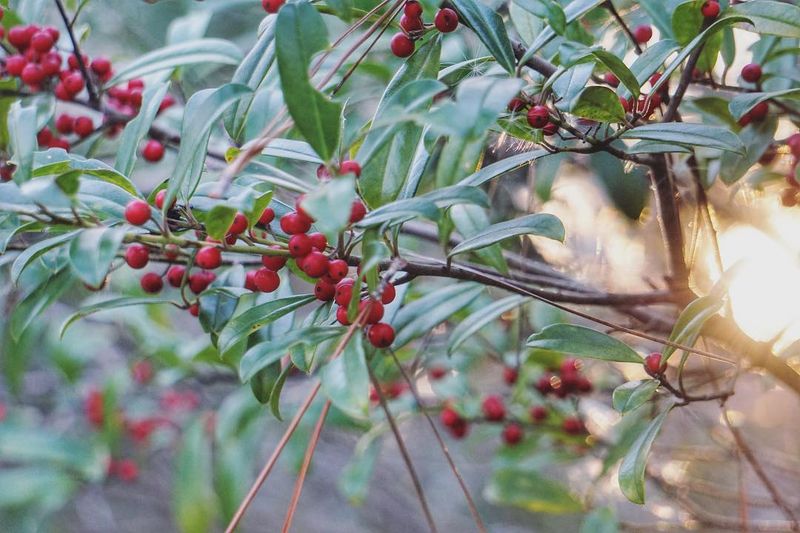
Got a low spot that stays damp longer than the rest of the yard? Dahoon holly can turn that awkward patch into an evergreen landing place for birds.
Female plants carry red berries that often remain through winter, while the leafy branches provide cover around a rain garden or pond edge.
This Florida native is often grown as a large shrub or small tree, so give it space and check for overhead wires before planting. Dahoon is especially well suited to moist or periodically wet soil, though an established plant can handle some drier conditions.
Full sun to partial shade works well. In a naturally dry, fast-draining bed, choose a different shrub from this list rather than committing to constant watering.
As with other hollies, berry production depends on a female plant receiving pollen from a male of the same species. Look for a plant that is already fruiting, and ask the nursery about a pollen source nearby.
Red berries can brighten a winter view from the porch, but the real advantage is matching the plant to a wet Florida site. Mulch around a young dahoon and water during establishment, then allow its root zone to stay free of heavy foot traffic.
5. Simpson’s stopper
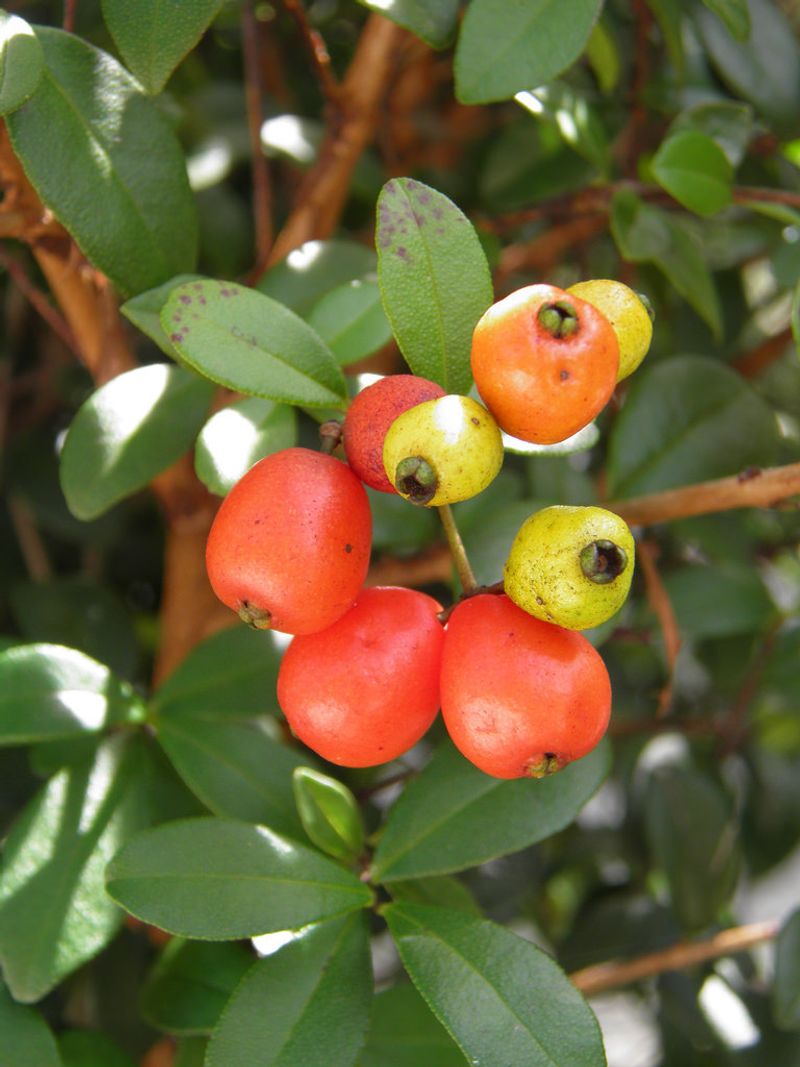
A narrow side yard does not need a sprawling thicket to help birds. Simpson’s stopper grows into a dense, handsome shrub with small glossy leaves, pale flowers, and red to orange fruits that birds eat.
Its tidy appearance makes it a good fit near a patio, along a property line, or in a mixed native hedge.
This is chiefly a central and south Florida choice. It grows best in well-drained soil and does well in sun to partial shade; once established, it tolerates dry spells.
A little room improves its shape, even if you plan to prune it as a screen. Flowers also draw pollinators, giving the planting value beyond winter fruit.
In colder inland locations, check local hardiness guidance before counting on it as an evergreen fixture.
Fruiting can vary by plant and season, and birds may clear ripe berries quickly. Use Simpson’s stopper as part of a layered planting rather than your only winter food source.
A nearby yaupon or wax myrtle can carry a different kind of crop, while the stopper’s dense growth offers a safe place to move between meals. Skip severe, repeated shearing if you want flowers and berries; trim selectively to keep the natural shape.
6. American holly
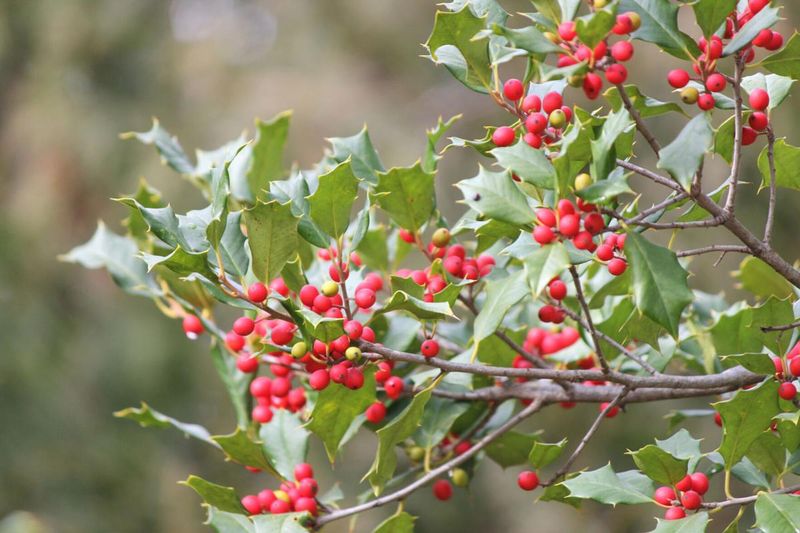
Picture a classic holiday holly, then give it enough room to grow. American holly brings evergreen cover and red berries to a spacious bird-friendly yard.
Its fruit can persist through winter, offering a meal to visiting robins, cedar waxwings, and other birds that eat berries.
Although it can be kept shrubby when young, American holly naturally develops into a substantial tree. That makes it a better choice for a wide border or back corner than for a small bed under a window.
It is most at home in northern and parts of central Florida, where it grows in sun to partial shade and prefers well-drained, acidic soil. In alkaline soil, ask a local extension office or native nursery whether it is a sensible choice for your site.
Only female American hollies bear fruit, and they need pollen from a male American holly within reach of pollinators. Confirm the plant’s sex when you buy it; a small unlabeled seedling may leave you waiting years without berries.
Protect young roots with mulch, keeping it clear of the trunk, and water while the plant establishes. For a large yard, the long-term reward is a sturdy place where birds can find both food and winter cover.
7. Marlberry
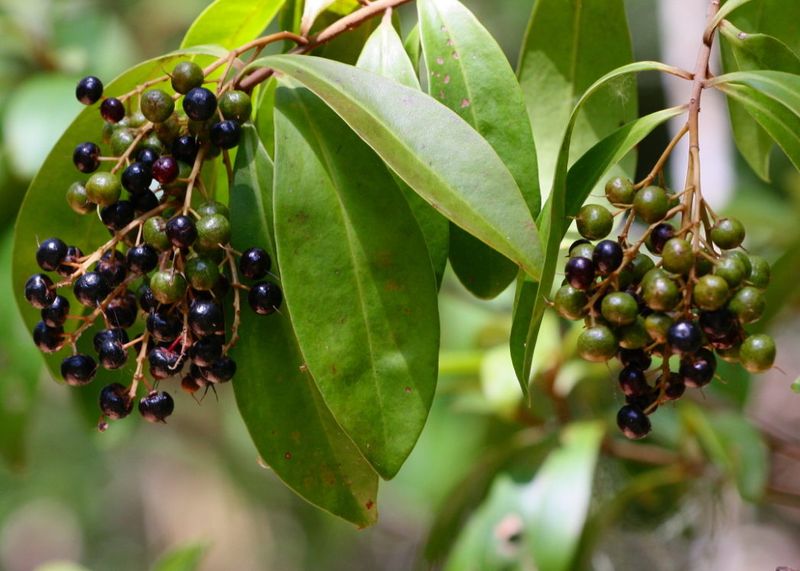
Dark berries can be easy to miss until a bird finds them. Marlberry produces clusters of small fruit that ripen from red to deep purple-black, making it a useful contrast to the red-fruited hollies.
In suitable parts of Florida, its fruit may be available during the cooler months, though timing varies from year to year.
Choose marlberry for a central or south Florida yard where you want an evergreen shrub or small tree with a natural, layered look. It does well in sun to partial shade and prefers well-drained ground.
Once established, it can handle dry conditions, which is welcome news in sandy beds. Plant it behind shorter flowers or along a woodland edge where its foliage can provide cover without blocking a path.
Do not confuse this native with coral ardisia, an invasive plant also called Christmas berry. Check the botanical name, Ardisia escallonioides, when shopping, and buy from a nursery that knows Florida natives.
Marlberry fruiting is not a promise of a full winter pantry on its own. Pair it with a berry-bearing yaupon or dahoon suited to your soil, and leave fallen leaves beneath the planting.
That simple layer supports insects, giving birds another food source when berries are scarce.