
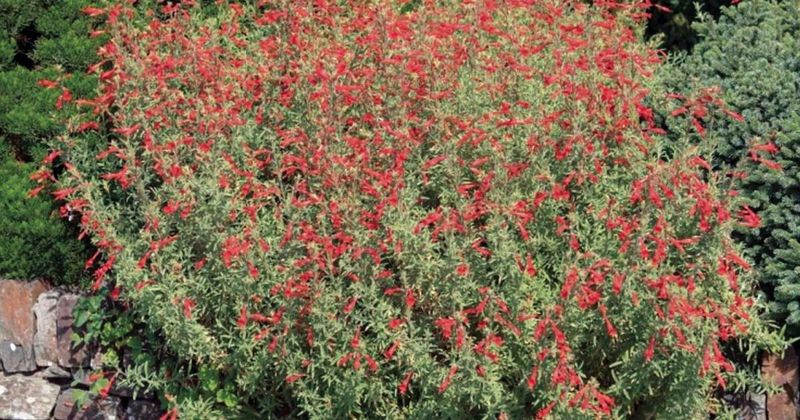
Late summer in Texas can leave garden beds looking tired and washed out. Flame acanthus is a tough native shrub that brings bright orange, tube-shaped flowers to that gap.
It works best in sun or light shade, though, so deep shade needs a different plan. Here is where each plant fits and how to choose for your own yard.
Flame acanthus brings orange flowers to the warm-season garden
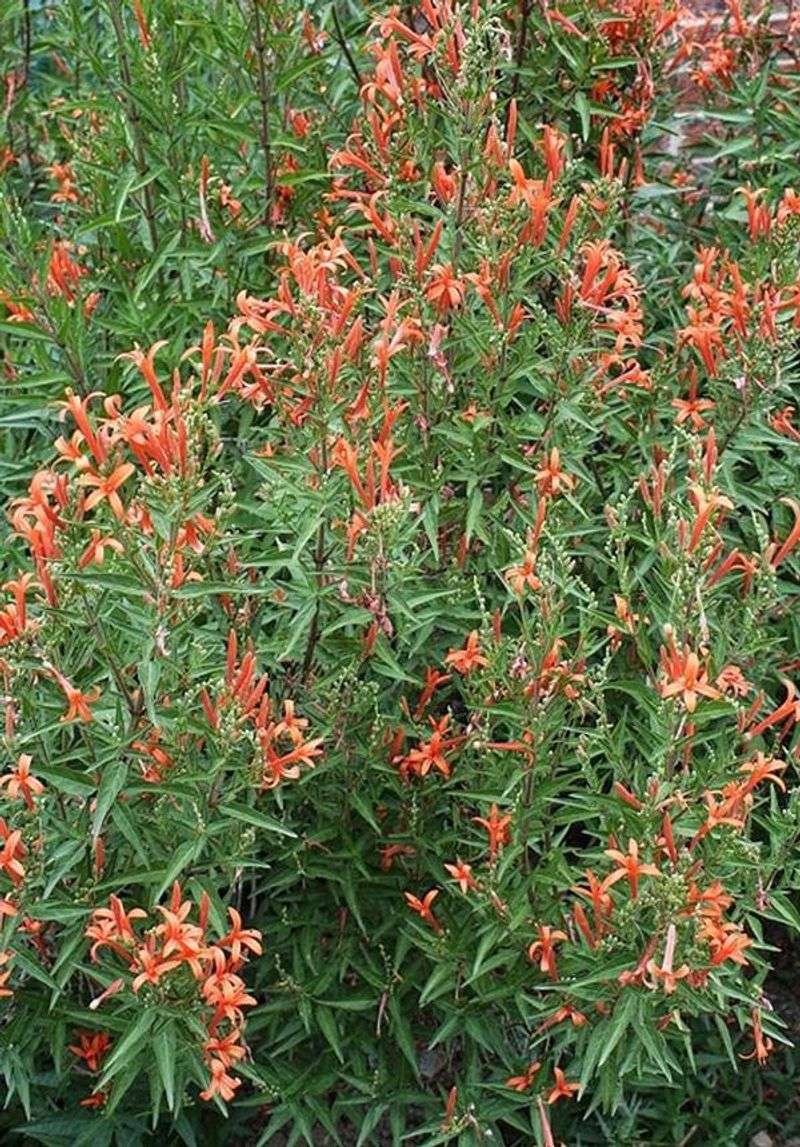
Few shrubs match the glow of flame acanthus when the summer heat is at its worst. According to Texas Tech’s plant database, it carries orange, trumpet-shaped flowers from summer into fall.
Small leaves and a loose, airy habit keep it from looking heavy in a border.
Most plants reach about 3 to 5 feet tall and 3 to 5 feet wide. That makes it a manageable choice for the back of a bed, a spot near a fence, or a corner that needs a burst of color.
It is deciduous, so expect bare stems in winter.
Flame acanthus is a Texas native, and the Native Plant Society of Texas documents its native range as South and West Texas. It is now grown more widely across the state, but that history is a good reminder to think about where you live before you buy.
Bloom timing is not the same everywhere. Sources describe flowering anywhere from June into November, so think of it as summer into fall rather than a fixed calendar.
Also keep in mind that these traits describe the plant’s seasonal role, not a promise that it will flower in every shady corner. The next section covers how much shade it can really handle.
How much shade can flame acanthus handle?
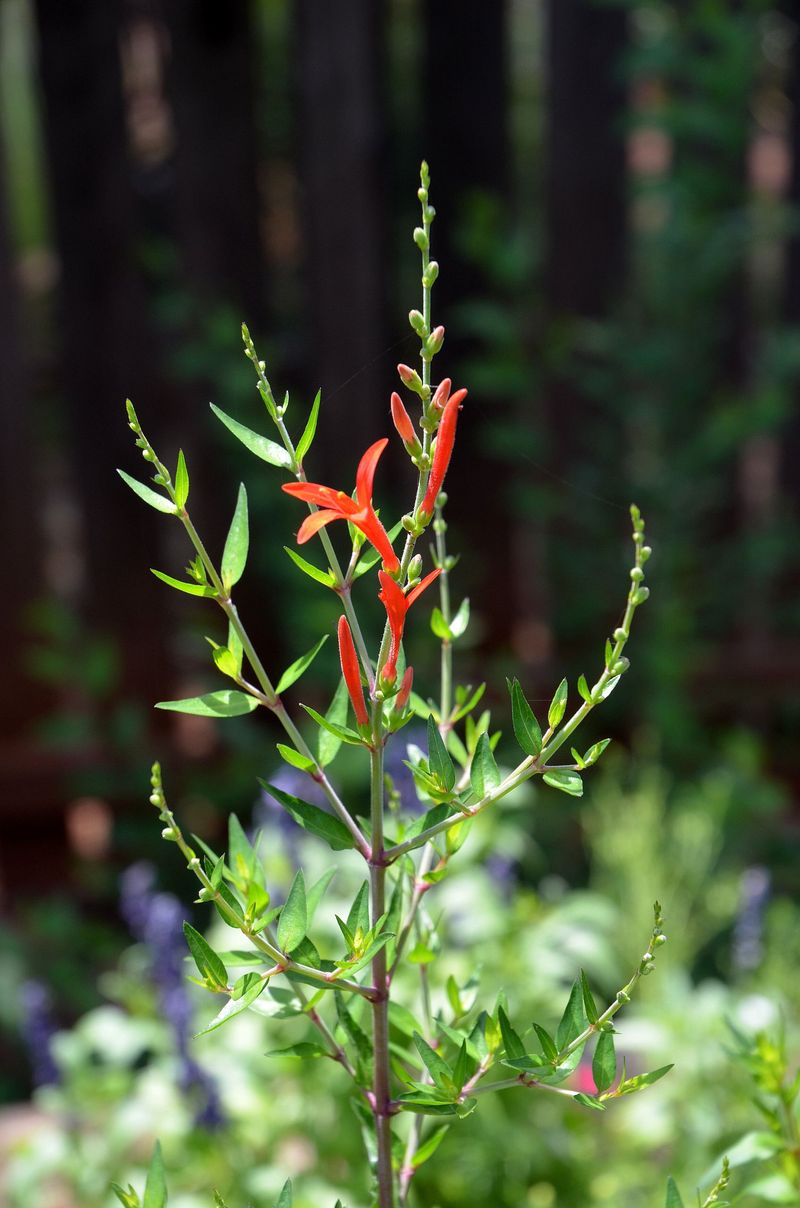
Shade comes in degrees, and the difference matters here. Light shade or part shade means the plant still gets several hours of direct sun, or bright dappled light most of the day.
Deep shade means little or no direct sun, such as the ground under dense live oaks or along a north wall.
Texas Tech lists flame acanthus as tolerating light shade. The Native Plant Society of Texas recommends sun to part shade.
A Henderson County Master Gardener page goes further and describes it as best in full sun.
Put those together and the safe read is that flame acanthus tolerates some shade, but it is not a deep-shade shrub. If your bed is truly dark, do not count on dependable flowers.
A simple test helps. Watch the spot on a sunny day and count the hours of direct light.
If you see a few hours of sun, flame acanthus is worth a try. If the spot stays dim from morning to evening, look at other options.
None of this makes the plant a poor choice. It simply earns its keep in sunny to partly shaded places, such as the edge of a tree canopy or a bed that gets morning sun.
Sun, drainage, and occasional water support better flowering
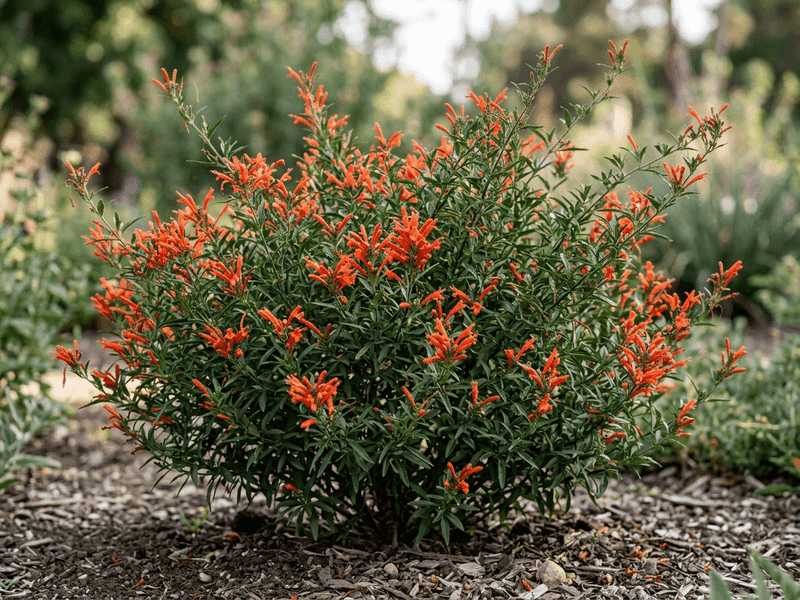
Once established, flame acanthus handles Texas heat and dry spells well. Texas Tech lists low water needs and drought tolerance, and the plant adapts to several soil types.
The one thing it prefers is soil that drains well, so avoid low spots where water sits after a storm.
Drought tolerance describes how an established plant survives, not how well it blooms. A plant can live through a dry stretch and still skip flowers.
A Master Gardener source says supplemental water during dry summer months can encourage flowering.
So a sunnier spot plus an occasional deep drink in a long dry spell is a sensible plan. Newly planted shrubs need more attention than established ones, so water them regularly while they settle in.
That approach is not a promise of nonstop color. Flowering can shift with rainfall and weather from year to year, which is normal for a native shrub.
In colder parts of Texas, stems may die back to the ground in winter. The roots usually survive and regrow in spring, so wait for new growth before deciding a plant is gone.
Late-season flowers may attract hummingbirds
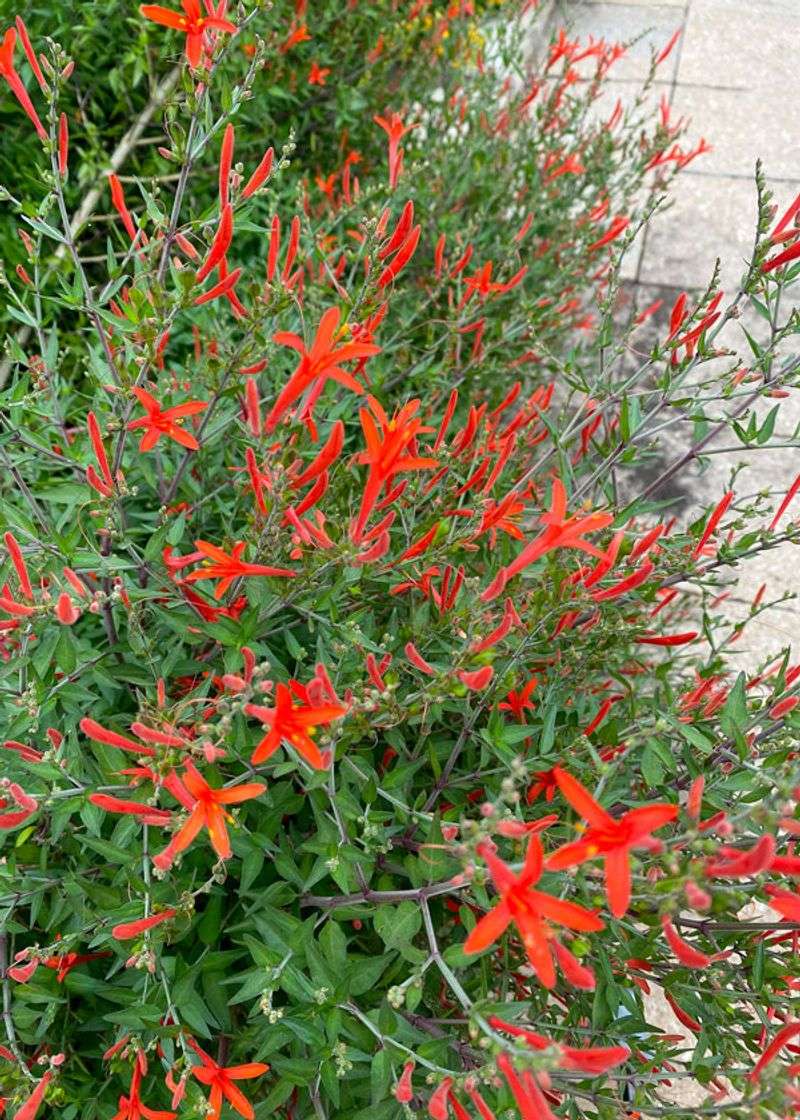
Hummingbird season in Texas stretches into fall, and plants that flower then can add to a wildlife-friendly yard. Texas Tech lists flame acanthus as attracting hummingbirds and butterflies.
The orange, tube-shaped blooms fit the kind of flower hummingbirds are known to visit.
No plant can guarantee visitors, though. Whether birds stop by depends on your neighborhood, nearby habitat, and the year.
Think of flame acanthus as improving your odds rather than booking a show.
Timing can also change. The Native Plant Society of Texas lists a June to November bloom period and notes that rain can trigger flowering.
After a good soaking rain, you may see a fresh flush of orange.
Sources vary on the exact window. A Master Gardener page mentions June to September while also describing bloom from midsummer to frost.
Plan for summer into fall and enjoy whatever your plant delivers.
A spot you can see from a window or patio makes the most of it. Watching for a hummingbird on a September morning is half the fun.
For a shadier bed, Turk’s cap trades orange for red
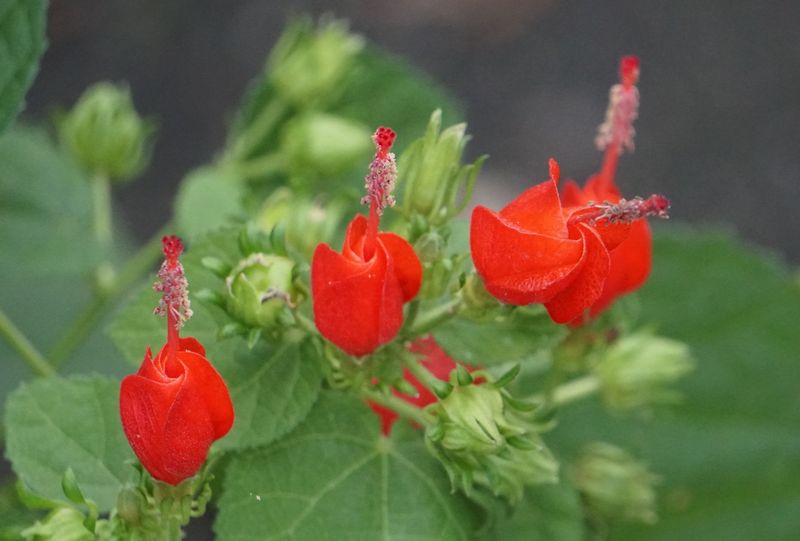
When your bed is genuinely shady, Turk’s cap is the better-supported pick. Texas Tech notes it as one of the few native plants that withstand shade.
It also tolerates drought and attracts hummingbirds.
The trade-off is color. Turk’s cap has red flowers, not orange, so it will not match an orange-themed plan.
If you want a bloomer for a shady spot and red works, it is a strong candidate.
Do not read drought tolerance as never needing water. The same database lists a preference for moist, well-drained soil and a medium water requirement.
In a dry shade bed under big trees, plan on some watering, especially in the first seasons.
Turk’s cap can also spread into expanding colonies. Austin’s plant guide says it is easy to contain, and pruning can keep it confined or manage legginess.
If you like a fuller, naturalized look under trees, that spreading habit can be a plus. If you want a tidy edge, trim it back and keep an eye on its borders.
Choose for the light your Texas yard actually gets
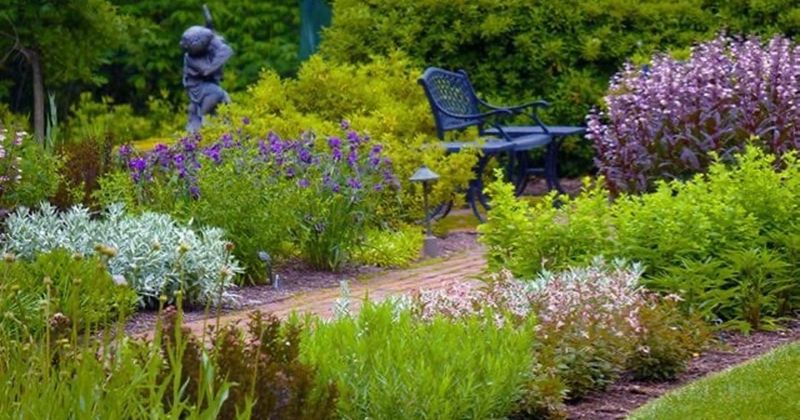
Start with the light. If your bed gets sun or part shade, flame acanthus can give you orange color from summer into fall.
If shade matters more and red blooms suit your plan, Turk’s cap is the better fit.
Region counts too. The Native Plant Society of Texas documents flame acanthus as native to South and West Texas, so check local suitability if you garden elsewhere.
To compare options, try the Texas A&M Earth-Kind plant selector. It lets you filter by light, bloom period, color, heat tolerance, drought tolerance, and region.
The best plant is the one that matches the spot you actually have.