
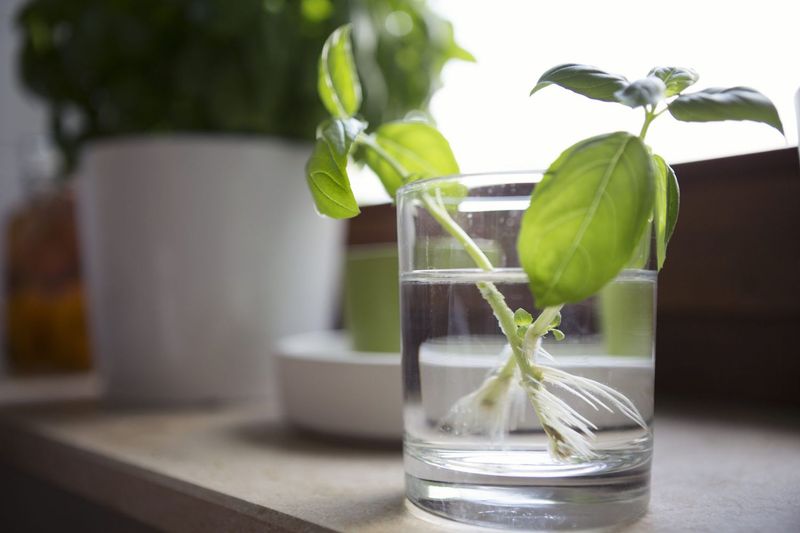
Basil hates the cold, and a chilly night can leave a healthy plant limp and dark. If you want to keep some of it going indoors, a small cutting can become a brand new plant.
It will not guarantee a winter full of pesto, but it gives you a real head start. Here is how to root it, pot it, and give it a fair chance in your home.
Take cuttings before cold damages outdoor basil
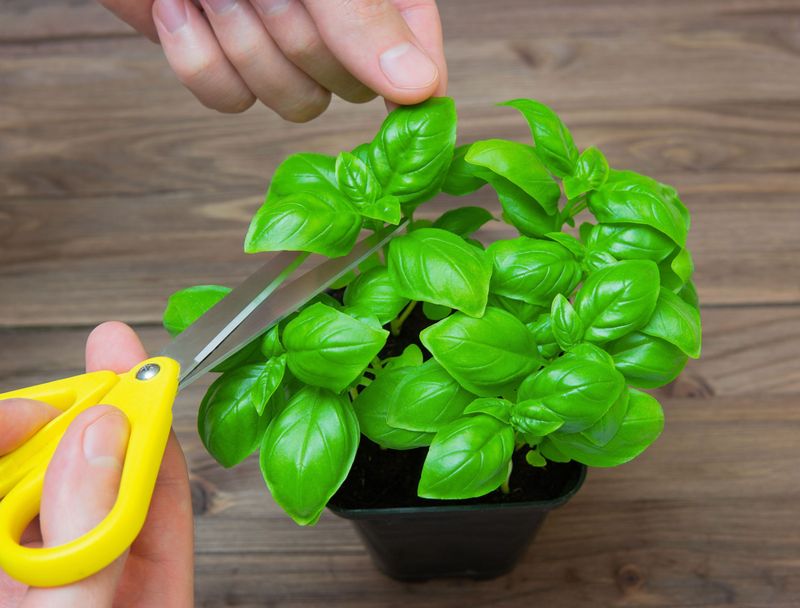
Waiting for a frost forecast can mean waiting too long. Basil is a warm-season plant, and Illinois Extension notes that cold damage and blackened leaves can show up at around 50°F.
Other guidance describes leaves blackening in the 40s, as South Dakota State University Extension explains for tender vegetables. Those numbers are useful signs, not exact cutoffs, because plants respond differently depending on exposure.
So think of the first frost as a late reminder rather than a deadline. Watch your own nighttime lows, especially if you garden in the South, where a warm afternoon can follow a surprisingly cool night.
When lows start sliding toward the 50s, it is time to act.
Penn State Extension says in its guide to growing herbs indoors that basil cannot survive below 50°F, which is another reason not to wait. Taking a cutting early gives you a plant to work with if the outdoor one is lost.
Be honest with yourself, though. A cutting only starts a new plant, and how well it grows all winter depends on the warmth and light in your home.
Choose and prepare a healthy stem
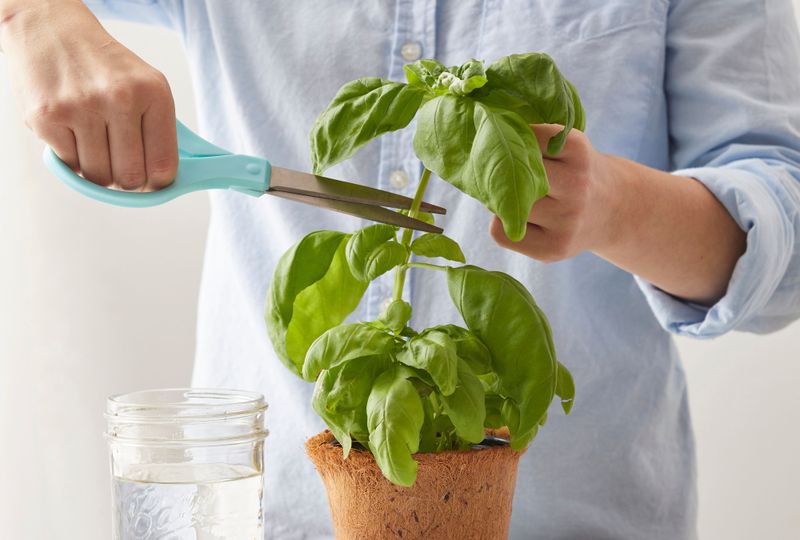
Pick a stem that looks fresh and busy growing. Skip anything yellowed, spotted, chewed, or already flowering and tired.
A strong, bright green stem with a few healthy leaf sets gives the best shot at rooting.
Cut a piece about 3 to 4 inches long, as the University of Tennessee basil propagation guide describes. Use clean, sharp scissors or snips so the cut is neat.
Cutting just below a leaf joint is a handy habit, since that spot is where roots tend to form on many plants, as Illinois Extension’s cutting advice covers.
Next, pull off the lower leaves. Any leaf that sits underwater will likely rot and cloud the jar.
Leave the top few leaves in place so the cutting can keep making food.
Taking two or three cuttings is smart. Not every one will root, and extras give you a backup.
Root the cutting in water
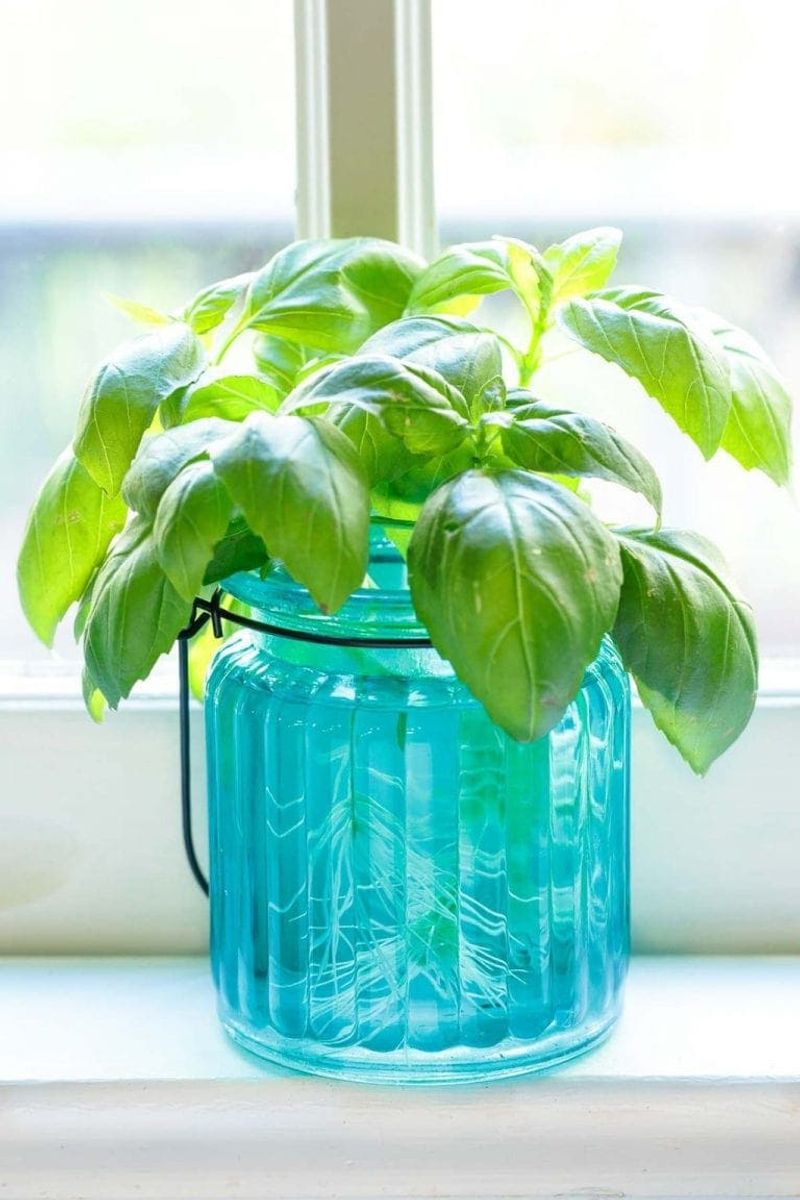
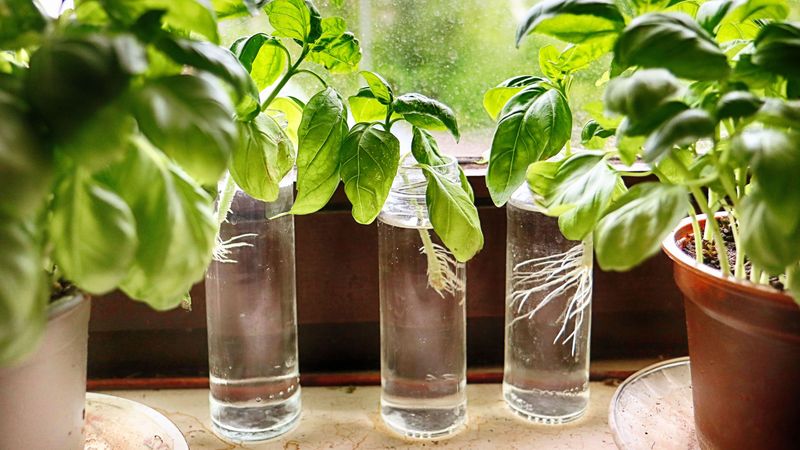
Once your cuttings are trimmed, set them in a clean glass or jar of water. Keep the leaves above the surface.
A bright spot works best, but skip hot, direct sun that can cook the stems.
Change the water every 3 to 4 days, which the University of Tennessee guide recommends. Fresh water keeps the stem from sitting in murky, stale liquid.
Be patient. Roots may appear in about 2 to 3 weeks, and some cuttings will be slower than others.
When the roots reach about an inch long, the cutting is ready for soil.
Think of the jar as a short stop, not the final home. Rooting shows the cutting is alive and working, but it does not promise a winter harvest.
Your home’s light and warmth will have a lot to say about what happens next.
Pot the rooted cutting in a draining container
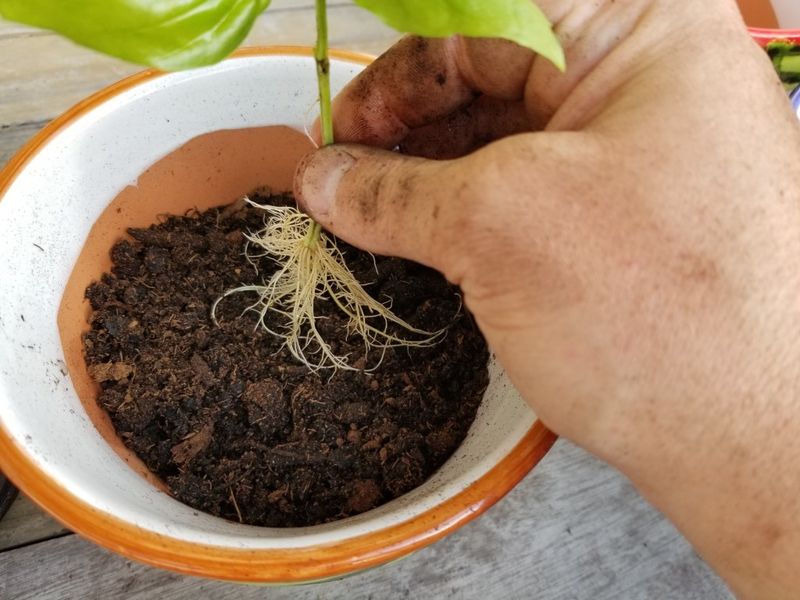
When roots hit that one-inch mark, move the cutting into a pot with drainage holes. Fill it with a well-draining potting mix rather than heavy garden soil.
Water that cannot escape is a common reason indoor herbs fail, as University of Maryland Extension points out in its container herb guidance.
Make a hole, lower in the roots gently, and firm the mix around the stem. Water lightly at first so the roots settle in.
After that, check the soil before you water again. Poke a finger into the mix, and water when the top feels dry.
Empty any saucer after watering so the pot is never left standing in water, a point also stressed in Iowa State’s indoor herb advice.
Resist the urge to leave the cutting in plain water for months. The Tennessee guide calls for potting once roots are about an inch long, and soil gives the plant a steadier footing for the weeks ahead.
Check whether your indoor light is strong enough
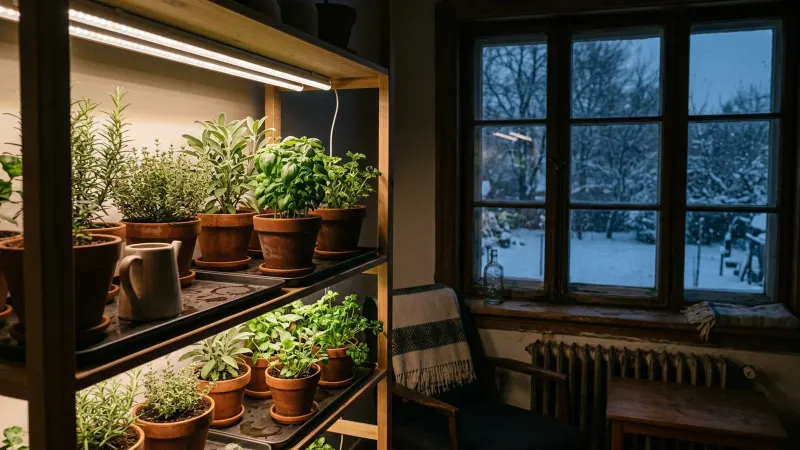
Light is where many winter basil plans stall. Iowa State says most herbs need around eight hours of direct light indoors, and plenty of windowsills fall short, especially in short winter days or with shade from porches and trees.
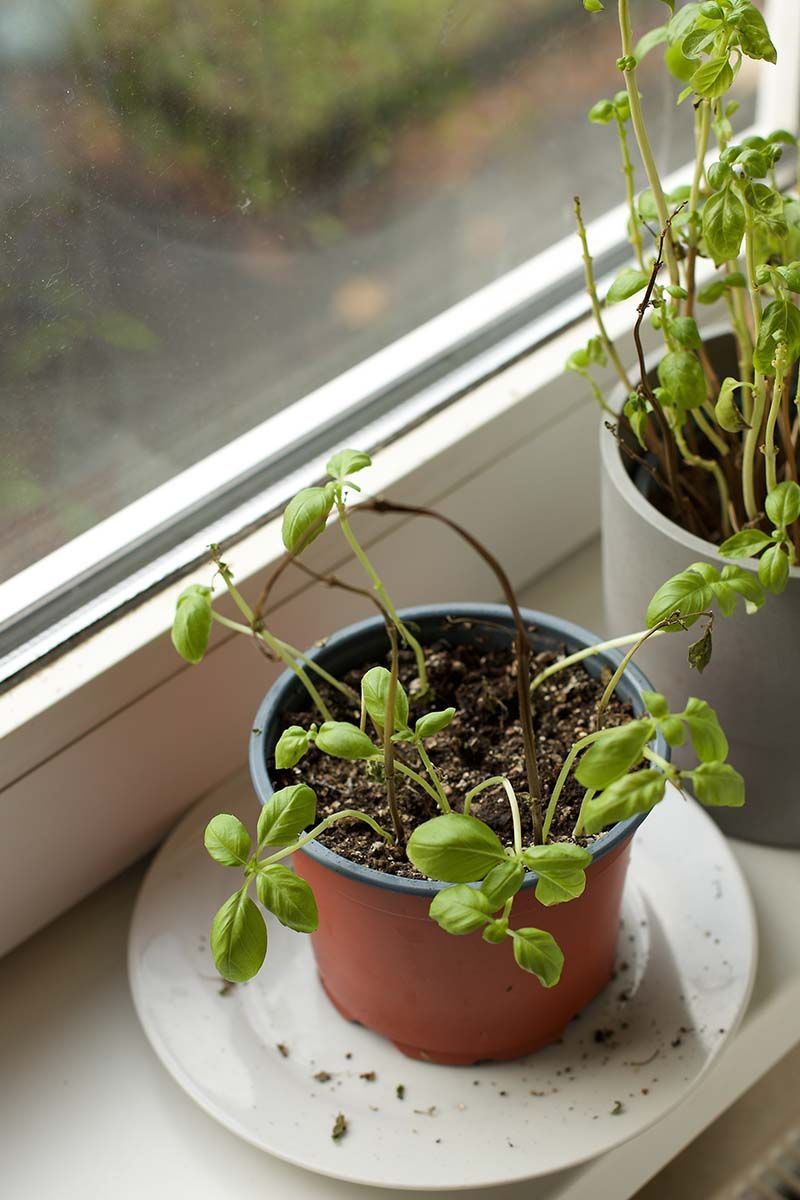
A south-facing window may be enough in some homes. In others, plants stretch, turn thin, and grow slowly.
Those spindly stems are a clue that the plant is reaching for more light.
If natural light is not enough, the Iowa State guidance on extra light suggests putting a grow light 6 to 12 inches from the leaves for 12 to 16 hours daily. A cheap timer makes that easy to manage.
The University of Maryland Extension also notes that winter light is a major limit for indoor herbs. Even with a light, growth may be slower than summer, so keep your expectations modest.
Keep the plant warm and inspect it for pests
Cold glass can chill a plant even when the room feels fine. Pull the pot back from the window at night, and keep it away from drafty doors and vents.
Penn State’s indoor herb guidance says basil does not tolerate temperatures below 50°F, and Illinois Extension has reported cold injury near that range. Treat those figures as warning signs rather than exact lines, since homes and plants differ.
Before any plant comes indoors, look it over. Check the tops and undersides of leaves for tiny insects, webbing, or sticky residue.
University of Minnesota Extension recommends inspecting plants and isolating new or returning ones when needed.
If you spot pests, keep that plant apart from your others and keep checking. Pesticides are not a routine step for edible basil.
If you ever consider one, follow the label and make sure it is meant for edible plants and indoor use.
A cutting starts a plant, not a guaranteed winter harvest
Basil can be grown indoors year-round, but winter is the hardest season for it. Short days, cooler rooms, and dim windows can slow things down or leave plants thin.
A few good leaves now and then is a realistic goal, while a nonstop harvest is not something to count on.
What a cutting does give you is another plant without buying one. That is a real perk, though not a zero-cost setup.
You may still need a pot, potting mix, and maybe a grow light, as the Iowa State light guidance suggests when windows fall short.
The steps are simple: cut a healthy stem, root it, pot it once roots are about an inch long as the Tennessee guide advises, and then watch how it responds. The University of Maryland guidance backs this container approach.
Even a slow-growing basil on a winter sill beats a blackened plant in the garden.