

Bearded irises are tough plants, but they have one big weakness in North Carolina gardens. Our wet winters and heavy clay soil can rot the thick roots, called rhizomes, before spring ever arrives.
One simple fall cleanup job can keep those roots healthy and ready to bloom. Spend a few minutes on it now, and you may see a much bigger show of flowers in April and May.
1. Clean Up Old Foliage and Expose the Rhizomes
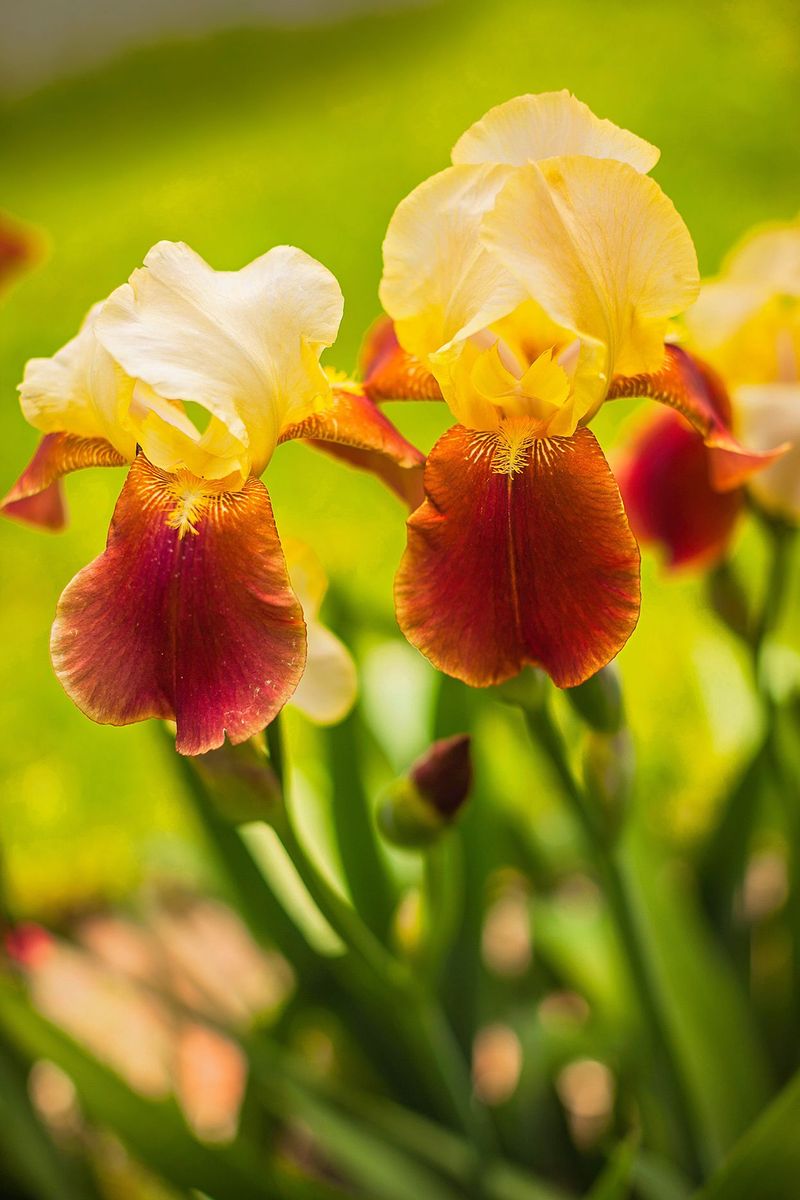
Picture a soggy December in the Piedmont, with rain soaking red clay for days. Under a mat of floppy, dead iris leaves, the rhizomes stay wet and dark, which is exactly what iris borers and soft rot love.
Removing that old foliage before winter is the single most useful thing you can do for next spring’s blooms.
Start after the first hard frost, usually late October to mid-November in most of North Carolina. Cut the leaves into a fan shape about 4 to 6 inches tall, and pull away any brown, dead material from around the base.
Iris borer moths lay their eggs on old leaves in fall, so clearing them out may help cut down the number of hungry larvae tunneling into roots next spring.
Next, check the rhizomes themselves. They should sit right at the soil surface, like a duck floating on water, so sun can reach and dry them.
Pull back any mulch or leaves piled on top, and gently press a rhizome. If it feels mushy or smells bad, cut out the soft part with a clean knife and let it dry in the air.
Bag the trimmings instead of composting them, since they may carry borer eggs or disease. Fun fact: the fuzzy beard on each petal is a landing strip that guides bees to pollen, so healthy irises can also support native pollinators each spring.
A tidy, sunny bed is a small effort with a big payoff when those purple, gold, and white flowers open.