
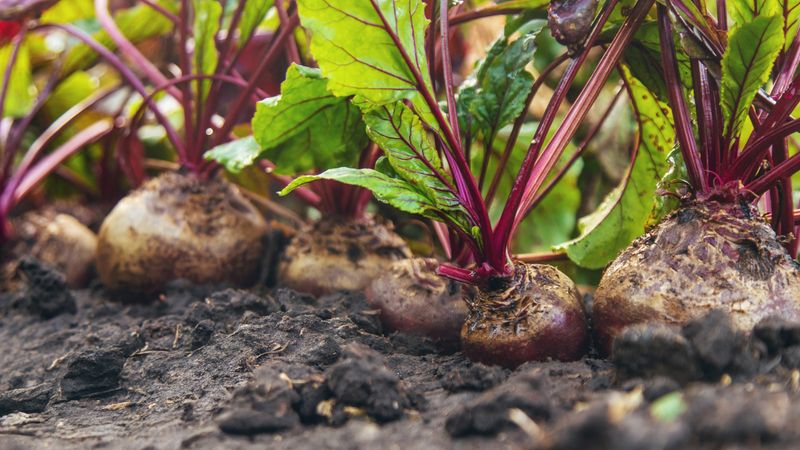
You water, you weed, and your beet tops look like they belong in a magazine. Then you pull one up and find a root no bigger than a marble.
Leafy growth is a clue, not a verdict, and it can point to several different problems. Here is how to track down the likely cause in your Southern fall garden and decide what to do next.
Check spacing before looking for a more complicated cause
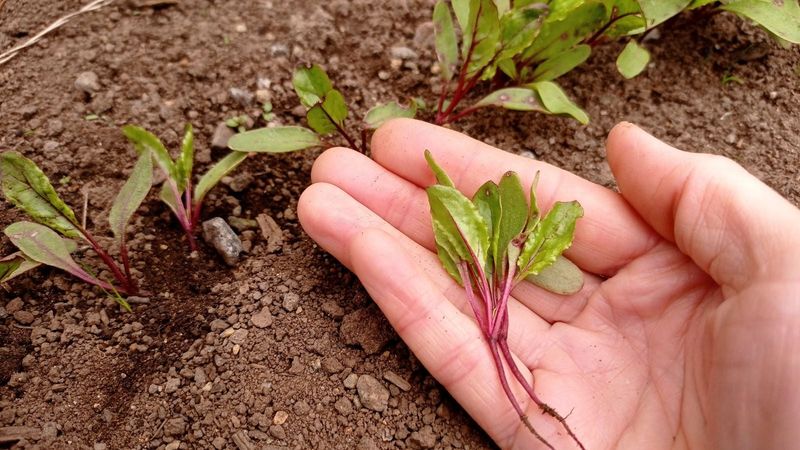
Start with the simplest suspect. A beet “seed” is really a dried fruit that often holds several embryos, so one planting spot can sprout a whole cluster of seedlings.
Illinois Extension names inadequate thinning as the most frequent reason beets form tops but no useful roots.
Take a look at your bed. If seedlings are touching or bunched in clumps, they are competing for the same soil, water, and room to swell.
Thinning while plants are young gives each remaining beet space to size up.
Spacing advice varies by source and variety. UF/IFAS gardening guidance and other Extension sources give ranges from about 1 to 3 inches up to 2 to 4 inches, so check your seed packet too.
Don’t toss the thinnings. Tender young beet greens are good in salads or a quick saute.
Keep in mind that crowding is only one possible cause, so keep reading if your spacing looks fine.
Heat, soil, water, and light can also limit root growth
Even well-spaced beets can stall. Texas A&M AgriLife describes beets as a cool-season crop that does poorly in hot weather, and they do not grow well in tight clay.
Deep, well-drained soil gives roots room to expand.
Soil is worth a hands-on check. Minnesota Extension lists compacted or rocky soil as a cause of very small or misshapen roots.
Push a trowel down beside a plant and see whether it meets a hard layer or stones.
Moisture swings matter too. Utah State Extension warns that fluctuating moisture can reduce yield, so a bed that bakes dry and then floods may be part of the story.
Light and time round out the list. Beets tolerate partial shade, but a shady spot may limit production, and a young planting may simply need more days.
Big tops alone cannot tell you which of these is at work, so look at the bed itself.
Leafy tops do not diagnose a nitrogen problem
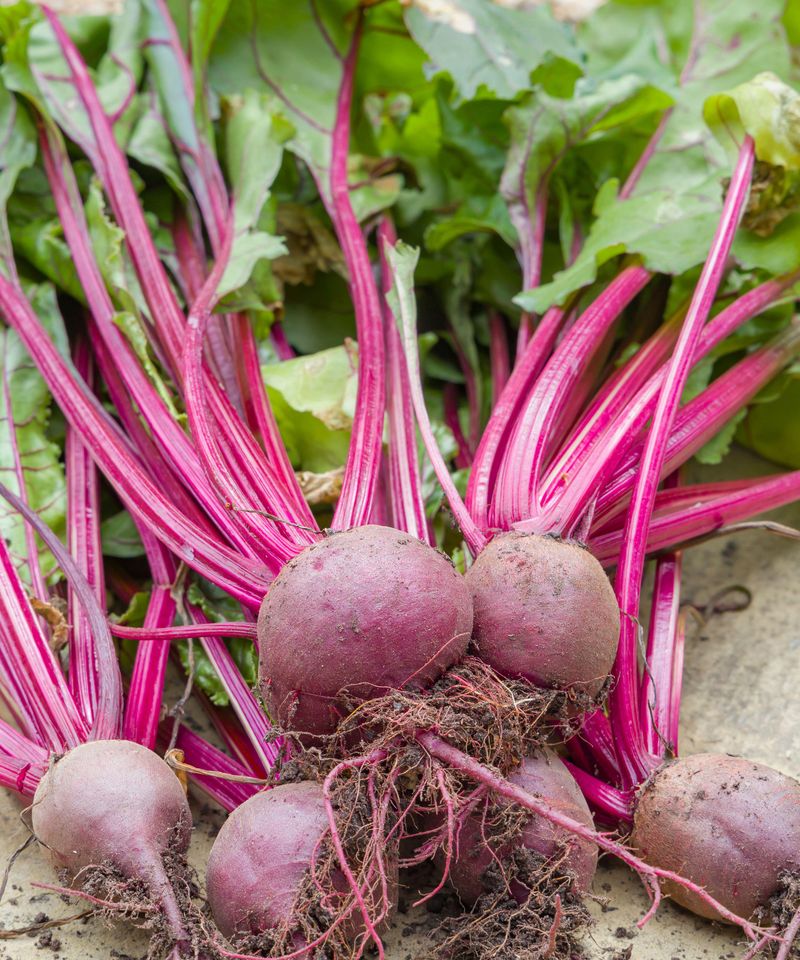
Many gardeners see lush leaves and blame too much nitrogen. It could be a factor, since one UC ANR Master Gardener page notes that high nitrogen can favor leafy growth.
But lush tops by themselves do not prove it.
Before changing your feeding plan, get facts. UF/IFAS recommends a soil test to learn whether fertilizer is needed and how much.
Your county Extension office can help with testing and local advice.
Skip the urge to add bone meal, phosphorus, or boron as a default. The same UC ANR page suggests phosphorus for small beets, yet other guidance points to testing first.
Texas A&M treats possible boron deficiency as a question for a soil test or local Extension.
Extra fertilizer without a reason can waste money and may not help the roots at all. Test first, then decide.
Adjust conditions without expecting a guaranteed recovery
If your beets are still young, there is room to act. Thin a crowded stand, and weed with care so you do not disturb the roots of the plants you are keeping.
Illinois Extension’s crowding guidance is the basis for these steps.
Aim for steady moisture rather than a dry-wet cycle. Utah State Extension gives 1 to 2 inches weekly as a general target, but your rainfall, soil, and drainage change that.
Sandy Florida beds dry out fast, while heavy Texas clay may hold water too long.
Loosen compacted spots and, for future plantings, build deep, well-drained soil, which Texas A&M recommends.
Be realistic about results. These steps may help remaining plants, but they cannot promise to enlarge roots that are already stunted.
And do not cut off the leaves to force root growth. Michigan State Extension warns that harvesting too many leaves early reduces root size and quality.
Fall planting dates vary across Florida and Texas
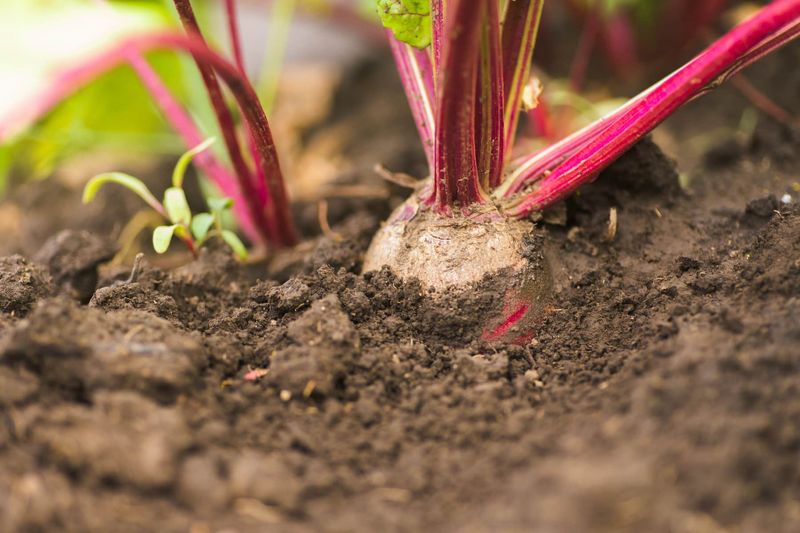
Timing may be the quiet culprit. Beets prefer cool conditions, and Texas A&M notes they do poorly in heat.
A late-summer sowing can spend its early weeks in warmth that slows root development.
Florida shows how much dates shift. UF/IFAS lists August through February for North Florida, September through February for Central Florida, and October through January for South Florida.
Texas varies just as much. AgriLife’s fall guide divides the state into five regions, with beet planting dates running from August 15 in Region I to December 15 in Region V.
Treat these as regional examples, not one date for the whole South. Find your region, mark a sowing window on the calendar, and use it to plan next season’s bed.
Inspect a root before deciding whether to harvest
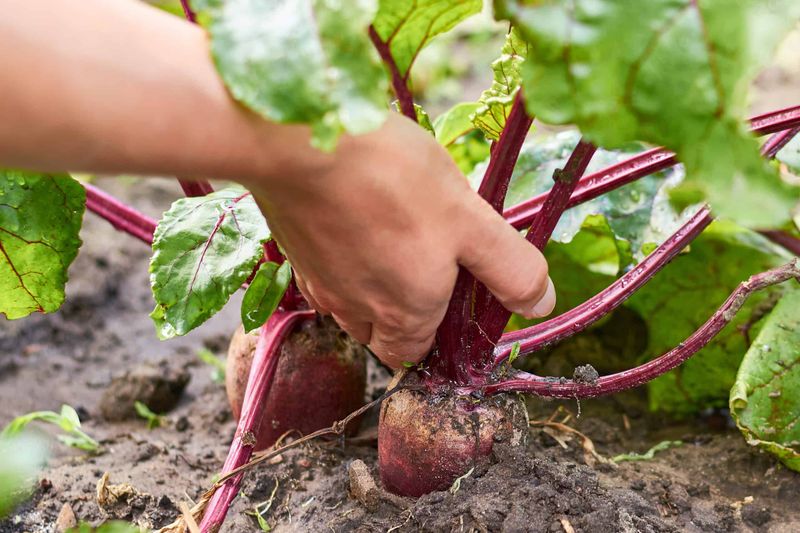
Tops tell you little about what is happening below ground. Beets commonly need about 50 to 70 days from seed, depending on variety and conditions, so check your seed packet and count the days.
Then do a gentle inspection. Brush soil away from the top of a root, or feel it with your fingers.
Iowa State Extension explains that beets can be harvested smaller, though UF/IFAS and others put common main-crop sizes at roughly 1.5 to 3 inches across.
If roots are small but within the expected days, you can pull a few and taste them. Tender baby beets are perfectly good eating.
If the planting is young and roots are still developing, more time may help, but waiting will not guarantee that a stunted root will enlarge. Let the root, not the leaves, make the call.