
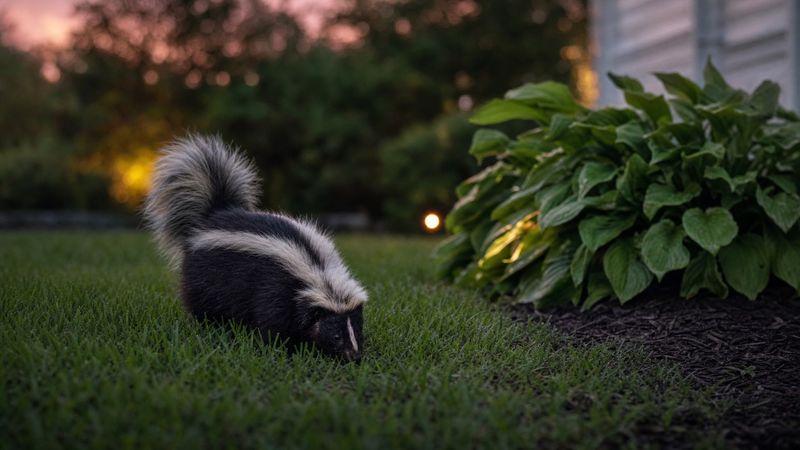
Waking up to a patch of torn-up turf is frustrating, especially when it looks like someone came back for seconds. A skunk is one possible culprit, but raccoons and armadillos can leave similar messes.
Fall in Texas brings grub activity and well-fed wildlife, which makes foraging a believable explanation. Before you treat the grass or change your yard, it helps to figure out who is visiting and what they are after.
Why might a lawn keep drawing a nighttime visitor?
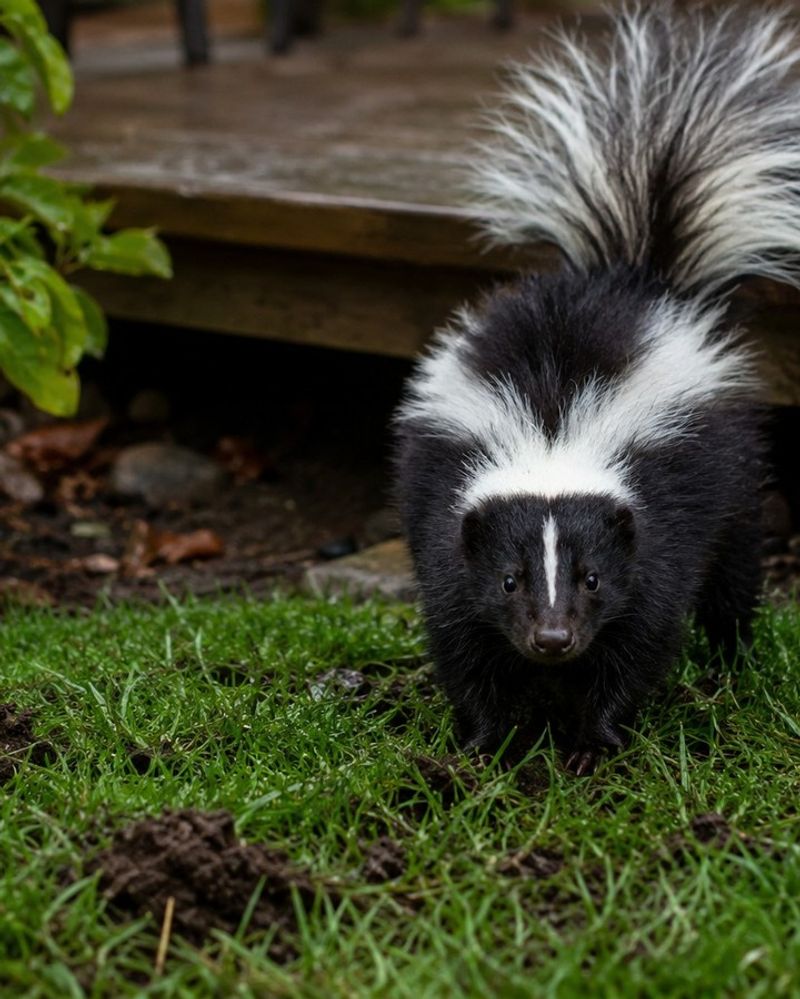
Striped skunks are mostly nocturnal, so any digging they do happens while you sleep. According to Texas Parks and Wildlife, insects make up a large part of their diet.
That means a lawn can look like a buffet to them.
Grass roots hide grubs, earthworms, and other soil-dwelling creatures. Extension guidance from Iowa State notes that skunks dig in turf for these foods, and they eat more than grubs.
So a hole in the grass tells you something was hunting underground, but not exactly what it found.
Why would the same patch get hit more than once? University of Maryland Extension describes animals returning to a feeding spot while food is still there.
Think of it like a restaurant that keeps its kitchen open. The animal is following the meal, not showing loyalty to your property.
That Maryland behavior has not been documented as a special Central Texas habit. It is also no confirmation that a skunk is your visitor.
Raccoons and armadillos can dig for the same kind of food, so treat skunk as a possibility until you have real proof.
If your lawn has soft, moist soil and plenty of small creatures living in it, repeat visits become easier to explain. If the food runs low or the animal moves on, the digging may stop by itself.
The next sections help you sort out which situation you are in.
What fall conditions can—and cannot—tell you
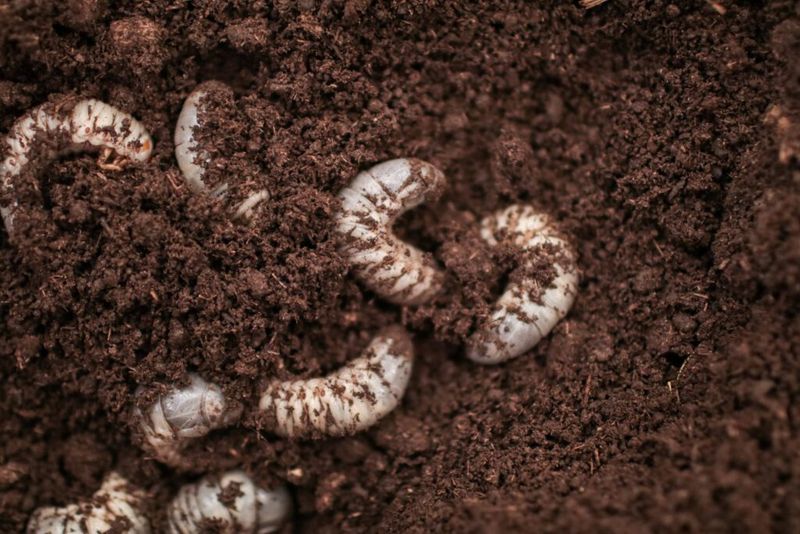
Fall timing gives the skunk idea some credibility. Texas A&M AgriLife reports that damage from the important Texas turf grubs is concentrated in summer and fall.
Many of those grubs are actively feeding from midsummer into early fall.
Wildlife timing fits too. Texas Parks and Wildlife says skunks become very fat in late fall.
Put those two facts side by side and a food-foraging explanation for some lawn digging looks plausible.
Here is where to be careful. Those facts do not prove that skunks search harder in fall, or that they dig lawns more often this time of year.
They also do not show that one lawn gets hit every night, or that Central Texas has a fall skunk pattern.
A better way to use the season is as a clue about what to check. If you see fresh digging in September through November, grubs and other soil prey are worth looking into.
Your own evidence still matters more than the calendar.
So keep notes. Write down the dates of new holes, the weather, and how many spots appear.
A simple log can show whether the visits are frequent or just occasional, and it will help you judge any response you try.
Hole shape offers clues, not a reliable identification
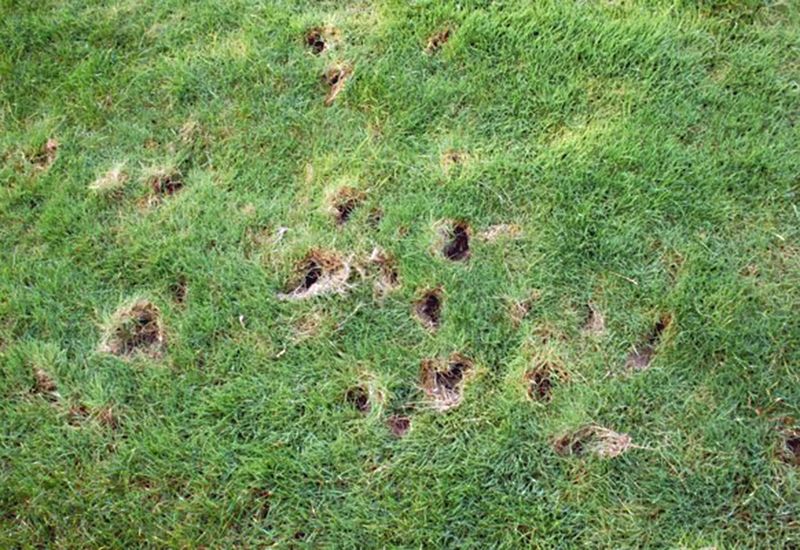
Hole shape can point you in a direction. University of Maryland Extension describes skunk damage as small, often cone-shaped holes, sometimes in clusters.
Raccoons more often lift or flip larger pieces of sod to get at what is underneath.
Both animals work at night, and Iowa State covers them together because the damage can look alike. A messy lawn may not match either description neatly.
Texas adds another suspect. Texas Parks and Wildlife says armadillos are widespread here and dig for grubs and other invertebrates.
Their young naturalist guide also notes cone-shaped feeding pits. A cone-shaped hole is therefore not proof of a skunk.
The practical fix is to watch the yard instead of guessing. A trail camera pointed at the damaged patch can show who arrives and when.
Even an inexpensive one can settle an argument between you and your neighbor.
Until you have a photo, treat any animal name as a working guess. That keeps you from spending money on the wrong solution.
It also keeps you from blaming a skunk for something an armadillo did.
Check the soil before deciding the lawn has a grub problem
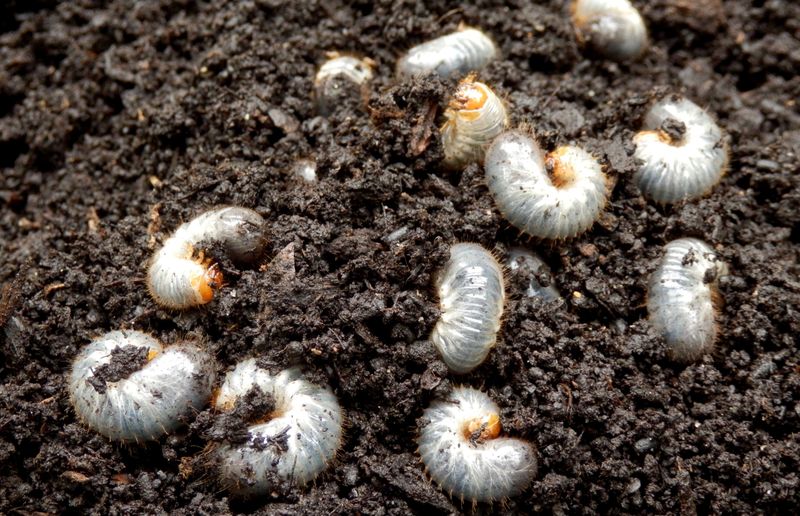
Digging in your lawn does not automatically mean grubs are wrecking it. Skunks also eat earthworms and other soil organisms, as Iowa State points out.
Grub numbers and turf injury vary from yard to yard.
To find out what is really down there, sample the soil. Texas A&M AgriLife recommends digging small sections near damaged or yellowing turf and counting the grubs you find.
Cut a square about a foot on each side, lift it, and sift through the roots and soil.
Do this in more than one spot. Grubs can be patchy, so one clean sample might miss a hot spot, and one bad sample might exaggerate the problem.
Try a few places near damage and a few in healthy grass for comparison.
AgriLife gives roughly 5 to 10 grubs per square foot as a point where treatment may be justified. Read that as a guide to possible turf damage.
It does not show that grubs caused a particular animal visit.
If you find few grubs or none, the visitor may be after worms or other prey. In that case, a pesticide would not solve much.
Write down your counts so you can compare them if damage returns.
A fall pesticide treatment is not an automatic fix
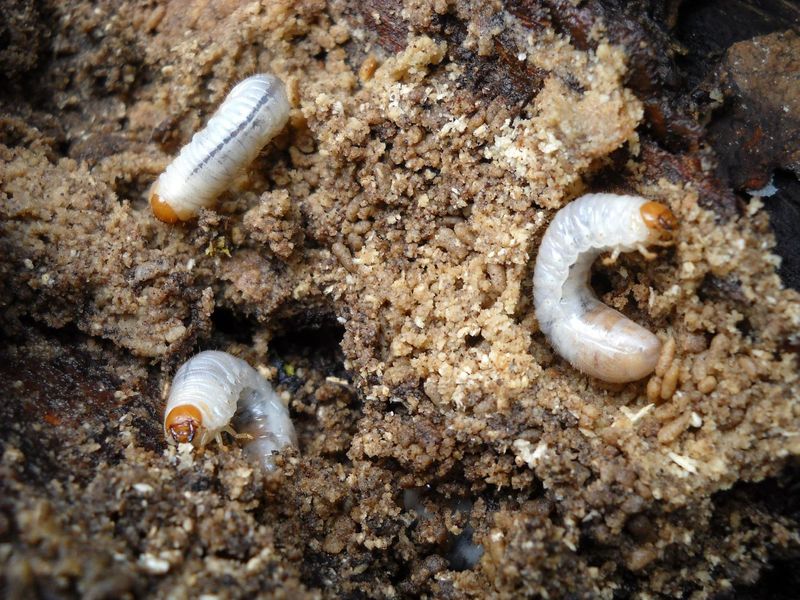
Timing matters a lot with grub control. Texas A&M AgriLife says preventive treatment generally aims at beetle emergence and early grub development.
That is around June in South Texas and early July in North Texas.
By fall, the picture changes. The AgriLife turfgrass publication explains that later grub stages can be harder to control.
A product sprayed at the wrong time may cost money and do little.
Before you buy anything, identify the pest. Confirm that grubs are present, check the count, and look up current guidance from your local Extension office.
Then follow every direction on the product label.
Also keep expectations realistic. Killing grubs may not make a visitor leave, because earthworms and other prey may still be in the soil.
Promising yourself that the digging will end is a bet you cannot be sure of winning.
If your counts are low, skip the treatment and focus on repairing the turf. If they are high, plan the next treatment window with your local Extension advice instead of reacting to fresh holes.
Reduce easy attractants without expecting a guaranteed deterrent
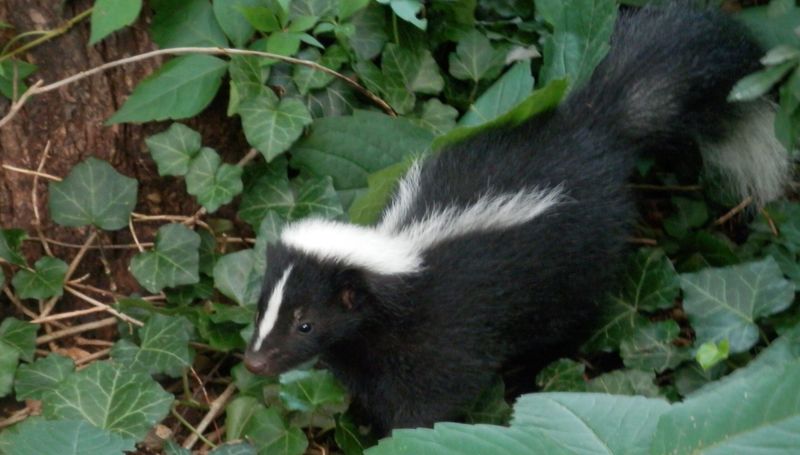
Some food sources are easy to remove. Bring pet food and water bowls inside at night, and keep garbage secured.
University of Maryland Extension and Texas A&M AgriLife Wildlife Services both treat this kind of cleanup as sensible.
It is a small chore with a modest payoff. Taking away the bowls and loose trash may keep other animals from lingering in your yard.
It may not stop an animal that is hunting insects in the grass.
The lawn itself stays the main attraction. As long as grubs, worms, or other soil prey remain, foraging can continue.
No cleanup routine changes what lives under the turf.
What about scent repellents? Iowa State says they are typically not very effective and need repeat application.
Rain can wash them away, so a product that works for a night or two may fail after a storm.
If you try one anyway, treat it as an experiment. Mark the date, watch for new holes, and do not count on it as your only plan.
Protect a repeatedly damaged patch with targeted exclusion
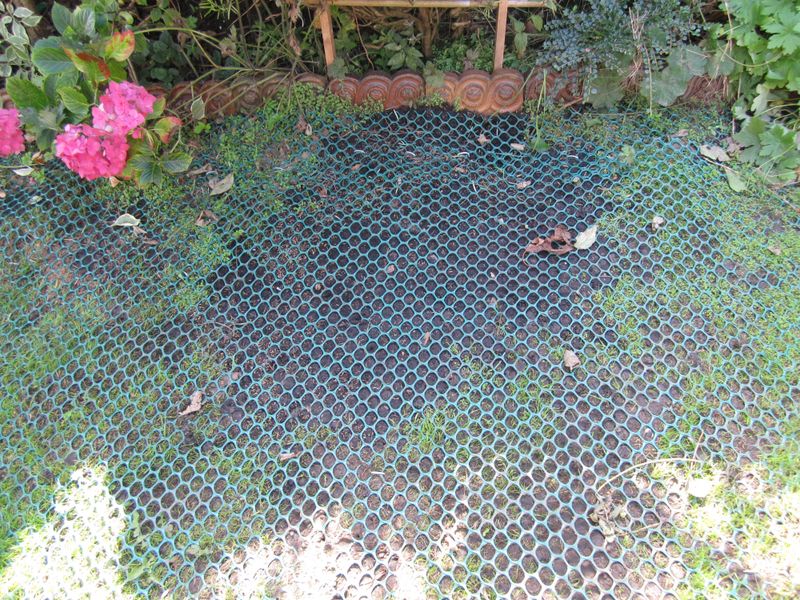
When one spot keeps getting torn up, a physical barrier may help. Iowa State describes anchored wire mesh over turf as a way to keep digging animals from getting to the soil.
A suitable fence is another option for a defined area.
The key words are anchored and specific. Mesh needs to be pinned down firmly so an animal cannot lift it, and it works best on a small trouble spot.
Neither mesh nor fencing is a guaranteed whole-yard answer.
You do have choices. Texas A&M AgriLife Wildlife Services describes skunks as beneficial consumers of grubs and insects.
If the damage is minor, you can tolerate it, rake and reseed the patch, or protect it.
That benefit does not mean you must accept a wrecked lawn. A few shallow holes might be an easy trade for fewer insects.
A torn-up front yard is another matter, and protecting it is a reasonable call.
Repair first, then cover. Fill the holes, firm the soil, water as needed, and then lay the barrier so new grass can recover underneath.
Keep skunk handling and relocation out of the DIY plan
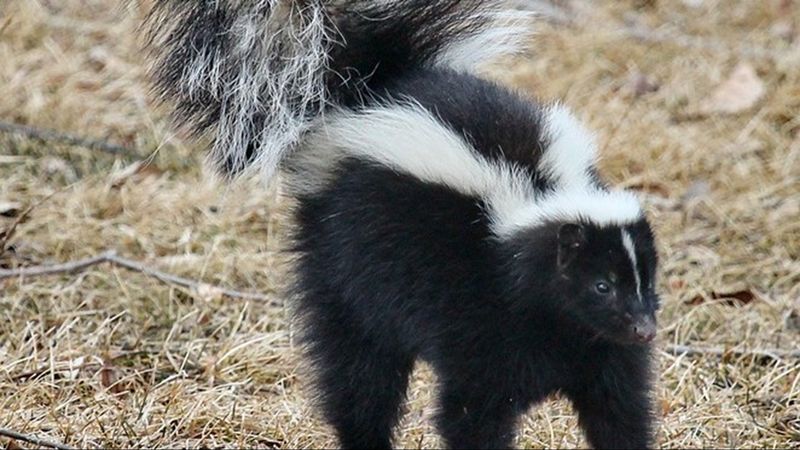
Leave the animal alone. Do not try to handle a skunk, corner it, or move it yourself.
Texas rules matter here too, since the Texas Department of State Health Services says transporting live skunks is generally illegal except for specified authorized parties.
That rules out the trap-and-relocate idea for most homeowners. If a wildlife problem feels beyond a simple yard fix, ask a licensed professional or your local wildlife authority what is allowed.
Health comes first if something goes wrong. After a bite, a scratch, or any other possible rabies exposure, contact a healthcare provider or your local health department promptly.
CDC guidance explains when to seek care.
Do not wait to see whether the animal seemed healthy. Let a professional decide what steps are needed.
Confirm the visitor, then match the response to the damage
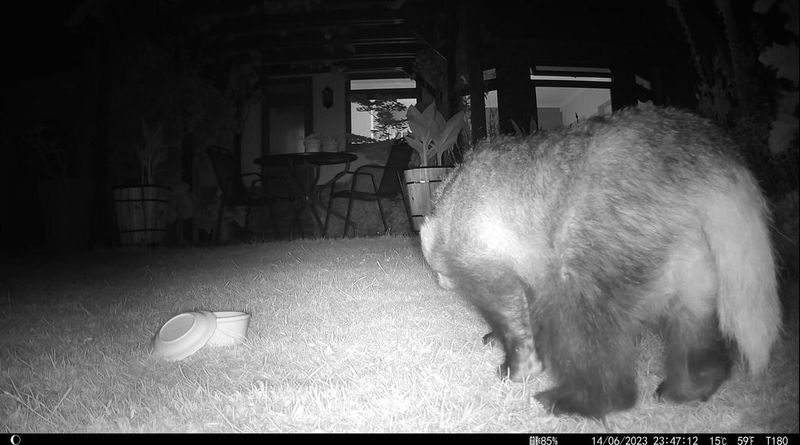
Start by confirming who is visiting. A trail camera beats guesswork, since Maryland Extension notes that several animals can cause similar damage.
Next, sample the turf before treating. Follow AgriLife’s grub counting steps in more than one spot.
Then pick a proportionate step, such as clearing easy food or covering a damaged patch, as Iowa State describes.
Repeat digging may simply mean food is still down there. Your lawn is answering a question, and the camera and the shovel help you read it.