
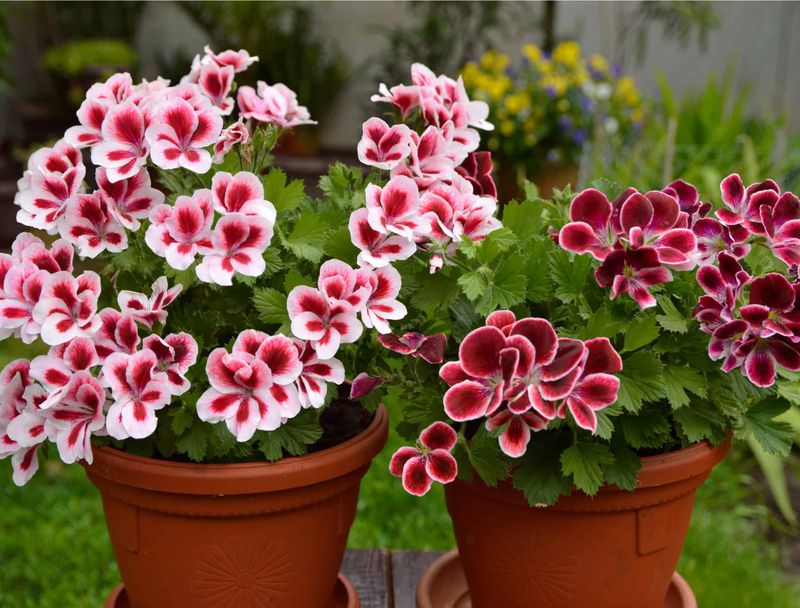
Your potted geranium has green leaves and a sturdy shape, yet the flowers just will not show up. That mix can be confusing, because a plant that looks healthy seems like it should bloom.
In the South, several things can quietly hold back flowers, from summer heat to shade to how the plant is watered. Here is a calm, step-by-step way to sort out what is going on.
Consider season and heat before repotting
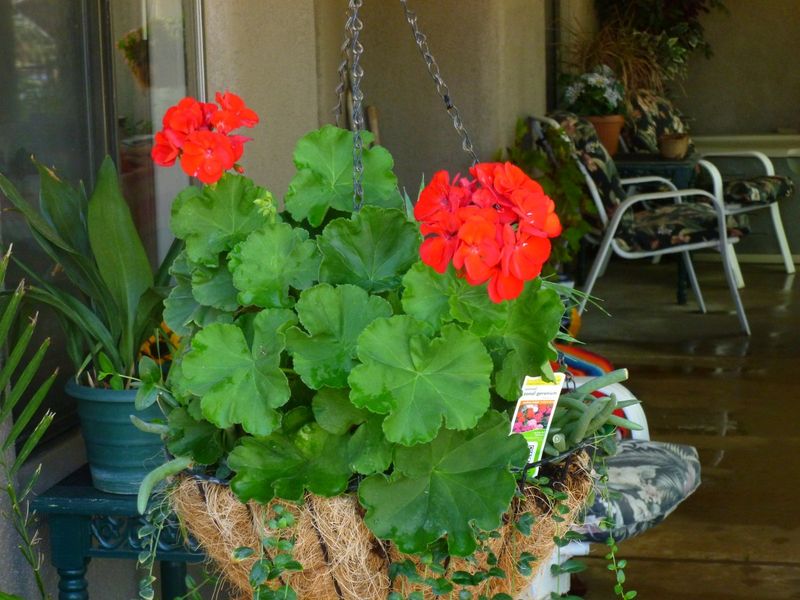
Green, glossy leaves do not rule out a seasonal slump. Garden-center geraniums are Pelargonium, and they are cool-season performers in much of the South.
UF/IFAS guidance notes that geranium flowering often fades by mid-to-late summer in Florida.
Timing also differs across the state. UF/IFAS Gardening Solutions says geraniums do poorly in Florida’s summer heat and humidity.
South and Central Florida generally grow them as a winter annual, while North Florida plantings are timed for cool spring conditions.
So if it is July and your plant is leafy but bare, heat may be the main reason. A bigger pot cannot override that limit.
Texas gardeners may see something similar, and some cultivars cope with heat better than others. Often the best move is to keep the plant healthy through the hot months and expect better flowering when cooler weather returns, though no result is guaranteed.
Check light without chasing harsh afternoon sun
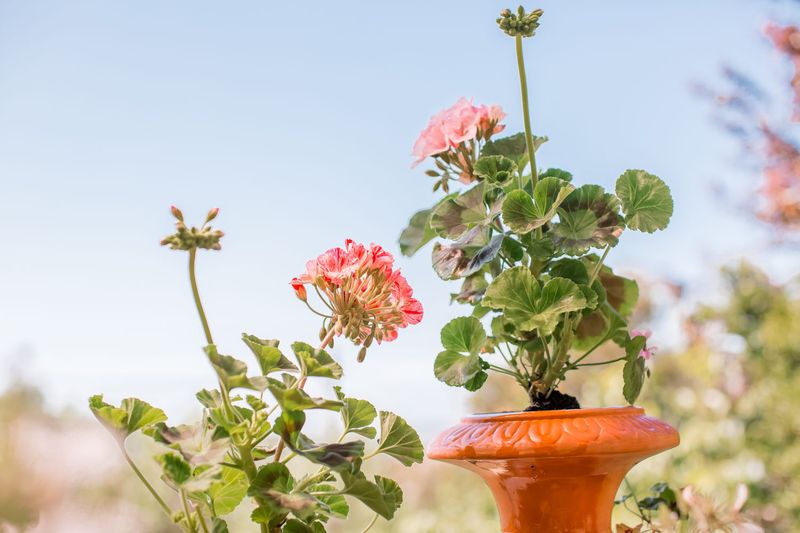
Too little light can keep a geranium leafy and quiet. Extension sources give a range rather than a single number.
Texas A&M recommends at least four hours of direct sun for good flowering, while Iowa State suggests at least six hours for optimum flowering.
Those numbers come from places with milder summers than a Gulf Coast porch. In hot Southern settings, morning sun with some relief from the harshest afternoon rays is often a sensible compromise.
Notes from UF/IFAS even mention that reduced summer sun exposure may let flowers keep forming in some conditions.
Watch where the shadows fall over a full day. If a pot sits behind a wall or under a dense tree and gets two hours of light, a move may help.
If it already gets plenty, more sun is not the answer.
Assess the pot and roots for practical signs
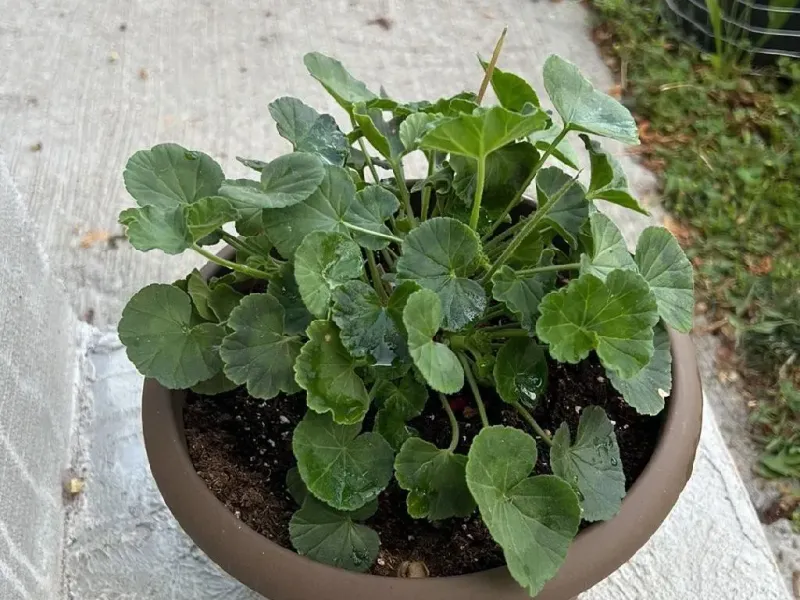
Now the container gets a turn. Pot size can affect root space and how fast the mix dries out, but the sources do not show it is the usual reason for weak flowering.
Treat it as one clue among several.
Clemson Extension advises moving to a larger pot if the plant wilts frequently. That is a practical sign, much like roots circling the drain holes or soil that dries out within hours.
UGA guidance gives a general range of 8 to 12 inches across and examples such as a 4-inch pot to a 6- or 7-inch pot, or a 6-inch pot to an 8- or 10-inch pot. Think of these as starting points, not a bloom formula.
Drainage matters most. Poor drainage and soggy mix can lead to root rot and poor growth, so choose a pot with holes and avoid jumping to a much larger one.
Do not force a root-bound rule
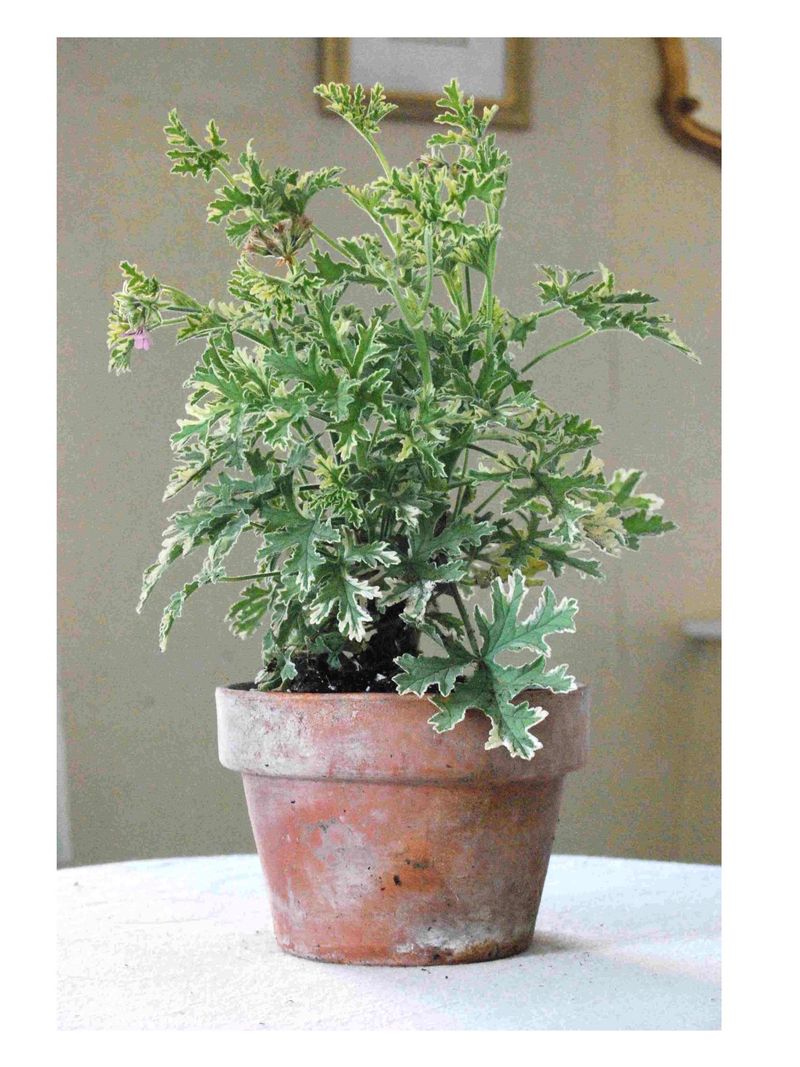
Gardeners hear both sides of this debate, and the advice really does conflict. A Texas A&M AgriLife page says container geraniums like to be root bound.
Yet UGA says a small or young plant can stay put until roots begin to bind, and warns that moisture becomes harder to maintain after that.
In a Southern summer, a tightly packed pot can swing from soaked to bone dry in a day. That is the kind of stress that makes some plants stall.
The takeaway is practical. Do not crowd roots on purpose hoping for flowers, and do not bump up the pot size automatically either.
Neither move is a proven bloom trigger.
Instead, look at how the plant behaves. If it holds moisture well and grows steadily, leave it alone.
If it wilts often between waterings, that is your cue to consider the next size up.
Water and feed steadily, not as a bloom fix
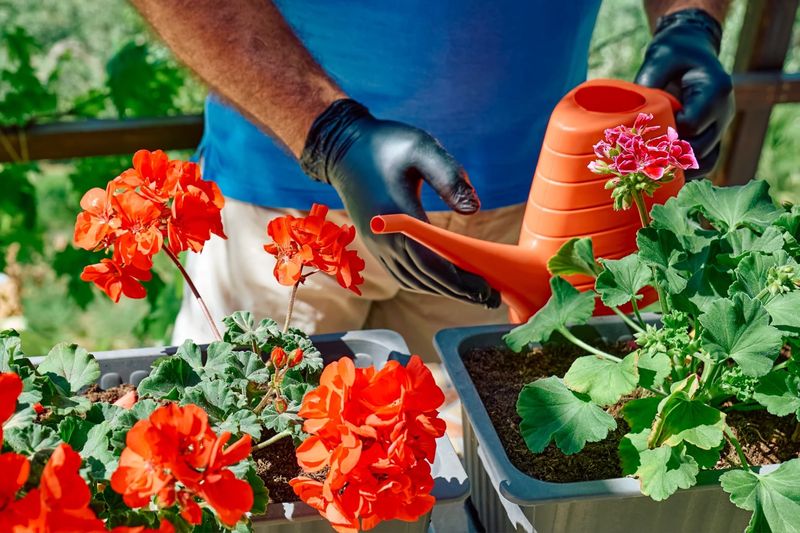
A fixed schedule rarely suits a container in the South. Go by the soil instead.
Iowa State advises watering container geraniums when the soil surface feels dry to the touch, and Clemson recommends letting the soil dry between waterings.
Poke a finger an inch or so into the mix. Hot, breezy days may call for water daily, while a cloudy week may need far less.
Feeding follows the same steady idea. Clemson recommends feeding during the growing season.
Extra fertilizer is another matter. A Texas A&M evaluation report notes that over-fertilizing may produce lots of foliage and few flowers.
If your plant is already leafy and lush, more feed may not help. Follow the product label and skip the extra scoop.
Deadhead and reassess before making another change
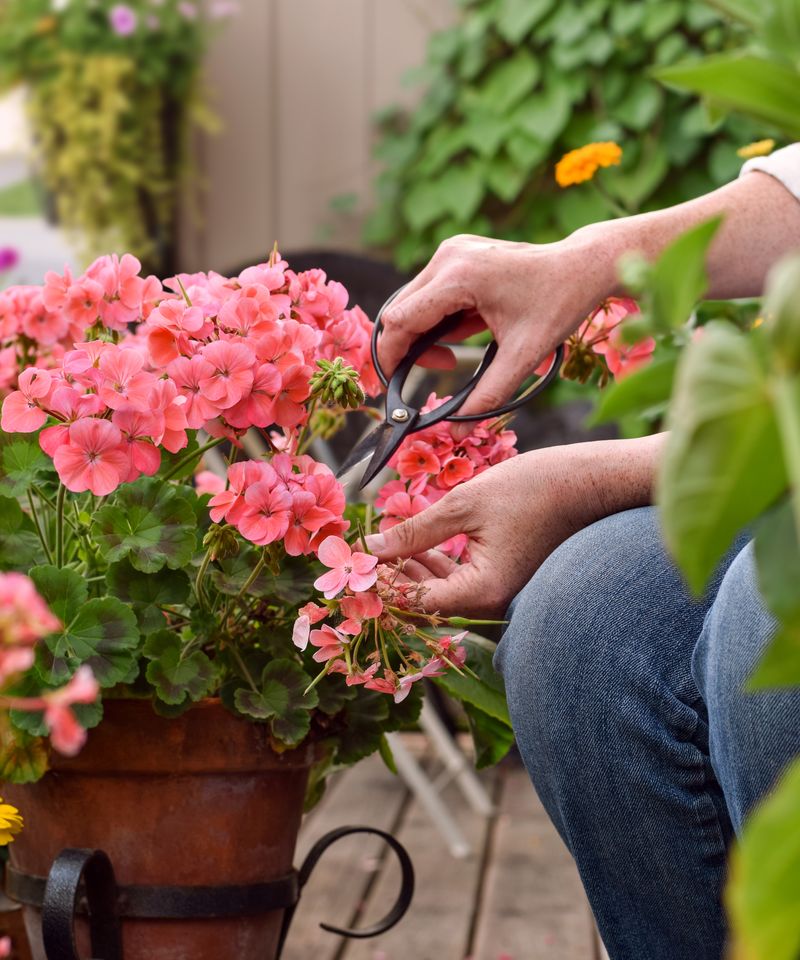
Removing faded flower heads is simple and worth doing. UF/IFAS says dead blossoms should be removed regularly, and Clemson says removing dead flowers prolongs flowering.
Pinch the stem back to where it meets the plant. It may help, but it will not guarantee fresh blooms in midsummer heat.
When flowers stay scarce, work through a measured order. First, deadhead.
Next, think about the season and your local heat. Then check light across the day, and review your watering and feeding habits.
Only after that, look at pot fit and drainage. Frequent wilting, roots crowding the holes, or a soggy mix are good reasons to repot, using a modest size step.
Change one thing at a time and give the plant a few weeks to respond. Geraniums often reward patience more than panic.