
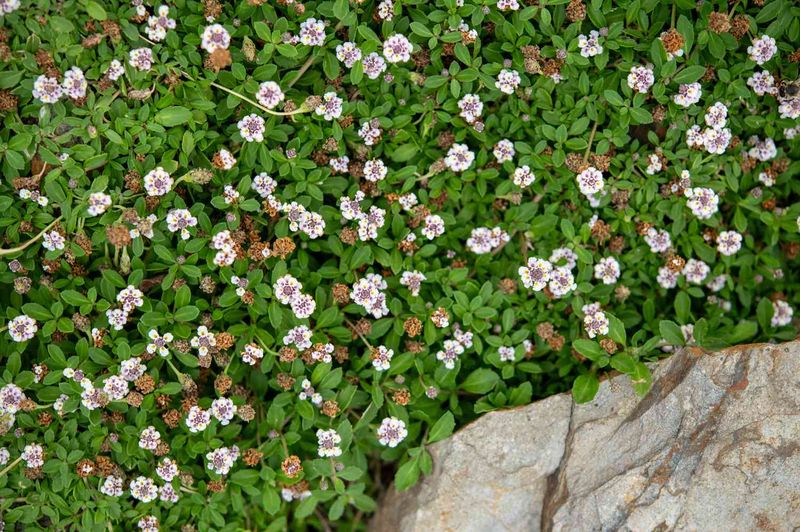
A bare strip of gravel along a Texas driveway soaks up heat and gives nothing back to the yard. Frogfruit, a low native groundcover, is one plant gardeners look at when they want green, flowers, and less bare ground.
It is not right for every strip, and it comes with some trade-offs worth knowing before you buy plugs. Here is how to tell whether it fits your driveway edge.
Frogfruit may suit some planted driveway borders
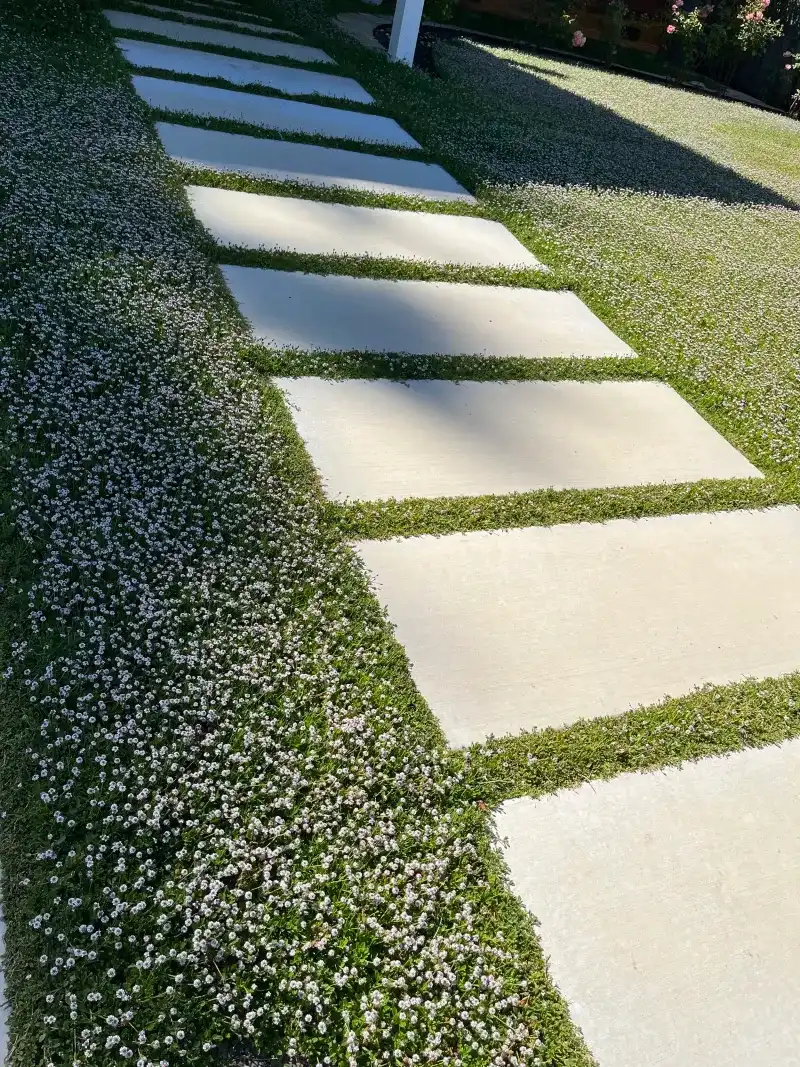
Frogfruit, known botanically as Phyla nodiflora, is a low, spreading groundcover native to parts of Texas. Austin’s plant guide lists it as a native for sun or partial shade, and it is recommended for some settings in Texas landscapes.
That makes it a reasonable candidate for a planted strip beside a driveway.
Picture a soft, flat mat of small scalloped leaves hugging the ground, dotted with tiny flowers. Compared with a gray band of gravel, it adds color, texture, and a living surface.
It will not suit every site, though, and no source shows that homeowners across Texas are swapping out their driveway rock for it. Think of it as an option worth testing, not a guaranteed fix.
Before pulling anything out, look at what the rock is doing. Decorative gravel that only fills a bare border is a fair candidate for replacement.
Rock that carries runoff away from the pavement, supports the driveway edge, or keeps soil from washing onto the surface may be doing a real job, and it should stay.
Visibility matters too. Keep any planting low and well back from spots where drivers need a clear view of the street or of people walking.
Also keep in mind that the Native Plant Society of Texas describes where this plant grows in the wild, and Texas covers many different regions. Confirm that frogfruit is suited to your area and available from local nurseries before planning the border.
A creeping mat needs room to spread
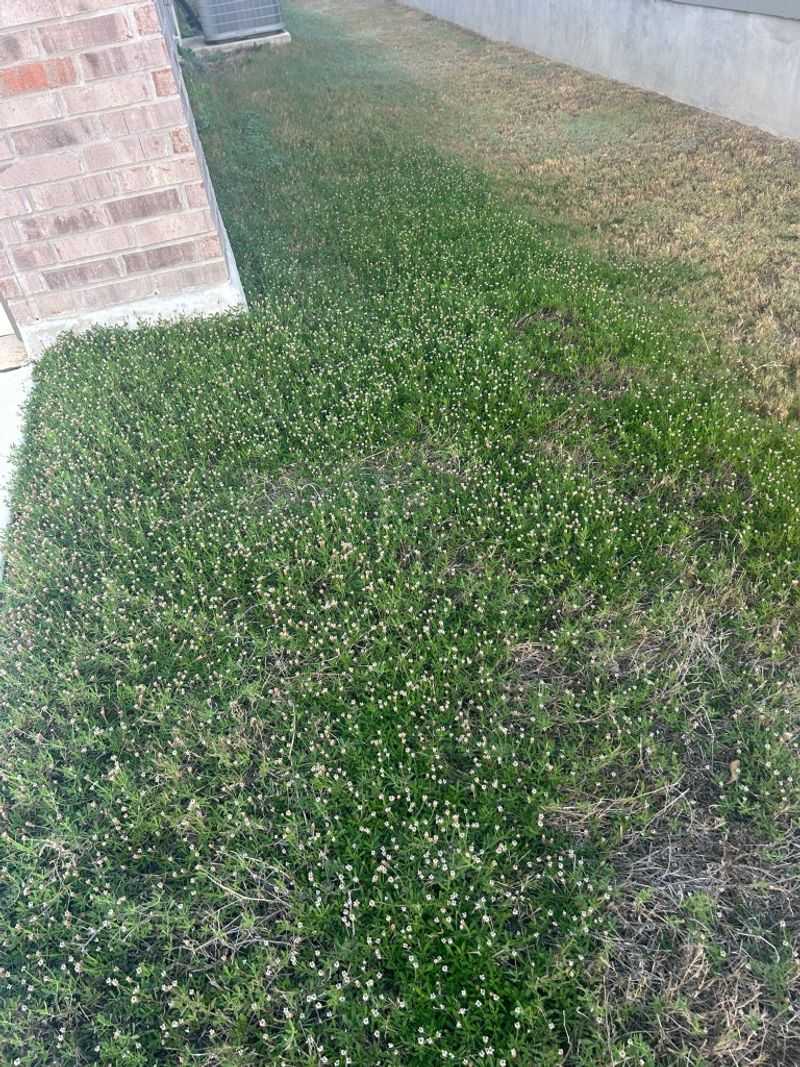
Frogfruit grows by sending out creeping stems that lie along the ground. Where those stems touch soil, they root at the nodes, which is why a few plugs can knit into a carpet.
According to the Native Plant Society of Texas, the plant stays quite low to the ground.
Sizes vary by source and by growing conditions. Texas references give heights from a few inches to under a foot, and a spread of roughly 1 to 2 feet per plant.
Richer soil and steady moisture tend to produce a lusher, faster mat, while dry, lean ground usually slows it down.
Imagine a green strip about ankle height at its tallest, with stems fanning outward in every direction. It will not stop politely at the edge of your planned border.
A UF/IFAS Extension guide describes it as a fast spreader, and it can wander toward pavement, lawn, or neighboring beds.
That means giving it room. A strip with a clear boundary, such as a curb or a mowed edge, makes the spread easier to live with.
Leave the specifics of keeping it in line for later, but plan from the start for a plant that wants to roam.
Small flowers offer documented pollinator benefits
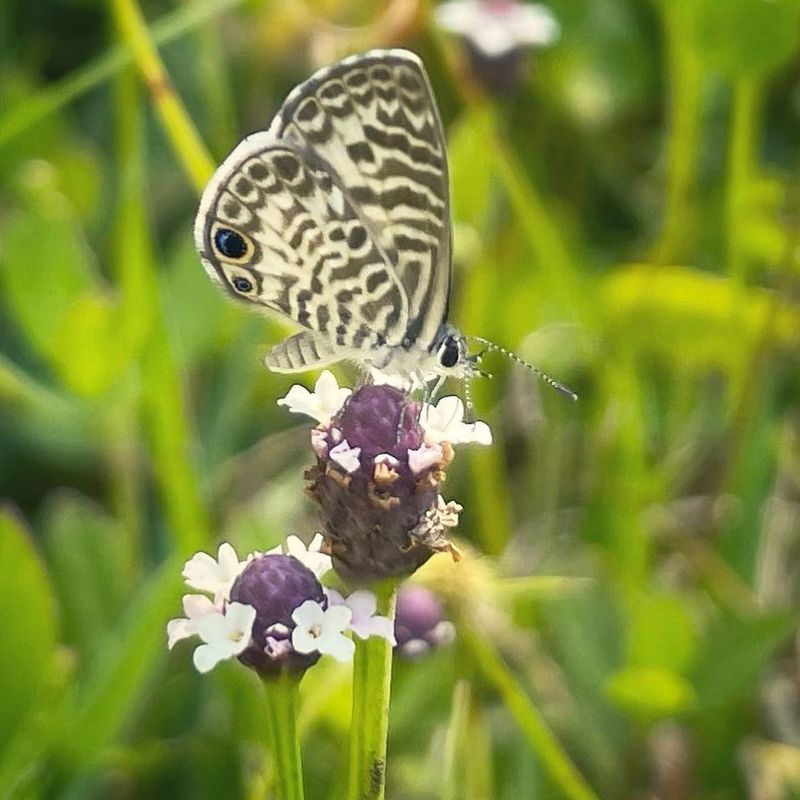
Each frogfruit bloom is small, a tight little button of white petals often tinged with purple or pink at the center. Up close, the clusters look like tiny domes scattered across the green mat.
Flowering can run from spring through fall, according to UF/IFAS Gardening Solutions.
That long window is the appeal for a driveway edge, but it is a reported range, not a promise. Bloom can slow during dormancy, drought, or cold, and a stressed planting may flower less.
Expect waves of flowers rather than nonstop color.
The same UF/IFAS page identifies frogfruit as a nectar source and a larval host plant for several butterflies, including the phaon crescent, white peacock, and common buckeye. Larval host means caterpillars can feed on the leaves, so you may see some nibbling on a plant that is doing its job.
Whether those particular butterflies visit your yard depends on where you live and what is already nearby. A planting is no guarantee that any one species will show up.
Still, small flowers close to the ground give bees and butterflies something to sip from, which a gravel strip never could.
Check the site before planting
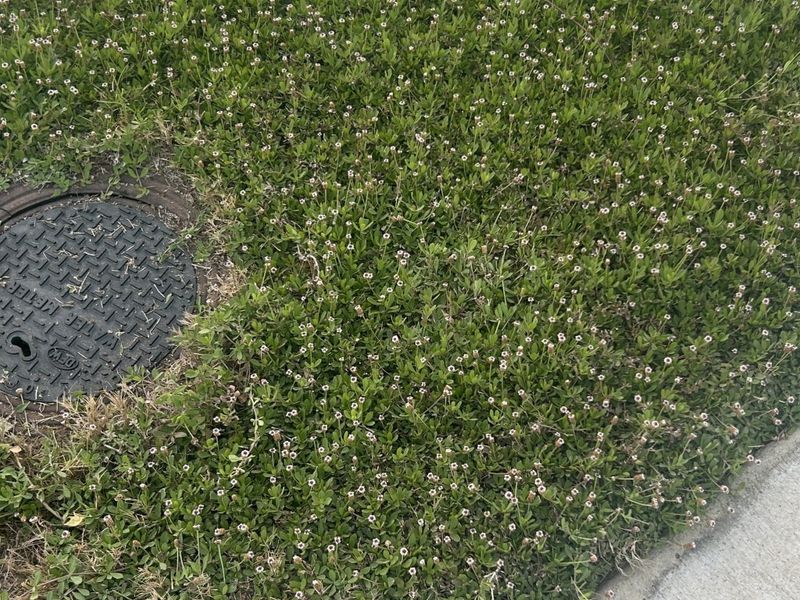
Start with light. Frogfruit grows in full sun to partial shade, so a bright driveway strip is within its comfort range.
The City of Austin guide places it in Blackland Prairie and Edwards Plateau settings, which tells you the plant has regional roots.
Next, look at soil and moisture. Frogfruit accepts a range of soils, and it is drought tolerant once established.
The UF/IFAS page cautions, though, that long dry periods can be a problem. Dig a small hole, see how fast water drains, and note whether the strip stays soggy or bakes hard.
Reflected heat is the big unknown. A Purdue Extension article lists driveway heat as one possible cause of stress in nearby turf, but nothing reviewed shows that frogfruit handles pavement heat everywhere.
Treat it as a candidate for a hot strip, and try a small patch first.
Finally, remember that Texas is huge. The Texas SmartScape entry is specific to North Central Texas, so a gardener on the Gulf Coast or in West Texas should check with a local extension office or native plant nursery.
A quick call can save a season of guesswork.
Establishment takes water before drought tolerance
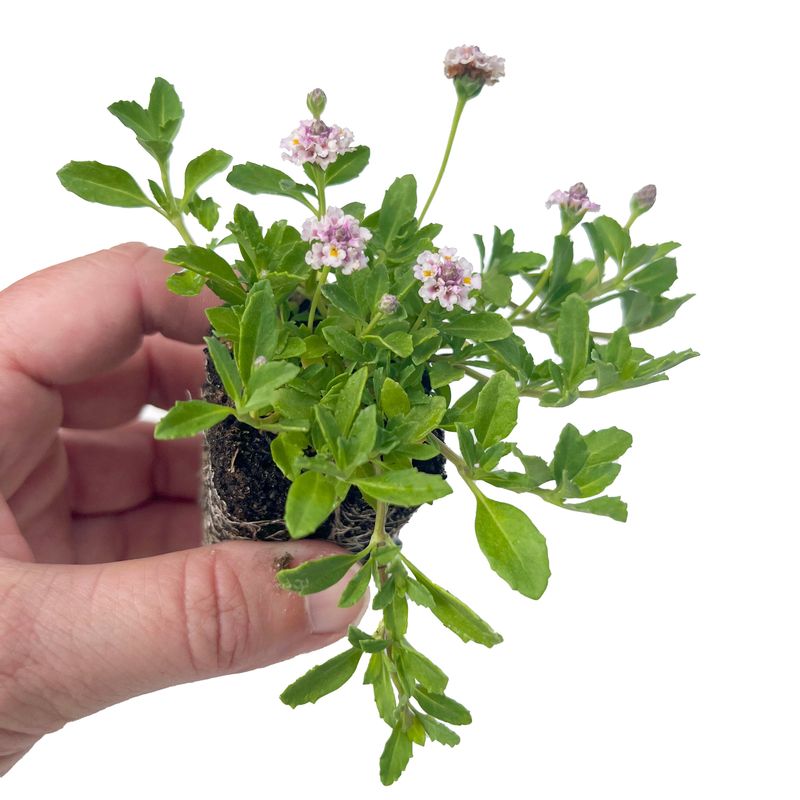
Plugs are a practical way to start frogfruit. A UF/IFAS guide suggests setting divisions about 12 inches apart, which leaves enough room for stems to reach each other without crowding.
Loosen the soil, set each plug at the same depth it grew in its pot, and firm it in.
Then comes the part that gets skipped in drought-tolerance talk: new plants are thirsty. The Texas Water Development Board’s landscape watering guide explains that new plantings need more frequent watering than established ones.
Expect to water regularly for the first weeks and months, tapering off as roots take hold.
Timing matters in Texas. The Texas Parks and Wildlife Department says fall is usually a good time to plant natives, but it also advises checking local conditions.
A planting window on the Gulf Coast will not match one in the Panhandle.
Before you set a hose schedule, check your utility’s rules. Many Texas cities limit outdoor watering days and hours, and some allow exceptions for new plantings.
Look up your city’s current stage of restrictions, and plan your planting date around what you are permitted to do.
Expect seasonal dormancy and manage the edges
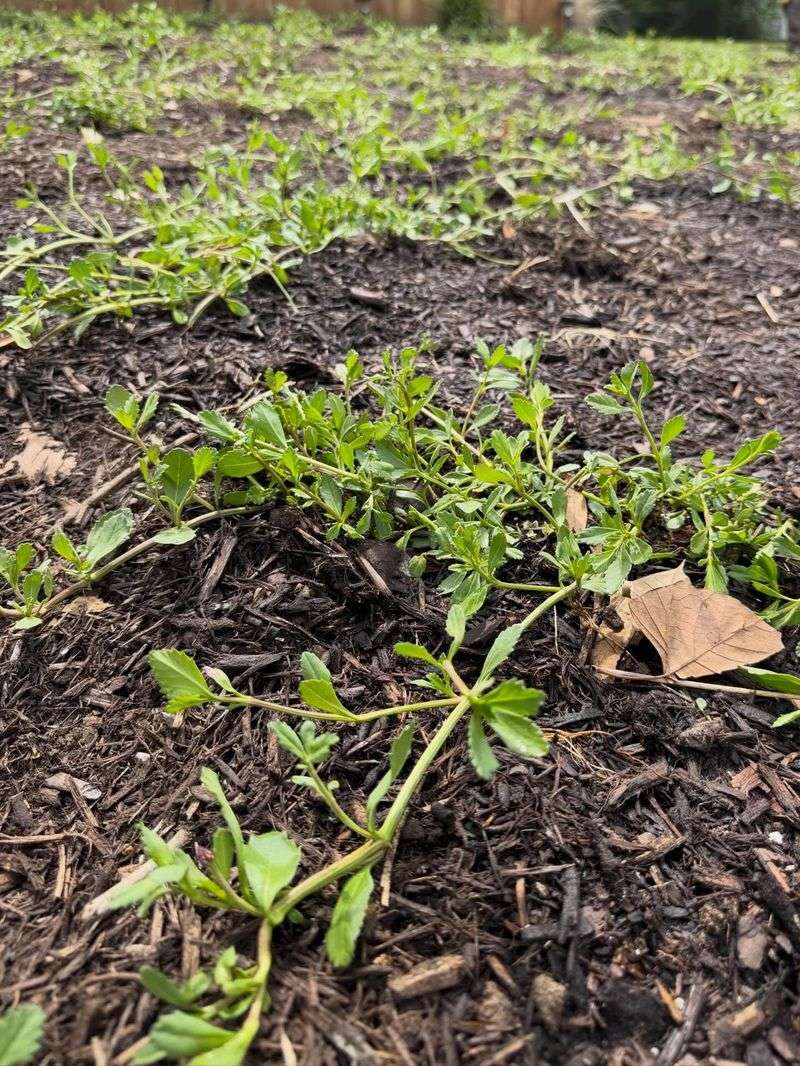
A frogfruit strip will not look the same in January as in May. UF/IFAS Gardening Solutions notes that it can go dormant in winter or drought, and freezes may damage it.
The mat can thin out or turn brown, then green up again when conditions improve.
That is why a flat promise of evergreen cover does not hold up. The Native Plant Society of Texas calls it semi-evergreen, and other Texas guides list it as deciduous.
In mild spots it may stay green, while a cold snap or dry summer can leave bare patches.
Spread is the other thing to watch. The plant roots as it creeps, and the UF/IFAS Extension guide notes it can show up as a lawn weed, especially in irrigated lawns.
It will not stay put on its own.
Occasional mowing or trimming helps manage its look and its reach. Walk the border every few weeks in the growing season and snip stems that cross onto pavement or into the lawn.
Check neighboring beds too, since runners can slip under mulch and root where you did not plan.
Match frogfruit to the strip you have
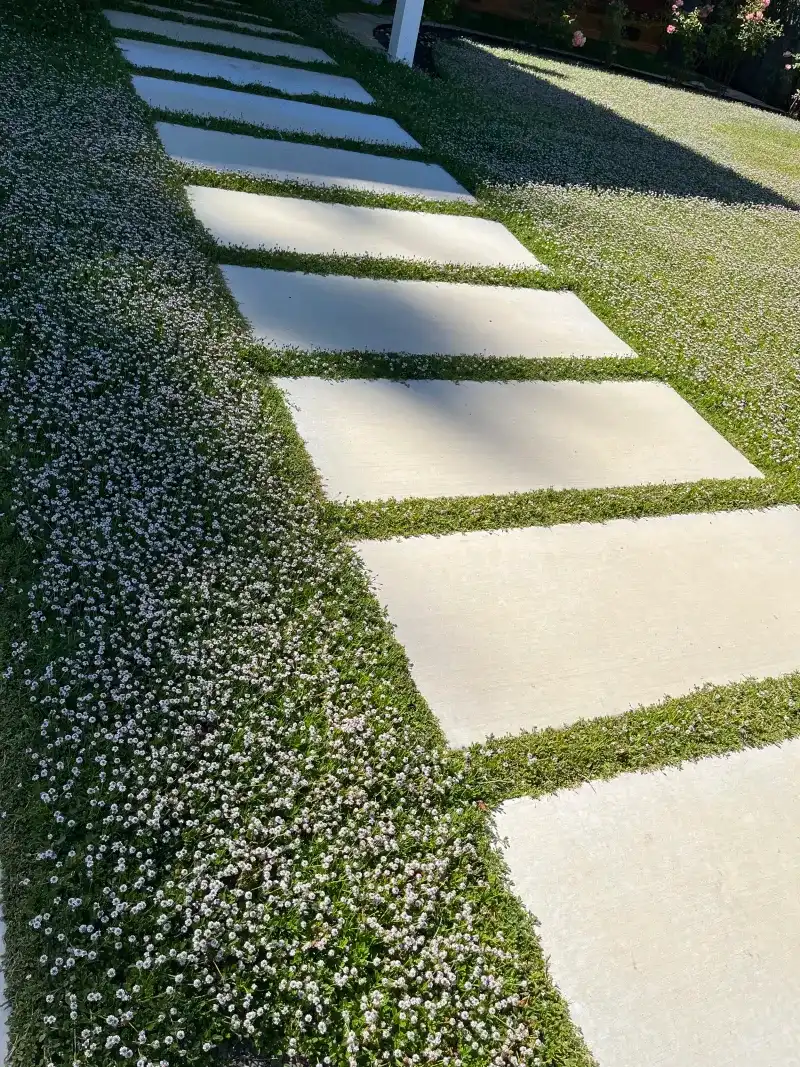
Frogfruit fits best where a driveway border can handle a spreading groundcover, gets sun, and can be watered while it settles in. If you are willing to trim the edges now and then, the payoff is a living strip with small flowers instead of bare stone.
The City of Austin and UF/IFAS both describe its strengths.
Skip it where rock handles drainage, where you cannot water at first, or where you want a plant that stays put. Winter greenery, local suitability, and performance beside hot pavement are never guaranteed.
Test a small patch before committing the whole strip.