
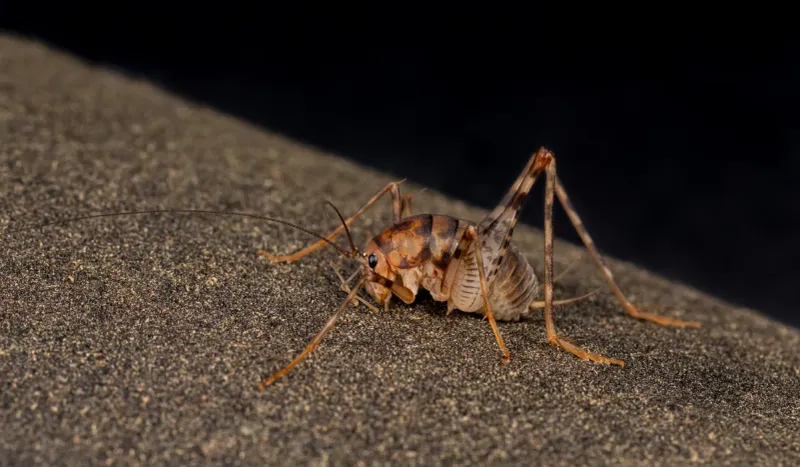
You flip on the basement light and something with long legs and a humped back springs across the floor. It looks like a cricket, but it may not be one at all.
That jumpy visitor is a clue about the conditions around your house, and a few simple checks can tell you a lot. Here is how to read the clue without jumping to conclusions.
A fall sighting is a habitat clue, not a foundation diagnosis
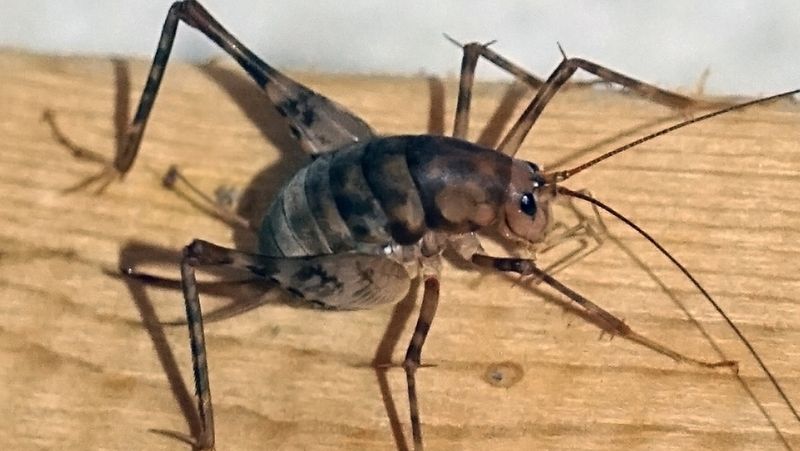
Picture a long-legged, hump-backed insect hopping across your basement floor in October. It is best described as a cave- or camel-cricket-like sighting, not a confirmed cave cricket.
A quick look cannot settle what it is.
Timing helps a little, but it does not prove a cause. University of Minnesota Extension notes that crickets may wander indoors in late summer and fall.
Fall is not the only season they show up, and autumn does not point to one particular reason.
NC State says camel-cricket problems can also come with excessive rainfall or extended hot, dry weather. In both cases, insects may look for cooler, damper, more sheltered places, and a basement or crawlspace can fit that description.
So what should one sighting prompt? A walk-through.
Check damp, sheltered spaces and the spots where insects could slip in. A single cricket does not diagnose a leak or foundation damage, and it would be a stretch to blame the structure of your house for it.
As for harm, NC State Extension describes camel crickets as mostly nuisance pests. That is not the same as harmless.
Large, persistent numbers can damage stored fabrics or linens when other food is scarce, so boxes of old clothes and blankets are worth a glance if you see many insects.
Think of the sighting as a reason to look around, not a reason to worry.
A casual sighting cannot confirm the cricket’s identity
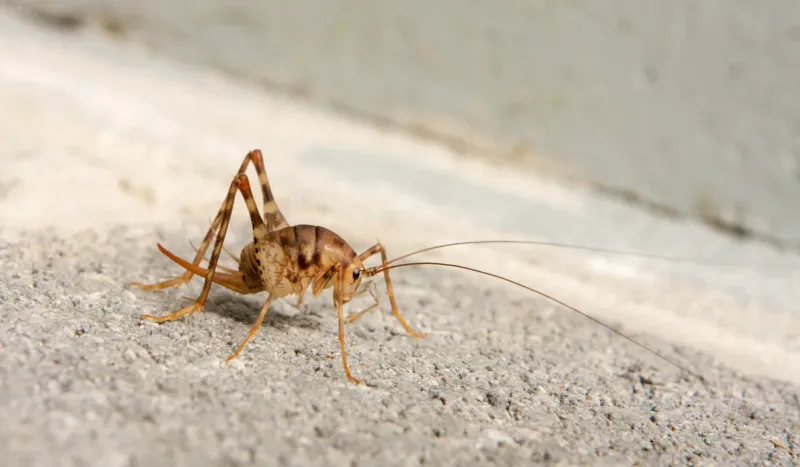
“Cave cricket” and “camel cricket” are common names, and they can refer to different species. That means a title, or a quick glance at something hopping away, is not enough to name what is in your basement.
Sound offers one practical clue. According to NC State Extension, camel crickets do not chirp, while field crickets likely do.
If you hear chirping at night, the singer may be something else entirely.
Body shape can also make you pause. Camel crickets are often described as humped and long-legged, but plenty of insects look similar in dim light.
North Carolina adds another layer. The state has multiple camel-cricket types and two cave-cricket species in the genus Euhadenoecus.
The Orthoptera of North Carolina species account for E. adelphus describes it as a habitat specialist tied to cool, moist microclimates in the Southern Blue Ridge. That is not simply a typical basement pest, so do not assume yours belongs to any one group.
If you want a firm name, take a clear photo, save the insect in a jar, and ask your county Cooperative Extension office. Either way, the same steps apply: check the conditions that make your basement inviting and reduce them.
Check for dampness without treating it as proof of a leak
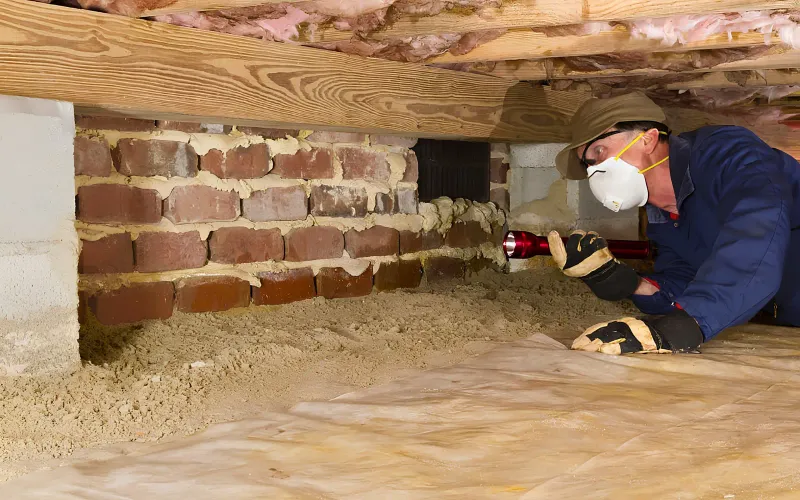
Cool, moist or humid spots are what camel crickets seem to like. NC State Extension says they may enter basements, crawlspaces, and garages, often where moisture may be a problem.
Notice the word “may.” Dampness is a habitat clue. It does not prove water is coming in, and a sighting alone never proves a leak.
Grab a flashlight and look around. Check for leaks around pipes and the water heater, condensation on cold pipes or ductwork, and walls or floors that stay damp.
Peek into corners and under stairs for cluttered hiding places, such as stacked boxes and piles of old cloth.
If you find visible water stains, active leaks, constant dampness, or pooling water, investigate those problems directly. They deserve attention whether or not any insects are around.
A humidity meter costs little and can put a number on what you feel. EPA guidance suggests keeping indoor relative humidity below 60 percent, ideally 30 to 50 percent when possible.
That is general advice for moisture and mold prevention, not a cricket-specific threshold.
North Carolina summers can leave basements muggy, so a dehumidifier or better airflow may help. Fix what you can find, and note what you cannot.
Clear shelter from the foundation edge
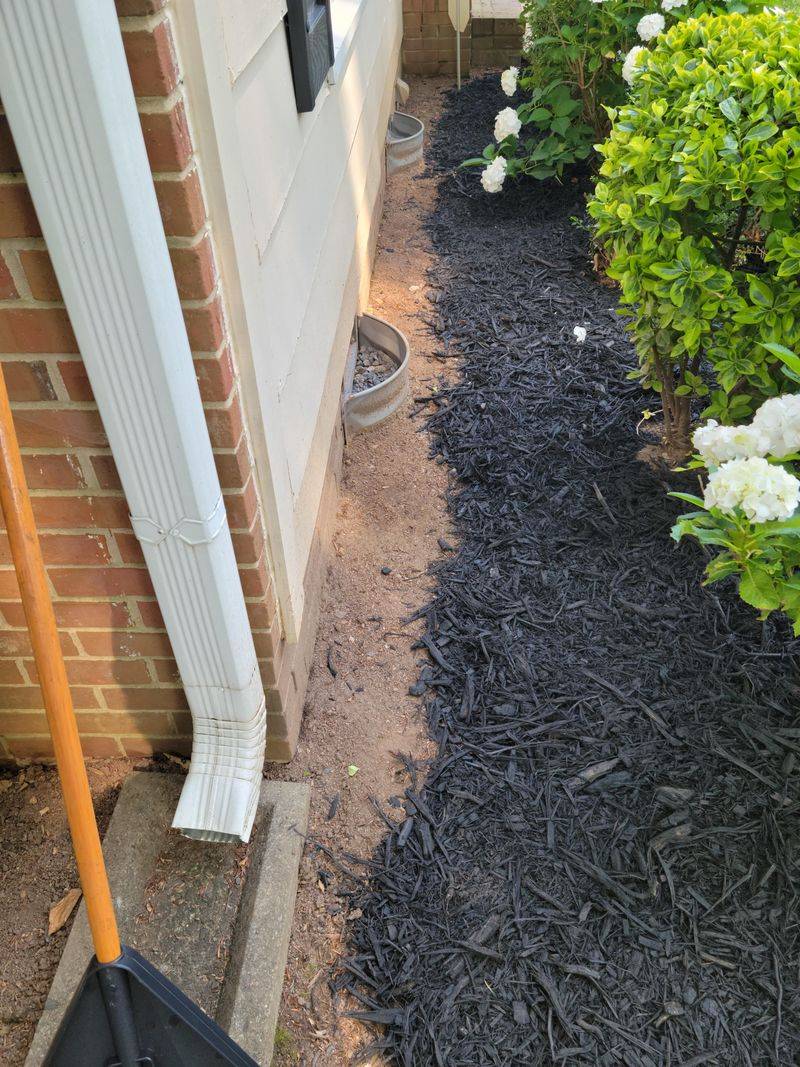
Walk the outside of your house and ask where an insect could tuck in beside the wall. Thick mulch, dense groundcover, and stacked wood all create cool, sheltered cover right at the foundation.
NC State’s camel-cricket guidance recommends keeping mulch and groundcover at least 12 inches from the foundation. It also suggests trimming shrubs and groundcover back and moving firewood and lumber away from the house.
A simple weekend routine works. Rake mulch into a bare strip along the wall, cut back plants that touch siding, and shift the woodpile out into the yard, raised off the ground.
Why bother? These changes make the foundation edge less sheltered, which may make it a less appealing spot for crickets to gather before wandering inside.
Be realistic about results. This is one habitat-management step among several, not a guaranteed fix.
NC State recommends combining moisture reduction, less cover, sealed entry points, and traps.
You may hear that clearing this cover also cuts down on indoor spiders. Spiders do eat insects, but nothing suggests that moving mulch will reliably change spider numbers inside your home, so treat any such change as a bonus, not a promise.
Direct rainwater away from the basement
After a good fall rain, take a walk around the house. Where does the water go?
Puddles beside the foundation are worth fixing no matter what insects are around.
NC State’s preventative home maintenance guidance advises keeping gutters clear and directing water away from foundation walls. Those are the first two jobs.
Start with the gutters. Leaves from oaks and maples clog them quickly in October, and a blocked gutter can spill water right down the wall.
Scoop out debris and check that water flows freely to each downspout.
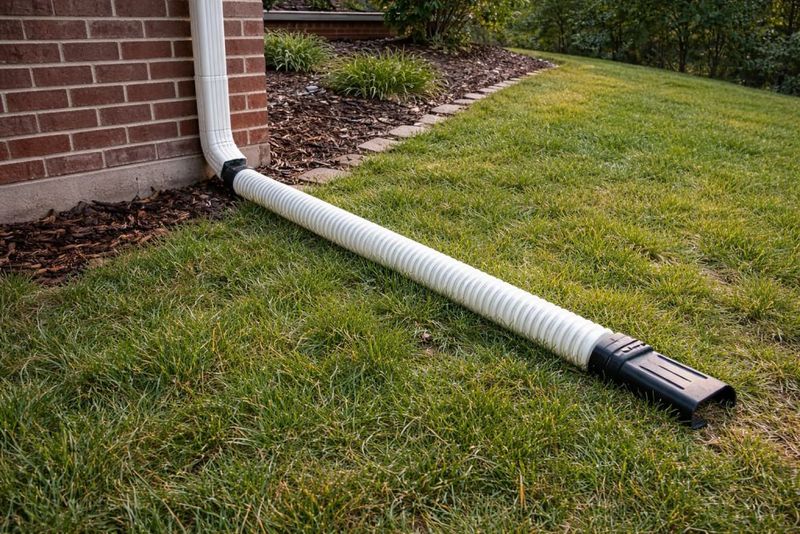
Next, look at the downspouts. Add extensions or splash blocks so water lands several feet from the house rather than at its base.
Finally, check the grading. The soil should slope gently away from the foundation, not toward it.
In clay-heavy Piedmont yards, low spots can hold water for days, so add soil to dips near the wall.
These steps help you manage moisture conditions around the house. They do not mean poor drainage caused a particular sighting, and drainage work alone will not eliminate insects.
Treat it as one piece of the larger plan.
Remove insects and block entry points
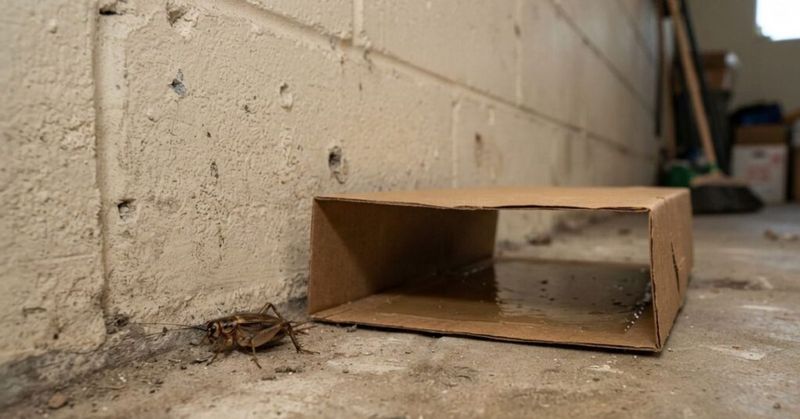
For insects already inside, keep it simple. A vacuum cleans them up quickly, and sticky traps along walls and near doors catch more while also showing where they travel.
NC State recommends sticky boards for crickets that enter.
Next, cut back the reasons to stay. Run a dehumidifier or fix leaks, then clear clutter so there are fewer hiding places.
Move stored fabrics and linens into sealed plastic bins, which protects them if numbers get large.
Then close the doors, literally. NC State Extension recommends sealing gaps around doors, windows, vents, crawlspace doors, and utility lines.
Weatherstripping, door sweeps, caulk, and screening for vents can all do the job.
Pesticides are not the place to start. Broad spraying is not the default answer, since exclusion, moisture reduction, and removing hiding places come first.
If you do choose a product, EPA pesticide safety tips say to follow the label, so use only one labeled for the intended site and follow every direction on it.
No single step works alone. Traps, sealing, drier air, and less cover outside work best together.
Fix the conditions you actually find, and let the cricket be a nudge to look rather than a verdict on your house.