
Florida rosemary is a tough native shrub that shows up in plant lists for sandy yards, and some people hope its scent will keep pests away from the door. The truth is more useful than the hype.
Here you will learn what this plant really is, where it grows best, and which simple steps make an entry less inviting to rats and roaches.
The scent is not a pest-control result
Here is the catch with the promise in the headline: none of the sources reviewed for this article show that planting a native shrub near a Florida door reduces rats or cockroaches. That does not prove a plant can never affect a pest.
It just means nobody has shown it works, so it is a poor thing to bet your doorstep on.
The plant most people have in mind is Florida rosemary, Ceratiola ericoides. UF/IFAS describes it as a native shrub whose leaves smell like rosemary when crushed.
A smell is a smell, though. It says nothing about whether a rat or roach cares.
What does have backing is plain housekeeping around the entry. UF/IFAS landscaping guidance points to spacing and trimming plants so pests have fewer places to hide.
UF/IFAS cockroach advice adds food, moisture, cracks, and hiding spots to the list, and EPA rodent guidance stresses sealing holes and securing food.
So the plan here is two parts. First, get to know Florida rosemary for what it is.
Second, build a pest plan that does not depend on it.
What does “Florida rosemary” mean?
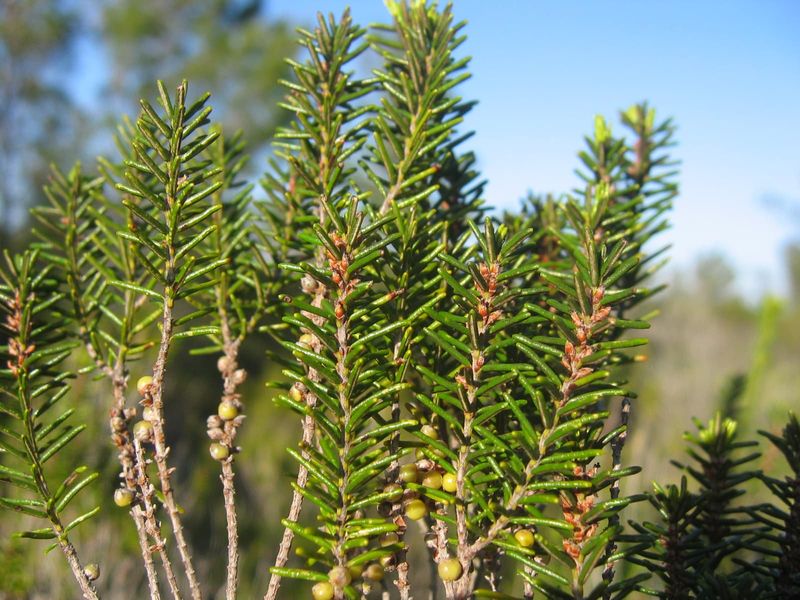
Despite the name, Florida rosemary is not the herb in your spice rack. Its scientific name is Ceratiola ericoides, and it is a native shrub of Florida’s scrub country.
Culinary rosemary is Salvia rosmarinus, which comes from the Mediterranean.
The two share a common name and a resemblance in their needle-like leaves, and that is about where the kinship ends. Care tips, uses, and any claims about culinary rosemary do not carry over to the native plant.
Treat them as separate species.
According to the UF/IFAS fact sheet, Florida rosemary is an evergreen shrub with a rounded, densely branched shape that can reach about 6 feet. That is a decent amount of plant, so size matters if you are picturing it beside a doorway.
Now the scent. The same UF/IFAS fact sheet says the leaves smell like rosemary when crushed.
But a UF/IFAS Extension article from Escambia County calls it not especially aromatic when crushed.
In plain terms, expect a mild herbal hint at best, and only if you crush the foliage. It is not a plant that perfumes the whole porch, so skip the picture of a fragrant wall of rosemary scent.
A dry-scrub native is not an automatic porch plant
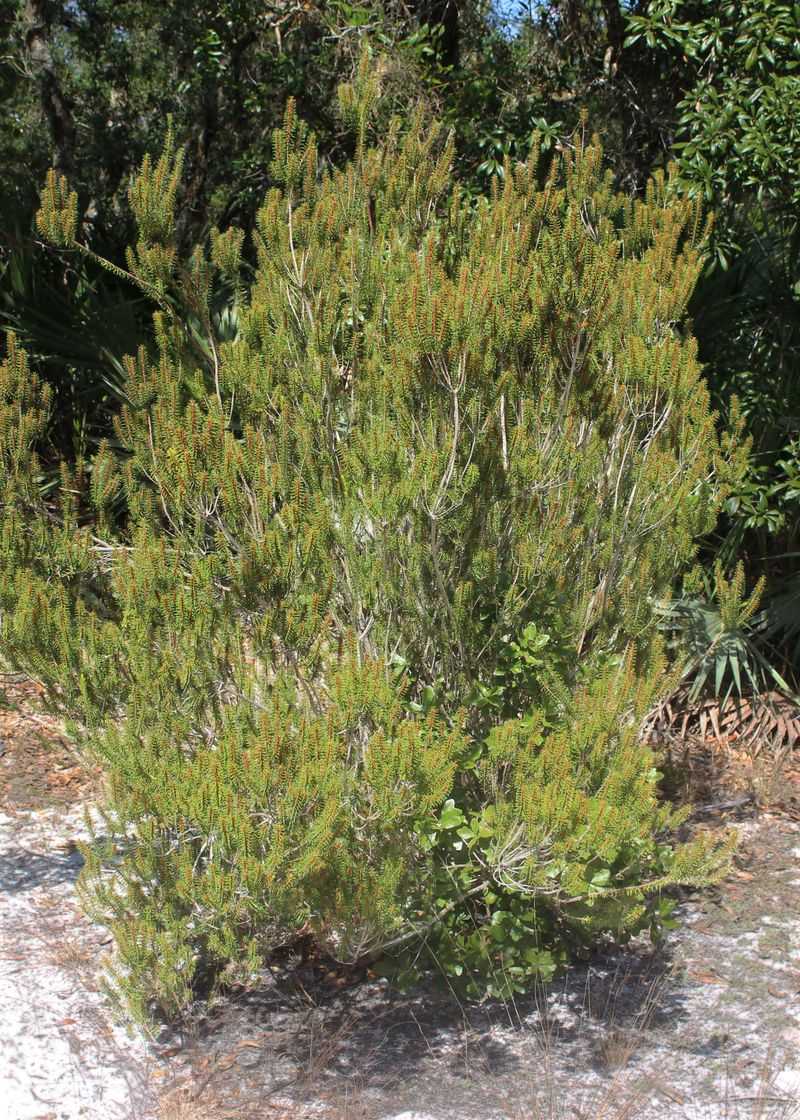
Florida rosemary belongs to dry, sandy scrub and similar habitats. That is where it has adapted to grow, with fast-draining soil and open sun.
A shaded, irrigated, richly mulched entry bed is a very different place.
UF/IFAS goes further. The fact sheet advises restricting it to minimally disturbed areas that resemble its natural habitat.
In other words, it is a specialist, not a plant to drop anywhere because it sounds appealing.
The same document talks about propagation and outplanting mostly in the context of dune restoration. It does not lay out routine porch-pot use.
So there are no container-growing instructions to borrow here, and guessing at them would be unfair to the plant.
If you live on a sandy lot with scrub-like conditions, Florida rosemary may be worth a look for its native value. Check with your county UF/IFAS Extension office about whether your site is a fit.
If your porch is shady, damp, or heavily landscaped, a different plant will probably serve you better.
Whatever you choose, do not pick it for a pest benefit nobody has demonstrated. Choose it because the site suits it.
Why oil studies do not prove a shrub will repel pests
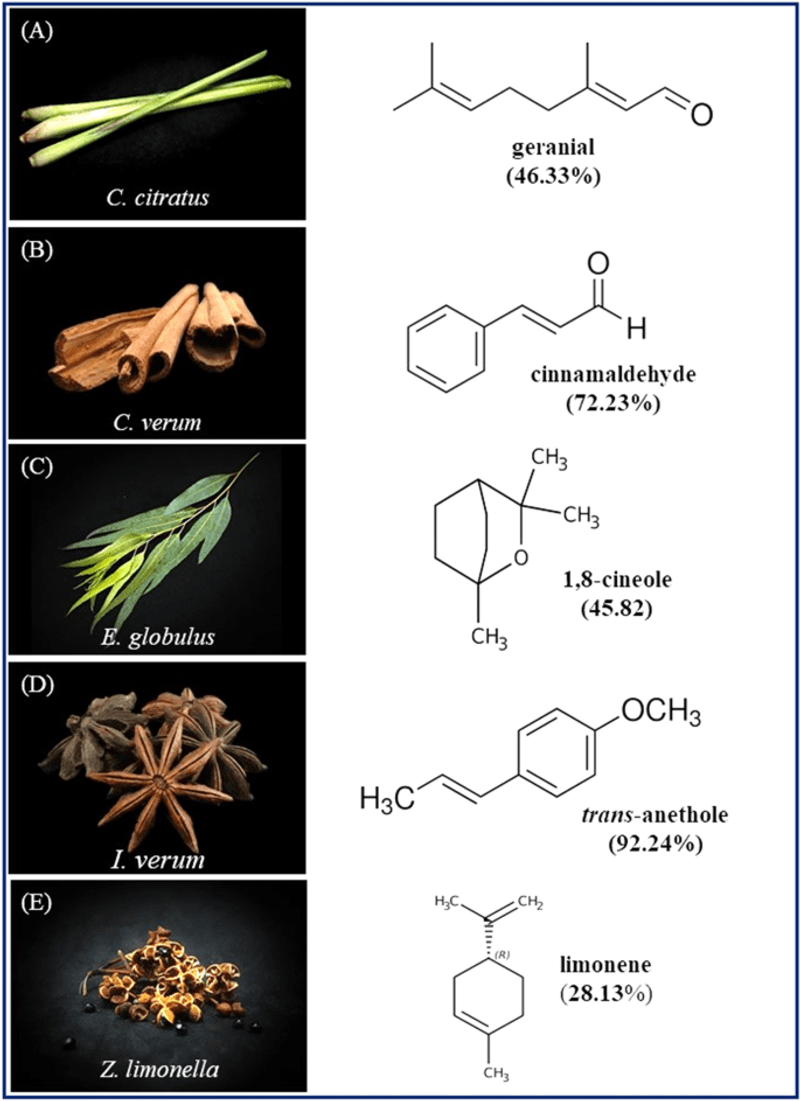
You may have seen headlines about plant oils and bugs. Those studies are real, but they test something very different from a shrub by your door.
One laboratory study looked at extracted essential oils against brown-banded cockroaches. The oils were concentrated, the setting was a lab, and the rosemary tested was culinary rosemary, not Florida rosemary.
A living plant sitting outside gives off far less than a bottle of concentrated oil.
Rodents tell a similar story. A systematic review of plant-derived rodent repellents found inconsistent success across laboratory, enclosure, and field studies.
Some tests showed an effect and others did not.
Put those together and you get a gap, not an answer. Neither type of research shows that planting a shrub beside a Florida home keeps pests away.
Neither one gives safe, effective instructions for treating a house with essential oils either.
So skip the DIY oil sprays as a substitute for real prevention. Keep your effort for the steps that deal with food, shelter, and entry points.
Give the entry less plant cover and shelter

Walk up to your own front door and look at it like a rat would. Thick shrubs, low branches, and damp mulch all look like shelter.
A dense plant beside the entry is not protection, whatever it smells like.
Here is what UF/IFAS landscaping guidance recommends. Avoid tight plantings, and prune shrubs and trees back from the structure.
Shape foundation shrubs into a “V” so the base stays open and the dark, moist space underneath shrinks.
Branches matter too. Overgrown plants can shelter pests, and roof rats can use branches as a route onto the house.
Look up as well as down, and trim anything that touches or hangs over the roof.
Then check the ground. UF/IFAS cockroach guidance says to pull mulch away from the house and keep shrubs and ornamentals trimmed and away from the structure.
A bare strip along the foundation is not glamorous, but it removes hiding places.
A good test is simple. If you cannot see the base of the plants or the wall behind them, there is probably more cover than you want.
For rats, close access to food and the house
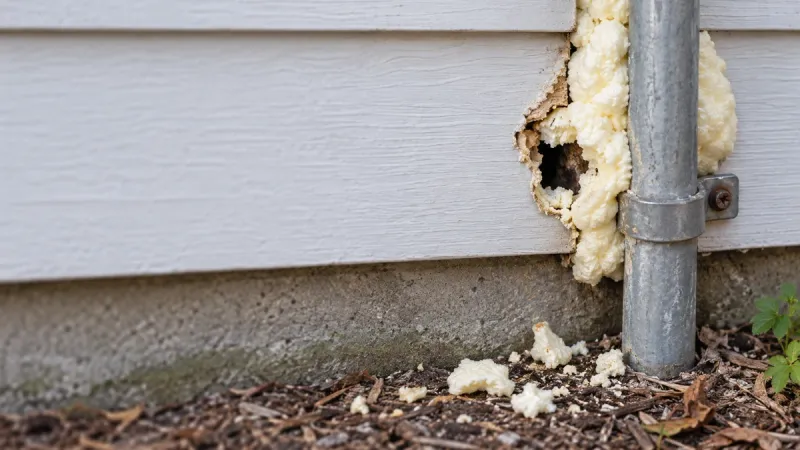
Rats need two things from your home: something to eat and a way in. Take those away, and the entry gets a lot less interesting to them.
No single step will wipe out rodents, but together they make a real difference.
CDC guidance on sealing up focuses on closing holes and gaps where rodents can squeeze in. Walk the outside of the house and check around pipes, vents, garage doors, and the spot where the porch meets the wall.
Fill what you find with durable materials.
Next, food. EPA guidance recommends securing food and garbage.
In practice that means tight-lidded trash cans, pet food brought in at night, and fallen fruit or birdseed cleaned up.
Clutter is the third piece. Stacked boxes, piles of lumber, and cluttered corners of a porch or storage area give rodents places to nest.
EPA also advises keeping brush and vegetation managed around the home.
These steps beat hoping a scent does the job. If you still see droppings, gnaw marks, or noises in the attic, call a licensed pest professional.
Outdoor cockroaches need their own response
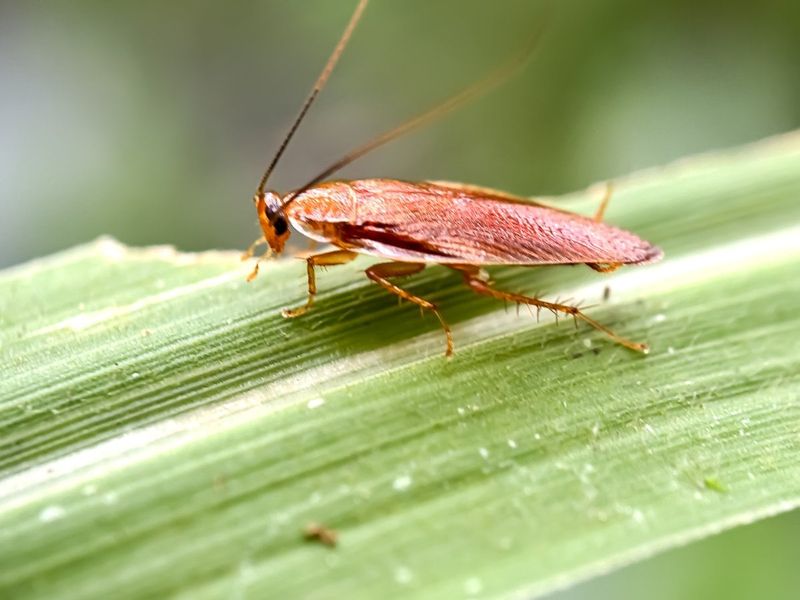
Not every roach is the same problem. The big ones you spot outside at night are not German cockroaches, and the fix for one does not automatically fit the other.
What you do depends on the species and where you find it.
UF/IFAS cockroach guidance separates large outdoor cockroaches from German cockroaches and focuses on removing harborage and closing entry routes. A large roach wandering across the porch is often a sign of outdoor shelter nearby.
German cockroaches are a different matter, and finding them points to an indoor problem that needs its own treatment.
For the outdoor kind, start with hiding places and moisture. Pull mulch away from the house, and keep shrubs and ornamentals trimmed and spaced from the walls.
Fix leaks and spots where water pools.
Mulch deserves a closer look. UF/IFAS notes that large outdoor cockroaches breed well in pine-straw mulch.
That does not mean every bed needs to be torn out, but a thick layer of it against the foundation is worth pulling back.
Finally, handle food and cracks. Clean up pet food and trash, and seal gaps around doors, pipes, and siding so the roaches you do have outside stay there.
Keep the plant choice and pest plan separate
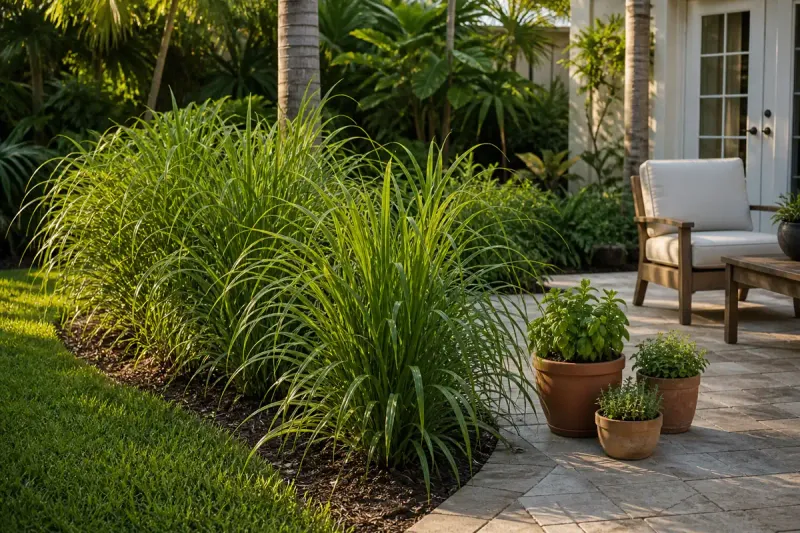
If your site is dry, sandy, and scrub-like, Florida rosemary can be a fine native choice for its own sake. Just do not count on it as a rat or roach repellent.
For pests, keep your attention on trimming, cleaning up food, and sealing gaps, as EPA and UF/IFAS advise.
A good porch plant makes a home look cared for. A well-sealed, tidy one is what keeps the uninvited guests out.