
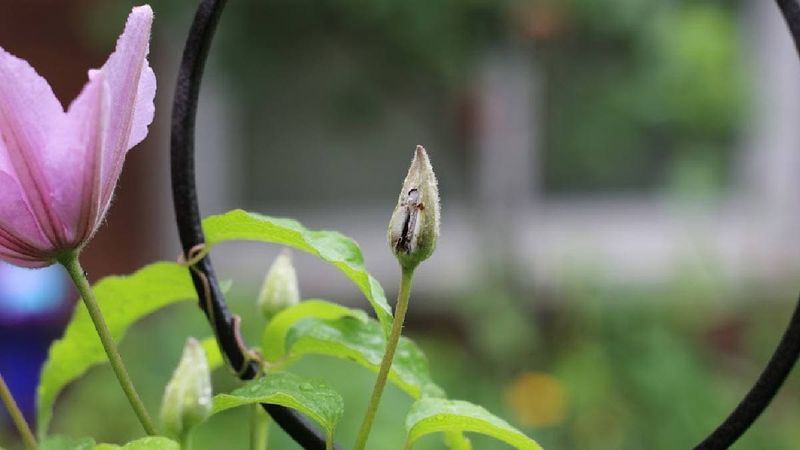
A clematis that climbs fast and covers the trellis in green can still leave you with almost no blooms. That is frustrating, especially after months of watering and waiting.
The good news is that fall gives you time to look closely at the vine and its spot in the yard. A few careful checks now can help you plan smarter for spring without making a cut you will regret.
A wall of leaves does not reveal the cause
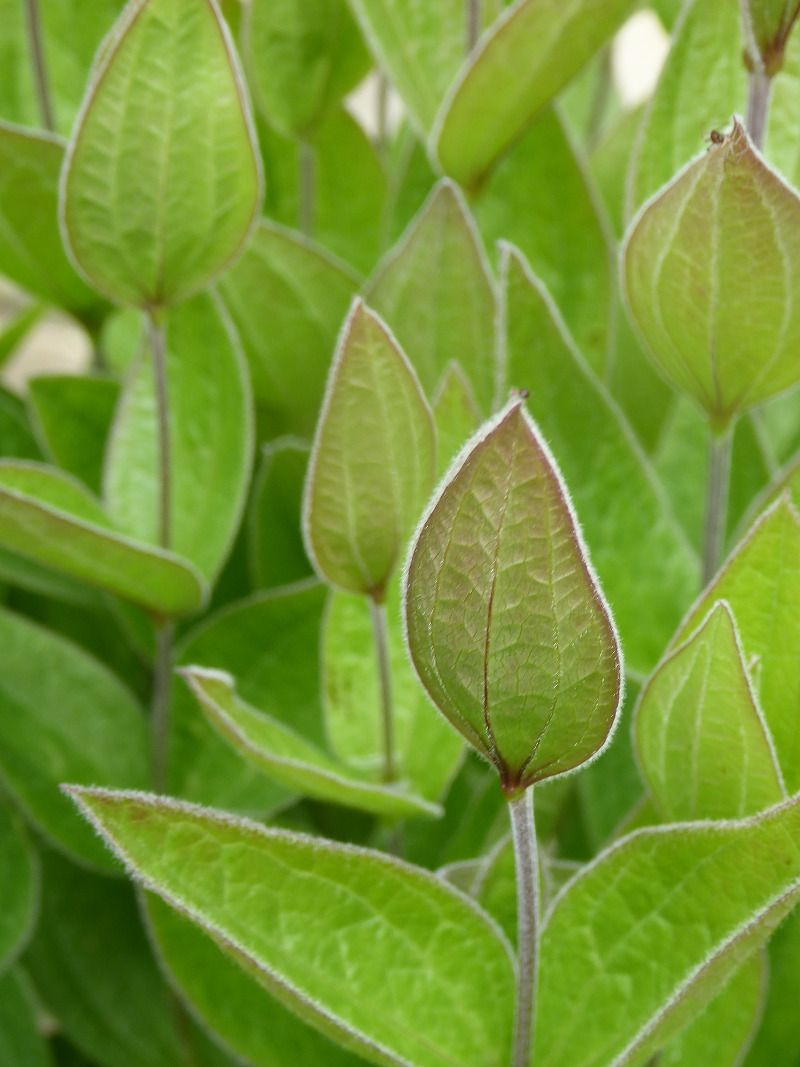
Lush leaves and few flowers can go together, but the leaves alone cannot tell you why. Iowa State Extension lists low light, excess fertilizer (especially nitrogen), improper pruning, and a young plant that is still getting established among the possible reasons for poor bloom.
So think of that green wall as a clue, not a verdict. Heavy feeding may be part of the story, but it may not be.
Light, pruning history, plant age, and timing all deserve a look.
Timing is the easiest one to miss. Clematis types flower across spring, summer, and fall, and Mississippi State Extension notes that variety shapes the bloom season.
Your vine may simply not have reached its flowering window yet, or it may have bloomed briefly while you were not looking.
Treat this fall as an investigation. No single change guarantees flowers next year, but good information helps you avoid guesses.
Identify the vine before making major cuts
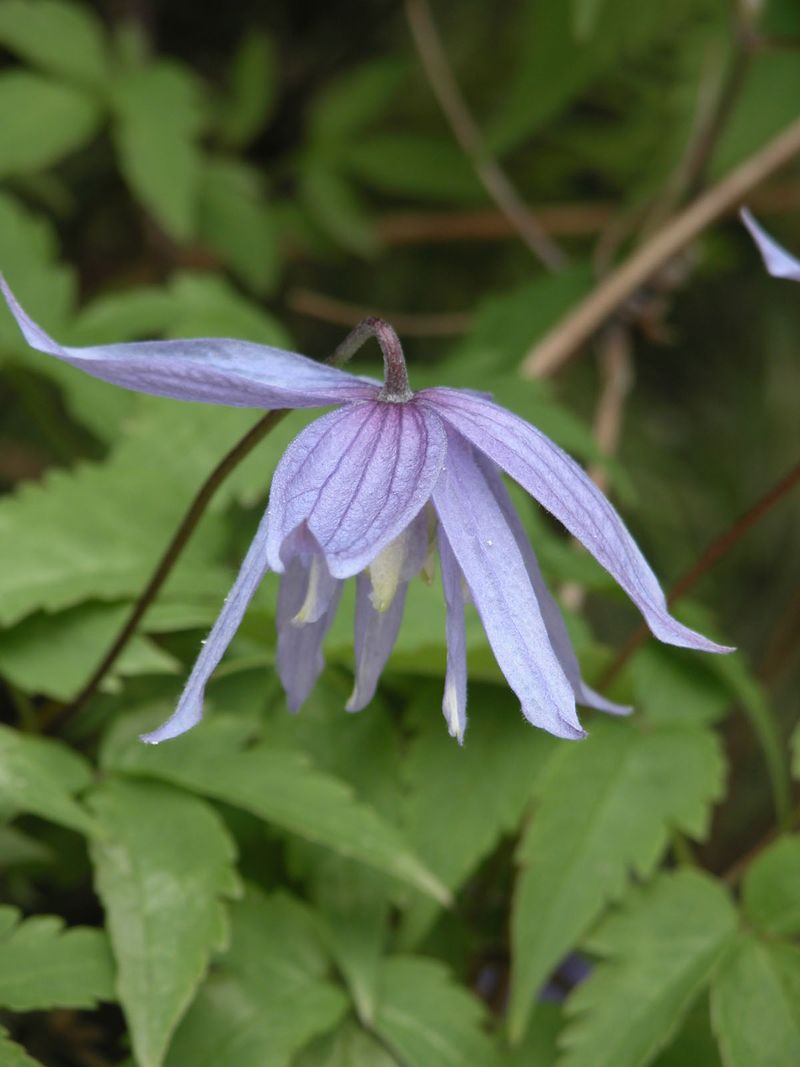
Start with the paperwork. Look for the original plant tag, a receipt, or a garden journal entry with the cultivar name.
Once you have a name, you can look up its pruning group, and that one detail guides nearly every cut you make.
If the label is long gone, become a note taker. Write down when the vine flowers, even if it is only a few blooms, and whether flowers appear on last year’s woody stems or on fresh shoots.
Iowa State Extension says watching bloom habits can help you tell the groups apart.
This matters because Illinois Extension stresses that correct pruning depends on knowing which clematis you have. A cut made at the wrong time can remove the very growth that carries next spring’s flowers.
Until you know more, skip major cuts. Pull off dead or damaged bits if you must, and keep your notes for next year.
Match pruning to the flowering group
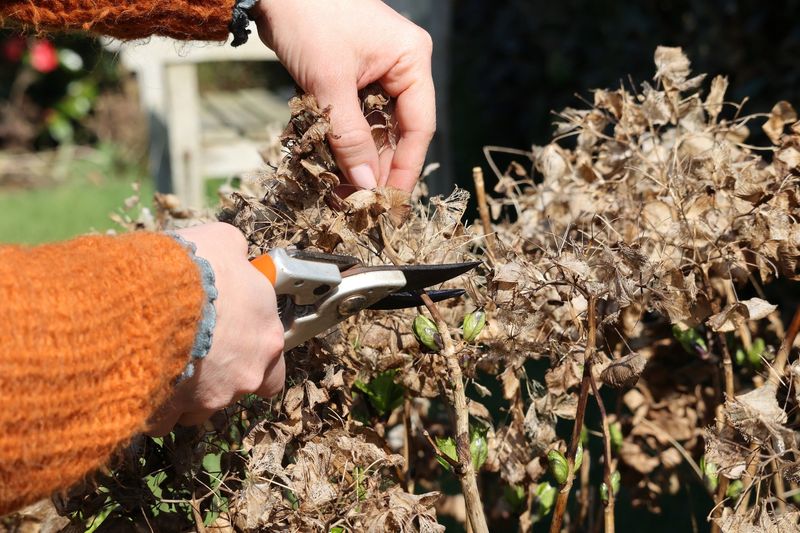
Clematis fall into three pruning groups, and each one wants something different. Group 1 blooms on growth from the previous season, so it is generally shaped after flowering rather than cut in winter.
Group 2 blooms on both old and new growth and usually needs only light, selective pruning.
Group 3 blooms on current-season growth, so it can generally be cut back hard in late winter or early spring. The RHS pruning guide lays out these differences clearly.
Cut height is not one-size-fits-all. Mississippi State gives about 12 inches for one example cultivar, while Illinois Extension suggests 8 to 12 inches for many Group C types.
Check guidance for your own cultivar and region.
A hard fall cut is not a universal fix. On Group 1 and some Group 2 vines, it can remove flower buds.
Use fall to name the group and mark a calendar date for the right pruning window.
Check the light at the foliage
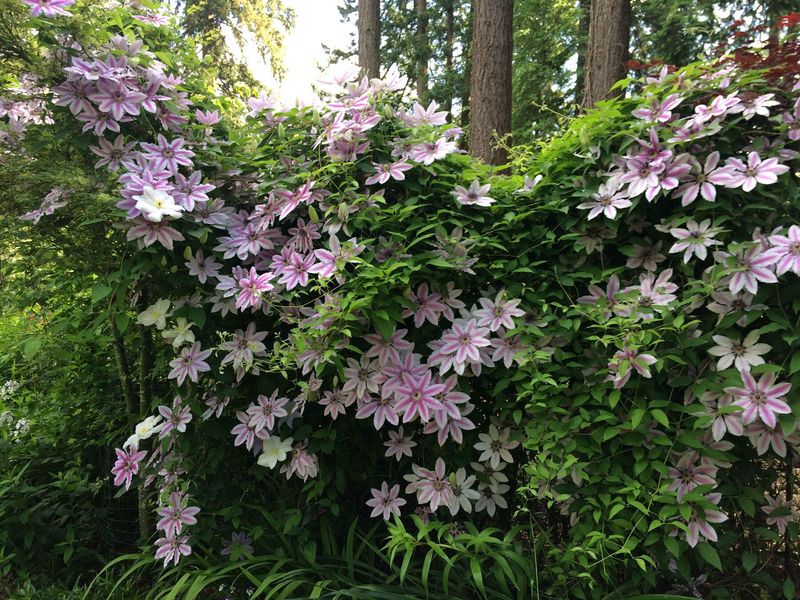
Clematis are famous for wanting their heads in the sun and their feet in the shade. That means the spot to judge is where the leaves and flower buds sit, not the soil at the base.
A vine can look sunny from the patio and still have its upper growth tucked under a tree or eave.
Spend a day watching the foliage. Note when sun hits it and when it goes dim, and whether a tree has leafed out or grown larger since you planted.
Clemson Extension says clematis need at least six hours of sun for best flowering, and that some afternoon shade helps in South Carolina’s hot summers. Treat that as a regional reference, not a rule for every cultivar or yard.
Iowa State also reports that part shade may mean fewer blooms.
In a hot Texas or Florida yard, a bit of afternoon relief may help. Full all-day blazing sun is not the goal everywhere.
Review fertilizer before adding more
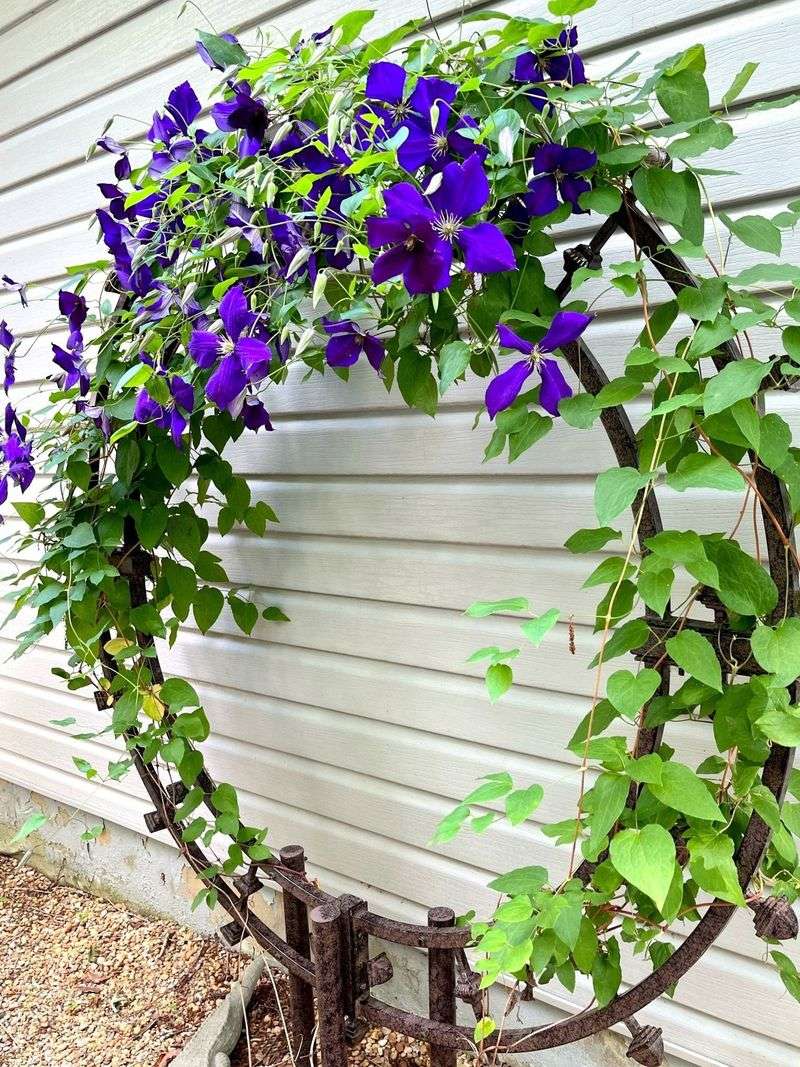
Before you reach for another bag, think back. What did you put around this vine, and when?
Lawn fertilizer that drifts into beds, compost piles, and high-nitrogen feeds all count.
Iowa State Extension warns that too much fertilizer, especially nitrogen, can produce lots of growth with few flowers. Still, leafy growth does not prove that was your problem.
Light, pruning, and age may matter more.
Advice on feeding is not uniform. Some sources call clematis heavy feeders, but a 2024 Maryland Extension response says established plants without signs of deficiency rarely need added fertilizer, and that overfeeding can reduce flowering.
A soil test or your local extension office’s guidance is a better starting point than a set formula or schedule. Feeding in response to a shown need is different from feeding by habit.
Adding more is not a proven rescue.
Consider plant age and growing conditions
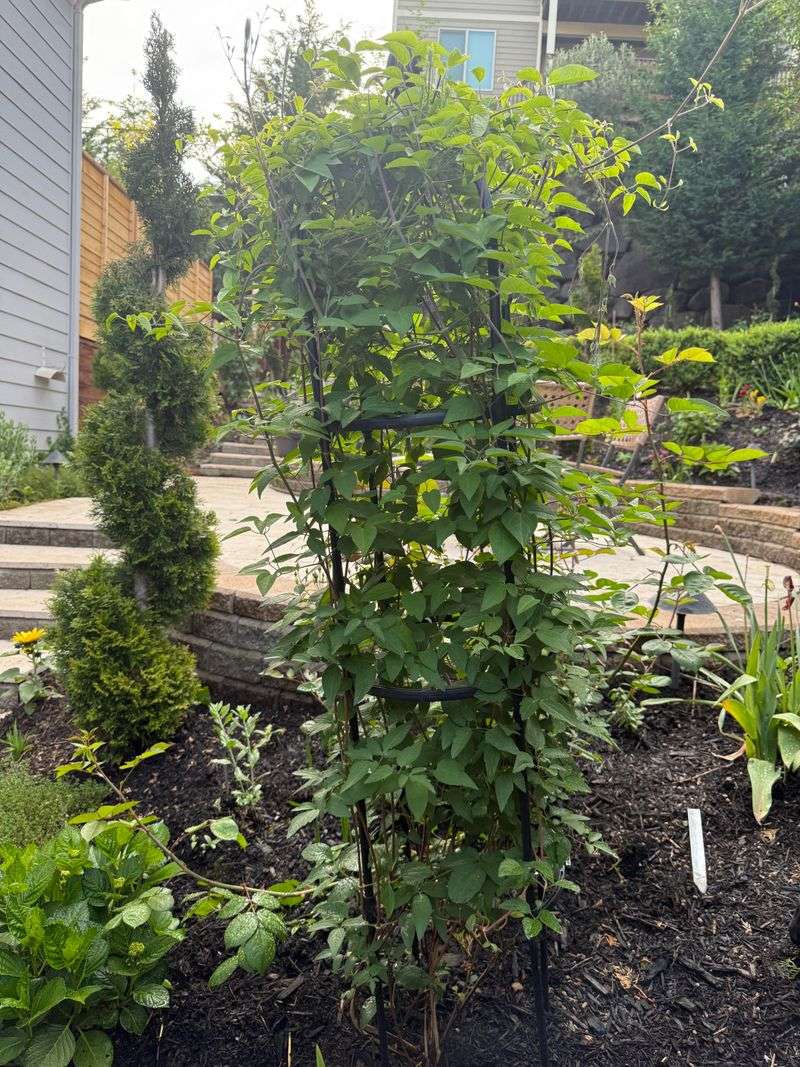
A young vine may be busy building roots and stems before it thinks about flowers. Iowa State says clematis can take up to three years to become established enough to begin blooming.
That is a possibility, not a schedule every plant follows.
Growing conditions matter too. Clematis like soil that stays moist but drains well, and they sulk in waterlogged spots.
Cool roots help, so mulch and low groundcover or nearby plants that shade the base can be useful.
Sources give starting points for care. Clemson suggests deep weekly watering in dry periods and a mulch layer of about two inches, while Iowa State offers about one inch of water a week as a general benchmark.
Adapt those numbers to your rainfall, soil, heat, and local conditions. A sandy Florida bed and a clay Texas bed will not drink the same way.
If the vine is young, patience plus steady care may be part of the answer.
Use fall to investigate and plan
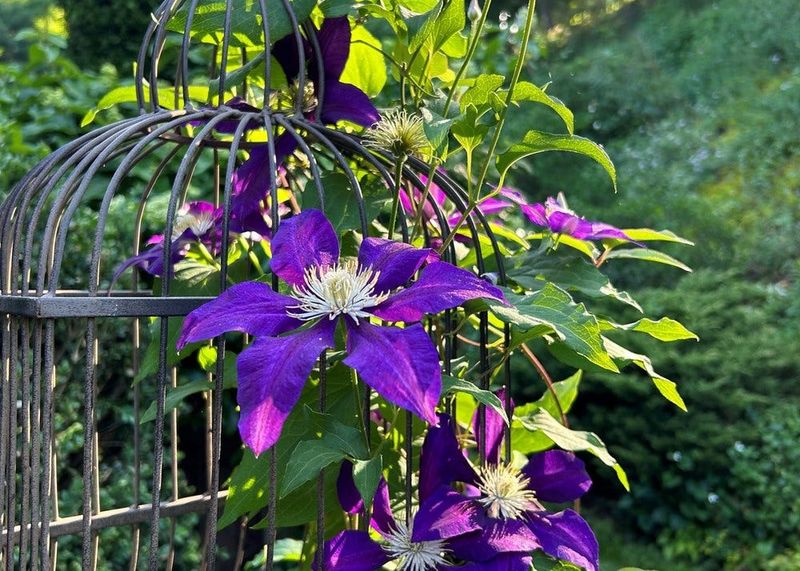
Work through the list in order. First, find the cultivar name or start tracking when the vine flowers.
Then note how many hours of sun reach its leaves and write down any fertilizer you have used.
Next, mark the pruning window for its group on your calendar. The RHS guide is a handy reference once you know the group.
Hold off on major cuts until then, and keep an eye on young vines as Iowa State describes, since age alone can delay blooms.
Sudden wilting or collapse of stems is a different problem than a leafy vine with few flowers, so do not reach for fungicide based on poor bloom alone. If you do see collapse, ask your local extension office.
No single adjustment promises flowers next spring. But a vine with a known name and a plan is far better off than one cut on a hunch.