
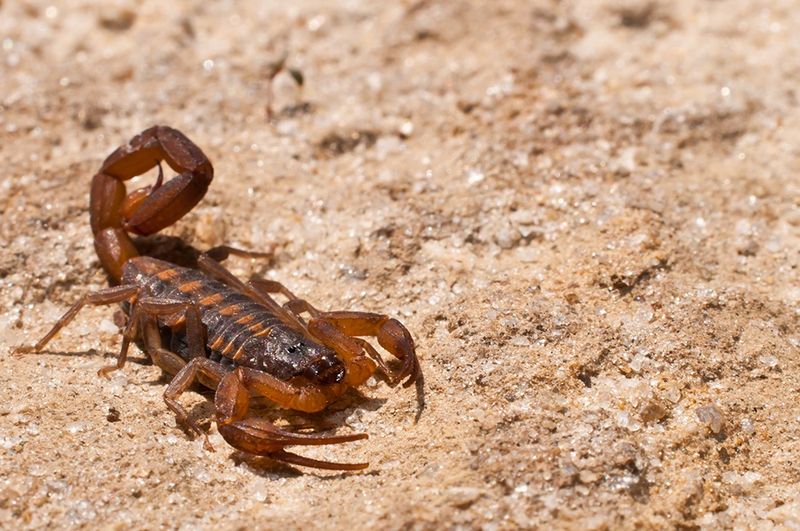
Maybe you spotted a scorpion near the baseboard last week, and now you are wondering if your neighbors are seeing them too. Plenty of Central Texas households ask that question as nights start to cool.
Nobody has measured a region-wide jump this fall, but some homes may be getting more visitors than usual. Here is what the weather records and Texas A&M guidance say, and what you can do around your house right now.
Sightings do not establish a regional surge
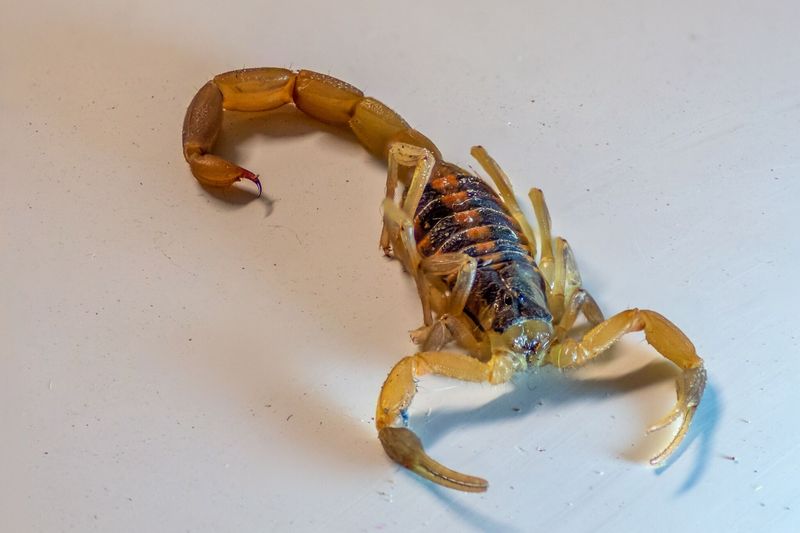
If you have found more scorpions in your house lately, your experience is real. A single household can notice a change that never shows up in any county or regional count.
What nobody has done is measure it: no systematic 2026 sighting or infestation dataset exists for Central Texas that would confirm a region-wide increase this fall.
Neighborhood chatter and pest-control stories are useful clues, but they are not a trend line. One street may have a lot of activity while the next has none, depending on the age of the homes, the gaps around doors and pipes, and the amount of hiding places in the yard.
Past Texas A&M guidance does offer some possible explanations. Texas A&M AgriLife Extension has noted that cooler temperatures often move critters inside.
Extension specialists have also said hot, dry conditions can lead scorpions to look for water or more hospitable shelter. Those are ideas about how scorpions might behave, not proof of what is happening in any house this year.
So think of this article as a practical guide. We will look at the weather backdrop, how the striped bark scorpion lives, and the steps that cut down opportunities for encounters.
Texas A&M’s scorpion guide puts the focus on blocking entry and removing shelter, and that advice works whether or not a regional surge is real.
You do not need to wait for an answer about the cause before making your home a harder place for a scorpion to settle into.
September’s weather is context, not proof

September was hot and dry in Austin. The National Weather Service climate summary for Austin-Bergstrom lists a September mean temperature of 86.4°F, which was 7.3°F above normal.
Precipitation totaled 0.08 inches, or 2.95 inches below normal.
Keep the scale in mind. Those numbers come from one station, so they do not describe every Central Texas town, and they cannot show why anyone’s house has scorpions.
They are background, a possible piece of the puzzle at most.
Then conditions shifted. By October 15, the Austin/San Antonio forecast discussion called for a cold front, much cooler weather, and rain chances in parts of the area.
That forecast also covers only part of the region and only a short window, not the whole season.
Weather does influence scorpions, but not in a simple way. A Texas Parks and Wildlife scorpion ecology review discusses how activity can respond to several environmental cues.
Nothing reviewed points to one weather trigger, whether heat, drought, rain, or a cold snap, behind the encounters people are reporting.
The practical lesson is that a hot, dry month may have played a role, or it may not have. Either way, the fixes are the same.
Bark scorpions seek shelter, not a proven winter migration
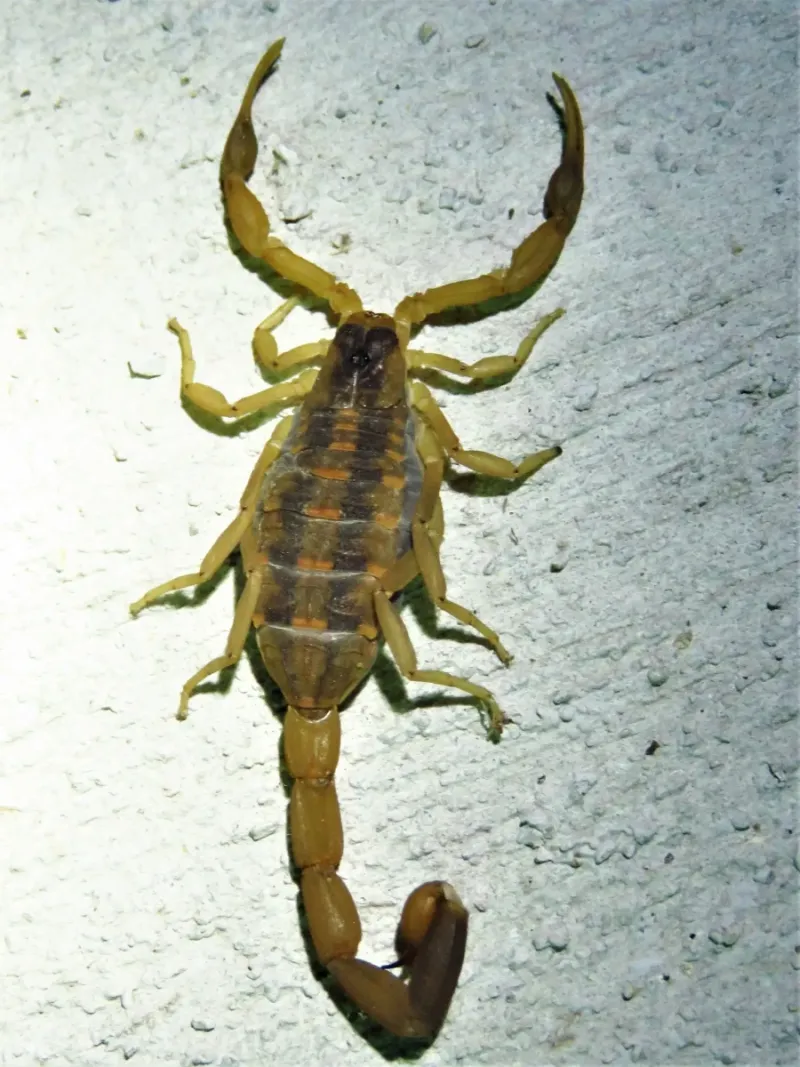
The striped bark scorpion, Centruroides vittatus, is the most common scorpion in Texas and the species most often associated with Central Texas. Not every scorpion indoors will be this one, but it is the likeliest suspect.
It is nocturnal, so you may only meet it after dark.
By day, it tucks into small, snug spaces. Texas A&M AgriLife Extension describes hiding spots under stones, bark, wood, and other debris.
A stacked woodpile, a pile of landscape rocks, or a stray board can all fit the bill.
The same guide says striped bark scorpions turn up both indoors and outdoors, and they climb walls and trees. In hot weather, they may enter living areas, including by escaping hot attics.
So a scorpion on your ceiling or wall is not a surprise.
What the sources do not show is a coordinated fall migration. Saying that autumn cooling sends scorpions into homes en masse is too broad.
Striped bark scorpions do mate in the fall, but that fact alone does not mean more of them end up in your living room.
The takeaway is simple: scorpions look for sheltered spots, and a house with gaps and a cluttered perimeter can offer plenty of them at any time of year.
Seal entry points and clear nearby shelter

Start with the house itself, because blocking access does more than any other step. Walk the outside at the start of a weekend and look for light showing around doors.
Fit door sweeps and weather-stripping on every exterior door, including the garage entry.
Next, seal cracks around pipes, eaves, and other places where something passes through the wall. Repair torn window and door screens.
Look for accessible wall openings too, such as gaps where cables enter or where trim has pulled away, and close them.
Then turn to the yard, since scorpions hide where they can wedge into tight cover. Texas A&M’s scorpion publication recommends moving firewood, stones, boards, and debris away from the house.
Store firewood off the ground and well back from the walls, and bring home-adjacent piles to a spot farther out.
Trim any vegetation touching the structure. A shrub branch resting on the siding or a vine climbing the wall works like a ramp.
Keeping a clear gap between plants and the house also makes it easier to spot problems.
A good order of work looks like this: doors first, then pipes and eaves, then screens and wall openings, then the cleanup outside. Check again after a heavy storm or when you do yard work.
Be realistic about results. Sealing and cleanup reduce access and hiding places, but they cannot guarantee a scorpion-free home.
A determined scorpion may still find a gap you missed, so treat the job as ongoing and recheck now and then.
Use traps and pesticides as supporting tools
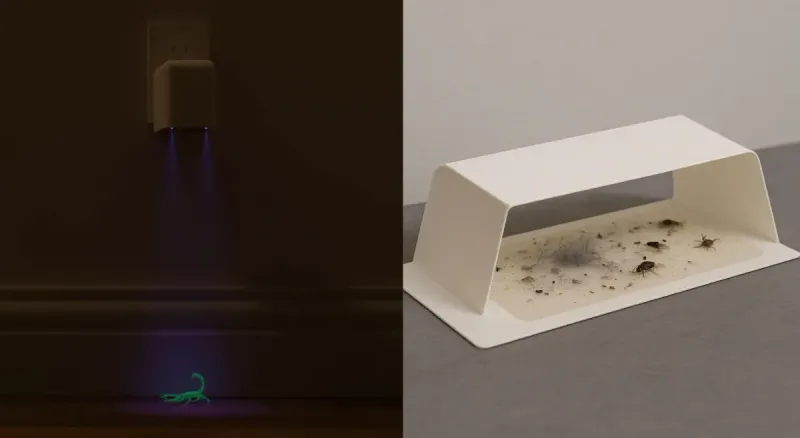
Sticky traps work best as a detective tool. Placed along baseboards, in corners, and near doors, they can show where scorpions are moving and point to likely entry areas.
The Texas A&M School IPM action plan for bark scorpions describes traps as a way to monitor activity.
Monitoring has a limit, though. A trap that catches a scorpion tells you it was there, but it does not remove whatever let it in.
Check traps regularly, note where catches cluster, and go back to those spots to seal gaps or clear clutter.
Pesticides are a different story. If you choose to use one, pick a product labeled for the site you plan to treat and for the pest, and follow the label directions exactly.
Skip any advice that offers a special spray schedule or a miracle product, since neither is supported here.
It also helps to know that Texas A&M notes insecticides alone make scorpions difficult to control. Spraying the yard and expecting the problem to be solved is misleading.
Think of pesticides as a possible add-on after exclusion and cleanup, never a replacement. If you are unsure which product suits your situation, a licensed pest professional can read the label with you and explain the options.
Remove scorpions carefully and take stings seriously
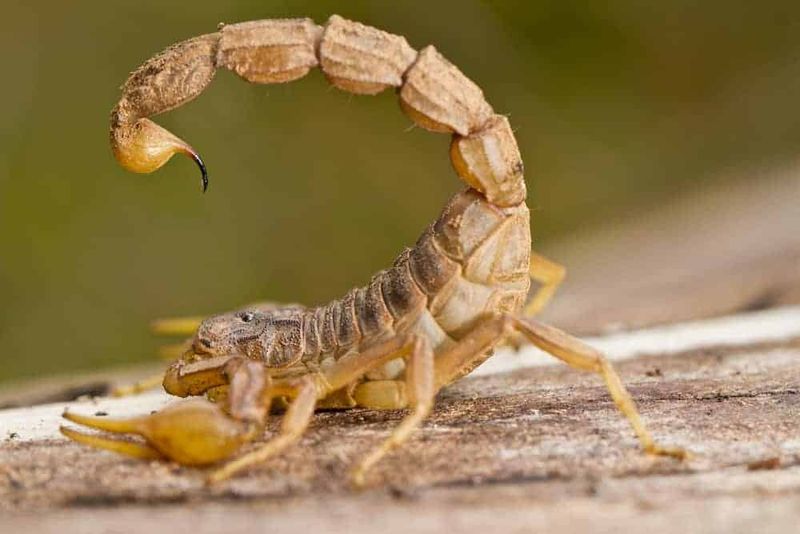
Never pick up a scorpion with your bare hands. If one has to go, use a container or a long tool and keep your hands well away from it.
Work slowly, and wear closed shoes when you are walking around at night.
The guidance on bark scorpion management from Texas A&M backs this hands-off approach. Once the scorpion is contained, take it outside and away from the house, then look around to see how it might have gotten in.
If someone is stung, wash the area with soap and water. Then call Poison Control at 1-800-222-1222 for advice that fits that person’s situation.
America’s Poison Centers offers guidance on scorpion stings.
Get urgent medical care for trouble breathing or swallowing, unusual muscle movements, or any other serious symptoms. Do not wait to see whether they pass.
Do not assume a sting will be minor. Texas A&M says most Texas stings cause moderate reactions, but reactions vary from person to person, and allergic or serious responses are possible.
Young children and anyone who is worried deserve a quick call for guidance.
Make prevention the fall plan
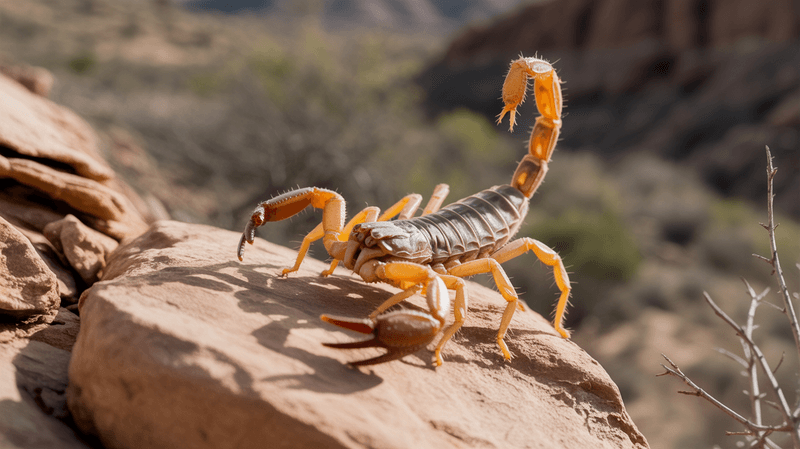
You do not have to settle the weather debate before you act. Start with the gaps around doors, pipes, and eaves, and clear stones, boards, and woodpiles away from the walls, as Texas A&M recommends.
Add sticky traps to monitor activity, and call Poison Control if a sting happens.
These steps cut down opportunities for encounters. They do not prove a regional increase, and they will not make scorpions vanish.
A scorpion has no loyalty to a weather theory, only to a good hiding spot, so take the hiding spots away.