
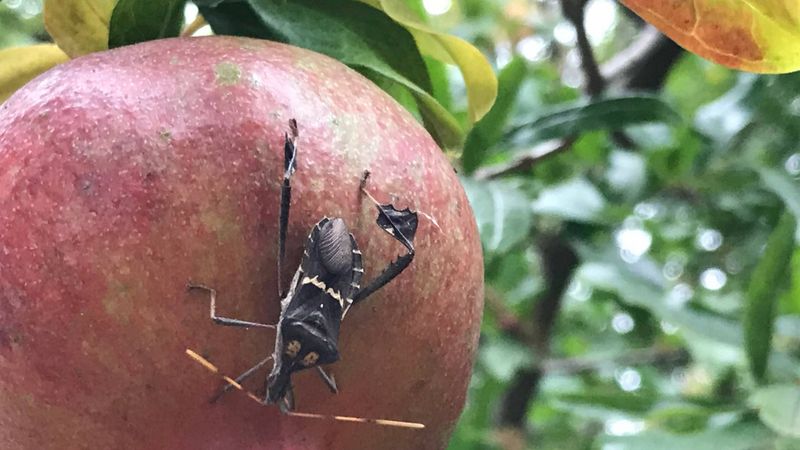
A brown, narrow-bodied insect with a white zigzag on its back may be visiting the tomatoes and pomegranates in some California yards. It does not chew fruit the way a caterpillar does.
It pokes in with a needle-like mouth and sips plant juices, and the damage can be easy to miss. Learning to spot it before you act can protect your harvest and the bees and helpful insects that share your garden.
A possible pest on two different harvests
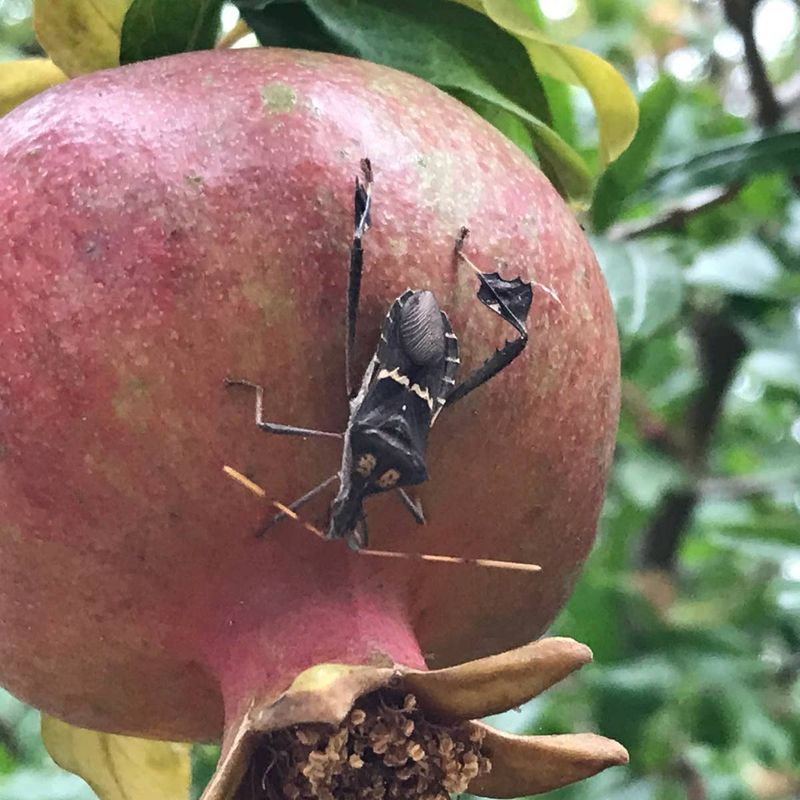
Meet the leaffooted bug, especially a species called Leptoglossus zonatus. UC IPM reports that California gardeners commonly find it on both tomatoes and pomegranates.
It does not chew.
It pierces the fruit and sucks out plant juices, so “feeding on” describes it better than “chewing through.”
Fall is a good time to take a look at pomegranates. UC IPM pomegranate guidelines describe leaffooted bugs feeding on the fruit through fall, with orchard numbers sometimes building from mid-August until harvest.
That is an orchard observation, though. It does not mean every backyard has these bugs, and it does not mean a widespread outbreak is underway this season.
The same goes for the idea that both crops are being hit in the same yards. The insect can feed on both, and some gardens may see it on one crop, both, or neither.
Other insects can also leave marks on tomatoes and pomegranates.
So the first job is detective work. Find the insect, confirm what it is, and then choose a response.
A calm start like that keeps you from spraying the wrong thing and harming bees or other helpful insects along the way.
How to recognize a leaffooted bug
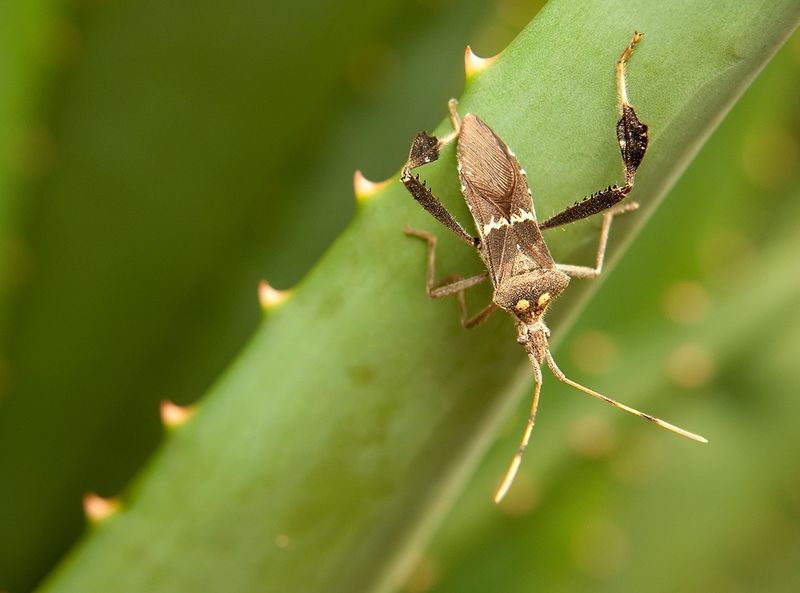
Picture a slim, brownish-gray bug about three-quarters of an inch to an inch long. According to UC IPM Pest Notes, adults often show a white zigzag stripe across the wings.
Leptoglossus zonatus also has two yellow spots just behind the head.
The hind legs give the group its name. They are flattened in a leaflike way, which can make the bug look a little clumsy when it walks along a stem.
Eggs are a helpful clue too. Females lay them end to end in neat strands, a bit like tiny barrels lined up on a leaf or stem.
Young nymphs hatch and often stay in clusters, so a bunch of small bugs on one spot is worth a closer look.
Nymphs can be easier to remove than adults, which tend to fly off when disturbed. Still, spotting one of these insects is different from blaming it for every flaw on your fruit.
Seeing the bug itself is what counts, not a blemish alone.
Fruit symptoms vary by crop and timing
A pomegranate can look perfectly fine from the outside. UC IPM notes that feeding may leave little visible evidence while the arils inside turn brown or wither.
Cutting a fruit open is sometimes the only way to see what happened.
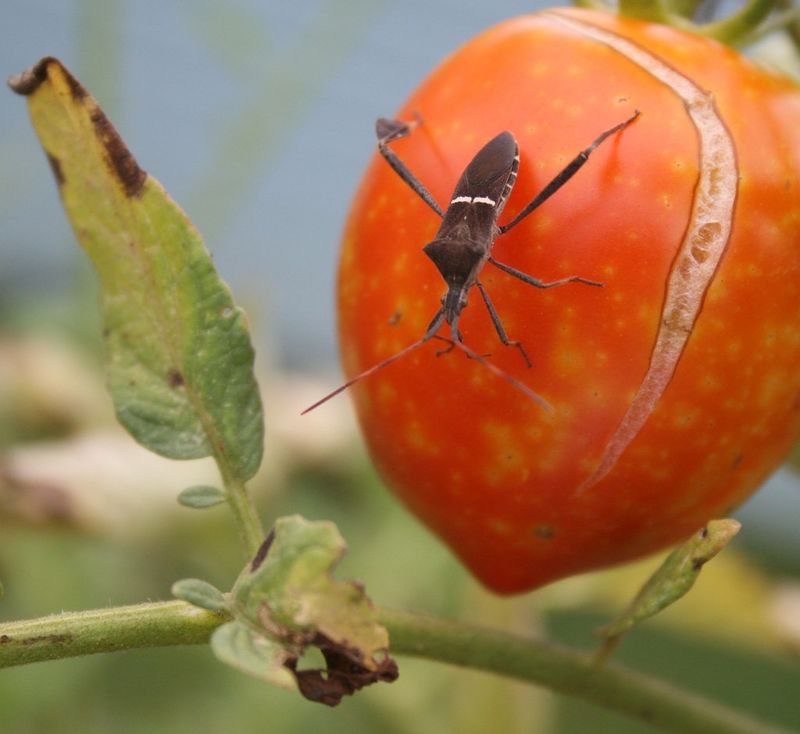
Tomatoes tell a different story depending on timing. Feeding on very young fruit can cause it to abort and drop.
Mature fruit may show only slight discoloration, and a small blemish is not automatically a reason to toss it.
Here is the catch: these symptoms do not point to one culprit. Stink bugs are relatives of leaffooted bugs, and UC IPM lists stink bugs as tomato pests too.
Other problems also mark tomatoes, as the UC IPM tomato garden guide shows.
Try this when you find a spotted fruit: look nearby for the actual insect, eggs, or nymph clusters before deciding anything. If nothing turns up, treat the damage as a puzzle rather than a verdict.
Inspect in the morning and remove bugs by hand
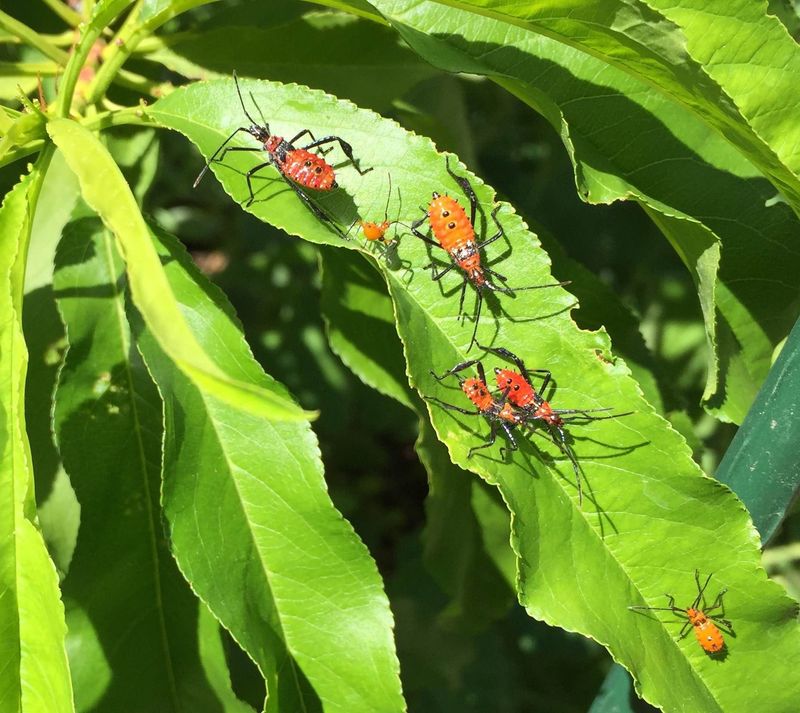
Early morning is the best time to look around. Bugs are slower and less active then, so they are easier to catch.
Walk your plants with a cup of coffee and check leaves, stems, and fruit clusters.
Look for the three things that matter: adults, clustered nymphs, and egg strands. Pick the bugs off by hand or brush them into a container of soapy water, as UC IPM recommends.
Gloves are a smart idea because the bugs release a smelly odor when handled.
When you find egg masses, remove them. Taking out a strand early means fewer nymphs to deal with later.
On pomegranates, shaking a limb or knocking nymphs off with a hose can help. UC IPM says this works better on nymphs than on adults, which may simply fly away.
You may need to repeat the routine, and eggs have to be checked separately.
Treat this as steady upkeep rather than a one-time fix. A few minutes a few mornings a week can keep numbers manageable without harming bees, though it will not guarantee complete control.
Use row covers before bugs arrive

Timing is everything with row covers. UC IPM notes that they can prevent feeding if you put them on before the bugs show up.
Once the insects are already on the plants, a cover may simply trap them in with your fruit.
There are tradeoffs to weigh. Covers can keep out pollinators and other beneficial insects, and they may let other pests build up underneath.
Tomatoes that need pollinator visits to set fruit are one reason to think carefully about when the cover goes on and when it comes off.
A cover works best as a prevention tool for a small bed. It is far less practical for a full-size pomegranate tree.
Secure the edges so bugs cannot sneak in, and peek under the fabric now and then. Pair covers with your morning checks instead of relying on them alone, since no single measure is a guaranteed solution.
Clean up fruit and debris, with one important caveat
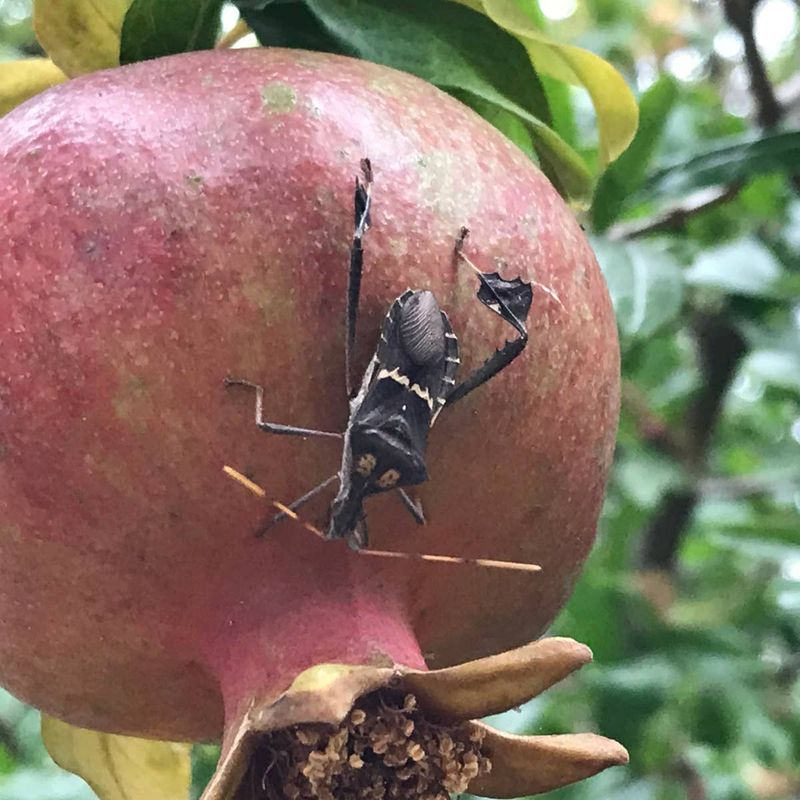
Tidying up is a good supporting habit in any garden. UC IPM’s general IPM advice includes picking up fallen fruit and removing infested plant debris.
It will not remove the bugs on your plants today, so it works alongside hand removal rather than replacing it.
Pomegranates come with extra guidance. The UC IPM pomegranate guidelines recommend removing fruit before winter, which may reduce potential overwintering sites.
Those guidelines are written for orchards.
Here is the caveat: UC IPM says the benefit to the following year’s backyard tree is unknown. So clean up because it is a sensible, low-risk chore, not because it promises fewer bugs next spring.
A simple routine keeps it easy. Pick up drops, clear out spent tomato vines, and toss anything that looks infested.
Then keep checking in spring, since cleanup is only one piece of the plan.
Consider pesticides only after identifying the pest
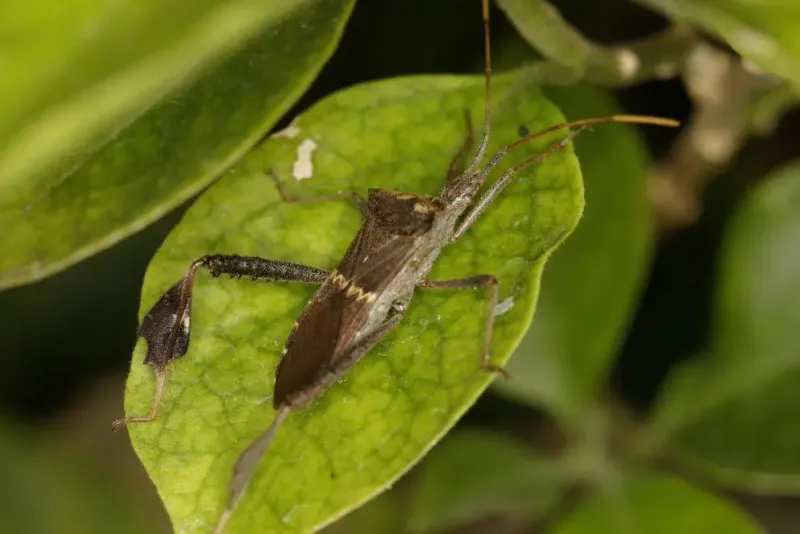
Reaching for a spray bottle is rarely the best first move. UC IPM says pesticides are rarely necessary for leaffooted bugs in home landscapes, and store-bought products often work only for a short time.
Adults can also fly back in from neighboring plants.
Broad-spectrum pyrethroids deserve extra caution because they can harm bees and beneficial insects. Those are the helpers many California gardeners work hard to protect.
If you still consider a product, identify the pest first. Then follow the label closely, including directions for food crops and harvest timing, as the UC IPM overview of IPM advises.
Routine spraying is not a recommended habit, and no spray is guaranteed to stop the bugs.
You may also run across numbers called thresholds. The tomato stink bug sampling rule is meant for commercial fields, not home gardens, and it does not apply to leaffooted bugs.
For pomegranates, UC IPM reports no treatment thresholds for leaffooted bugs. Backyard decisions are best made on what you actually find on your plants.
Identify first, then choose a measured response
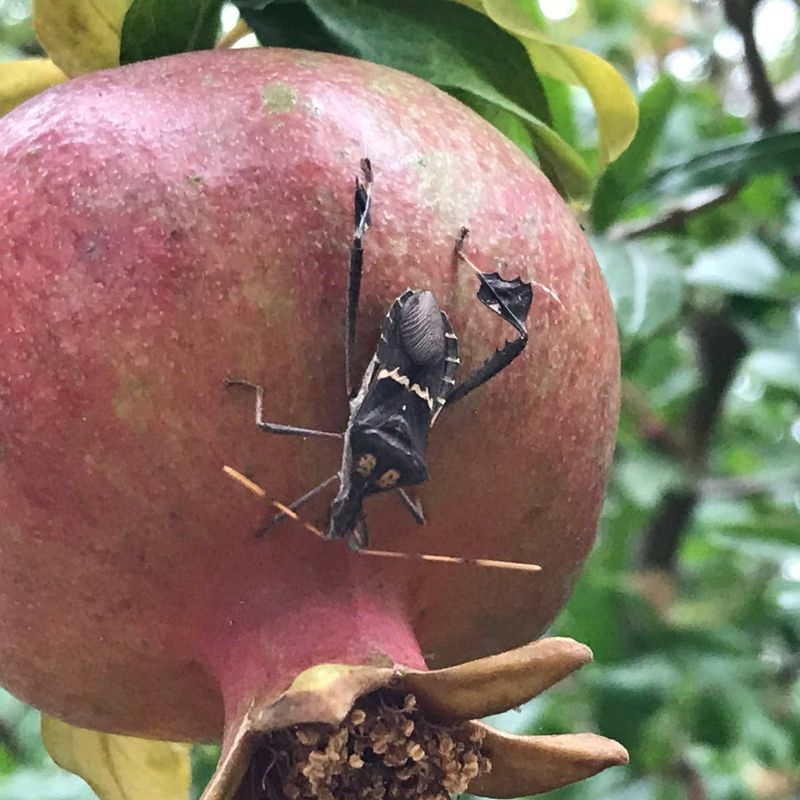
Start by looking, then name what you find. Remove bugs and egg masses where you can, consider covers before the next arrivals, and clear fallen fruit and debris, following UC IPM leaffooted bug advice and the wider IPM approach.
Keep pesticides for carefully considered cases.
Leaffooted bugs can feed on both crops, but a marked fruit alone does not prove they did it, and nothing shows both crops suffering in the same yards this fall. A good look at the actual insect settles more than any guess.