
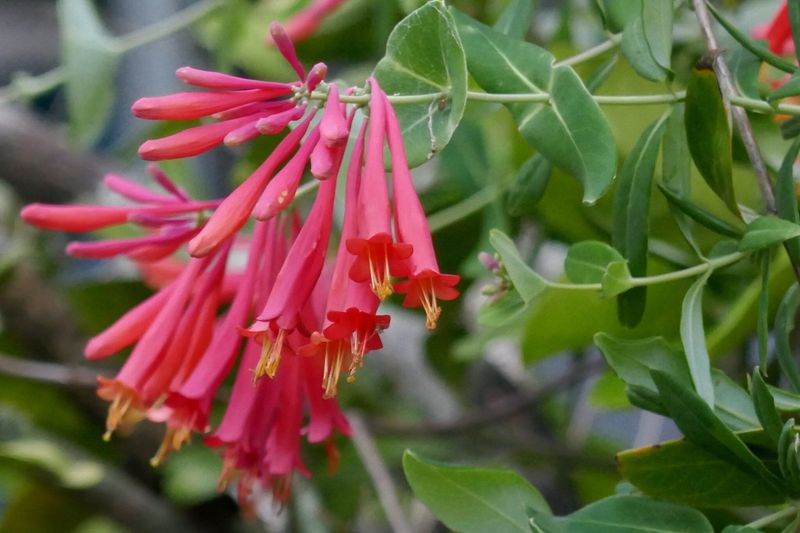
A hummingbird stopping beside your porch chair can turn an ordinary afternoon into something special. In Florida, fall flowers can help feed birds moving south, while some areas also host hummingbirds through winter.
These seven plants offer nectar, bright blooms, and practical options for porch containers. Pick the ones that match your sunlight and space, then give visiting birds a clear, quiet path to the flowers.
1. Firebush
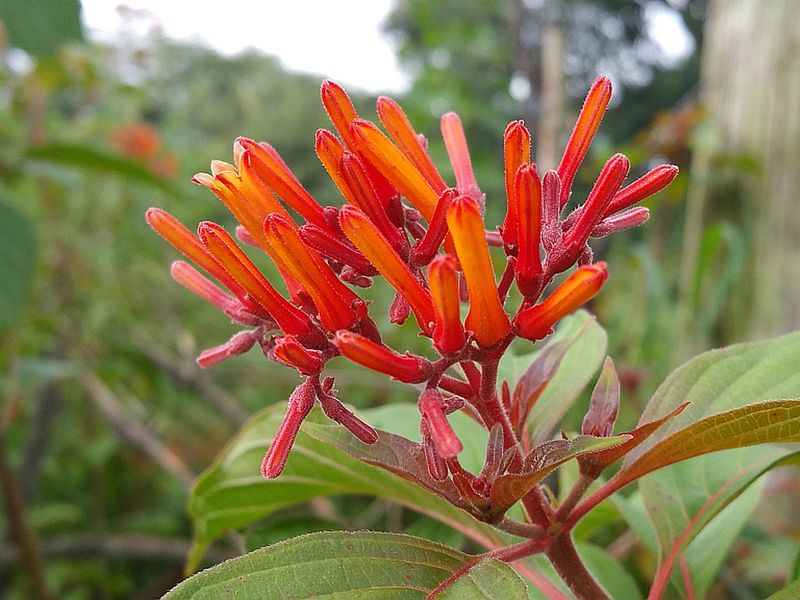
Orange-red flower clusters can turn one large pot into the busiest corner of a sunny porch. Firebush, Hamelia patens, is a Florida native that offers hummingbirds nectar while giving the porch a loose, leafy backdrop.
Choose the native species from a nursery that can confirm its identity, since plants sold as firebush are not always the same. Start with a sturdy container about 20 inches wide, with generous drainage holes, and use potting mix rather than sandy yard soil.
Give it at least six hours of sun for strong flowering, although some afternoon shade is welcome on a hot patio. Water deeply when the upper inch of mix dries, and expect containers to need checking more often than plants in the ground.
Its main trade-off is size: even in a pot, firebush needs room. Trim lightly rather than shearing away every flower tip, and remember that North Florida cold can end the show while South Florida plants may keep blooming much longer.
2. Tropical Sage
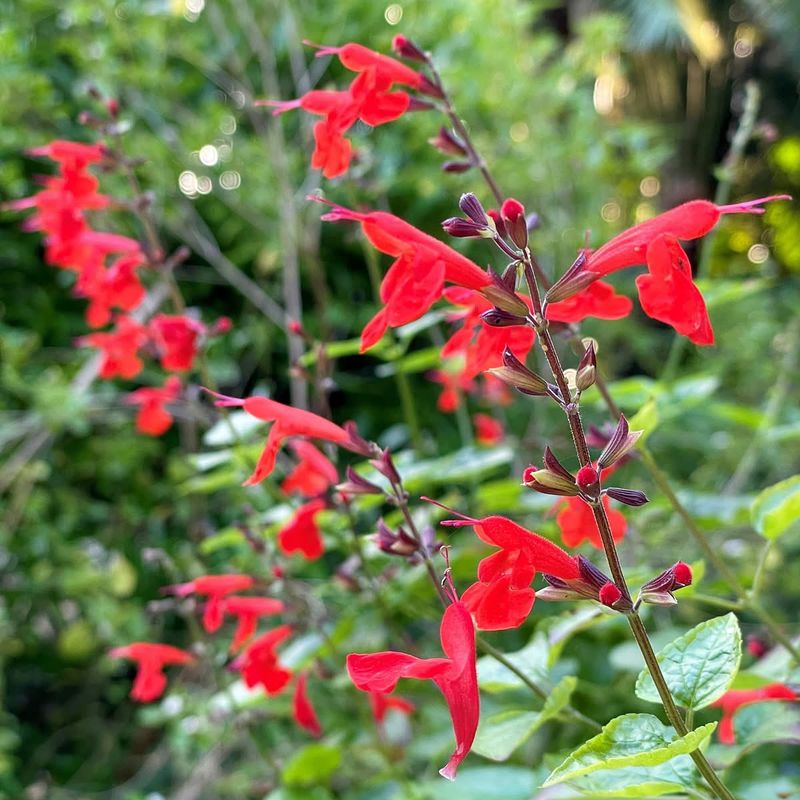
A few slender scarlet flower spikes can do plenty of work without taking over your sitting area. Tropical sage, Salvia coccinea, brings a light, airy shape to containers and is native to Florida.
For a hummingbird-focused pot, the red-flowered form is an easy choice. Pink and white forms are also available, but flower shape and nectar matter more than color alone.
Set one plant in a container roughly 12 to 14 inches wide, or group several in a wider planter. Morning sun with afternoon shade works well, and sunnier spots are suitable when watering keeps pace with drying potting mix.
Snip off spent flower spikes to encourage fresh growth, leaving a few to form seed if you want volunteers. Seedlings may appear in nearby pots, so pull extras while they are small.
Expect a softer, less formal display than a tightly clipped bedding plant. Fall flowering can continue during warm weather, but frost may finish individual plants in North Florida, making saved seed or nursery replacements useful for the next season.
3. Coral Honeysuckle
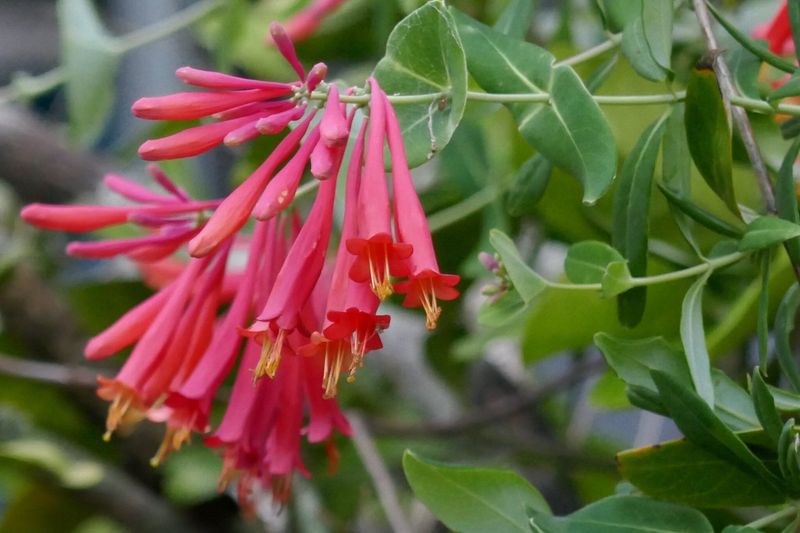
When floor space is tight, send the flowers upward. Coral honeysuckle, Lonicera sempervirens, uses a trellis to place clusters of narrow red blooms near eye level without spreading across the porch floor.
This Florida-native vine is different from invasive Japanese honeysuckle. Check the botanical name before buying, and choose a plant already carrying buds if your goal is flowers this fall.
Use a heavy container at least 20 inches wide and a firmly secured trellis. A sunny porch edge usually gives better bloom than a deep, shaded corner, while a rich, well-drained potting mix helps the roots stay healthy.
Fall flowers are a bonus rather than a promise: its main bloom season is spring, followed by scattered flowering when conditions suit it. That makes coral honeysuckle a longer-term porch investment, not the most dependable instant fall centerpiece.
Guide young stems onto the support and shorten wandering growth as needed. Keep the trellis out of walkways, and move or secure the entire setup before strong tropical weather arrives.
4. Vermillionaire Cuphea
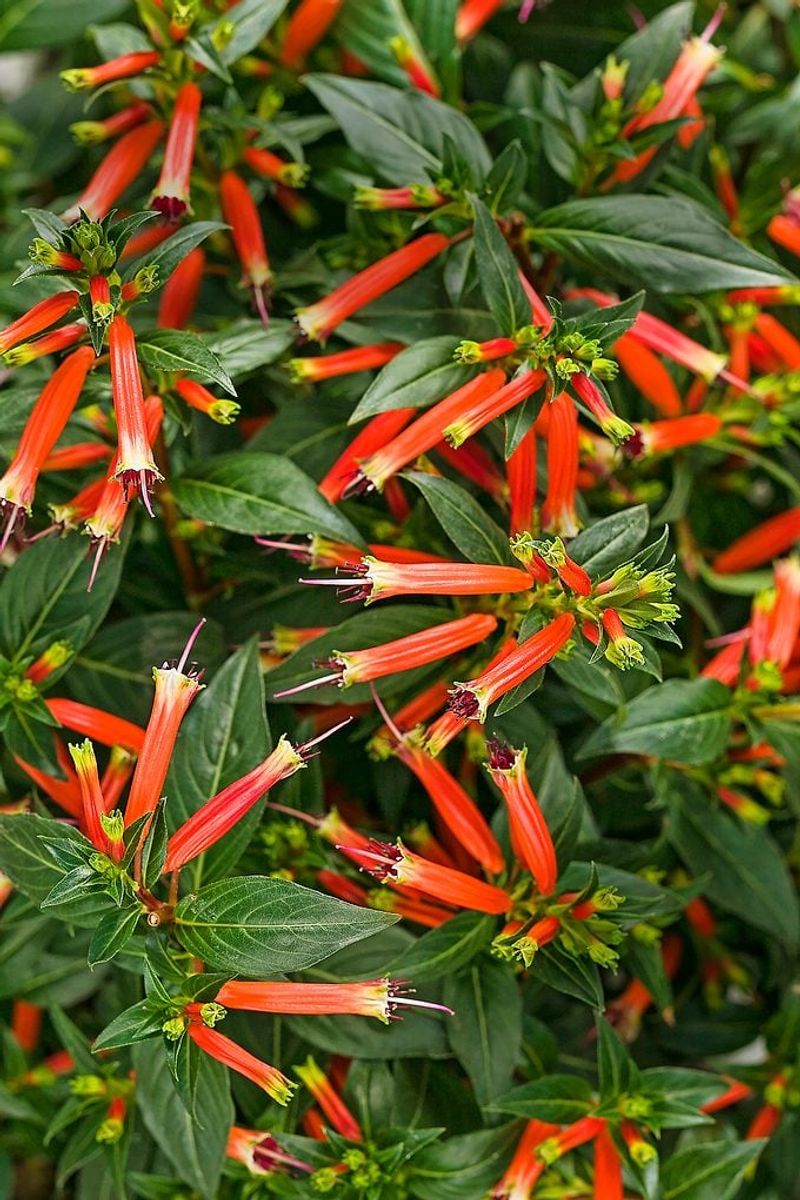
Think of a porch-sized fountain of tiny orange nectar tubes. Vermillionaire cuphea stays much more manageable than a large shrub, yet its many flowers can give hummingbirds plenty of places to investigate.
This named cuphea hybrid is not a Florida native, but it earns a place here for its compact, branching habit and long flowering season. Buy a healthy, blooming plant so the container starts working as a nectar stop right away.
A pot about 16 to 18 inches wide gives a single plant room to fill out. Place it in full sun, water when the surface mix begins to dry, and avoid leaving the container standing in a water-filled saucer.
Routine deadheading is usually unnecessary, which makes this a useful choice beside a chair you would rather sit in than work around. Feed lightly according to the container fertilizer label instead of pushing lots of soft, leafy growth.
Cold limits its season in northern parts of Florida. Move the pot into a protected location for chilly nights, and do not assume it will bloom through a freeze.
5. Firecracker Plant
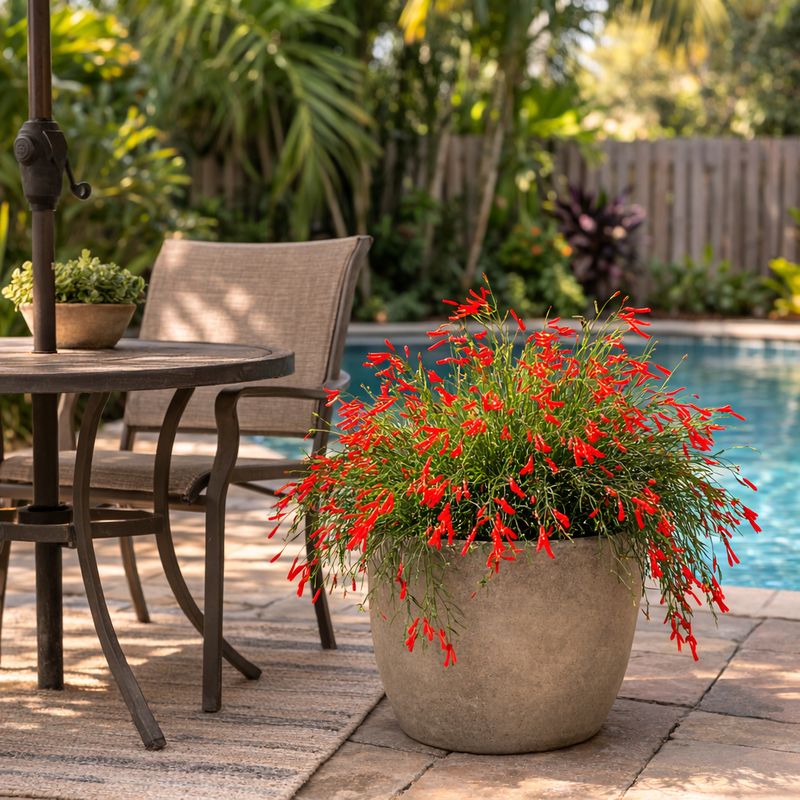
Let the flowers spill instead of standing at attention. Firecracker plant, Russelia equisetiformis, sends thin, arching stems over a pot rim, creating a relaxed display of red tubular blooms.
Its cascading shape makes it different from the upright plants on this list. Use a tall, stable planter about 18 inches wide, positioned where trailing stems will not brush ankles or block steps.
Sun encourages the fullest flower show, although light shade is tolerated. Water thoroughly, allow excess water to drain, and check the mix regularly during Florida’s warm fall afternoons.
Established landscape plants can handle dry spells, but a porch container has a much smaller water reserve. Do not let that drought-tolerant reputation turn into a week of bone-dry roots.
Remove dead stems and trim selectively when the plant becomes tangled, rather than cutting all the flower-bearing growth at once. This nonnative plant performs best through mild weather; frost can damage it in North Florida, while warmer coastal and southern locations often enjoy a longer display.
6. Black and Blue Salvia
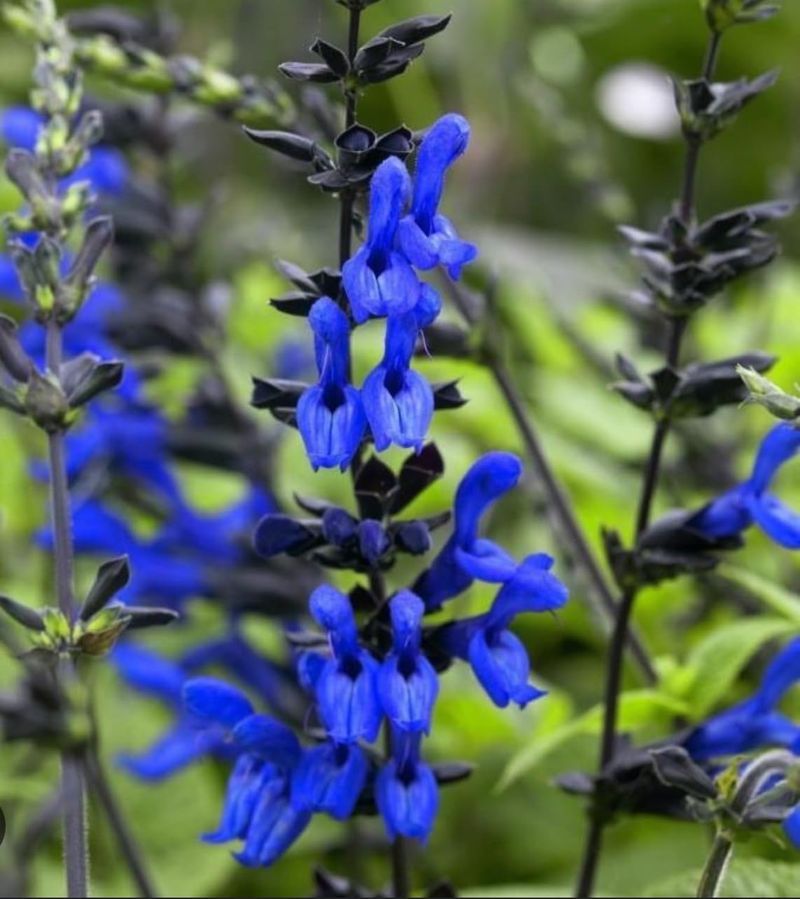
Red is not the only color on a hummingbird’s menu. The deep blue tubes and dark flower cups of Black and Blue salvia offer a bold change from the orange and scarlet shades common in nectar gardens.
Sold as Salvia guaranitica ‘Black and Blue’, this nonnative perennial needs more room than a small bedding sage. Give it a broad, heavy pot around 18 to 20 inches wide and place it toward the back of your porch grouping.
Morning sun and some afternoon relief can be helpful on a hot Florida porch. Keep the mix evenly moist but never swampy, especially while the plant is settling into its container.
Clip spent spikes back to a leafy joint to encourage more flowering. If stems grow floppy, improve the light or provide a discreet support rather than adding extra fertilizer.
Its spreading roots are easier to manage in a container than in a crowded mixed bed. Fall blooms depend on plant condition and weather, so choose a budded specimen and protect the pot when freezing temperatures threaten.
7. Pentas
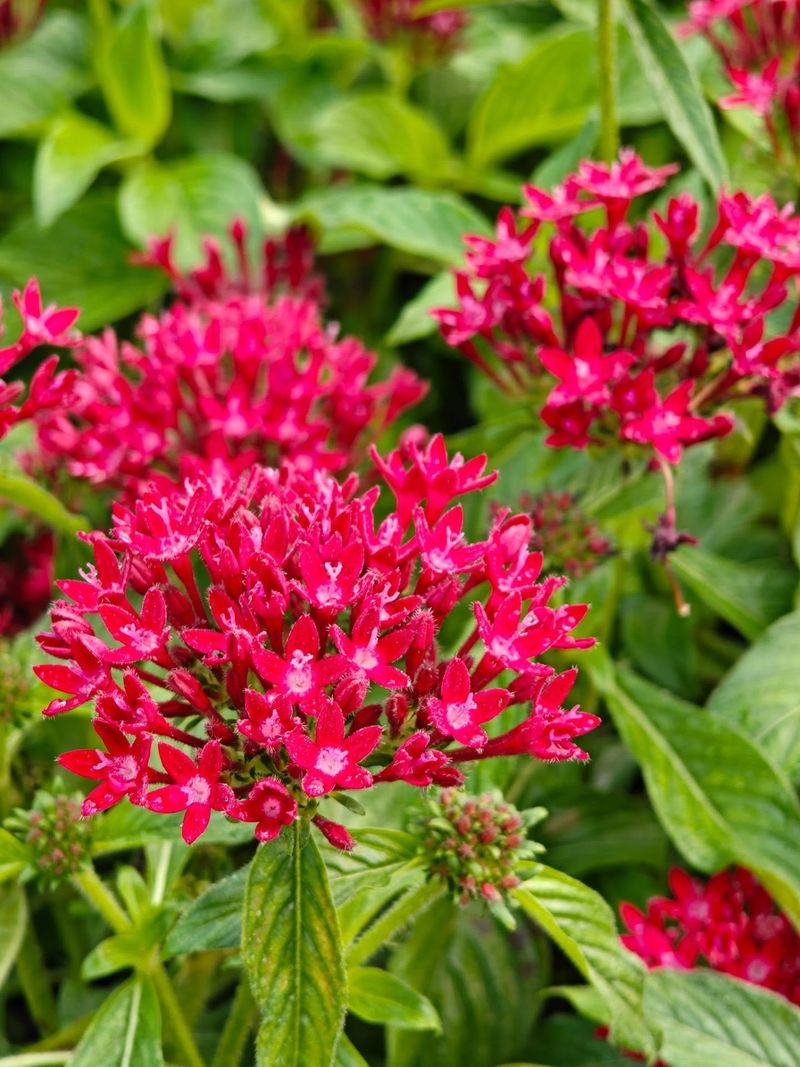
For a tidy pot that also welcomes butterflies, a cluster of red pentas is hard to overlook. Each rounded flower head holds many small blooms, keeping the color concentrated where you can see it from your chair.
Pentas lanceolata is a nonnative warm-season favorite in Florida. Hummingbirds may visit its nectar-rich flowers, although tubular sages and firebush are often stronger choices when birds are your main goal.
Choose a single-flowered variety and check the plant tag for mature size, since compact and taller selections differ greatly. A 14- to 16-inch container suits many compact plants, provided it has open drainage holes and fresh potting mix.
Give pentas plenty of sun and water at soil level when the upper inch dries. Remove tired flower clusters if the plant needs tidying, and avoid routine insecticide sprays on blooms where pollinators feed.
Warm Central and South Florida porches can carry flowers well into fall, while northern gardens need a frost plan. Pair this neat mound with a taller nectar plant, keeping both several feet from your chair so visiting birds have comfortable flight space.