
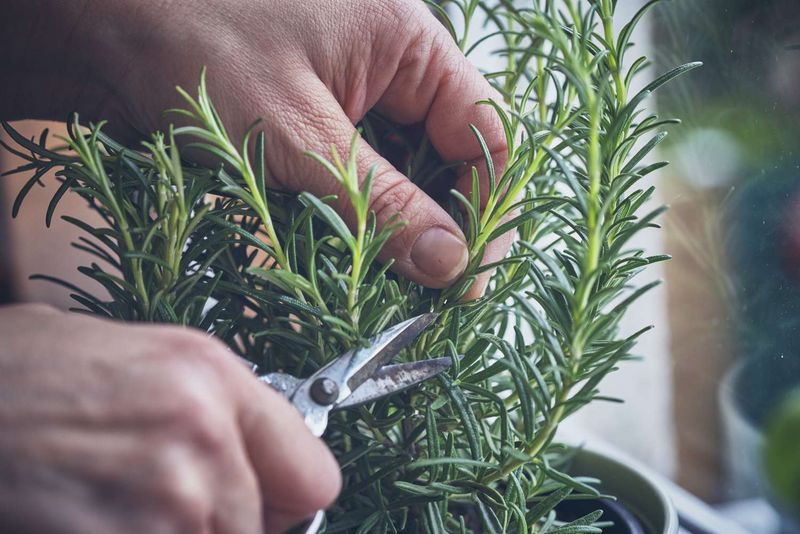
Every rosemary grower eventually notices it: stems that turn brown, stiff, and bare while the green tips seem to wander farther away. The woody look is not a sign you failed, but it can signal a plant that is giving you fewer shoots to snip for the kitchen.
California yards range from foggy coast to frosty foothills to hot inland valleys, so one pruning calendar will not fit them all. Here is how to keep your shrub tidy and harvestable, and how to avoid cuts that leave it patchy.
Woody stems are normal; bare growth is the warning sign
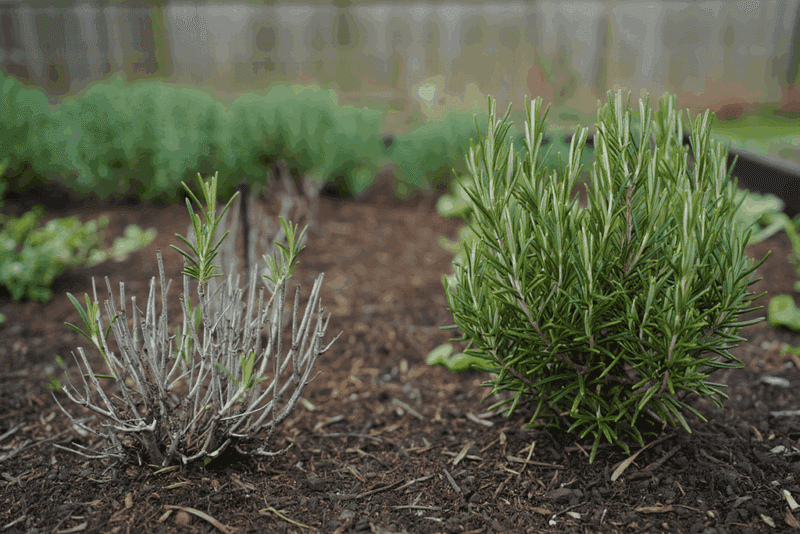
Rosemary is a shrub, and shrubs build wood as they age. The Royal Horticultural Society describes rosemary as an evergreen woody shrub, so brown, firm stems at the base are simply part of growing up.
A plant with thick lower stems and a full canopy of green needles is doing exactly what it should.
The real concern is a different picture. Look for long stems with leaves only at the far ends, a hollow or bare center, and fewer fresh shoots to harvest than you had a couple of years ago.
That is what gardeners usually mean by leggy, and it is the problem worth fixing.
So the goal is not to keep every stem soft. No trimming routine can make mature stems turn tender again.
What you can do is guide where the leafy growth happens, keep the shape manageable, and make sure there are plenty of green tips within easy reach of your pruners.
A quick check helps. Walk around the plant and note how much of its outer layer is green and how far the leaves sit from the main stems.
If you can still find plenty of leafy branches to snip, the shrub is in good shape. If the green is thinning and drifting outward, UC Integrated Pest Management guidance points toward regular harvesting and pruning rather than waiting for the shrub to get out of hand.
Take a photo each spring and compare it with the year before. It makes slow changes easy to spot.
Harvest leafy tips regularly instead of waiting for an overgrown shrub
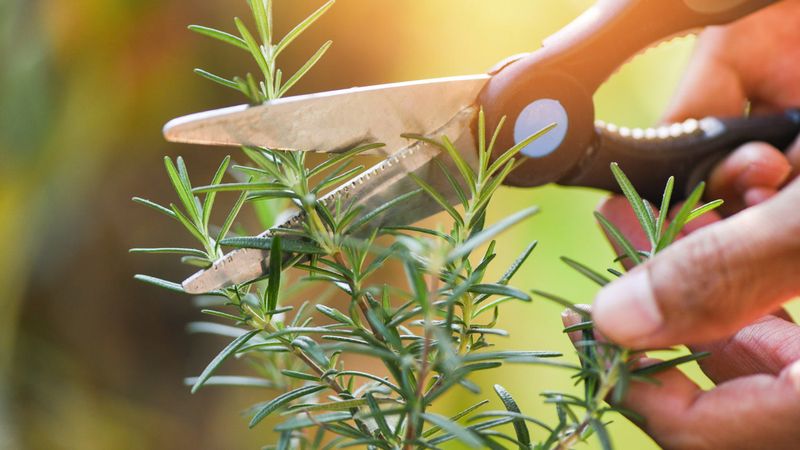
Snip a few sprigs every week or two, and your kitchen supply doubles as maintenance. UC IPM recommends harvesting sprigs from the tips of the longest branches, and notes that regular harvesting or pruning encourages new growth.
Small, frequent cuts beat one big overhaul every few years.
Here is how it plays out. Say you grab a handful of tips each time you roast potatoes or season chicken.
Taking from the longest branches first keeps the outline even and nudges the plant to produce fresh shoots near the cut instead of stretching outward.
Waiting is the habit that causes trouble. A shrub left alone for a few seasons grows long, lightly leafed branches, and by then the only way to restore its shape may involve cuts you do not want to make.
Keep expectations realistic, though. Regular harvesting helps manage shape and encourages new growth, but the older stems will still harden with time.
It does not stop maturation, and it does not guarantee a plant that stays bushy forever.
Spread your picking around so one side does not get stripped. Rotate around the plant, and take only the green tips, not whole stems.
If you have more rosemary than you can use, dry the extra sprigs or share them with a neighbor.
Make cuts where leafy growth remains
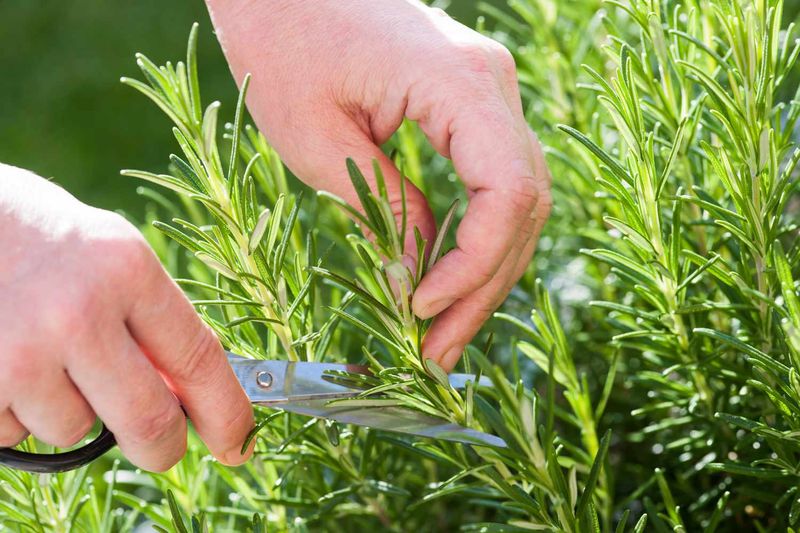
Start with sharp, clean pruners. Clean cuts heal neatly, and wiping the blades with rubbing alcohol between plants helps avoid carrying problems around the garden.
On a young plant, pinch or trim the leafy tips to encourage branching. UC IPM’s rosemary guidance supports this kind of early shaping.
Each pinch gives the plant more side shoots, which builds a fuller frame from the start.
Established plants need a lighter, more selective approach. UC Master Gardeners of Sacramento County suggest shaping selected branches while avoiding cuts into woody stems.
In practice, pick a branch that is sticking out, follow it back, and cut it where green leaves remain below the cut.
That leftover foliage matters. A stem trimmed above leaves has something to grow from, while a cut made into bare wood may leave only a stub.
The RHS notes that rosemary generally does not recover well from heavy pruning and advises against cutting into old wood.
You will not find a magic percentage here. Fixed rules like cutting off one-third do not account for your plant’s age, size, or climate.
Let the leaves guide you instead: if you can see green below your cut, you are in the safe zone. Step back every few snips to check the shape, and stop while the plant still looks full.
Choose pruning time by local bloom and frost risk
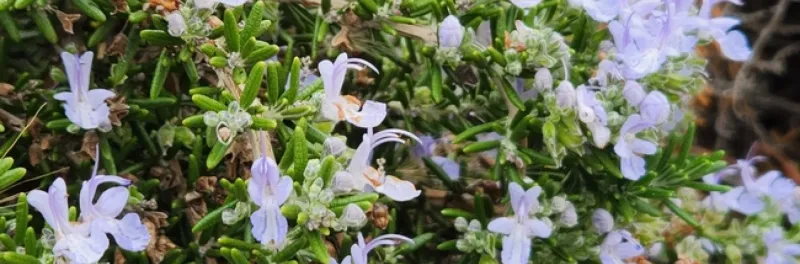
California does not have one rosemary calendar. A foggy coastal garden, a Central Valley yard, and a Sierra foothill property all behave differently, so fall is not a dependable statewide pruning window.
UC Master Gardeners of Sacramento County advise pruning after the main bloom period. Rosemary there flowers heavily from spring into summer, with sporadic blooms at other times, so watch your own plant and trim once the main flush fades.
Other UC guidance gives a slightly different picture. A UC Sierra Foothill plant-maintenance guide places pruning of younger plants in spring or summer, and renovation of older plants in late winter to early spring.
Those two views fit together once you account for local bloom and weather.
Frost is the other half of the timing question. UC herb-care material warns that pruning can expose tender new growth to frost damage, so avoid heavy cuts shortly before a cold snap.
A fall trim can make sense in a mild-winter area where the plant is still growing, but keep it light. In colder inland or foothill gardens, wait until the frost danger has passed.
Check your local last and first frost dates, and plan around them.
Treat an old, bare shrub as a selective-removal problem
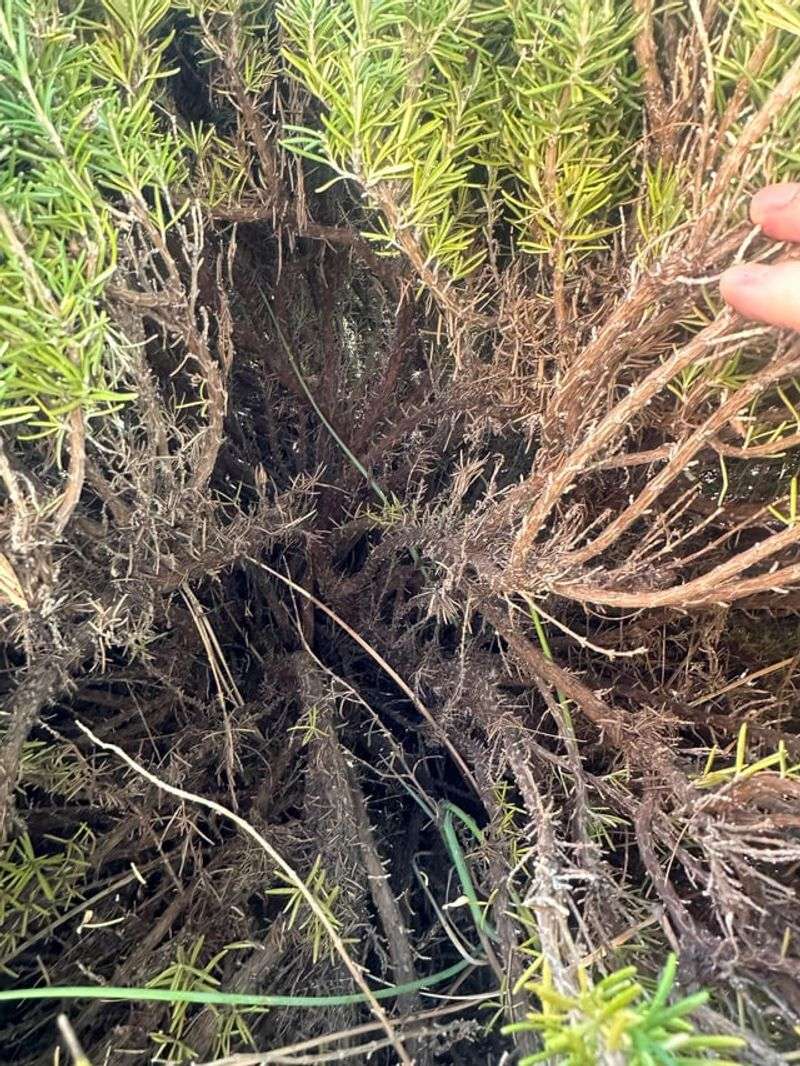
An older shrub with a bare middle is a tougher case, and it calls for modest expectations. The UC Master Gardeners of San Luis Obispo County note that new green growth will not develop from woody stalks, though they also suggest removing selected stalks from a bare-centered plant.
Those two ideas are different. Taking out an unwanted stalk opens up the shrub and removes something that is not pulling its weight.
Cutting a stalk in the hope that its bare section will sprout is a gamble that usually does not pay off.
So choose the stalks you remove for what they do to the plant’s shape, not for what you expect them to regrow. A crossing, dead, or sprawling stalk is a good candidate.
Leave any stem that still carries leaves.
Heavy cuts carry real risk. UC guidance for the Sierra foothills says not to renovate an older plant below its lowest cluster of needlelike foliage.
The RHS likewise says rosemary does not recover well from heavy pruning, so a severe cut can leave the plant sparse or damaged.
Spread any removal over more than one season. If the shrub is truly past its prime, planting a young rosemary nearby gives you a backup while the old one keeps producing what it can.
Support leafy growth with sun and well-drained soil
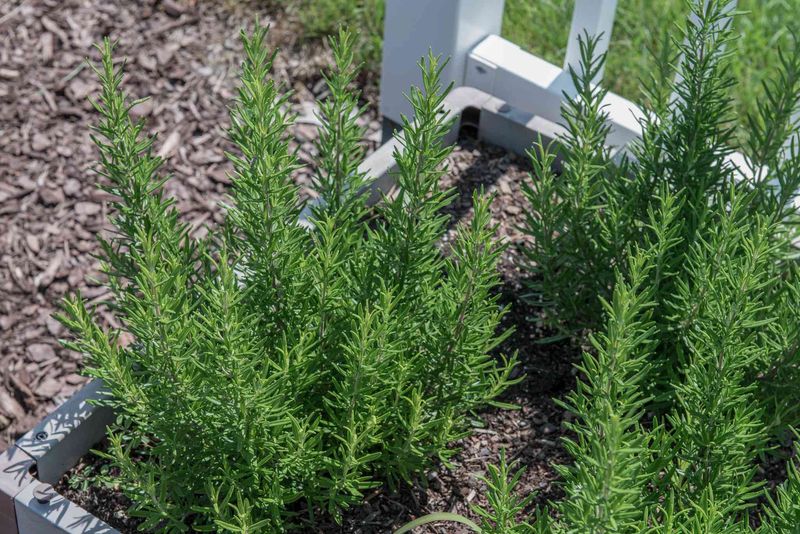
Good pruning works best on a plant that is comfortable where it lives. UC IPM recommends full sun and well-drained soil for rosemary, which suits much of California’s dry-summer climate.
Drainage deserves extra attention. Heavy clay that stays soggy through winter can stress the roots, so consider planting on a mound or slope, or mixing in coarse material, if your soil holds water.
Drought tolerance applies to established plants, not new ones. UC Master Gardeners of San Luis Obispo County advise regular watering during the first year and little water once the plant is established.
A new rosemary that dries out completely will struggle to build the roots it needs.
Watering will not turn old stems soft again, so do not use extra water as a fix for woodiness. Overwatering a mature shrub can do more harm than good.
Give the plant sun, good drainage, and light, regular harvests, and it will reward you with plenty of fragrant green tips. Woody stems are simply the frame that holds up the part you actually eat.