
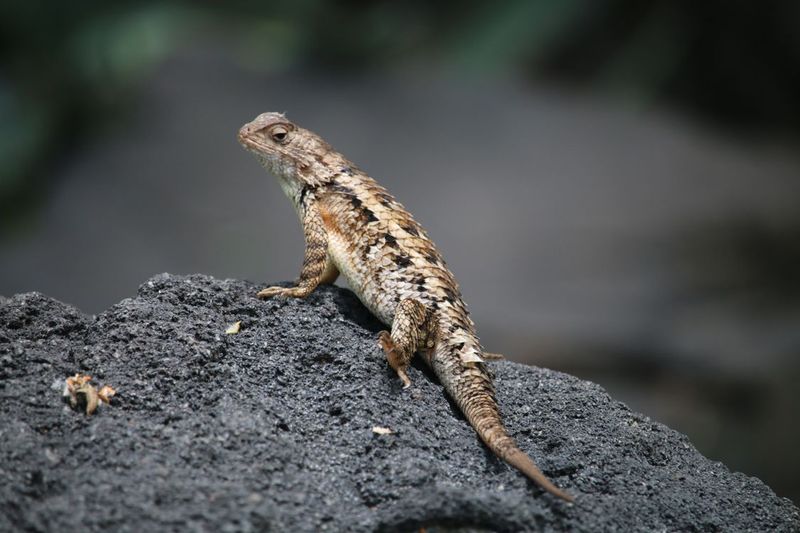
You step outside on a bright fall morning and spot a lizard stretched out on a warm fence rail. It looks relaxed, but it is actually working.
That small scaly sunbather is using the sun to get its body ready for the day, and once you know the clues, you can read what it is doing.
A familiar yard lizard may be a Texas spiny lizard
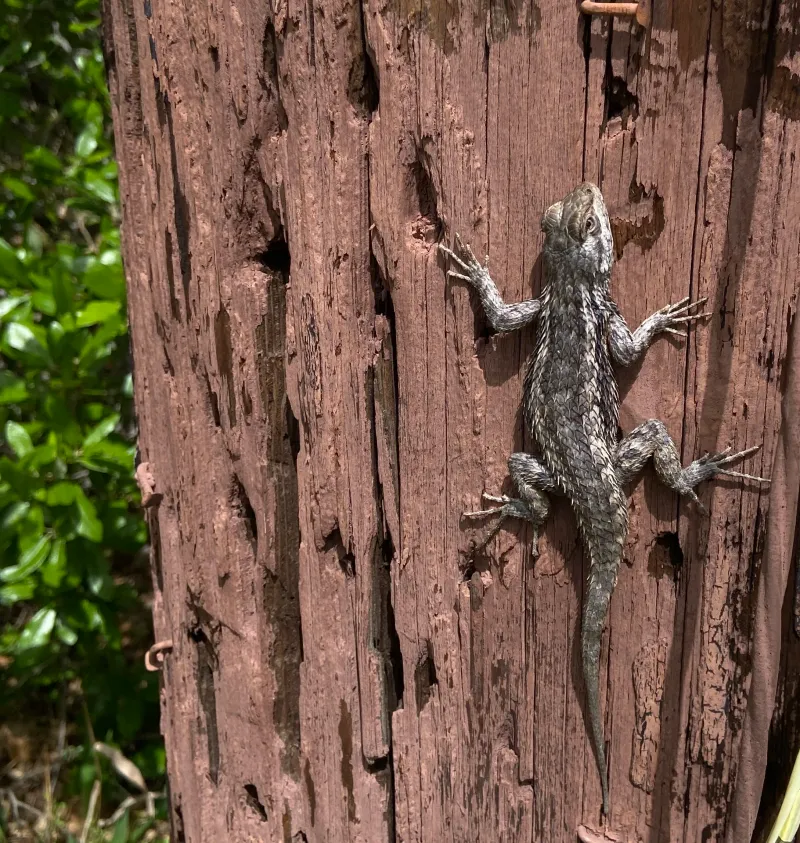
Picture the lizard that scurries up a fence post when you walk by, then freezes on the far side of the wood. In Central Texas, that rough-scaled climber is often a Texas spiny lizard.
A quick glimpse will not confirm the species, so treat it as a likely match rather than a sure thing.
According to Texas Parks & Wildlife Magazine, this species lives in places like oaks, mesquites, fences, and building exteriors. That list explains a lot.
A yard with a wooden fence, a few trees, and a sunny wall gives a spiny lizard the kind of vertical, textured surfaces it already uses in the wild.
Clues can help you decide what you are seeing. Spiny lizards have rough, pointed scales and tend to cling to trunks, posts, and walls.
They are not the only lizard in Texas yards, so keep an open mind if the animal looks smooth, tiny, or shaped differently.
One animal you should keep separate is the Texas horned lizard. TPWD describes horned lizards as mostly ant eaters that favor open to semi-closed habitats with loose soils.
That is a different lifestyle from a fence-climbing spiny lizard, and not every yard lizard belongs to either species.
A sunny perch can help a lizard warm up
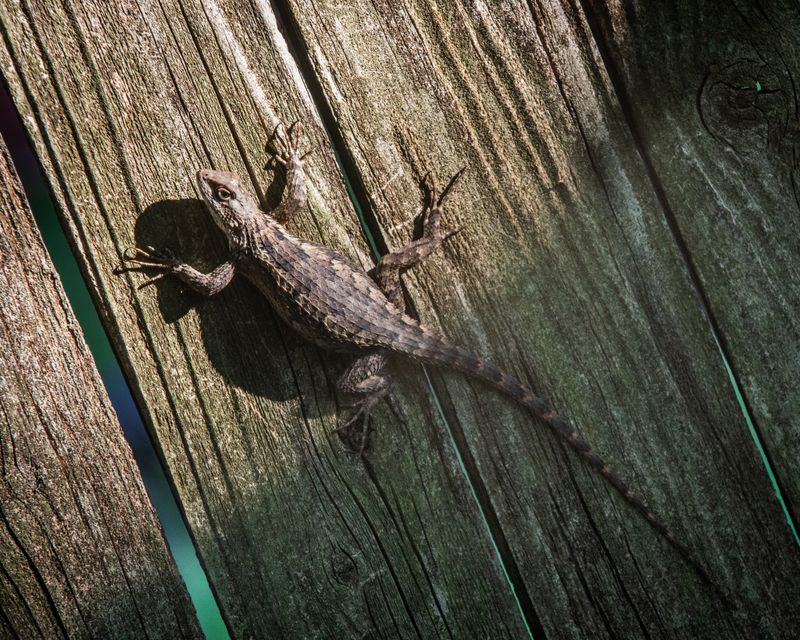
Mornings are when a lizard’s day gets going, and the sun is its starter. Texas spiny lizards are active during daylight, and according to the UT Austin Biodiversity Center, they are ectotherms.
That means they depend on outside heat sources instead of keeping a fixed body temperature from the inside.
A sunlit rock, fence rail, or wall works like a heating pad. The lizard lies on it, soaks up warmth, and gets its muscles ready for hunting, watching for rivals, and dodging danger.
A lizard that can warm up on demand can also move away when it has had enough.
Basking is a smart habit, not a sign of trouble. A review of lizard thermal biology shows that lizards manage body temperature through behavior, including how they use sun and shade.
The old idea that cold-blooded animals are helpless or sluggish misses the point. These lizards make choices all day long.
You can watch this in action. A lizard may press flat against a sunny surface, then slip into shade or around the back of a post.
Because it is such a surface-loving climber, TPWD lists fences and building exteriors among its habitats, so those warm spots fit right in.
Warm fall weather may make lizards easier to spot
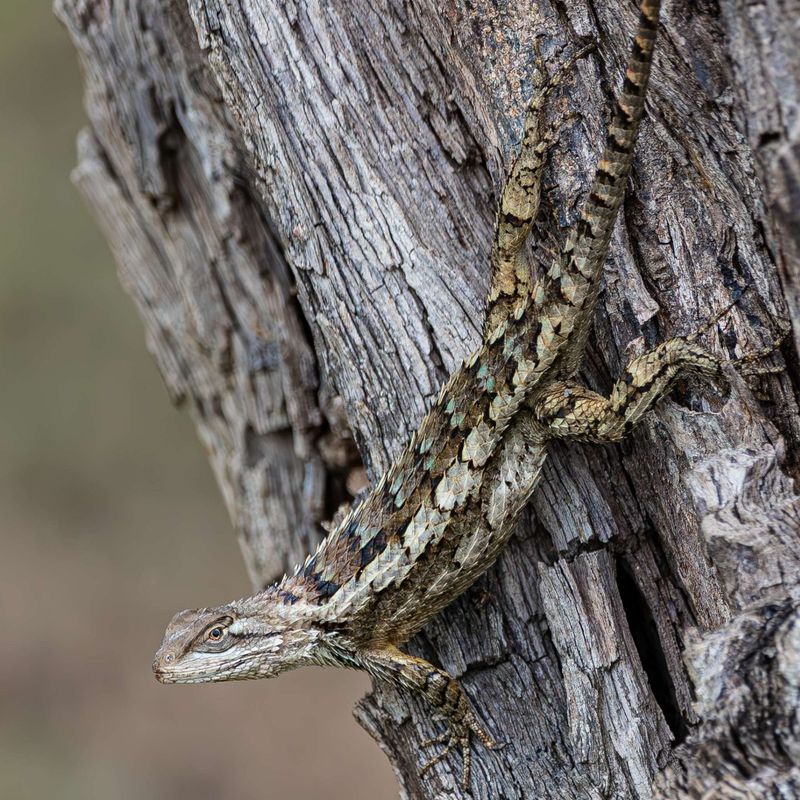
Fall in Central Texas often brings stretches of warm, bright afternoons. For a lizard that runs on outside heat, those days can be good ones to stay out and active.
A lizard that stays active on a sunny fence is simply easier for you to notice.
That is a reasonable explanation, but it is not a headcount. Nothing in the sources reviewed documents an unusual region-wide rise in Central Texas yard sightings or in lizard numbers.
More sightings in your own yard could come from a sunny week, a changed routine, or just paying closer attention.
TPWD says Texas spiny lizards are seen during the warm months, which fits a lizard that stays out while the weather allows. What you see also depends on the species, the day’s weather, and the small habitat around your yard, such as a south-facing wall versus a shaded corner.
For wider context, a meta-analysis of seasonality in lizard thermal biology shows that lizards adjust their thermal strategies across seasons. It does not show a fall surge in Texas spiny lizards.
Fall basking also should not be pinned on mating, since TPWD places that in mid-March into summer.
Yard structures can provide habitat as well as sunny perches
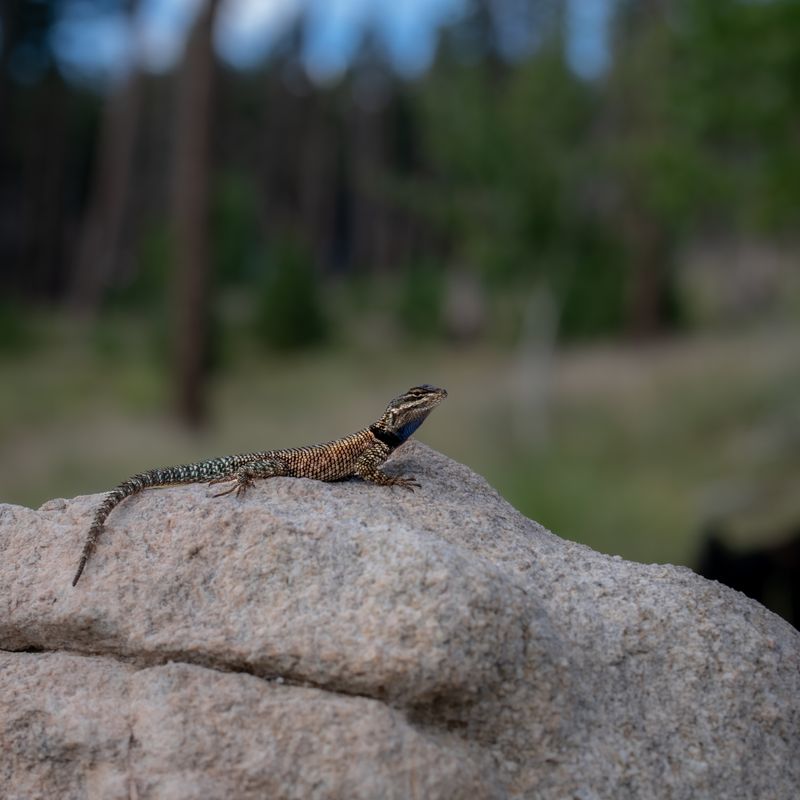
A sunny fence does double duty. It offers a warm perch and, with trees nearby, part of a lizard’s home turf.
TPWD lists oaks, mesquites, fences, and building exteriors as Texas spiny lizard habitat, so a yard with those features already resembles what the species uses.
Food matters too. TPWD says these lizards eat grasshoppers, beetles, ants, caterpillars, and other larvae, and the UT Austin Biodiversity Center describes them as mostly insect eaters.
Still, no source measures how much they reduce yard pests, so enjoy them as neighbors rather than counting on them as pest control.
If you want a more wildlife-friendly yard, TPWD’s wildscape tips suggest providing food, water, and shelter. Rock walls, brick piles, and stacked wood can shelter small wildlife, and lizards eat insects.
Treat these as general ideas, not a recipe. No single feature guarantees that a certain lizard will show up.
A simple approach is to leave a corner a bit less tidy, keep native plants that draw insects, and skip heavy spraying near the spots you want to share with wildlife.
A warm-weather sighting does not mean a lizard needs rescuing
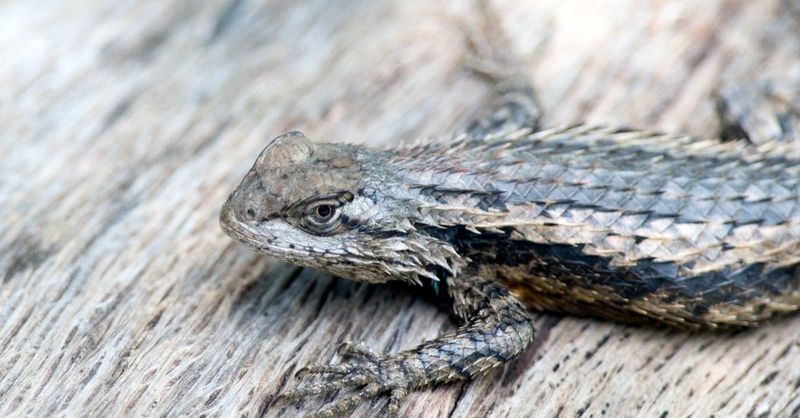
Seeing a lizard out in the open can stir up a rescue instinct, especially as nights start to cool. But a lizard on a warm fence at midday is usually doing exactly what it should.
A sunny perch alone is not a sign that it needs a box, a shelter, or a new home.
TPWD reports that Texas spiny lizards spend winter under leaf litter or in soil. That detail is about this species only, so it should not be applied to every lizard you meet.
It does tell us these animals have their own cold-season plan, and they do not need our help carrying it out.
Bringing a healthy lizard indoors or moving it to another spot can cause stress and takes it away from the territory it knows. The kinder move is to leave it alone and let it finish basking.
Leaf litter and loose soil at the edges of beds may be just what it uses later, so you can hold off on raking every corner bare.
Some situations are different. If a lizard looks injured, is stuck in a trap, netting, or glue board, or cannot get away from a hazard, do not handle it yourself.
Contact a licensed wildlife rehabilitator or your local wildlife agency for guidance.
Watch from a distance and leave healthy lizards alone
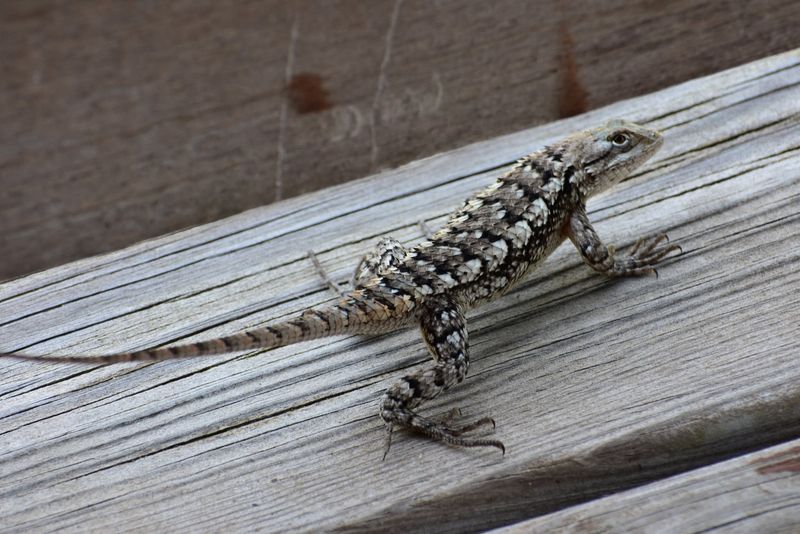
The simplest way to enjoy a basking lizard is to watch it from a few steps away. A phone camera with a zoom lens or a pair of binoculars works well, and you will see more natural behavior than you would up close.
Pick a chair near a sunny wall and see how long the lizard stays put.
There is also a health reason to keep your hands off. CDC guidance says reptiles can carry Salmonella even when they look clean and healthy.
It recommends washing your hands after any contact with reptiles, and it says children under five should not handle reptiles or their environments.
That page is written mostly with pet reptiles in mind, so a lizard passing through your yard is not a cause for alarm. The advice is a sensible habit, not a warning about every sighting.
If a curious kid or a pet does touch a lizard or its surroundings, a good hand wash is the next step.
Next time a lizard stretches out on your fence, you are looking at a small animal using the sun the way you might use a warm porch step.