
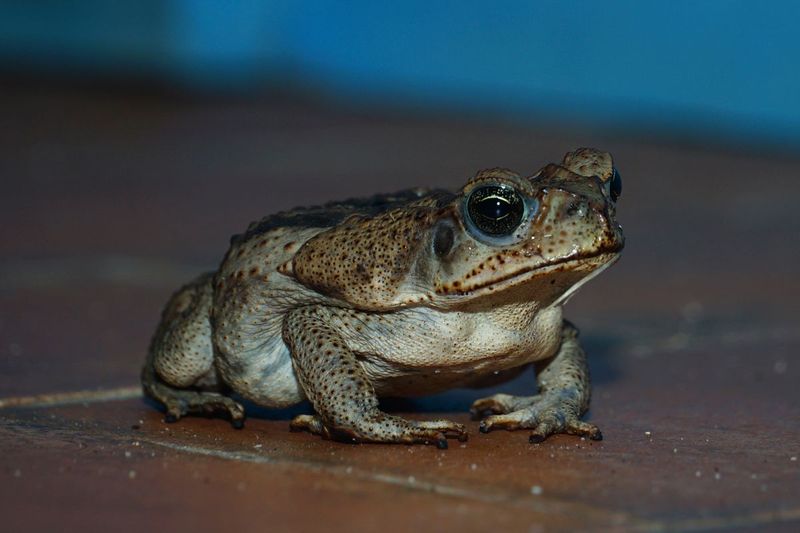
Your dog dashes across the patio at night and noses a big toad before you can say a word. In central and south Florida, that toad could be a cane toad, and its defensive toxin can make a dog very sick.
Telling the toads apart takes more than a quick glance at size. Here is how to spot the difference and what to do in the first few minutes.
A suspected cane toad encounter can become urgent quickly
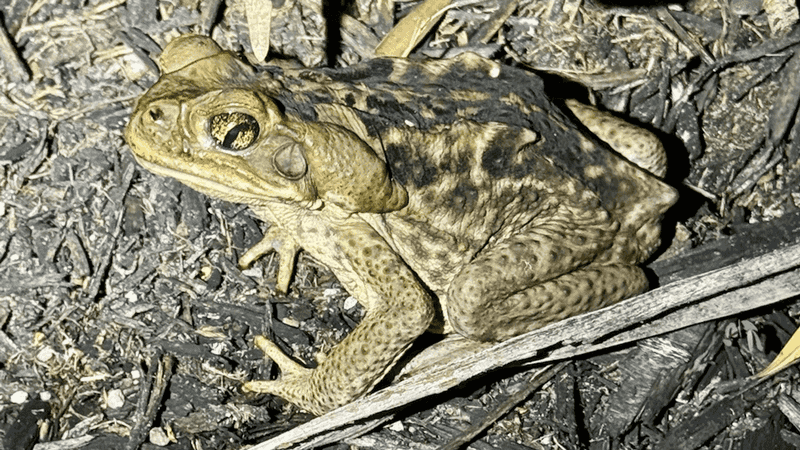
Evening is when patio toads come out. Adult cane toads are nocturnal, and the Florida Fish and Wildlife Conservation Commission describes them as nonnative and established in central and south Florida, generally south of the I-4 corridor.
Adults often measure 6 to 9 inches long, and they turn up in human-altered places such as yards, patios, and pool decks.
That geography matters. A yard in Miami, Fort Myers, or Orlando faces a different level of risk than one in the Panhandle, and not every Florida yard or every toad carries the same danger.
Plenty of toads that visit patios are harmless native species, so a big toad alone does not prove a problem.
Still, a suspected cane toad deserves a quick, serious response. According to UF/IFAS Extension, a dog that mouths or bites one can be severely poisoned.
Drooling and irritation in the mouth can start right away, and severe cases can move on to seizures, heart rhythm problems, breathing trouble, or death.
Speed is possible, but it is not guaranteed. The toad, the amount of toxin, and the dog all shape the outcome.
FWC warns that an untreated pet can die in as little as 15 minutes, which is a worst-case possibility and not a typical timeline. The smart move is to act fast without assuming the worst.
Use several features to identify an adult cane toad
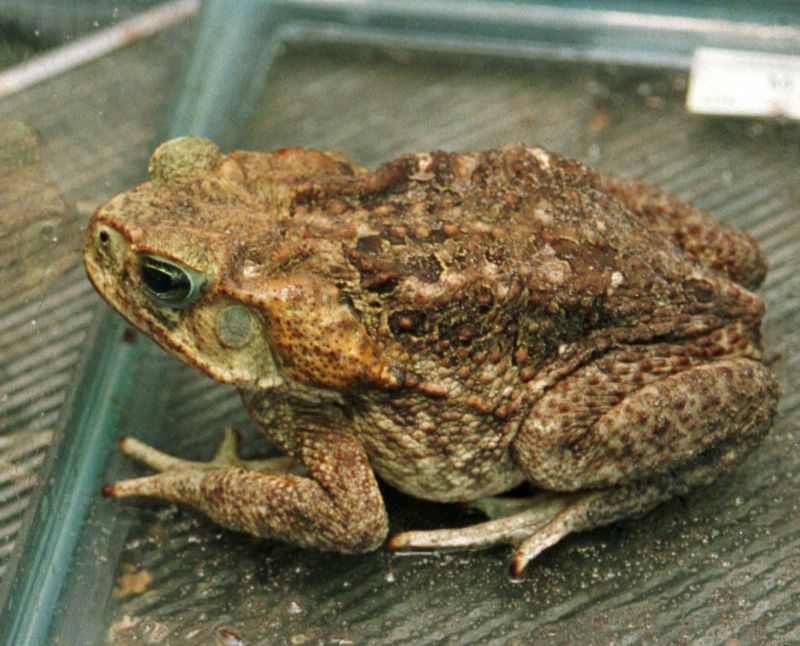
No single clue settles it. Size is a tempting shortcut, but a combination of features is far more reliable.
UF/IFAS points to several traits that work together.
Adult cane toads have very large, somewhat triangular glands on the shoulders. They have a ridge around the eyes and above the nose, and they lack the paired crests on top of the head that southern toads have.
Look for all of these together before drawing a conclusion.
Southern toads, a common native, have two crests on the head and smaller, oval glands. Oak toads are the easiest to rule out because they are tiny, reaching only about 1.5 inches, with a light stripe running down the back.
Young cane toads are a trickier case. They are much smaller and can be hard to tell apart from native toadlets, which is why size alone cannot be trusted.
A small toad is not automatically safe, and a large one is not automatically a cane toad.
If you cannot tell what you are looking at, leave it alone. Do not handle it, and do not kill it.
Take a clear photo from a safe distance and ask a local expert, such as your county extension office, to identify it. Meanwhile, keep your dog away.
A bite can press defensive toxin into a dog’s mouth
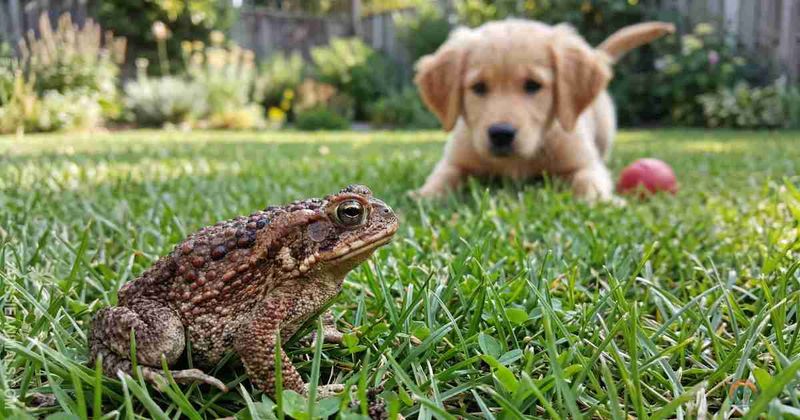
Picture the toad as a sitting target, not an attacker. Cane toads do not shoot or spray poison across the yard.
They make toxin as a defense, and pressure on their large glands can force it out.
A dog that grabs, bites, or mouths a toad supplies exactly that pressure. The toxin lands right inside the mouth, where it can irritate tissue and be absorbed.
This is why a quick sniff from a distance is a very different event from a dog with a toad in its jaws.
Toxins show up in all toads, but strength varies by species and location. The Merck Veterinary Manual notes that serious or life-threatening poisoning is linked especially to large cane toads and certain other species.
A native toad may cause drooling and mouth irritation, while a cane toad can cause far worse.
For that reason, any suspected mouth contact is worth treating promptly, even though not every case turns severe. You cannot judge the toxin dose by looking at your dog, and the toad may be hard to identify in the dark.
Treat the uncertainty as a reason to act, then let a veterinarian decide how serious it is.
Remember that UF/IFAS describes this defensive release as pressure-driven, so keeping dogs from biting toads is the most direct protection.
Wipe and rinse the mouth only when it is safe
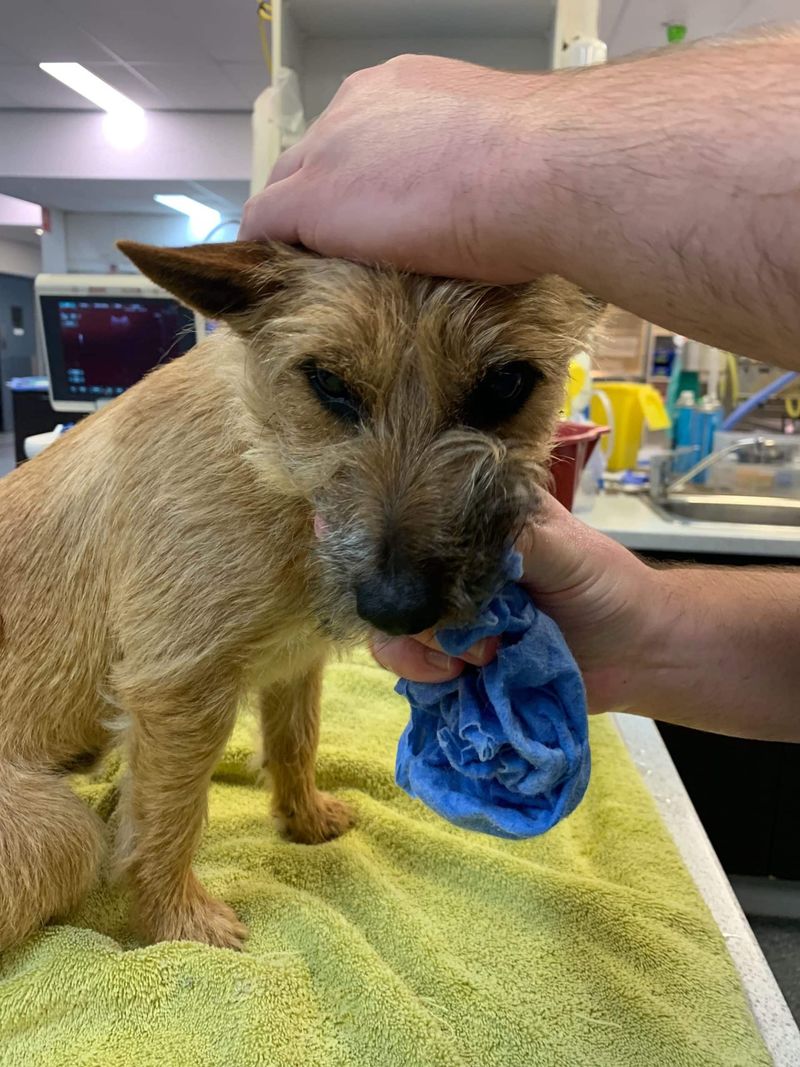
Order matters here. First, wipe the inside of your dog’s mouth with a damp cloth to remove toxin and slimy residue.
Next, rinse with running water so it flows outward, with the dog’s head held low and the stream aimed along the side of the mouth, not down the throat. Then contact a veterinarian immediately, rather than waiting to see whether symptoms show up.
How long should you rinse? The two Florida sources differ.
UF/IFAS recommends 15 minutes of rinsing, while FWC says 10 minutes. Both stress keeping water out of the throat and calling a vet promptly.
Ask the veterinary clinic which they prefer when you call, and do not try to blend the two numbers yourself.
The biggest danger of rinsing is aspiration. Merck warns against letting the dog inhale water or toxin-laden saliva.
Keep the head pointed down and let the water drain out of the mouth.
Some situations rule out rinsing altogether. If your dog is seizing, unconscious, or struggling to breathe, do not pour water into its mouth.
Get to emergency veterinary care right away, and call ahead from the car if you can.
One more rule: do not try to make your dog vomit. Inducing vomiting is not advised for toad exposure and can make things worse.
Wipe, rinse when safe, and call.
Recognize warning signs, but do not wait for them
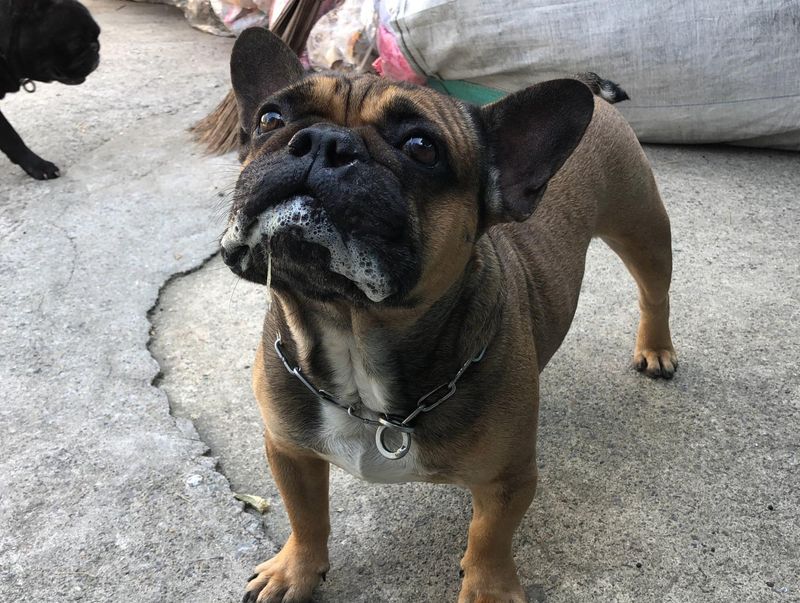
Signs of trouble can show up fast, and they tell you an emergency may be developing. UF/IFAS lists the ones that call for urgent veterinary attention: red gums, drooling or foaming, pawing at the mouth, vomiting, disorientation, tremors, seizures, and breathing problems.
Picture a dog that suddenly stumbles, stares oddly, or paws at its face while thick saliva drips from its jaws. Those are the moments to head for the clinic, not to watch and wait.
Bright red gums are easy to check by gently lifting a lip, so make that a habit if your dog has had any mouth contact.
These signs are a guide, not a schedule. Some dogs show several quickly, some show a few, and some mild cases never go further.
No symptom or timeline is guaranteed, so none of them should set your decision.
The most important point is that a dog with suspected mouth contact needs a veterinarian whether or not any of these signs appear. Call right after you start wiping and rinsing, tell them what you saw, and follow their instructions on whether to come in.
Make a nighttime yard less attractive to toads
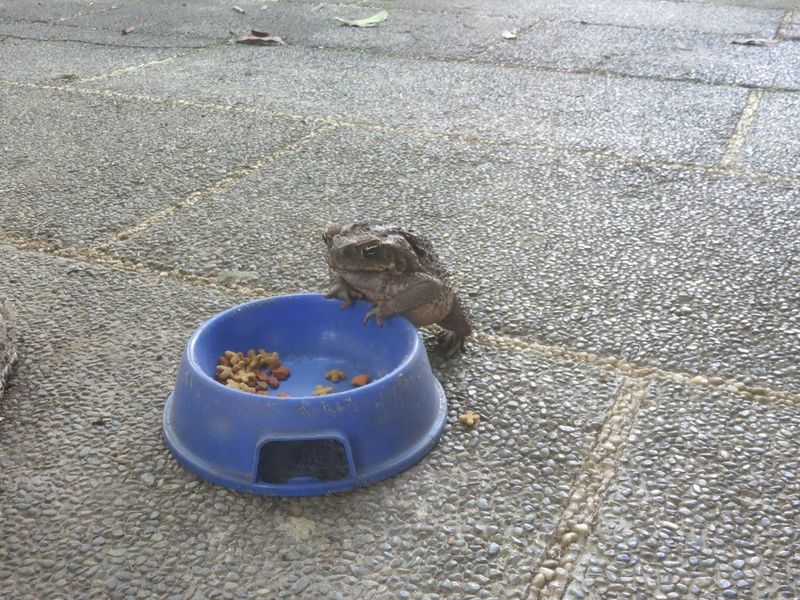
Prevention comes after the emergency plan, but it pays off. A few simple habits can reduce the chance of a patio toad meeting your dog, though no yard can be made completely toad-proof.
FWC guidance supports several of them.
Start with the bowls. Bring pet food and water dishes indoors at night, since toads are drawn to both.
Sweep up dropped kibble, fallen fruit, and other food scraps so there is less to attract them or the insects they eat.
Next, take away hiding spots. Toads shelter in cool, damp places, so clear piles of debris, stacked pots, and tangled brush near the patio.
A tidier edge gives them fewer places to settle for the day.
Look at your lighting, too. Outdoor lights attract insects, and insects become a meal for toads.
Switching off unneeded lights, or moving them away from the area where your dog goes out, can help.
Even with all that, keep a leash or a close eye on your dog during nighttime potty breaks, especially south of I-4. A flashlight sweep of the patio before opening the door is a small step that can head off a big problem.