
Yesterday the grass looked fine. By breakfast, little holes had appeared across your Florida lawn, and something had clearly been busy.
The shape, loose soil, and nearby tracks can help you narrow down the visitor, though a hole alone rarely proves who made it. Here are ten common suspects and the clues that tell you what to do next.
1. Armadillos
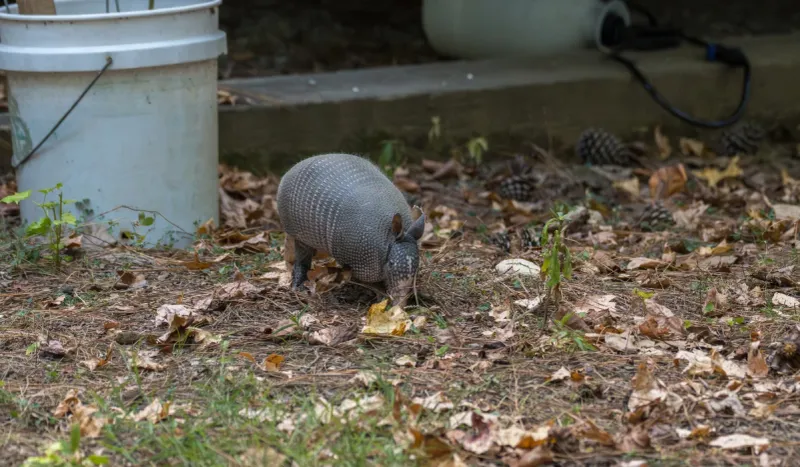
A patch of lawn that looks poked with a small garden trowel often points to a nighttime visitor wearing armor. Armadillos dig for insects and other soil animals, leaving scattered pits rather than tidy tunnel entrances.
Many feeding holes are roughly 1 to 3 inches wide and several inches deep, although size varies. Look for a tapered shape, freshly tossed sand, and several disturbed spots along beds or shrubs.
Florida’s sandy ground makes digging easy, especially after rain or irrigation brings prey closer to the surface. A much larger opening beside a foundation or brush pile could be a shelter burrow, which needs a different response from shallow feeding damage.
Use a motion camera to confirm the animal before choosing a control method. Remove fallen fruit, avoid excess watering, and protect small problem areas with sturdy fencing that extends below ground.
Do not assume digging means your lawn needs insecticide. If damage continues or a burrow threatens a structure, ask UF/IFAS Extension or a qualified wildlife professional about suitable next steps.
2. Raccoons

Rolled-back grass is a stronger clue than a neat round hole. Raccoons use their front paws to pull and lift turf while searching for grubs, worms, and other food beneath the roots.
The result can resemble a tiny crew removing sod overnight. Expect rough-edged patches, scattered divots, and sometimes handlike tracks in damp sand near a fence, pond, or drainage route.
Recently laid sod is especially easy to lift because its roots have not anchored firmly. Still, damaged turf does not automatically mean a grub outbreak, so check underneath several affected areas before buying any treatment.
Start by securing garbage lids, bringing pet food indoors, and removing fallen fruit. Water according to your lawn’s needs and local restrictions rather than keeping the soil constantly damp.
A nighttime camera can separate raccoon activity from armadillo digging. Replace lifted sod promptly, press it into contact with the soil, and follow appropriate watering guidance for recovery.
Keep your distance from any raccoon that appears sick or unusually bold. For repeated damage, seek professional wildlife advice rather than trying to handle the animal yourself.
3. Skunks
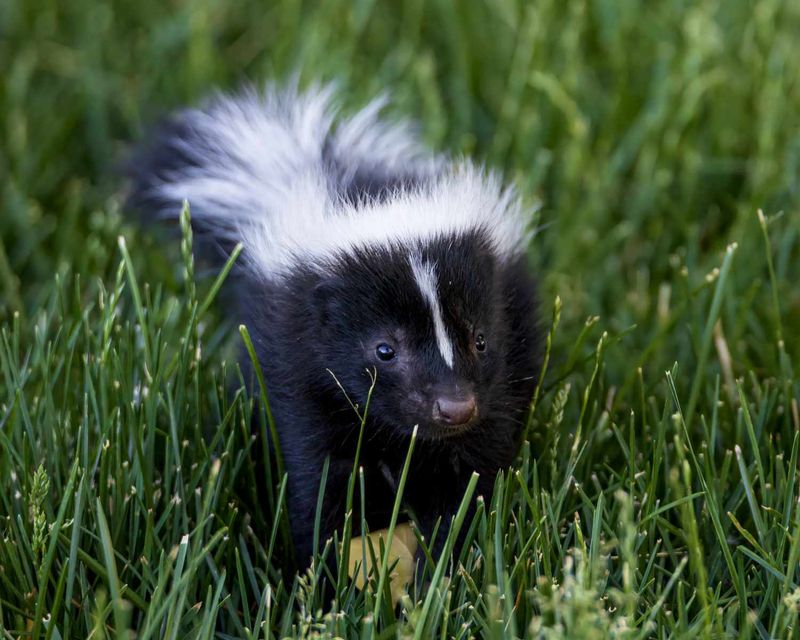
Dozens of small feeding pits can look surprisingly dramatic by morning. Where skunks occur in Florida, they may leave shallow, cone-shaped holes while searching for beetle larvae and other soil-dwelling food.
Individual holes are often only a few inches across, with a little loose soil beside them. Unlike raccoons, skunks generally do not roll up broad sheets of turf, although the damage can overlap.
Odor may offer a clue, but its absence does not rule out a skunk. Tracks and a camera image are more useful than guessing from smell or hole size alone.
Give suspected skunks room, especially near sheds, decks, and other sheltered spaces. Never reach into a possible den or seal an entrance until a professional has checked whether animals are inside.
For ordinary feeding damage, remove outdoor food sources and check whether lawn insects are actually abundant. Treating healthy turf just to discourage wildlife adds cost without a clear benefit.
If the visitor keeps returning, contact a qualified wildlife professional. That approach is safer than cornering an animal that may spray when frightened.
4. Squirrels
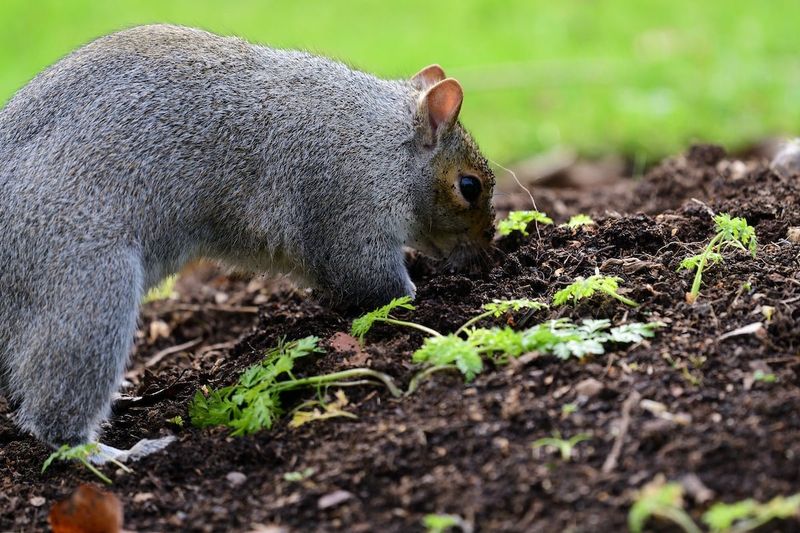
Not every hole discovered at breakfast was made after dark. A squirrel may have buried or retrieved food the previous afternoon, with the damage going unnoticed until your morning walk.
Look for small, shallow scoops scattered near oaks, palms, garden beds, or familiar squirrel routes. Some holes are partly covered again, while others remain open after the animal digs up a hidden snack.
Nut shells, acorns, and nearby tree activity strengthen the case. A squirrel searching through loose soil usually leaves a different pattern from the deeper, pointed feeding pits associated with armadillos.
For a few lawn divots, the simplest repair is usually enough: return the soil, settle it lightly, and let surrounding grass fill in. There is rarely a reason to treat the lawn for insects because squirrels are digging.
Protect newly planted bulbs or vulnerable containers with firmly secured wire mesh where appropriate. Keep sharp edges covered and avoid loose netting that could trap wildlife.
A short daytime camera recording often settles the mystery. If you find a large, persistent tunnel entrance instead, consider another culprit rather than blaming the nearest squirrel.
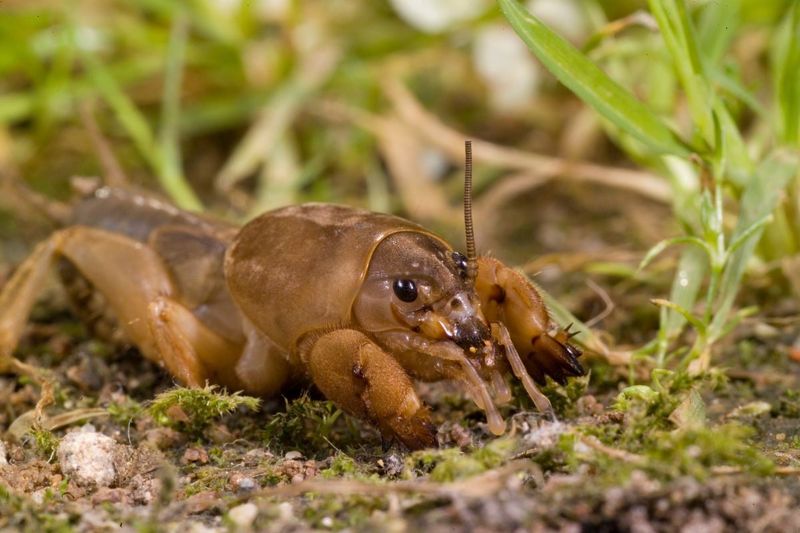
5. Mole Crickets
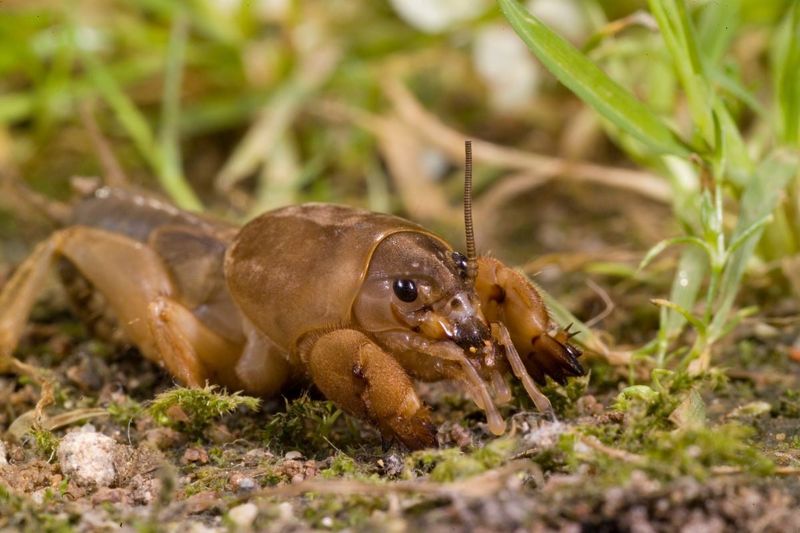
Spongy ground and skinny surface tunnels suggest a problem beneath the grass, not a hungry mammal above it. Mole crickets burrow through soil, and damaging species can weaken Florida turf by feeding on roots and disturbing their contact with soil.
Small openings may appear among winding ridges, thinning patches, or loose sand. Activity is often easier to notice during warm weather, but timing and severity vary by species and location.
Before treating, try a standard scouting method used in Florida turf care. Mix about 1.5 fluid ounces of liquid dish soap into 2 gallons of water and pour it over roughly 4 square feet of a suspect patch.
Watch for several minutes as insects come to the surface. Avoid testing drought-stressed grass, rinse afterward, and ask your county Extension office to help identify what emerges.
Finding one insect does not automatically justify treatment. Florida also has native mole crickets that are generally less damaging than invasive pest species.
If control is needed, UF/IFAS guidance can help match treatment to the species, life stage, and lawn conditions. Young pest mole crickets are generally easier to manage than large adults.
6. Earthworms
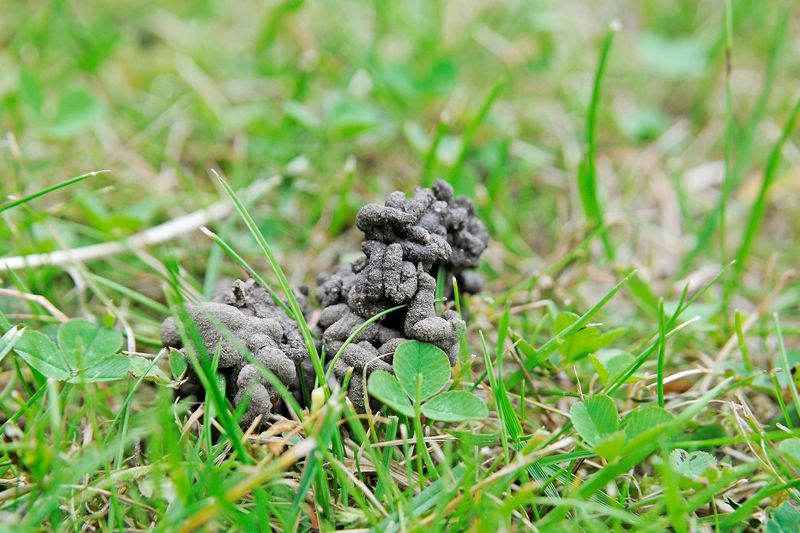
Tiny piles of curled, crumbly soil are often better news than they first appear. Earthworms bring soil to the surface and leave castings around small burrow openings, especially when the ground is moist.
From a standing height, those dark specks can resemble miniature digging damage. Get closer and look for grainy or wormlike coils of soil rather than a clean excavation with sand thrown to one side.
Earthworm activity generally helps mix organic matter into soil and creates channels for air and water. In a home lawn, scattered castings are usually a cosmetic issue rather than a reason for pest control.
Allow wet castings to dry before lightly brushing or raking them into the grass. Working them while sticky can smear soil over the blades and make the area look worse.
If the lawn stays soggy, check irrigation settings, runoff, and drainage instead of blaming the worms. Florida rainstorms can reveal activity that was already happening below the surface.
Skip insecticides and home remedies for this kind of disturbance. A tiny opening with castings, no torn turf, and no expanding bare patch usually calls for patience, not a chemical fix.
7. Cicada Killer Wasps
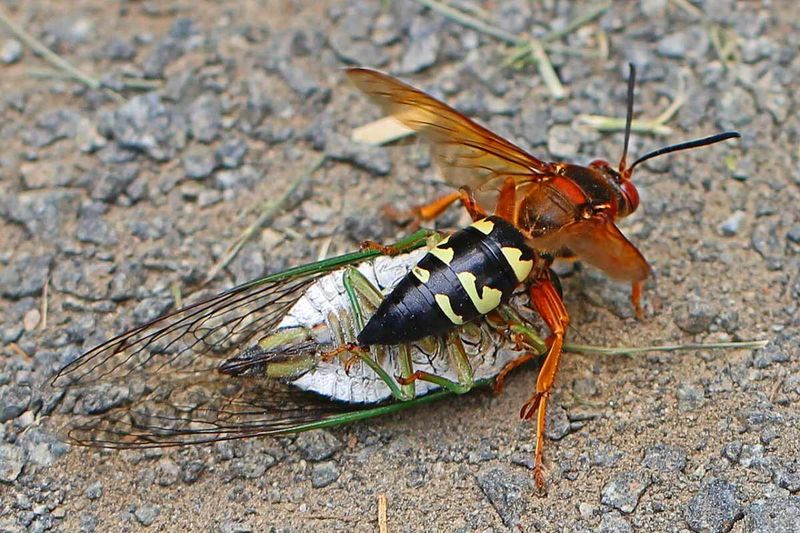
A fresh fan of sand beside a round opening can mark a wasp’s construction site. Cicada killers dig nesting tunnels in sunny, well-drained ground, including thin turf and sandy areas common in Florida yards.
Entrances are often around half an inch across, sometimes larger. A substantial pile of excavated soil and a large wasp carrying a cicada provide much stronger evidence than the opening alone.
Despite their intimidating size, these solitary wasps are not defending a shared colony like yellowjackets. Males cannot sting, and females generally sting only if handled or trapped against the skin.
Watch from a comfortable distance rather than blocking the entrance or testing the insect’s patience. Activity is mainly during daylight, so a hole noticed in the morning may simply have escaped attention the day before.
Where nests are away from foot traffic, leaving them alone is often practical. Improve thin turf through suitable mowing, irrigation, and site care to make exposed nesting ground less available over time.
If a nest sits beside a busy doorway or someone has a serious sting allergy, get professional identification before deciding on control.
8. Ground-Nesting Bees
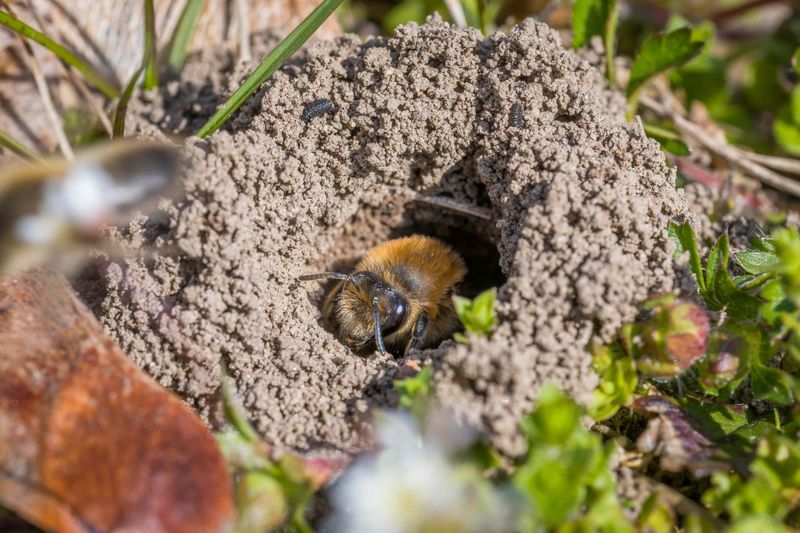
Pencil-sized entrances clustered in a sunny bare patch may belong to helpful pollinators. Several kinds of native bees nest underground, and Florida’s exposed sandy soil can offer suitable places to raise their young.
Many leave a small ring or mound of loose soil around each opening. You may see several bees using separate holes in the same area, which does not necessarily mean they share a single colony.
Most solitary ground-nesting bees are unlikely to sting unless handled or pressed against skin. Their nesting activity is often seasonal, and the lawn disturbance is usually minor.
Pause nearby during daylight and watch from a safe distance. A photograph of an insect entering its hole can help your county Extension office distinguish bees from wasps or other burrowing insects.
Do not assume every busy ground entrance is harmless. Repeated traffic by many yellow-and-black wasps through one opening could indicate yellowjackets, which can defend their nest aggressively.
For confirmed solitary bees away from play areas, leave the patch undisturbed while nesting continues. Avoid flooding holes, pouring in chemicals, or applying broad insecticide treatments to a useful pollinator nesting area.
9. Burrowing Crayfish
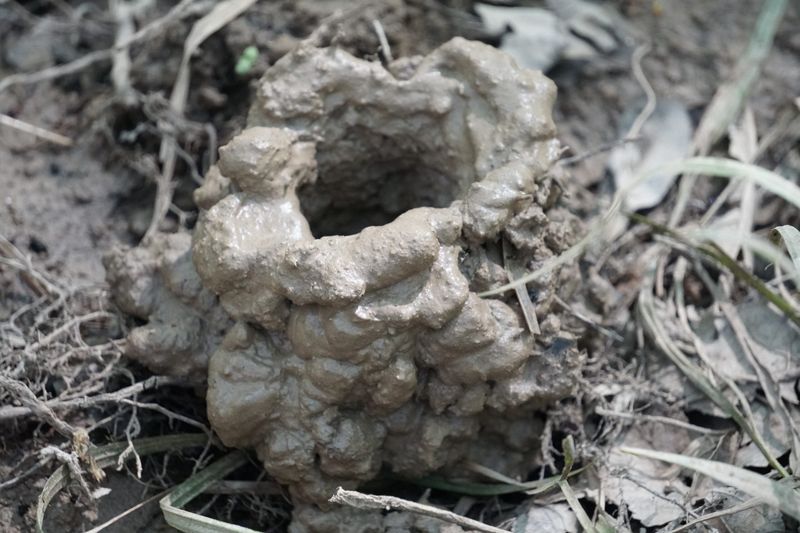
A little mud chimney rising above the grass is one of the clearest clues on this list. Burrowing crayfish push wet soil out of their tunnels, sometimes building a rough tower around the entrance.
Look in low areas, near ditches, or where groundwater stays close to the surface. After heavy Florida rain, fresh mud pellets and renewed building activity can make a previously hidden burrow stand out overnight.
Unlike an armadillo feeding pit, the opening leads into an established tunnel. The chimney may crumble or get knocked down by mowing, leaving a plain hole that is harder to identify.
Crayfish are part of local wetland food webs, so their presence does not automatically call for removal. A few burrows at the damp edge of a yard may be easier to tolerate than a constant battle with the site.
Check for irrigation leaks or runoff that keeps an otherwise dry area wet. Do not fill burrows with bleach, fuel, salt, or pesticides not labeled for that use.
If burrows repeatedly affect a walking path, ask Extension about identification and drainage options. Avoid altering wetlands or drainage systems without checking applicable rules.
10. Moles
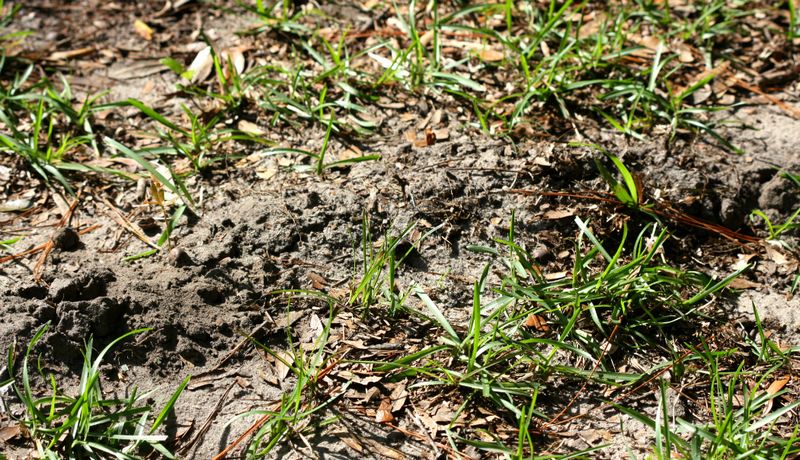
Follow the raised line rather than focusing only on the hole. Moles spend much of their time underground, so winding surface ridges and pushed-up soil are more useful clues than exposed entrances.
A small opening may appear when a shallow tunnel collapses or another animal investigates it. Moles commonly keep their tunnels closed, which makes a yard full of clean, open holes a poor match by itself.
Florida’s eastern moles eat earthworms and other soil animals. Their digging can loosen turf roots, but they are not chewing grass roots in the way some lawn pests do.
To check activity, gently flatten a short section of raised tunnel and see whether it is lifted again over the next day or two. Mark the spot so you can find it without repeatedly disturbing the entire area.
Avoid assuming that grub treatment will solve the problem. Moles have other food sources, and unnecessary insecticide use may provide little benefit.
For minor damage, settle the soil and care for the grass normally. If active tunnels keep creating trip hazards or serious turf damage, ask Extension or a qualified professional about targeted management rather than trying unproven household repellents.