
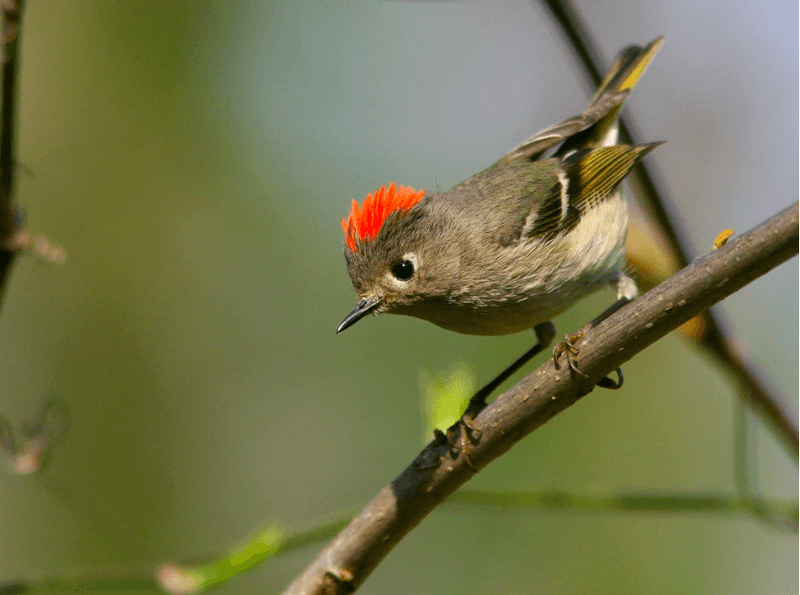
Something very small and very busy may be hopping through the shrubs outside your window this season. The ruby-crowned kinglet is a tiny songbird that can pass through Central Texas in fall and may stay for the winter.
You cannot promise a visit, but you can make your yard friendlier to a bird that hunts for insects and spiders in leafy cover. Here is how to spot one and set up your trees and shrubs so they are more welcoming.
A quick flicker in the shrubs may be a ruby-crowned kinglet
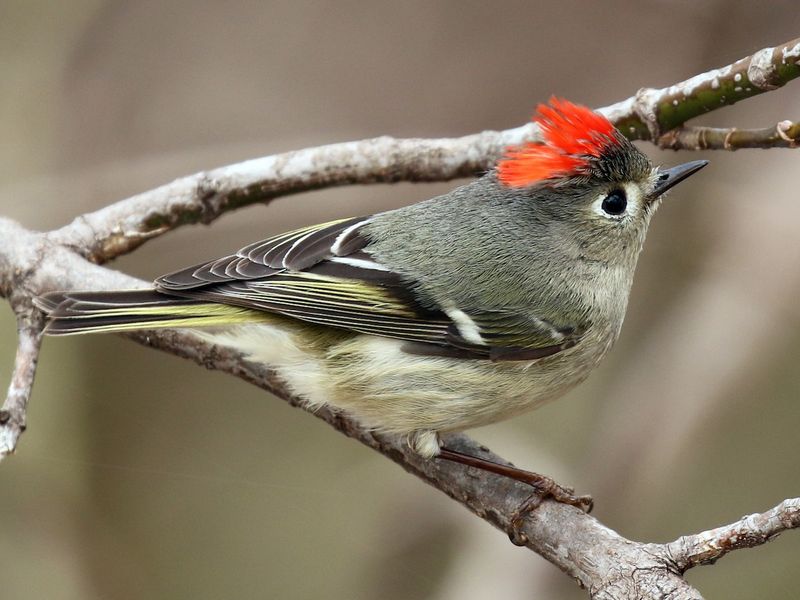
Most backyard sightings of this bird last a couple of seconds. You catch a flutter of movement, a olive-gray blur, and then it is gone behind the leaves.
Knowing what to look for makes those short moments count.
Start with size. According to Cornell Lab of Ornithology’s overview, this is a tiny songbird, smaller than many sparrows and chickadees.
Its body is a soft olive-gray, and it often looks plump and round-headed.
Next, check the face and wings. A bold white eye-ring gives it a wide-eyed, surprised look.
A pale white wing bar shows on the folded wing.
Then watch the behavior. Kinglets are nervous, constant movers, and they flick their wings again and again as they hop from twig to twig.
That wing-flicking is often the best clue when everything else happens too fast.
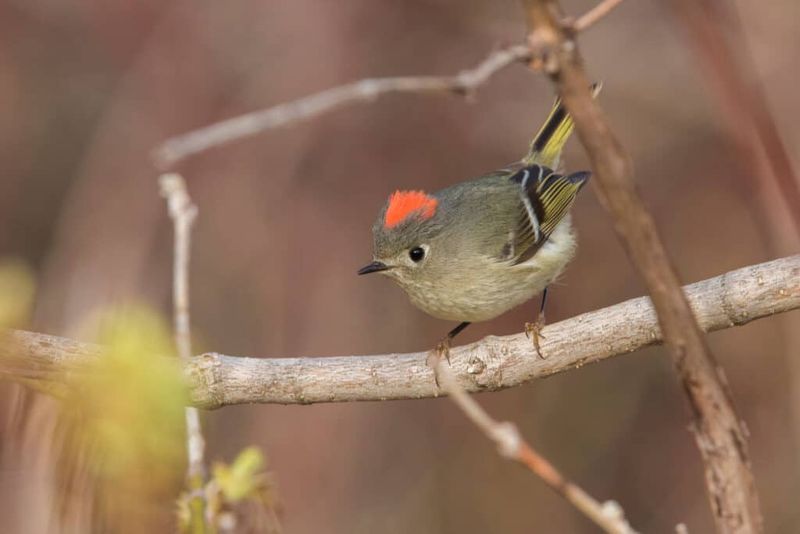
The name promises a ruby crown, but do not count on seeing it. The red patch is usually hidden and tends to show only when the bird is excited or agitated.
Most of the time you will identify it by its small size, eye-ring, wing bar, and twitchy wings instead. If you see those together, you have a good candidate.
October falls within migration season, but timing varies
October sits inside a long stretch of fall migration for this species. eBird’s seasonal model places post-breeding migration from early August into late December. That is a wide window, so a kinglet showing up in October is reasonable, but it is not a fixed date for your street.
Local timing can differ. A Texas Ornithological Society account for Victoria County reports October arrival and fewer birds after February.
Victoria County is on the coastal plain, so treat it as one Texas example rather than a calendar for all of Central Texas.
Some birds you see are just passing through, while others settle in for the cold months. Audubon’s field guide notes that the species winters in many wooded and brushy places, including mesquite brush and streamside thickets.
Cornell also describes it as common in woods and thickets during migration and winter.
That regional pattern does not tell you about one bird. A kinglet in your cedar elm on Tuesday may be gone by Thursday, or it may linger for weeks.
Nobody can predict an individual bird’s schedule.
A practical approach is to keep an eye out from October through the winter months. Spend a few minutes near shrubs on a calm morning with a cup of coffee, and see what turns up.
Leafy foliage offers the food and cover kinglets use
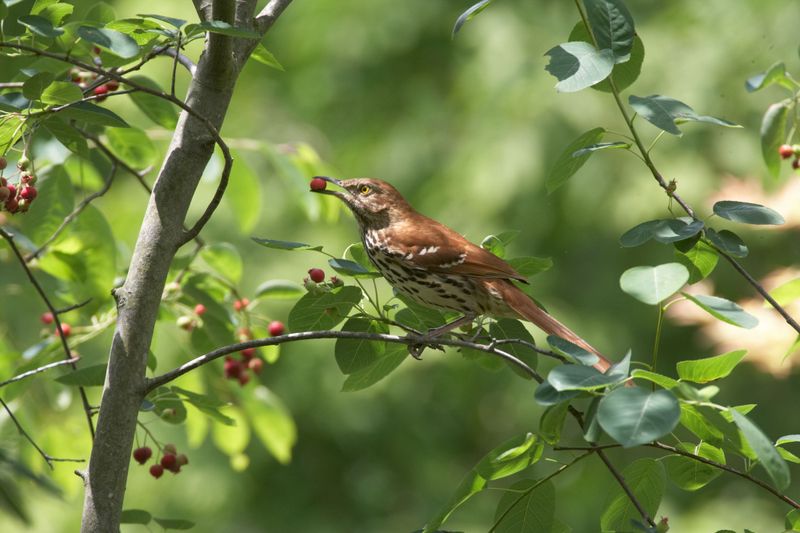
Think of a kinglet as a hunter, not a seed eater. According to Cornell’s life history page, it picks spiders and insects such as aphids, ants, wasps, and bark beetles from leaves and twigs.
It also eats small amounts of seeds and fruit, but insects are the main story.
That points toward habitat. Leafy trees and shrubs give the bird places to search and places to hide.
During migration and winter, it often forages low in woods and thickets, so a layered planting with shrubs under taller trees fits how it moves.
Cornell notes that the bird may visit backyards when food is available. That wording matters.
Good cover and bugs make a yard more suitable, but they do not guarantee a visit.
Pesticides are the other half of the plan. Sprays that wipe out insects can also remove the natural food birds rely on, and Audubon’s bird-friendly yard advice recommends cutting back on them.
Skipping the spray gives spiders and insects a chance to stay in the leaves.
A few simple habits help. Leave some fallen leaves under shrubs, keep evergreen and semi-evergreen plants in place through winter, and resist the urge to trim everything tidy before the cold months.
A slightly shaggy yard often holds more life.
Choose Central Texas plants for habitat, not as a kinglet lure
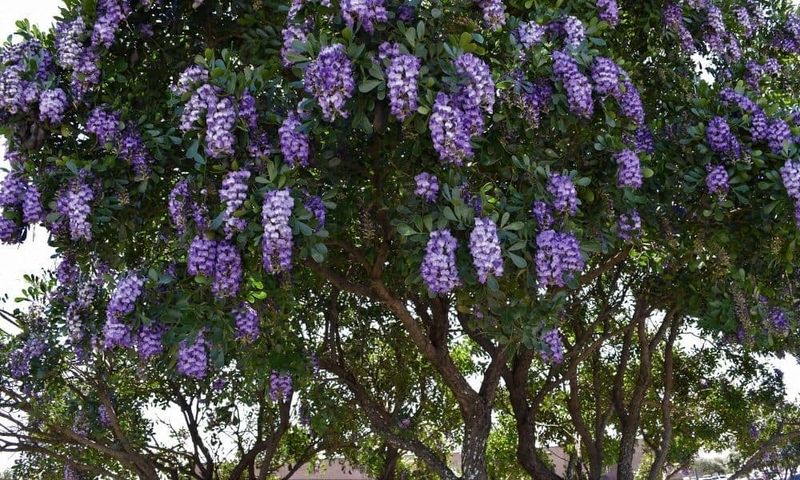
Plant choices work best when they fit your soil, sun, and water. Travis Audubon’s backyard guide names yaupon, agarita, Texas mountain laurel, live oak, Ashe juniper, and cedar elm as native plants that can give birds shelter or food.
Treat that list as general bird habitat, not a kinglet recipe. No source shows that any one of these plants draws ruby-crowned kinglets.
What they offer is structure: cover, perches, and places where insects and spiders can live.
Match each plant to your spot. Yaupon and agarita can work as mid-level shrubs, while live oak, cedar elm, and Ashe juniper are larger trees that need room.
Texas mountain laurel suits well-drained, sunny sites. Check the mature size before you plant, and think about utility lines, fences, and your house.
Audubon’s Plants for Birds tool lets you search by ZIP code for native plants suited to your area, which helps when you want options beyond this list.
Mixing layers gives the best result. A canopy tree, a few shrubs beneath, and some low plants create a varied space.
Fall and early winter are good planting seasons in much of Central Texas, since cooler weather eases stress on young roots.
Treat feeders as an optional supplement
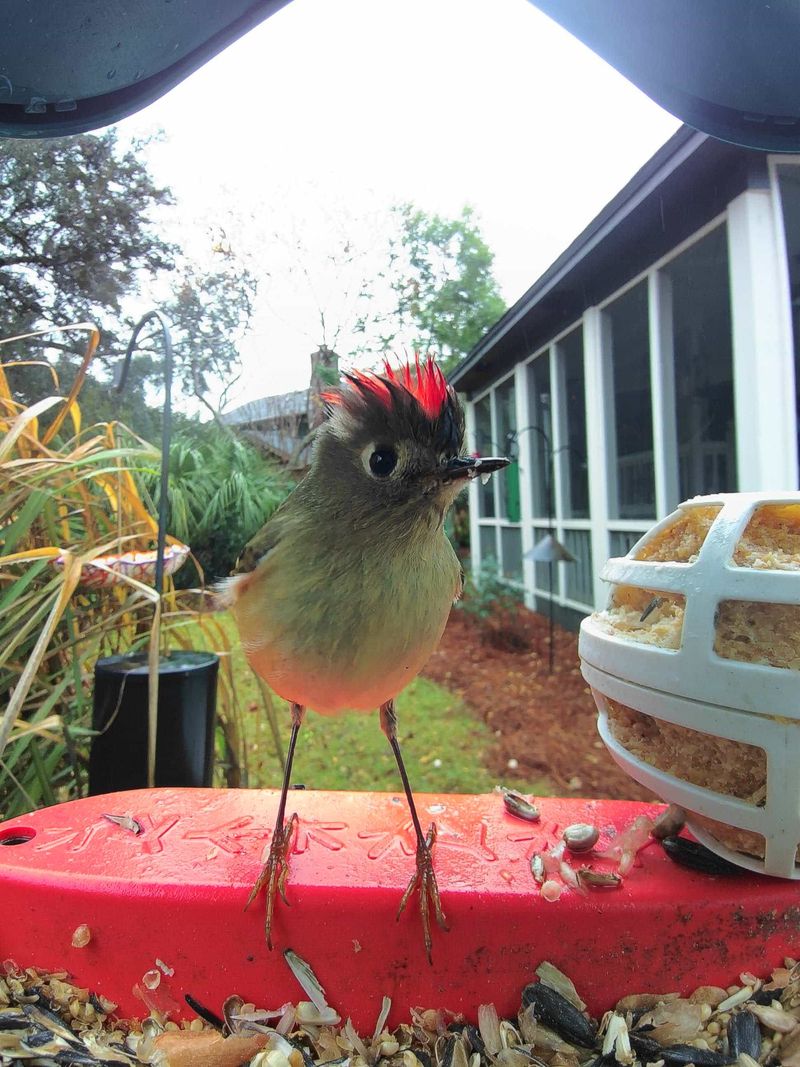
A habitat-first yard does not need a feeder. If you want to add one, suet is the option that fits insect-eating birds.
Project FeederWatch guidance says suet can attract birds that eat insects.
For this species, the evidence is thin. A participant in Katy, Texas, photographed a ruby-crowned kinglet eating suet.
That shows it can happen, but it does not show that suet reliably brings kinglets in.
If you put out a feeder, keep it clean. The Texas Parks and Wildlife Department advises cleaning feeders about every two weeks and removing built-up debris.
TPWD also says to stop feeding if you find sick or dead birds at a feeder.
Birdbaths follow a different schedule. CDC guidance recommends cleaning baths weekly or whenever they look dirty.
If a sick or dead bird turns up, the CDC advises taking down both feeders and baths for two weeks.
Keep the two sets of advice separate in your routine. A simple reminder on your calendar can cover the feeder cycle, while a weekly rinse handles the bath.
Make the yard safer as well as leafier
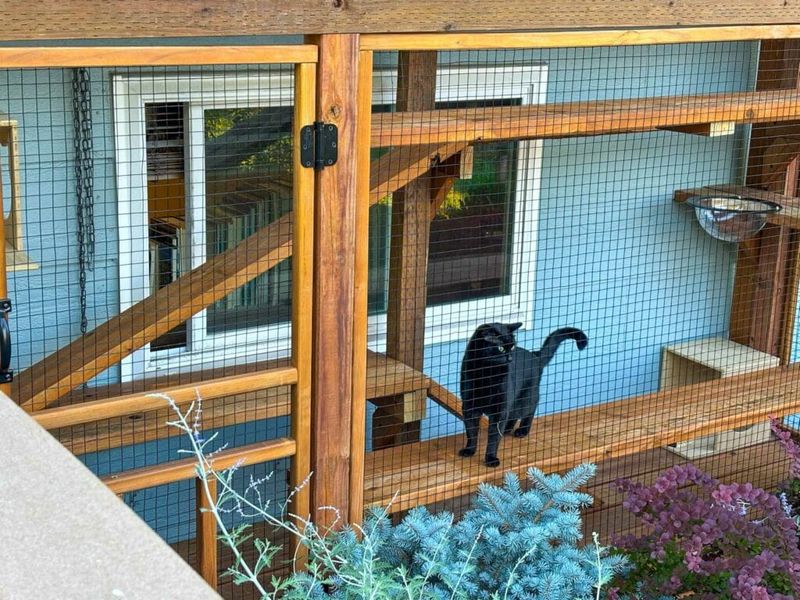
A welcoming yard should also be a safe one. Run through this short checklist before the cold months settle in.
Windows come first. Birds can mistake reflections for open space, so Audubon’s backyard safety advice includes making problem windows visible to birds.
Look for glass that reflects your shrubs and treat those panes first.
Cats are the second hazard. Keeping them indoors, or at least off the loose in your yard, protects small birds that forage low in shrubs.
Pesticides complete the list. Skipping them leaves more natural insect food on the leaves, which fits the bird-friendly planting approach covered in Audubon’s Plants for Birds resources and its bird-friendly yard guide.
The goal is simple: more cover and more natural food, with fewer hazards. Whether a kinglet shows up, and for how long, is up to the bird.
Keep watching those shrubs anyway. A flick of white wing bars at the edge of a leaf is a good reason to pause.