

Crape myrtles put on a long show across North Carolina, but the flowers do fade. Some gardeners snip off the faded clusters hoping for another round of color.
It is a small, low-risk step, and it works better on some plants than others. Here is how it works, when it makes sense, and how it differs from real pruning.
Deadheading offers an optional chance at another flush
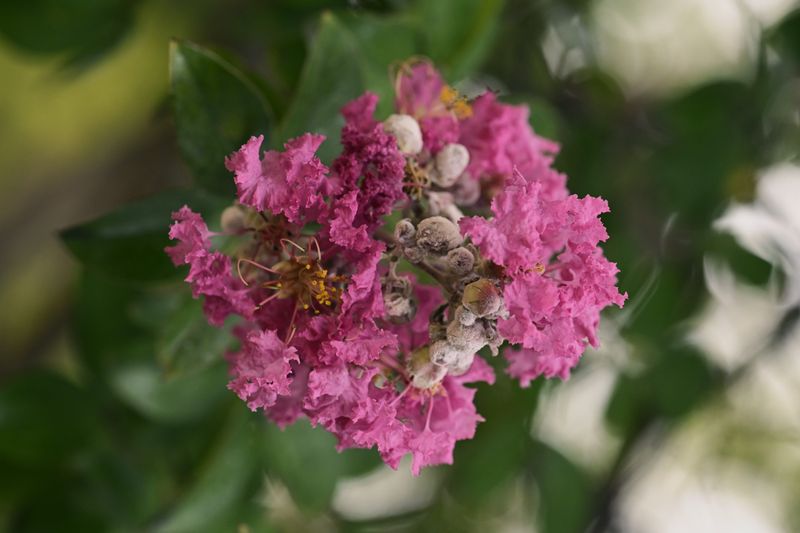
Nothing about crape myrtles requires you to deadhead them. A healthy plant blooms just fine without any pruning, and the University of Georgia calls the idea that pruning is needed for flowers a misconception.
NC State lists the usual bloom period as July through September, so many plants already put on a long display on their own.
If you like to tinker and want to try for more color, removing faded flower clusters is the low-risk way to do it. UGA Extension guidance says this can stimulate another flush of flowers in late summer on some cultivars.
The word to hold onto is some. Results vary from plant to plant and from year to year.
The payoff, if it comes, is a second round of blooms in the same season. It is not a switch that controls how the plant behaves for the rest of the year, and it is not a way to guarantee anything.
Virginia Cooperative Extension describes the results of summer tip-pruning as inconsistent, which is a fair reason to treat it as a bit of garden experimenting rather than a chore.
Since it is mid-October in North Carolina now, the blooming window has passed for this year. Think of what follows as a plan for next summer, and a way to understand what is happening on your plants.
Remove the spent cluster, not a major branch
The cut itself is small. Once a flower cluster has faded, follow the stem down from the spent bloom and find where a leaf joins it.
Snip just above that spot. According to UGA Extension, if the stem has no leaves left, cut just above a lateral bud instead.
Picture it as taking off only the tired tip of a stem. A fresh pair of sharp, clean pruners makes a neat cut that heals quickly.
You are not shaping the plant or making it smaller, and you are not cutting into woody branches. A single cluster at a time is the whole job.
The idea behind the cut is simple. Removing the spent cluster can stimulate new growth from the buds below it, and on some cultivars that new growth carries another round of flowers.
UGA describes this as a way to bring on a possible second flush, not a sure thing.
A few practical points keep the job easy. Start with shrub-sized or reachable plants, since tall trees can be impractical to work on.
Work cluster by cluster as they fade rather than all at once. If you cannot reach a cluster from the ground, skip it.
A ladder and a pair of pruners high in a tree is rarely worth the effort for a possible bonus bloom.
If a plant does not respond, nothing is lost. Cutting a faded cluster does not harm a healthy crape myrtle, and the plant simply carries on with the blooms it already had.
Cultivar and timing affect the chance of rebloom
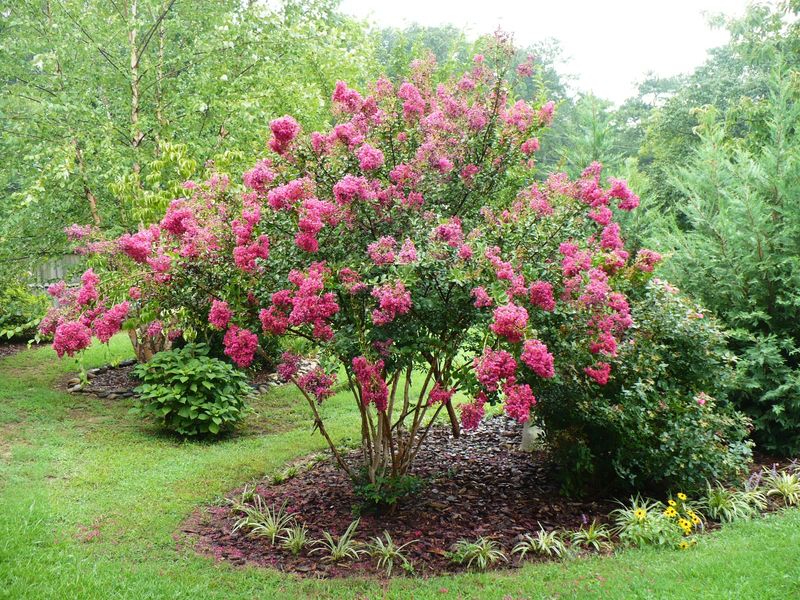
Not every crape myrtle plays along. Some cultivars flower earlier in summer and have time left to try again.
Others do not start blooming until later, and by then the season is running short.
That is the reason timing matters. Virginia Cooperative Extension says summer tip-pruning may lead to a second flowering on cultivars that bloom before mid-July.
Even then, it calls the results inconsistent. Some plants will respond, and some will not.
On the other end, UGA notes that a second bloom can be difficult to induce on cultivars that flower after mid-July. If your crape myrtle is a late bloomer, leaving it alone is a perfectly good choice.
So how do you know which kind you have? Keep a simple note for a season or two.
Write down roughly when your plant opens its first flowers and when the main show fades. If that first flush comes in June or early July, you have a better shot.
If it begins in late July or August, the odds drop.
North Carolina adds its own twist. Mountain gardens often see later and shorter seasons than the Piedmont or the coastal plain, so the same cultivar can bloom on different schedules depending on where you live.
That makes it hard to predict results for every plant in the state, so treat any rebloom as a pleasant surprise rather than something you are owed.
Deadheading is not topping
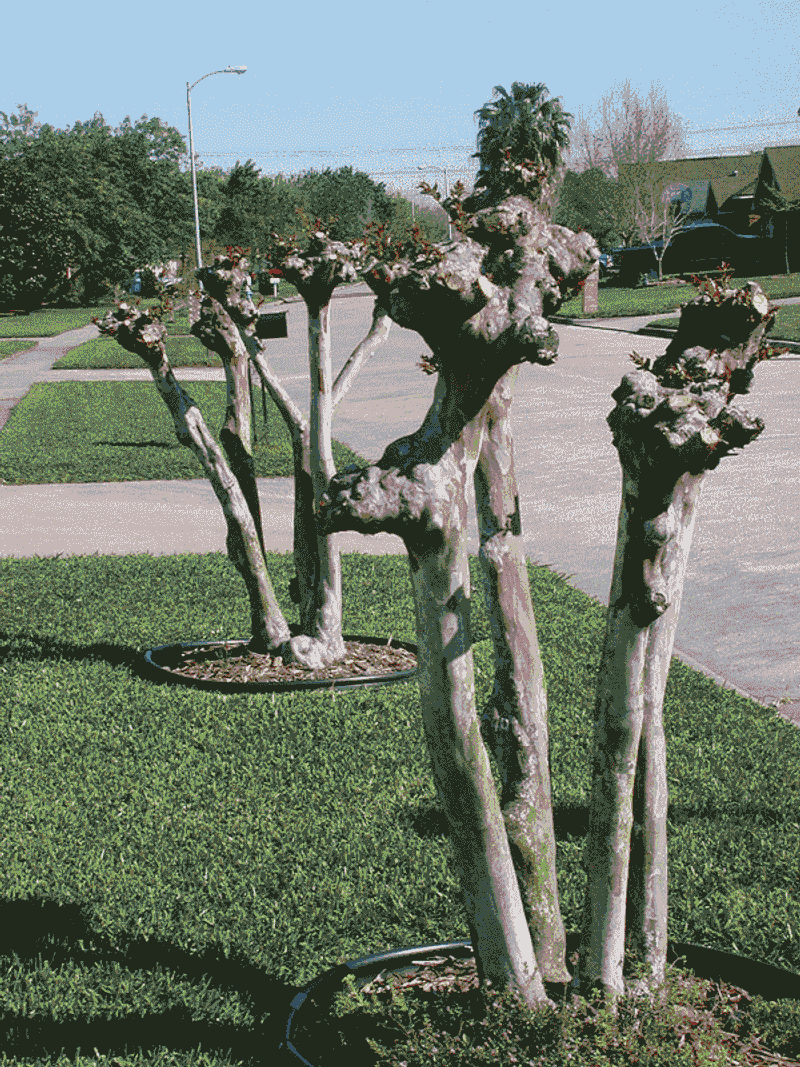
Removing one spent flower cluster is a tiny job. Topping is something else entirely: chopping major branches back to thick stubs, often in the middle of the growing season.
The two get lumped together, but the plant experiences them very differently.
Severe cuts during the growing season are not a shortcut to more flowers. UF/IFAS Extension warns that heavy pruning in the growing season affects how the plant grows.
Topping also damages the natural shape of the tree and can lead to weak, crowded shoots.
Virginia Cooperative Extension adds that summer tip-pruning is not needed to promote flowering the following year. So there is no reason to feel behind if you skip it.
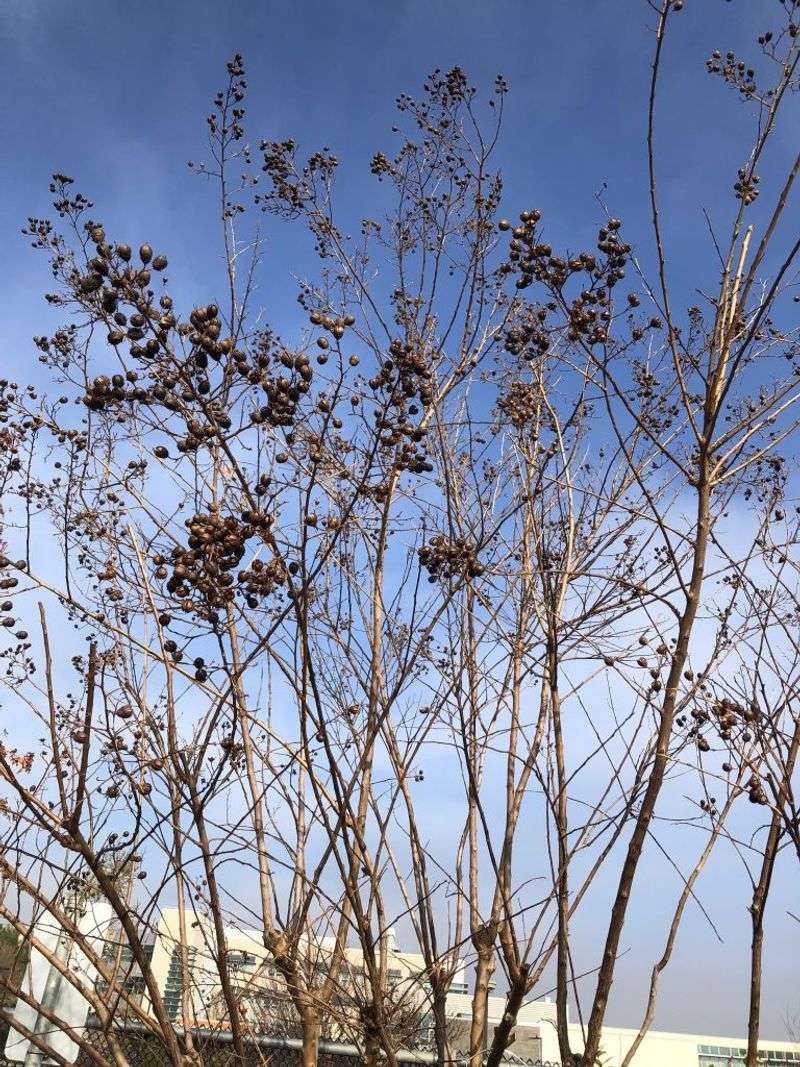
Seedheads are another spot where gardeners worry for no reason. After flowering, crape myrtles form small round seed capsules.
UGA describes them as an attractive feature that can stay on the plant and fall naturally. Removing them is optional, and it is not required for next year’s blooms.
A handy test: if you need a ladder, loppers, or a saw, you have moved past deadheading. Real deadheading uses hand pruners and takes off only the faded end of a stem.
If a cut would remove a branch thicker than a pencil, put the tools away until the proper pruning season.
Save substantial pruning for late winter or early spring
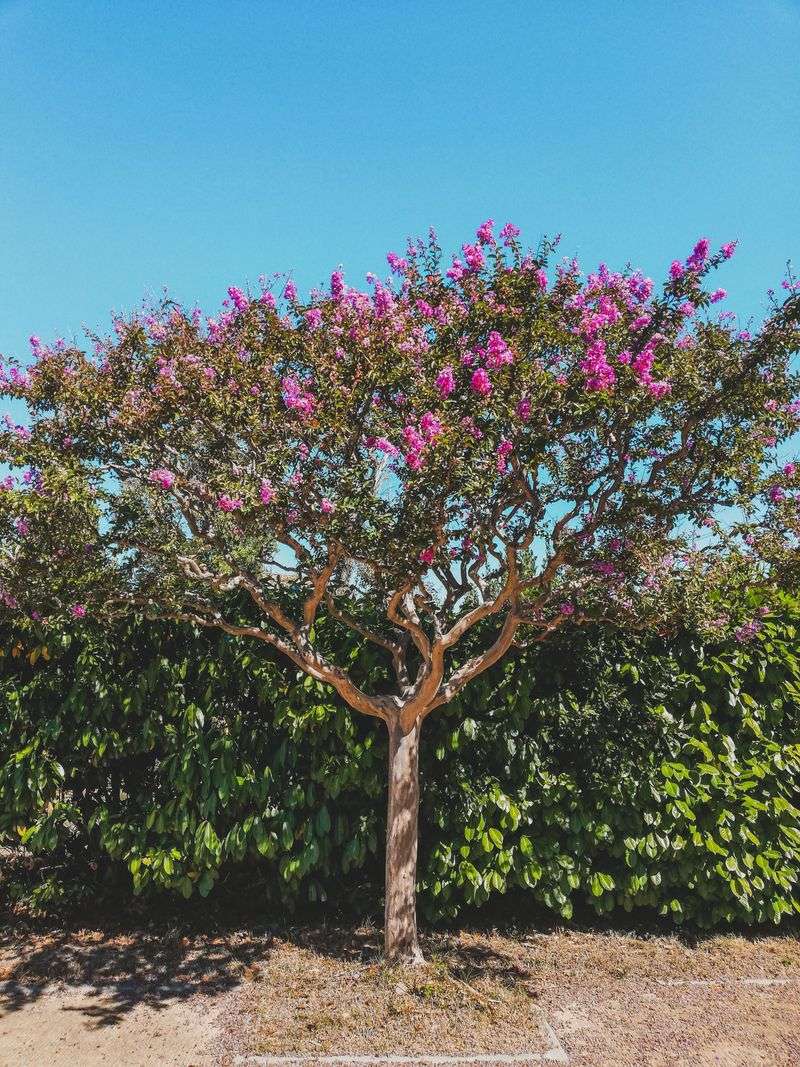
When a crape myrtle does need real work, such as removing crossing branches or thinning crowded growth, the calendar matters. NC State Extension recommends doing substantial pruning in late winter or early spring, before new growth begins.
The plant is dormant then, and its structure is easy to see.
Timing matters because crape myrtles bloom on the growth they make in the current season. According to the NC State Extension Gardener Handbook, pruning at the wrong time can remove flower buds or leave tender new growth more open to frost damage.
Late-season growth may also not have time to mature before cold weather arrives.
That is a good reason to leave heavy cuts alone this time of year. Any shoots a plant pushes out in the fall could be nipped by the first freeze, which falls at different times across the mountains, Piedmont, and coastal plain.
Pruning is also not a requirement for blooms. The NC State Plant Toolbox lists the typical bloom period as July through September, and a healthy plant that never gets pruned can still flower well.
If you do prune this winter, aim for light, purposeful cuts. Take out dead wood, branches that rub, and suckers at the base.
Leave the main trunks and the graceful, vase-like form alone.
Choose the small cut only if the timing and goal fit

Here is a simple rule to carry into next summer. Snip faded clusters only if a possible extra flush sounds worth the effort and your cultivar blooms early enough to leave a chance.
If either part does not fit, leave the plant alone.
That choice costs you nothing. UGA Extension treats a second bloom as a possible bonus, and a healthy plant flowers without help.
Right now, with fall settling in, there is nothing to do for rebloom this year. Save structural work for the pruning window the NC State handbook recommends, in late winter or early spring before growth starts.
A crape myrtle that is left in peace usually does just fine.