
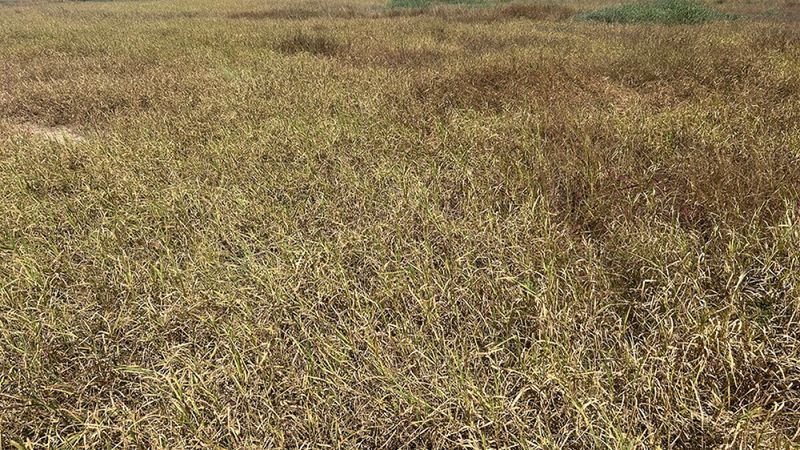
Brown patches in a Texas lawn or pasture can make anyone nervous, especially with news about a new invasive insect. Pasture mealybugs are tiny pests that can harm warm-season grasses, and they have turned up in many parts of the state.
Still, browning grass has plenty of other causes, and the facts matter before anyone reaches for a sprayer. Here is what is known, what is not, and how to check your own grass the smart way.
The pest affects pastures most, but can damage turfgrass
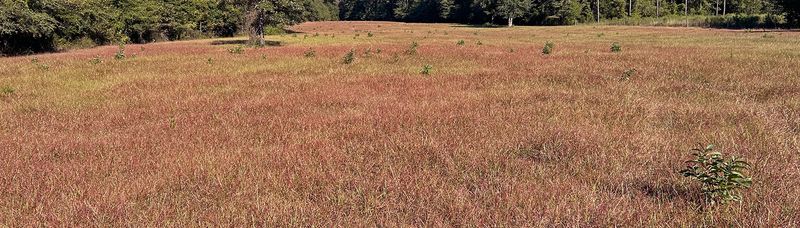
Two invasive insects share the name pasture mealybug: Heliococcus novovillei and H. summervillei. Both feed on warm-season grasses, the kinds that dominate Texas yards, hayfields, and rangeland.
Field observers cannot tell the two apart by sight, so most guidance treats them as one group.
The heaviest documented costs fall on ranchers. Texas A&M AgriLife Extension describes the pest as a new threat to pastures and hayfields, where feeding can cause yellowing, reddening, stunting, and dieback.
Lost forage means lost hay and grazing, which is why agriculture officials pay close attention.
Turfgrass can be a host too. Texas A&M has pictured an infestation in St. Augustinegrass, a common Texas lawn grass, so lawn damage is possible.
That single example does not show a statewide lawn outbreak, though, and USDA APHIS describes the pest mainly as a concern for grazing and hay lands.
For a homeowner, that means the pest deserves attention, not panic. A thin, yellowing St. Augustinegrass lawn is far more likely to have a more ordinary cause.
A pasture owner with unexplained dying patches in bermudagrass or bahiagrass has more reason to look closely.
The 70-county figure is a July detection snapshot
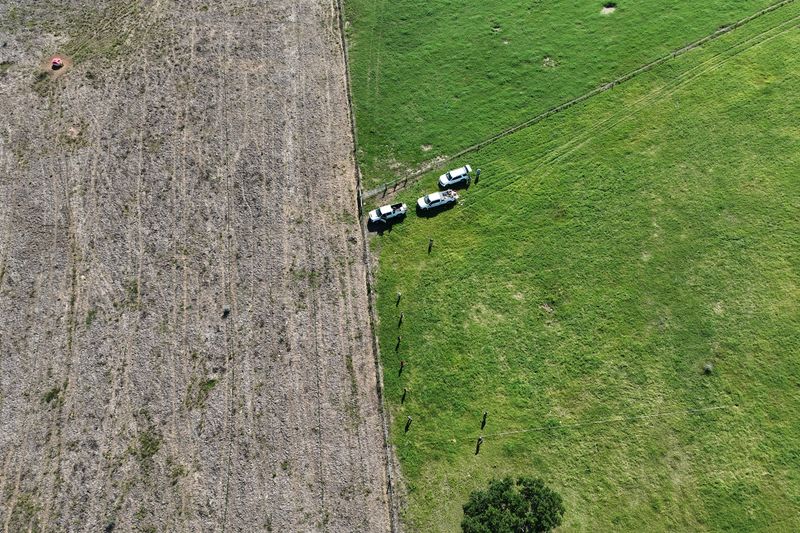
The number 70 comes from the Texas Department of Agriculture. In a July 17, 2026 announcement, the agency reported confirmed infestations in 70 Texas counties, with another 56 counties considered at imminent risk.
That is a count of counties where the insect was confirmed at least once. It does not mean 70 counties have widespread dead grass, and it does not mean 70 counties have damaged home lawns.
One confirmed find in a county can be a single pasture.
It also is not a fall tally. USDA APHIS updated its page on October 5, 2026 and confirms detections in Texas, Louisiana, Florida, and Georgia, but it gives no newer Texas county total.
Anyone quoting a current number is guessing.
A fair reading is that the pest is established across a large part of the state and still spreading, which is reason enough to stay alert. It is not a reason to assume your own lawn is affected.
Think of the figure as a dated snapshot that tells you the insect is out there, not what your grass is doing today.
Mealybugs can hide on grass and below ground
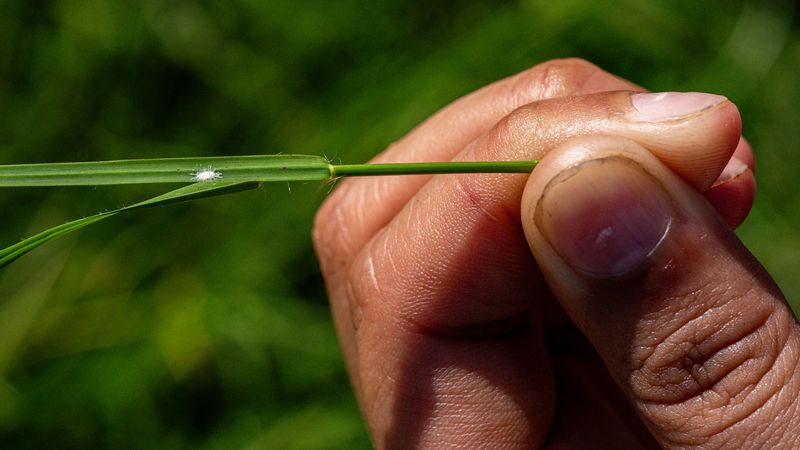
Adult and young pasture mealybugs are small, soft-bodied insects with a waxy white look. A quick glance across a lawn will rarely show them.
They tuck into leaf sheaths, along stems, and around the crown where grass meets the ground.
According to Texas A&M AgriLife Extension, they can sit on blades, at plant bases, in thatch, at the soil surface, or below ground. Immature stages cause much of the damage, and those young insects are even tinier and easier to overlook.
Calling this a soil pest is only half the story. They are not exclusively soil-dwelling.
USDA APHIS says they may move deeper into the soil during drought or other unfavorable periods, which could make them harder to spot just when grass looks its worst.
That is why a clean-looking surface does not rule them out, and why a few white specks on a blade do not confirm them either. Plenty of harmless debris and other insects look similar to the untrained eye.
Brown grass in fall does not confirm an infestation
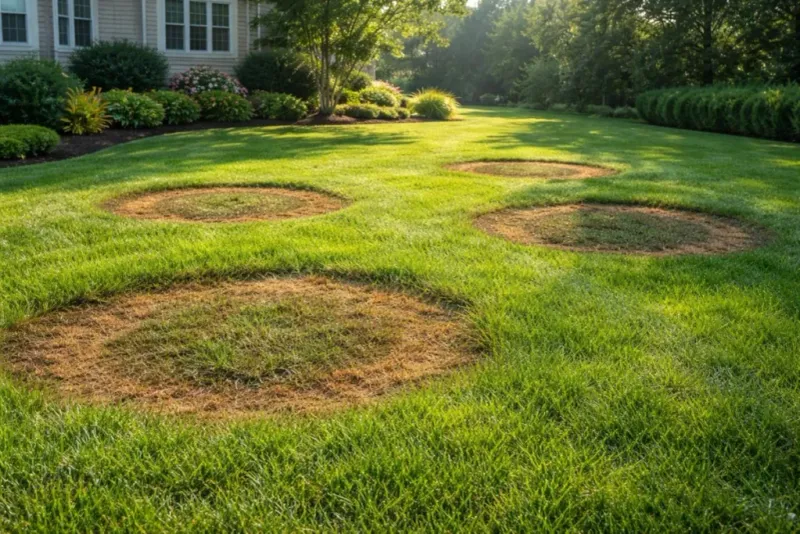
Mealybug feeding may start with yellowing. Grass can then turn red or purple before it browns, and plants may look stunted with weak roots.
Affected turf can resemble drought-stressed grass, which is exactly why these clues point toward a closer look and nothing more.
Plenty of other problems produce the same colors. Drought and heat stress, fungal or root disease, nutrient shortages, other insects, and herbicide injury are all documented lookalikes, according to Texas A&M AgriLife Extension.
Fall lawns also get brown patch, and a Texas A&M brown patch guide explains how that fungus creates circular brown areas as temperatures cool.
Season does not settle the question either. USDA APHIS says activity depends on temperature, moisture, and host availability, and the pest’s seasonal biology in the United States is still not well understood.
Nobody can say fall brings a surge.
A practical sorting step: ask what changed recently. Did you spray a weed killer, skip watering during a hot spell, or see circular patches after damp nights?
Those answers often explain the browning without any insect involved. If none fit and the grass keeps declining, move on to a careful inspection.
Inspect a damaged patch and seek identification
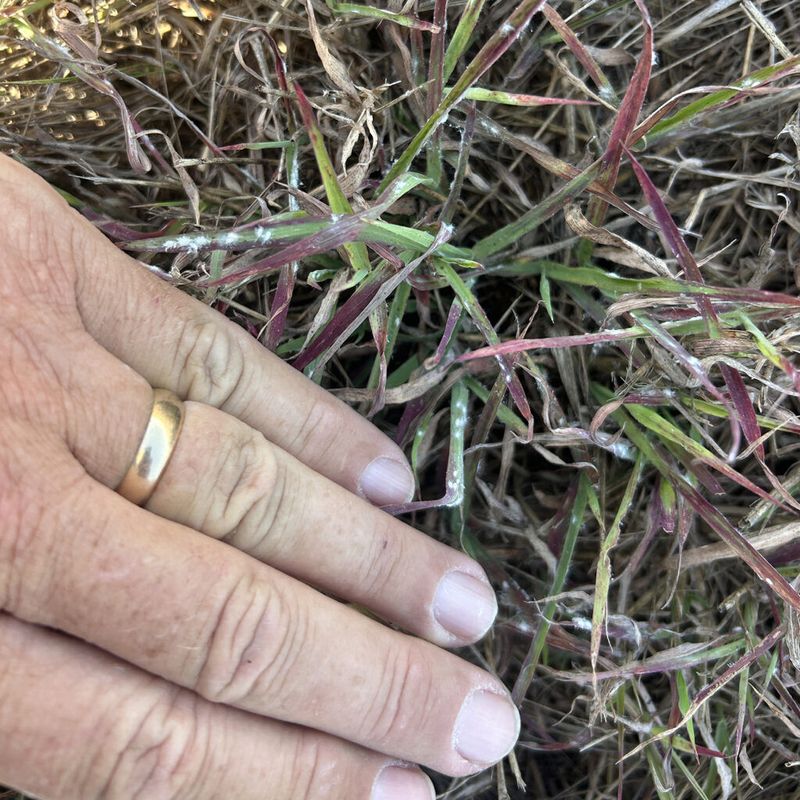
Start at the edge of the damaged area, where affected grass meets healthy grass. Insects are more likely to be found there than in the dead center.
Part the blades and look at lower leaves and stems, then check the thatch and the soil surface.
Take clear photos of the patch, close-ups of anything suspicious, and a wider shot showing the layout. Write down the location, the grass type, and what you have noticed, such as color changes or recent watering and herbicide use.
These details help the person who identifies the problem.
Next, contact your local Extension office or the state agriculture department. USDA APHIS asks people who suspect this pest to seek identification instead of guessing.
Texas A&M AgriLife Extension offers similar guidance for confirming a suspected case.
Avoid moving potentially infested grass, clippings, soil, or other material to another spot, and do not bag it up for a neighbor. These steps support identification only.
They are not a way to confirm the pest yourself, and they are not a treatment.
Pasture managers can scout and limit spread between fields
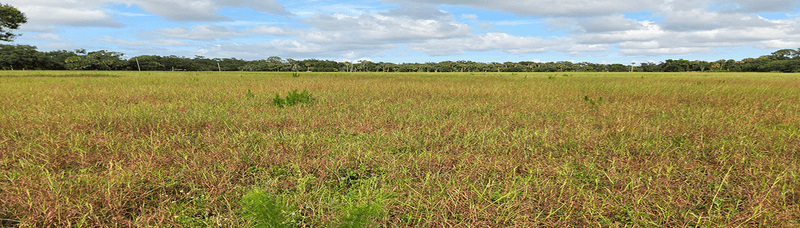
For ranchers and hay producers, the Texas Department of Agriculture passes along Texas A&M’s advice in an alert to producers. It comes down to three habits.
First, scout regularly. Walk fields on a schedule and pay attention to patches that yellow, redden, or thin out without an obvious reason.
Checking the edges of those patches, and the base of the plants, gives you the best chance of catching a problem early.
Second, manage forage through grazing or harvest. Adjusting how and when grass is grazed or cut is part of the recommended approach.
Third, clean equipment and vehicles before moving between fields so you are not carrying plant material or soil from one place to another.
These are field-management practices for pastures and hayfields. They are not a homeowner treatment plan, and they cannot promise to prevent or eliminate an infestation.
They are sensible ways to reduce risk and spot trouble sooner.
Pesticides are a separate matter. Any insecticide use is governed by its own authorization and label, which the next section covers.
The pesticide exemption is limited to specified pasture uses
Texas now has an EPA Section 18 emergency exemption, effective October 7, 2026, for Centric 40WG. The authorization letter covers specified uses on pasture and rangeland in listed Texas counties.
Anyone using it must follow the exemption label and every restriction in it.
It is not a general homeowner-lawn treatment. Using the product outside the authorized uses is off-label and unlawful, so do not apply pasture insecticides to a backyard lawn.
The list of eligible counties is also not a map of infestations. A county can be eligible without a confirmed detection, and a confirmed county may not appear on the list.
Nor does authorization guarantee success. Extension describes management as still developing, and coverage and effectiveness remain challenges, as the TDA producer alert reflects in its focus on scouting and field practices.
If your lawn is browning and you wonder about mealybugs, put the sprayer down and get an identification first. Dead grass has many causes, and the right fix depends on finding the real one.