
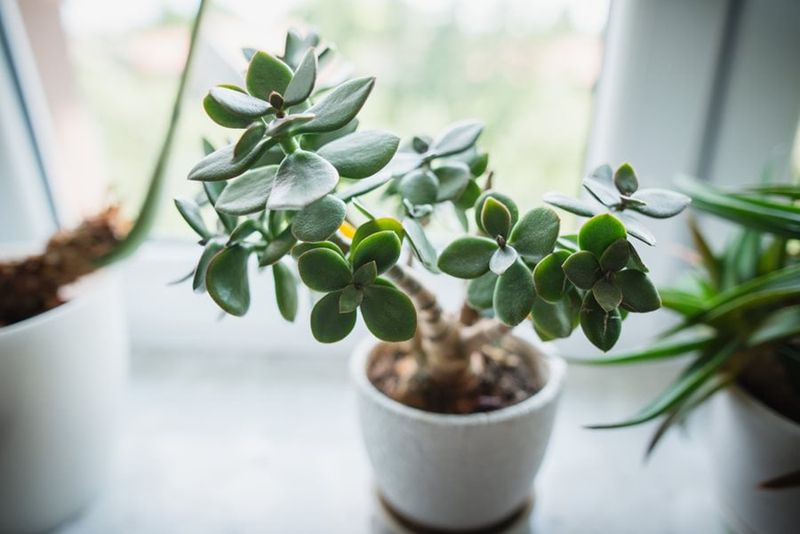
You walk past your jade plant one cool morning and spot a little pile of plump green leaves on the floor. It feels like your sturdy, easygoing succulent suddenly gave up on you.
The good news is that fall leaf drop almost always has a clear cause, and most of them are simple to fix. Here are the eight usual suspects, plus what you can do about each one starting today.
1. Overwatering as Growth Slows
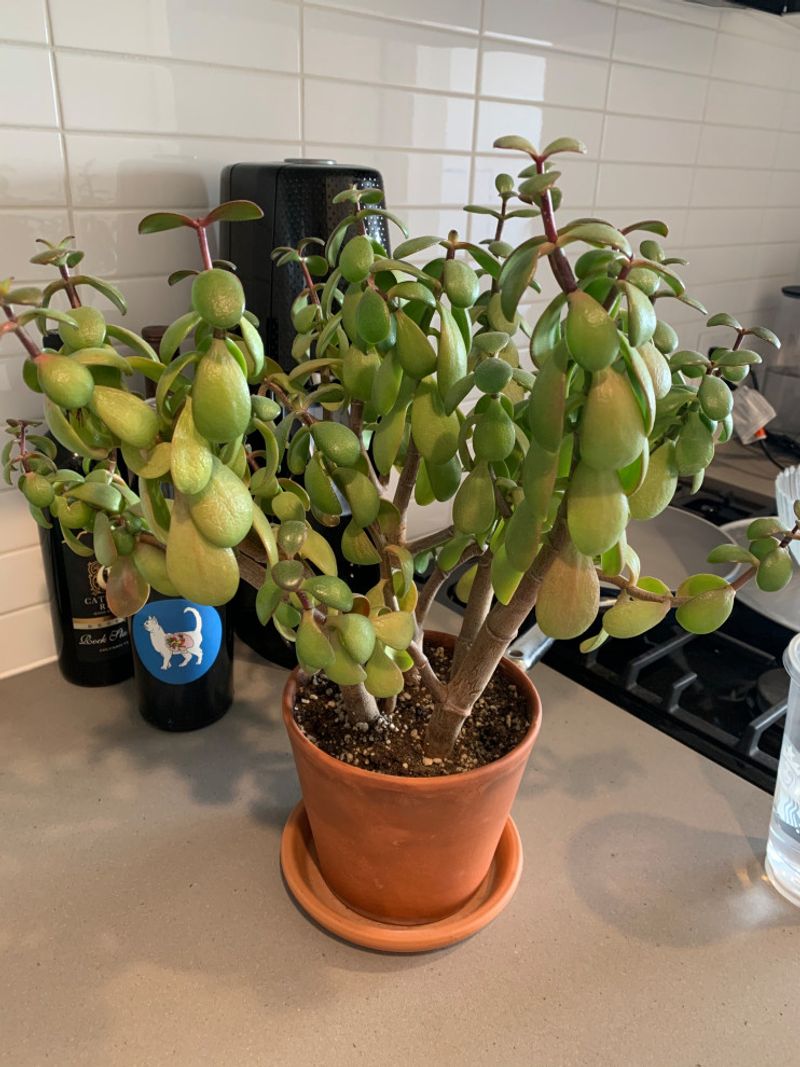
Summer habits are hard to break. All season long your jade drank happily, so you kept the watering can moving on the same schedule.
Once fall arrives, though, shorter days and cooler nights slow the plant way down, and it simply uses less water.
Extra moisture sits in the soil and starts to suffocate the roots. The first warning signs are often soft, yellow, or translucent leaves that drop with a light touch.
If the stems near the soil feel squishy, root rot may already be setting in.
Here is a better approach for fall:
Push your finger two inches into the soil and only water when it feels completely dry. For many Southern homes, that can mean watering every two to three weeks instead of weekly.
Always empty the saucer so the pot never sits in a puddle.
If you suspect rot, slide the plant out and check the roots. Healthy ones look firm and pale, while rotten ones are brown and mushy.
Trimming away damaged roots and repotting into dry, gritty succulent mix can often give the plant a fresh start. Hold off on watering for about a week afterward so cut roots can callus over and heal.
2. Sudden Temperature Swings
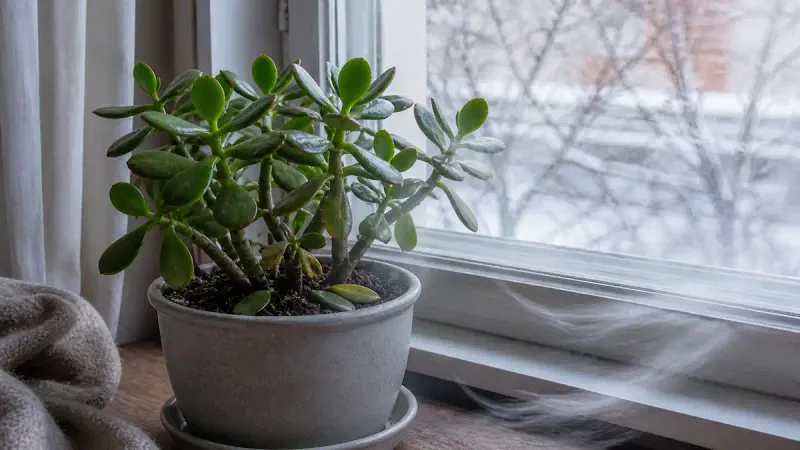
Picture a jade that spent all summer lounging on a sunny Texas patio. Then one October night, a cold front blows through and temperatures plunge twenty degrees by morning.
That kind of whiplash is a classic trigger for leaf drop.
Jade plants handle warmth well, but they dislike sudden chills. Nights below about 50 degrees can stress them, and anything near freezing may cause real damage.
Even indoor plants feel it when they sit near drafty doors, single-pane windows, or a heater vent blasting hot, dry air.
Watch the forecast closely during fall in Florida and Texas, where early cold snaps can catch gardeners off guard. When nighttime lows start dipping into the 50s, it is a smart time to bring outdoor jades inside or at least under cover.
Indoors, aim for a steady spot between roughly 60 and 75 degrees. Keep the plant a few feet away from doors that open often and from heating or cooling vents.
A stable location usually helps the plant settle down, and leaf loss tends to slow within a couple of weeks. Leaves that already dropped will not reattach, but new growth often fills in nicely by spring.
3. Not Enough Light Indoors
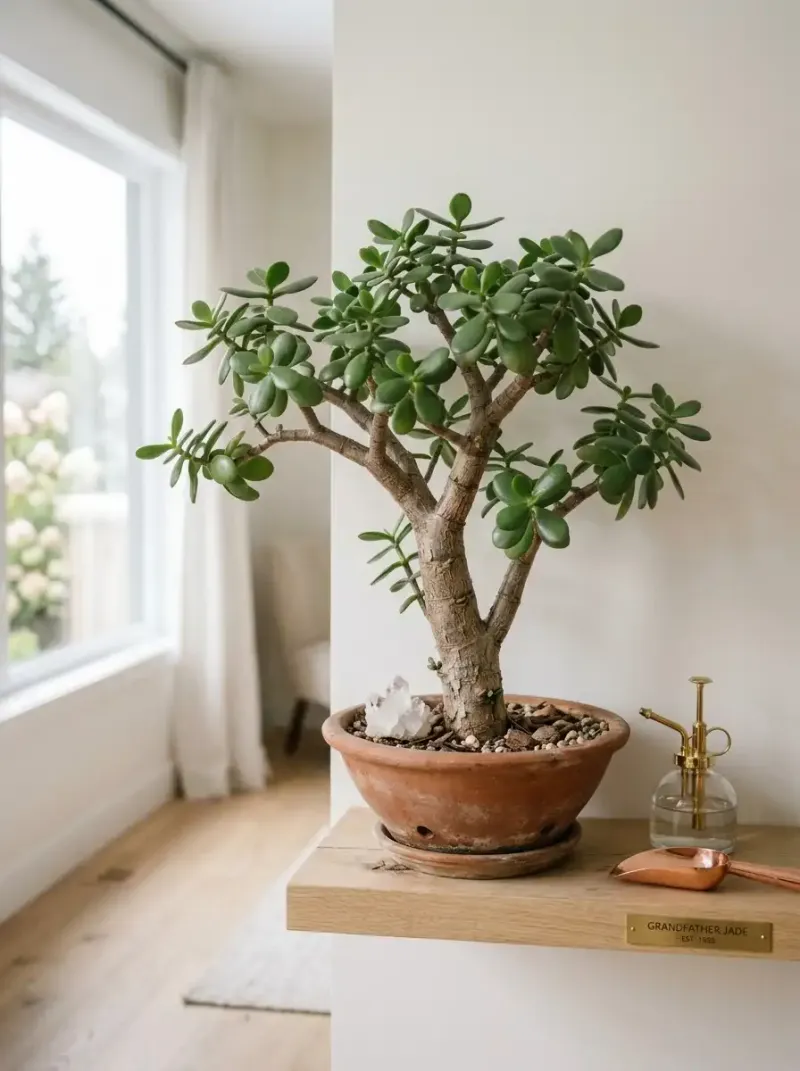
Sunlight is basically your jade’s paycheck. Outside on a bright Southern porch, it earns plenty.
Move it into a dim corner for fall, and suddenly the budget gets slashed.
When light drops, jade plants start cutting costs. They may shed older lower leaves, stretch their stems toward the nearest window, and grow new leaves that look smaller and paler.
Shorter fall days make the problem worse, even on a windowsill that seemed fine in July.
Jades usually do best with at least four to six hours of bright light daily. A south- or west-facing window is often the best choice indoors.
East-facing windows can work too, as long as nothing blocks the morning sun.
If your home simply lacks bright windows, an inexpensive LED grow light can make a big difference. Set it about 12 inches above the plant and run it 10 to 12 hours a day.
Many gardeners notice firmer, more compact growth within a few weeks. Rotate the pot a quarter turn every time you water so all sides get a fair share.
That small habit keeps the plant from leaning and helps balance its shape through winter.
4. Shock From Moving Inside
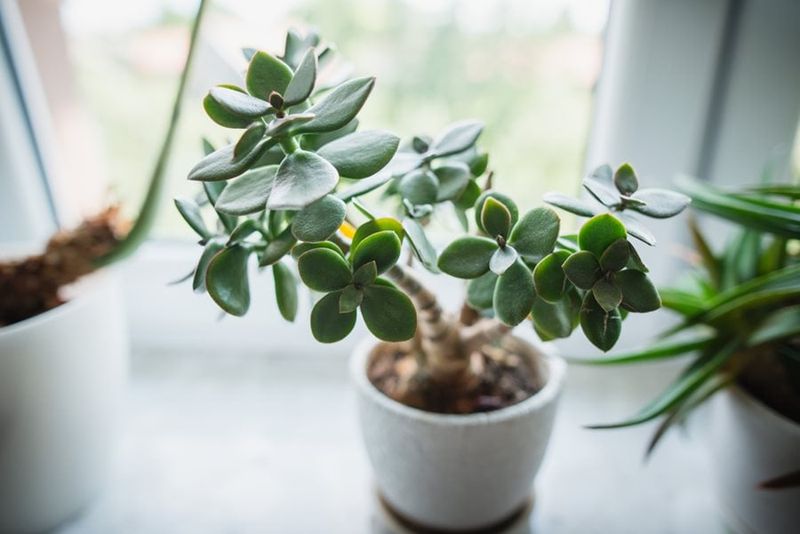
Moving day is stressful for everyone, plants included. Many Southern gardeners haul their jades indoors in fall, and a week later the leaves start raining down.
It looks alarming, but it is often just an adjustment period.
Outside, the plant enjoyed strong light, fresh breezes, and humid air. Indoors, it suddenly gets dimmer light, drier air from air conditioning or heat, and different temperatures.
That sudden change in conditions can make a jade drop a handful of leaves while it adapts.
The fix is easing the transition instead of making one dramatic switch. About two weeks before your first expected cool nights, start bringing the plant in for a few hours each evening.
Gradually increase indoor time until it stays inside full time.
Before the move, check carefully for hitchhiking pests under leaves and around the pot rim. Once inside, place the plant in your brightest spot and resist the urge to water more to make up for the stress.
Extra water usually makes things worse. Patience is often the best medicine here, since most healthy jades settle in within two to four weeks and stop shedding on their own.
5. Underwatering and Thirsty Roots
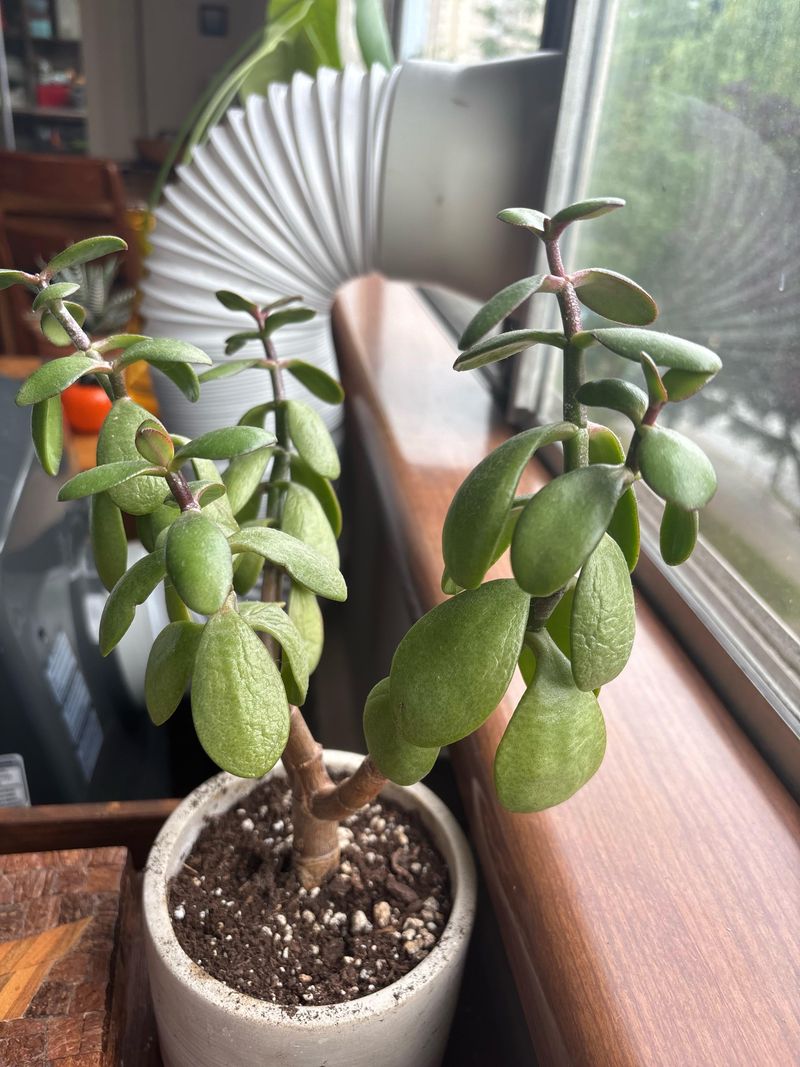
Funny enough, the opposite mistake causes the same symptom. Some gardeners hear that jades hate water and go so far in the other direction that the plant starts running on empty.
Jade leaves act like little water tanks. When the plant gets truly thirsty, those tanks shrink, wrinkle, and eventually fall off as the plant tries to save its stems.
Indoor heat and dry winter air can speed up that process, especially in small pots.
So how do you tell thirst from overwatering? Thirsty leaves feel thin, soft, and wrinkly, but not mushy.
The soil will often be bone dry and may pull away from the edges of the pot.
When that happens, give a deep, thorough drink until water runs out the drainage holes. If the soil has become so dry it repels water, try bottom watering by setting the pot in a tray of water for 20 to 30 minutes.
Plump leaves usually return within a few days. After that, go back to the finger test and water whenever the soil is fully dry.
Consistent, deep watering tends to work far better than frequent small sips.
6. Hidden Pests Like Mealybugs
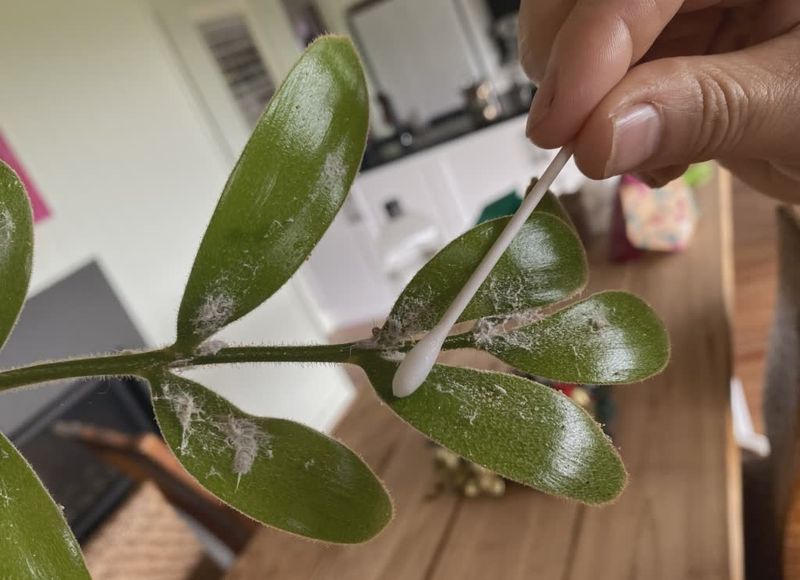
Tiny white fluff tucked between the leaves is not dust. Mealybugs are one of the most common jade plant pests, and they love hiding in leaf joints where you might not look closely.
These sap-sucking insects drain the plant slowly. Infested jades may drop leaves, develop sticky residue, or show stunted new growth.
Fall is a prime time to spot them, since plants coming in from outdoors can bring pests along, and warm indoor rooms help populations grow.
Scale insects can cause similar trouble. They look like small brown or tan bumps stuck to stems and leaves.
For light infestations, dab each bug with a cotton swab dipped in 70 percent rubbing alcohol. Check again every few days, because eggs can hatch after the first round.
For larger problems, insecticidal soap may help, but test it on a few leaves first since some jades react to sprays.
Isolate the affected plant from your other houseplants until it is clean. Inspecting new plants before bringing them home can also reduce future headaches.
Regular checks during watering often catch problems while they are still small and easy to manage.
7. Poor Drainage and the Wrong Soil
Here’s a sneaky one. You might be watering perfectly, yet leaves still drop because the pot and soil are holding moisture far too long.
Standard potting mix is designed to stay damp, which works for ferns but not for succulents. Combine heavy soil with a pot that lacks drainage holes, and water pools at the bottom with nowhere to go.
In fall, when evaporation slows, that soggy zone can rot roots quickly.
Decorative glazed pots are frequent offenders. They look lovely on a porch but often trap water inside.
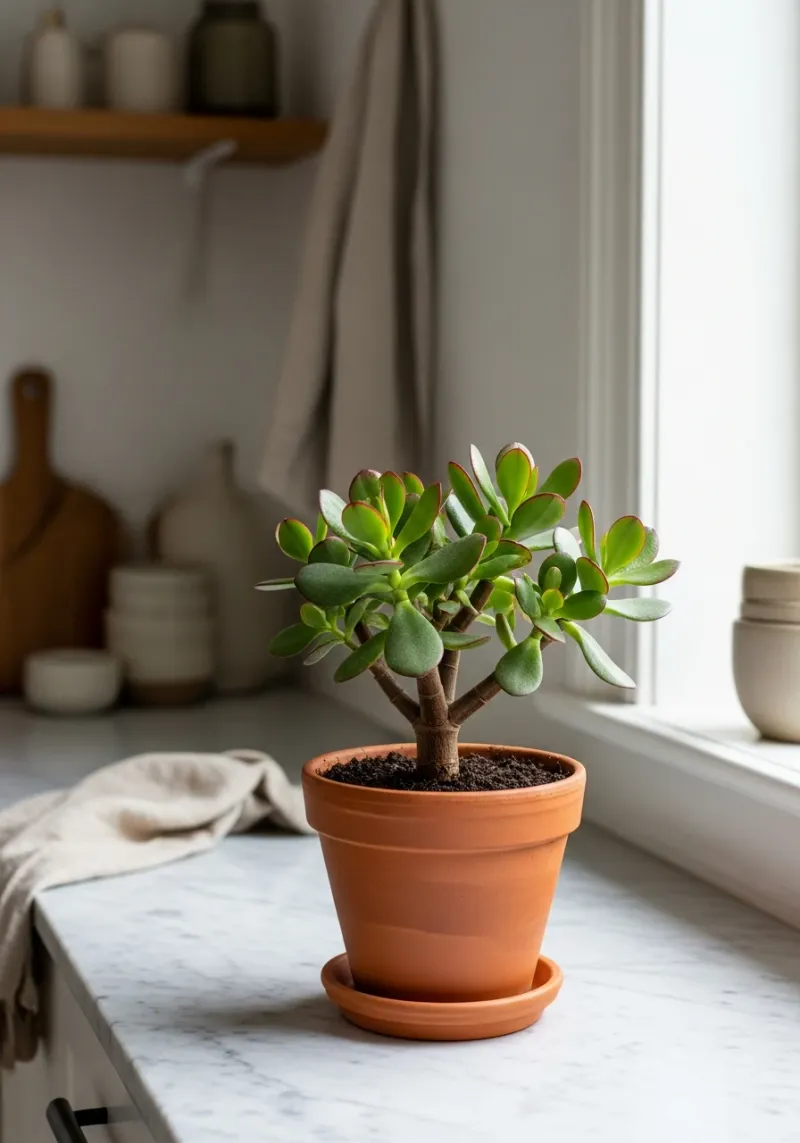
A better setup starts with a pot that has at least one drainage hole. Unglazed terracotta is a favorite because it breathes and helps soil dry faster.
Fill it with a cactus and succulent mix, or make your own by blending regular potting soil with perlite or coarse sand in roughly equal parts.
Repotting is best done in spring, but if the soil stays wet for more than a week, moving it sooner may be worth the risk. Choose a pot only slightly larger than the root ball.
Too much extra soil holds extra water, which brings the same problem right back.
8. Natural Shedding of Old Leaves
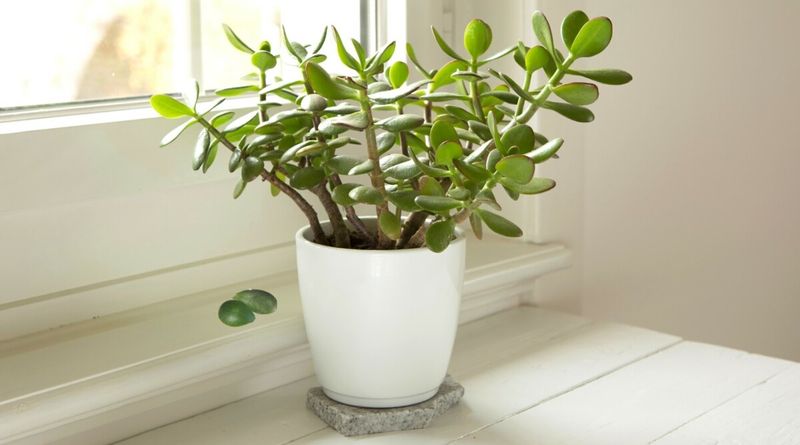
Sometimes the best news is that nothing is wrong at all. Every jade plant sheds older leaves from time to time, and fall is a common season for it.
As the plant grows taller and woodier, it often lets go of lower, older leaves near the base of the stems. Those leaves may shrivel or yellow slowly before dropping.
Meanwhile, the top of the plant stays plump, green, and full of new growth.
Wondering how to tell normal shedding from a real problem? Look at where the leaves fall from and how many are dropping.
A few lower leaves here and there are usually fine. Dozens of leaves falling quickly, or new top growth looking unhealthy, points back to one of the earlier issues.
Fun fact: those fallen leaves can become brand-new plants. Set healthy ones on top of dry succulent soil, mist lightly every few days, and tiny roots often appear within a few weeks.
Many Southern gardeners turn fall leaf drop into a stash of baby jades for gifts. With steady light, careful watering, and a little patience, your original plant should look full and happy again by spring.