
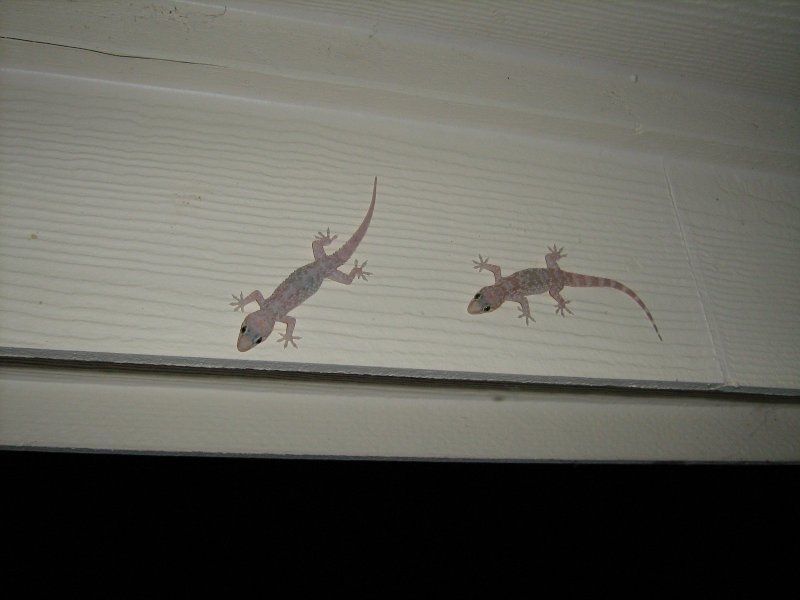
You flip on the porch light after dark and spot a handful of small geckos clinging near the bulb. It looks a little like a party you were not invited to.
Those tiny lizards are telling you something, but maybe not what you think. Here is what the sighting means, what it does not mean, and what simple steps make sense at home.
The porch light creates a concentrated hunting spot
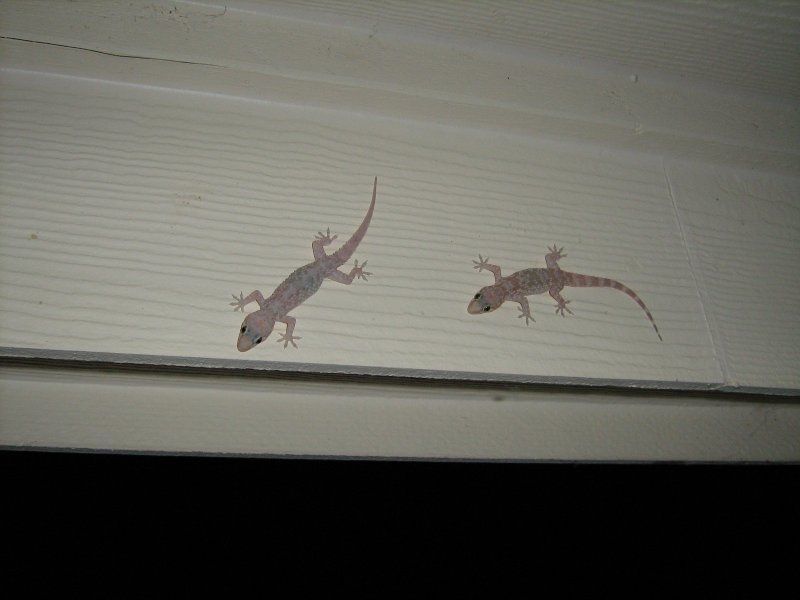
Picture a lit bulb on a dark night. Insects drift toward it, circle it, and bump against the wall around it.
For a small predator, that is a handy buffet laid out in one visible spot.
That is the most likely story behind a gecko gathering. Texas A&M AgriLife Extension notes that house geckos hang around lights and wait for insects that are drawn there.
The University of Georgia’s Savannah River Ecology Laboratory describes the same habit, with geckos waiting near lights to feed on the insects that gather.
So the geckos are not really gathering for the porch. They are gathering for the meal the lamp pulls in.
A wall beside a bright bulb works like a lunch counter, and the best seats go to whoever shows up first.
You can usually watch this happen if you stand back quietly. A gecko will often sit motionless, head angled toward the bulb, then dart a few inches to grab a moth or beetle that lands nearby.
Then it settles back into place and waits again.
Notice the wording here. The light is concentrating insects at one visible location, and the geckos have figured out where to find them.
That explanation is about the lamp and the food, not about the weather, and it is the place to start before reading anything bigger into the scene.
What does a porch-light crowd actually measure?
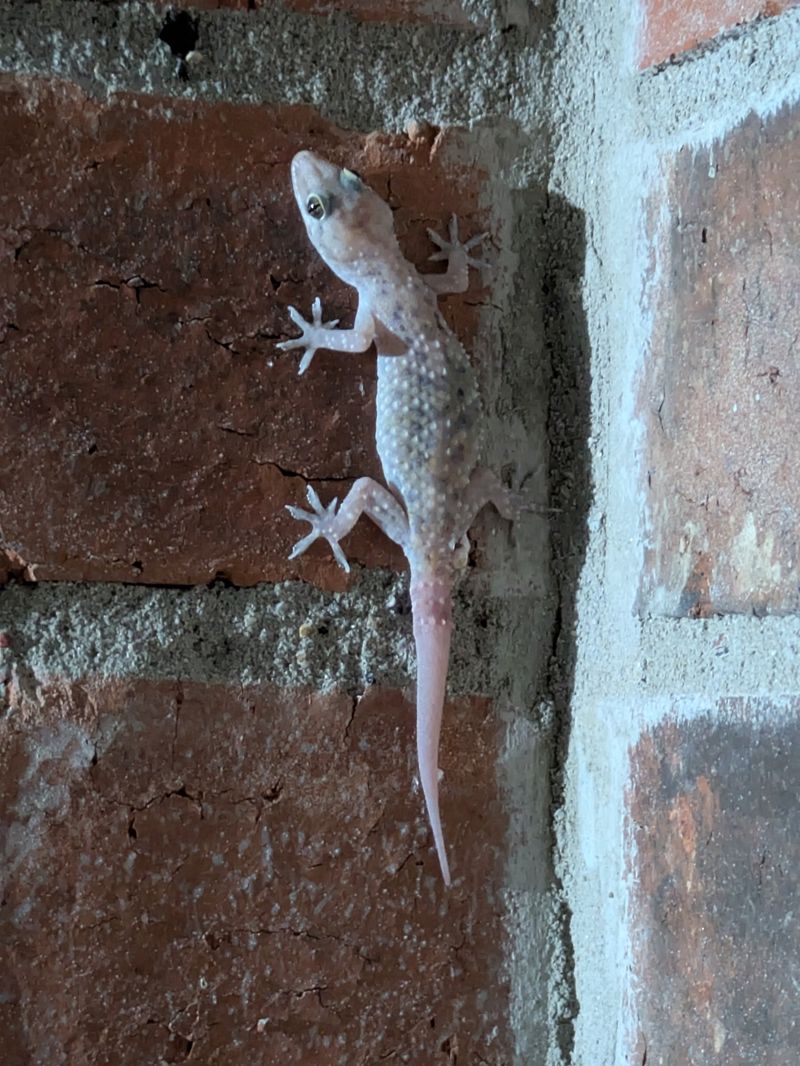
A crowd of geckos at the light measures one thing well: there is a good place to eat right there. It does not measure how many insects live across your whole yard.
A single bright bulb can pull bugs from a wide area into one small patch of wall.
Think of a food truck parked on a corner. A long line outside tells you the truck is popular, not that the whole town is hungry.
In the same way, gecko numbers at the lamp do not diagnose an infestation, and they do not show that insect numbers have recently gone up.
Geckos are not picky about what lands in front of them. In a Texas study of Mediterranean house geckos in Nacogdoches, the most important prey by volume included grasshoppers and crickets, moths and butterflies, and isopods.
What they ate also varied with where they perched. That supports a simple takeaway: they eat a range of small invertebrates.
It does not support bigger promises. The study did not test whether geckos keep mosquitoes, roaches, or any other household pest in check, so do not count on them as pest control.
Likewise, the Georgia species account ties their position to insects drawn to lights, not to how buggy the property is overall.
If you want a real read on insects around the house, look for direct clues instead: droppings, damage, or pests indoors. Those tell you far more than the lizards on the wall.
Texas house geckos include introduced species, but a sighting may not identify which one
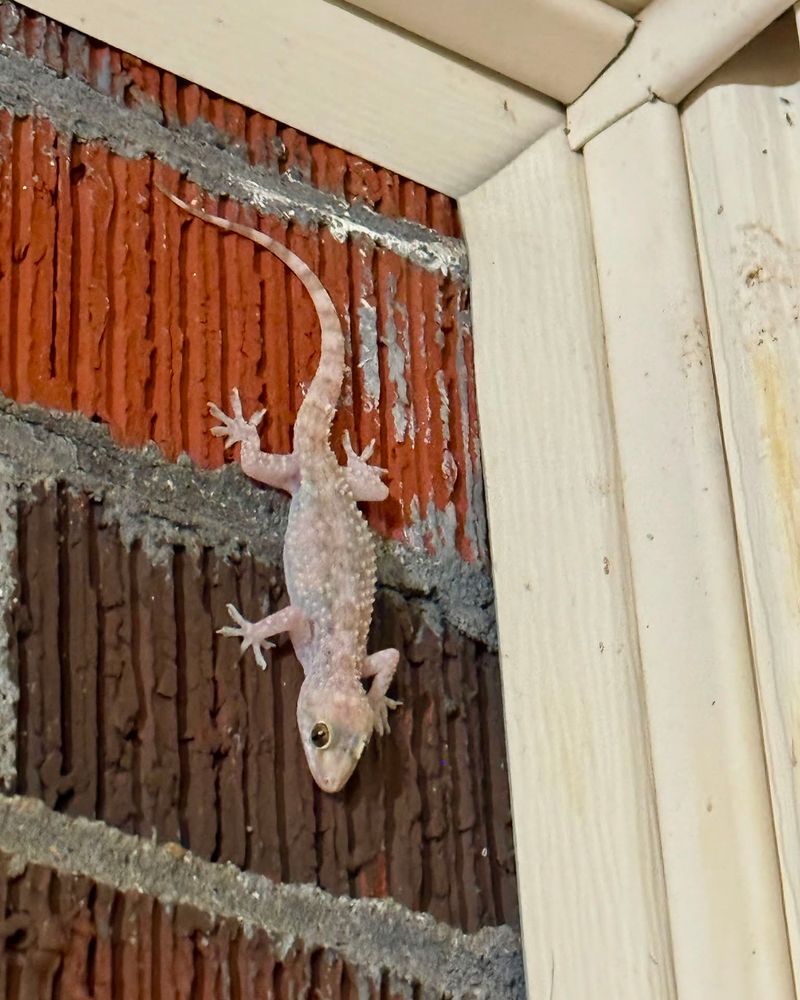
The geckos around Texas homes are not Texas natives. The University of Texas at Austin Biodiversity Center reports that Mediterranean geckos are established around Austin and other Texas cities, and that people commonly see them around homes at night.
The species is introduced, meaning it came from elsewhere.
There is a second one to know about. Texas A&M lists two introduced house geckos in the state: the Mediterranean house gecko (Hemidactylus turcicus) and the common house gecko (H. frenatus).
That matters for your porch. Without a clear photo or identifying details, a small gecko on the wall could be either one, so it is not safe to label every sighting as a Mediterranean gecko.
It is also wrong to assume every gecko you see in Texas belongs to these two house-gecko species.
If you are curious, snap a few sharp photos in good light and compare them with a regional field guide or ask a local Extension office.
Introduced status also raises a fair question about harm. The honest answer is that nobody knows yet.
The University of Georgia source says the impact on native wildlife is unknown. So a porch gathering is not proof of ecological damage, and it is not proof of harmlessness either.
Fall can bring geckos indoors, but it does not explain the light gathering
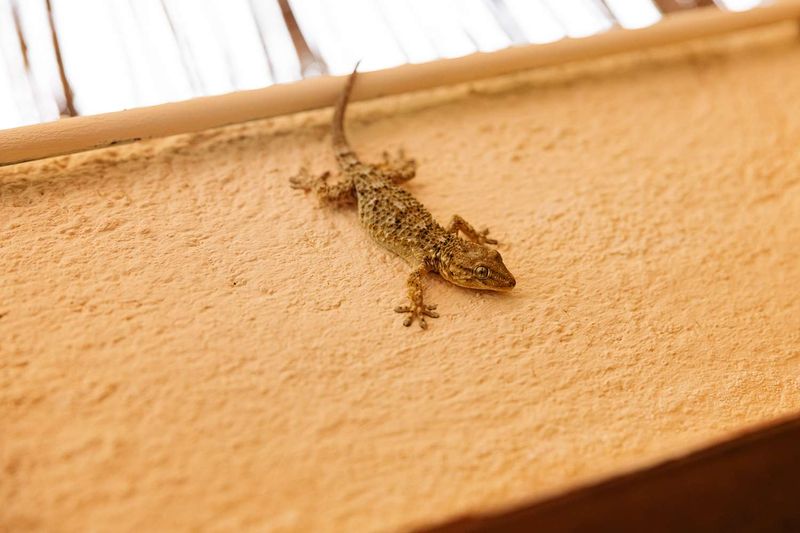
Fall does matter for geckos, just not in the way many people guess. A Texas response on Ask Extension says geckos may move into houses more often as fall temperatures drop, especially when there are openings to get through.
Notice what that describes: movement indoors. A cracked door sweep or a gap around a pipe gives a gecko a warm, sheltered spot, and more people notice them inside once the weather cools.
Porch-light hunting is a separate behavior with a separate cause. As covered earlier, Texas A&M describes geckos waiting near lights for the insects drawn there.
Nothing in these sources shows that cool nights make geckos crowd around lamps.
Here is a practical way to sort out what you are seeing. Geckos on the outside wall near the bulb point to a lit feeding spot.
Geckos on the bathroom floor or behind the couch point to an opening somewhere.
Both can happen in the same week, which is why they get mixed together. Also skip the urge to name a magic temperature.
These sources do not give a Central Texas cutoff, so treat fall as a good reminder to check your doors and windows, not as an explanation for the crowd at the light.
Change the lighting before reaching for chemicals
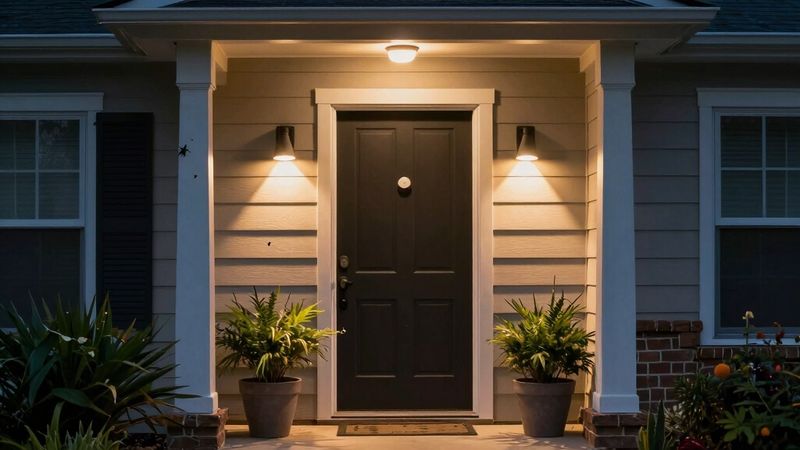
If you would rather see fewer geckos by the door, work on the thing that draws the food: the light. Fewer insects at the lamp means less reason for geckos to linger there.
Nothing here is a guarantee, but it is a calm, low-cost place to start.
Begin by turning off lights you do not need. A timer or motion sensor can keep the porch dark when nobody is using it.
Where you do need light for steps or safety, Utah State University Extension’s outdoor lighting guidance points toward aiming light downward and using only as much as the job requires.
Bulb color is another option to try. Warm-colored bulbs are a reasonable experiment, but results vary.
In an experiment comparing domestic lights, insect attraction differed by bulb type, so do not expect any bulb to erase bugs or geckos.
Give each change a week or two and watch what happens at the wall. You might move a fixture, add a shield, or swap one bulb at a time so you can tell what helped.
What to skip is just as useful. Spraying pesticides around the entry is a poor first move, since Texas A&M says no pesticides are registered for gecko control.
Changing the light costs little, harms nothing, and addresses the actual draw.
Seal entry points and remove indoor geckos carefully
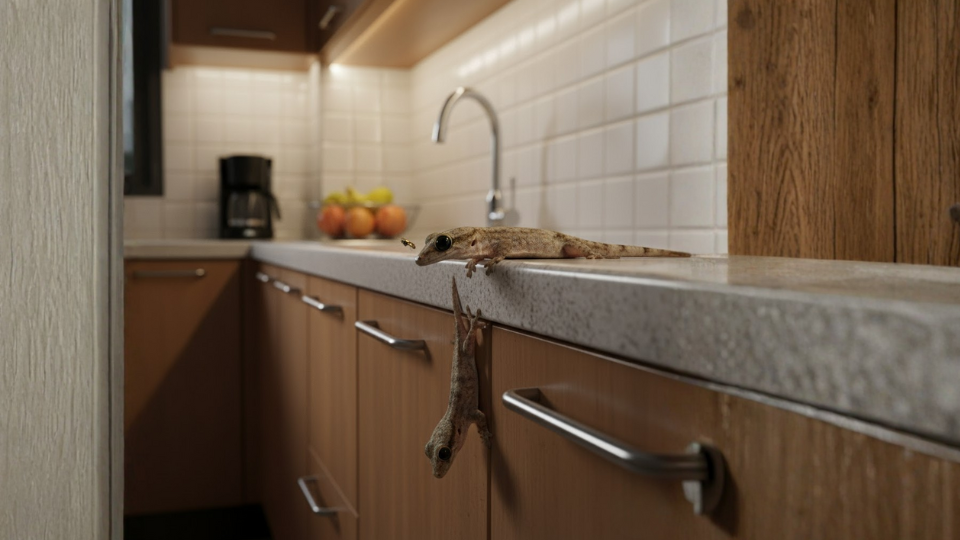
When geckos keep turning up inside, the fix is blocking the way in. Texas A&M recommends exclusion: repair worn weather stripping and seal gaps around doors, windows, soffits, and utility penetrations such as pipes and cable lines.
Walk the outside of the house at dusk and look for light leaking out, since a gap that shows light is a gap a gecko can use.
Chemicals are a weak first choice. Texas A&M says no pesticides are registered for gecko control and that general insecticides may have little effect on gecko numbers.
Glue boards are worse, because they kill geckos and offer no humane release.
For a single gecko inside, you do not need to grab it. Set a clear container over the gecko, slide a stiff piece of cardboard underneath, and lift the whole thing together.
Carry it outside and release it near a wall or shrub, away from the door.
Skip bare-handed handling when you can. CDC guidance says geckos and other reptiles can carry Salmonella in their droppings even when they look healthy.
Wash your hands with soap and water after any contact, including with the container if it touched droppings. The CDC also advises that children under five should not handle reptiles, so let an adult do the removal.
A small porch signal calls for a small response
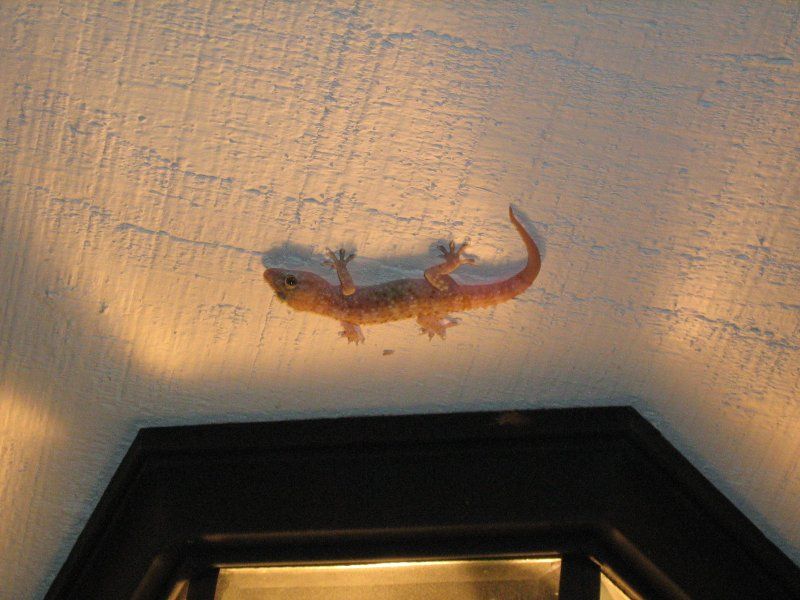
A cluster of geckos at the lamp most likely marks a feeding spot, a place where insects gather and geckos wait. It is not a diagnosis of an infestation.
If you want fewer geckos by the entrance, start with the lighting. If they are getting inside, follow Texas A&M’s exclusion advice and seal the gaps.
Otherwise, the little lizard on your wall is just a neighbor that found dinner.