
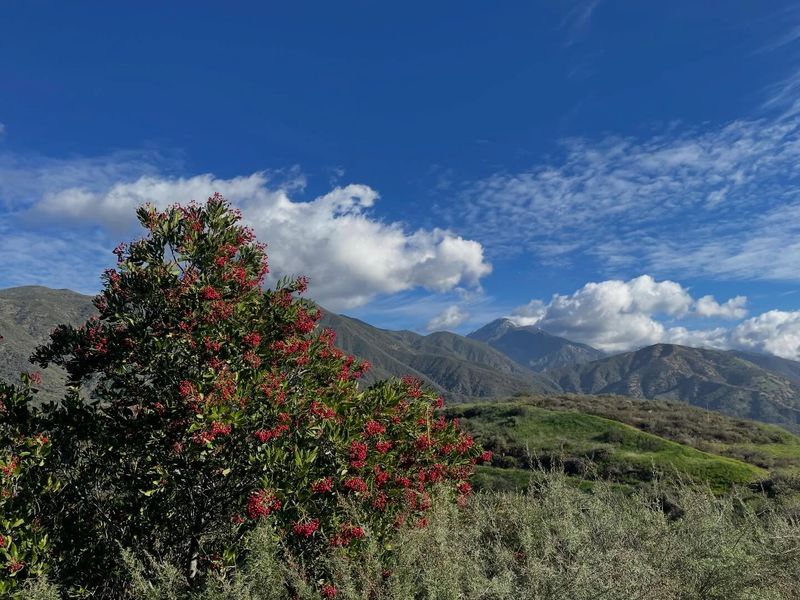
Drive through almost any California neighborhood in winter and you will spot toyon shrubs loaded with bright red berries. Some people have heard that cooking turns them into a tasty backyard food.
The story is more complicated than a simple kitchen trick. Here is what researchers, parks staff, and UC experts have actually said about these berries.
Why toyon’s red berries draw attention in winter
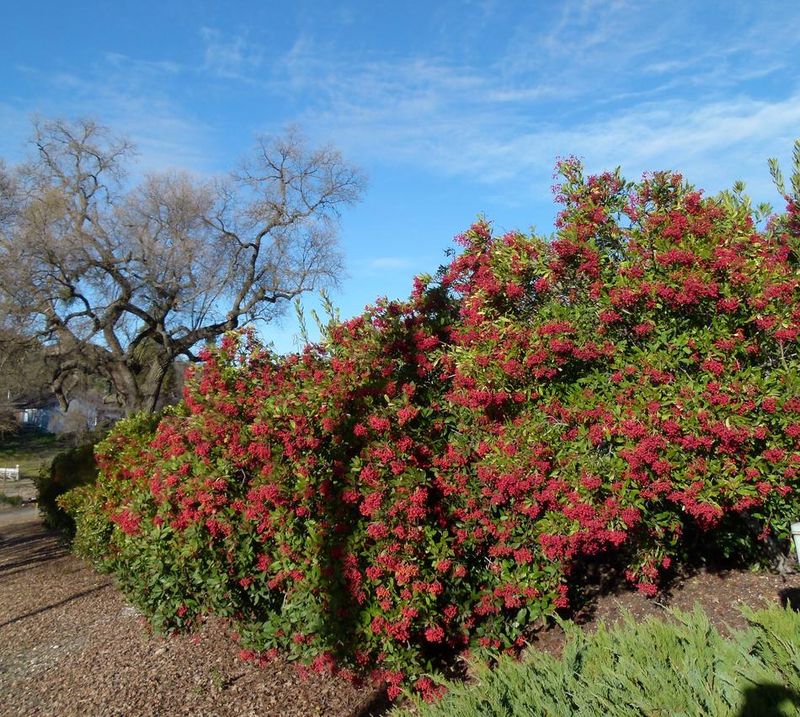
Toyon, known to scientists as Heteromeles arbutifolia, is a California native shrub that many homeowners already have in their yards or on nearby hillsides. When winter arrives, its clusters of berries become the brightest thing in the garden.
That color explains why people stop and wonder what the fruit is good for.
The berries ripen from green to red, so the title’s mention of orange does not match how the fruit is described. UC Davis Arboretum notes that the berries attract winter birds, and UC Master Gardeners in Sonoma County describe them as a food source for birds and other wildlife.
It is tempting to think that if a robin or a mockingbird can eat them, people can too. That jump does not hold up.
Birds and humans handle plant chemicals differently, and a bird flock stripping a shrub tells you nothing about a safe serving for a person. Research on the fruit, such as a 1974 study of toyon chemistry, looks at how the fruit changes and how seeds get spread, not at a human serving size.
For a wildlife-minded homeowner, the better takeaway is simple. Those berries are winter fuel for local birds, and leaving them on the shrub is one easy way to support the creatures you share your yard with.
Maturity changes berry chemistry, but does not establish a safe serving
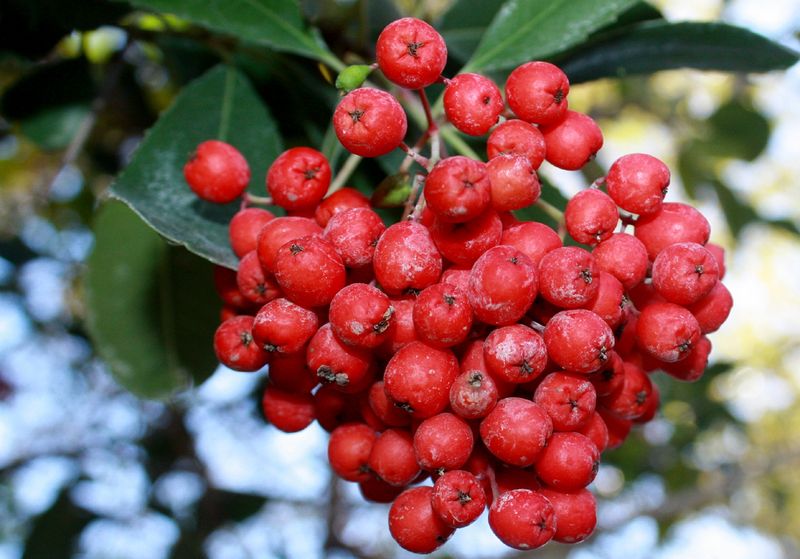
A peer-reviewed study from 1974 tracked how toyon fruit changes through the seasons. Researchers found that immature fruit contains high levels of tannins and cyanogenic glycosides.
Tannins are the compounds that make food taste harshly bitter, and cyanogenic glycosides are chemicals that can release cyanide.
As the fruit matures, the tannins decline. The cyanogenic glycosides also move around, shifting from the pulp toward the seeds.
That is a real, measured change, and it explains why green fruit and ripe fruit are not the same thing.
Here is where people stretch the findings too far. The study measured chemistry.
It did not test people, and it did not come up with a safe human dose. It also did not show that red fruit is safe to eat, only that the chemical balance shifts as the fruit ripens.
A practical example helps. If you picked a handful of berries and wondered which ones are lower risk, this study cannot answer that.
It can only tell you that unripe fruit is the more worrying stage and that seeds are where the cyanide-related compounds end up concentrating.
So the chemistry gives a reason to steer clear of green berries. It does not hand you a green light for red ones.
Historical preparation documents food use, not a modern safety guarantee
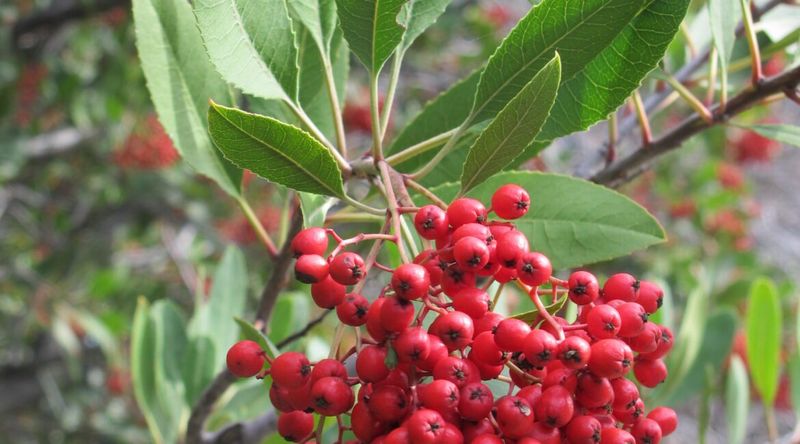
Food use of toyon berries is not a modern invention. An educational handbook from California State Parks describes California Indians boiling, baking, or heating toyon berries with hot rocks before eating them.
The same handbook says the berries are bitter when raw.
That account is worth respecting, but its scope is narrow. It is a single handbook’s summary, and California was home to many distinct peoples with their own foods, tools, and traditions.
It would be wrong to assume that every group prepared toyon the same way, or that every group ate it at all.
The account also does not translate into a recipe for today. The handbook lists heating methods, but it does not give a time, a temperature, or a way to check that a backyard batch is safe.
The berries in a modern suburban yard are also not the same as a harvest gathered by people with generations of knowledge about the plant and place.
Think of it like a family tradition that has no written safety test behind it. It tells you that people once ate the fruit, and that heat was part of the process.
It does not prove that a pot on your stove will do the same job, so history is a source of curiosity here, not a safety certificate.
UCLA’s preserve recipe is not a tested detoxification method
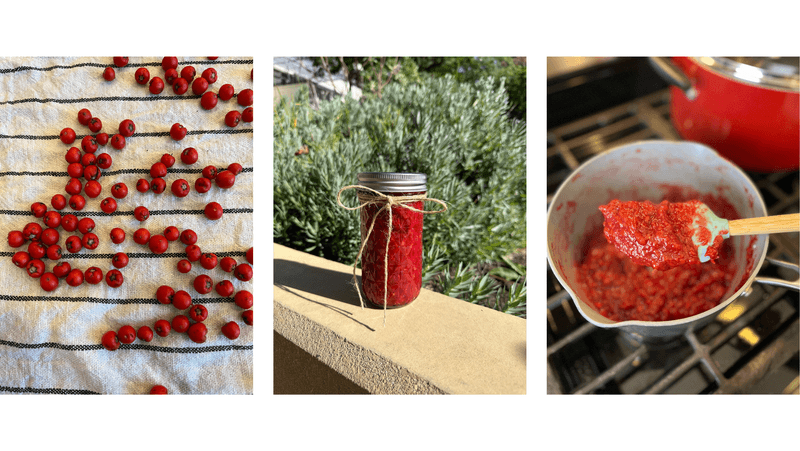
Anyone searching for a toyon recipe will likely land on UCLA Mathias Botanical Garden’s Toyon Preserves page. It is a real, published recipe, and it deserves an accurate description.
The steps begin with washing and sorting the berries. Next, the cook simmers them for 10 minutes.
Then the berries keep simmering until they burst, which takes about another 10 minutes in the recipe.
Notice what the recipe leaves out. It simmers whole berries and does not direct cooks to remove the seeds.
That matters, because the 1974 chemistry work places cyanogenic compounds in the seeds as fruit matures.
It also matters what the page does not say. It does not claim that those 20 minutes remove toxins, and it does not describe any test showing that the finished preserves are safe.
It reads as a culinary recipe, not a laboratory protocol.
So if someone tells you that simmering for 10 plus 10 minutes makes toyon safe, that is a claim the recipe itself does not make. Treat the page as a record of how one garden approaches the fruit in a kitchen, and not as a tested method you can count on for safety.
Choose caution when deciding what to do with the berries
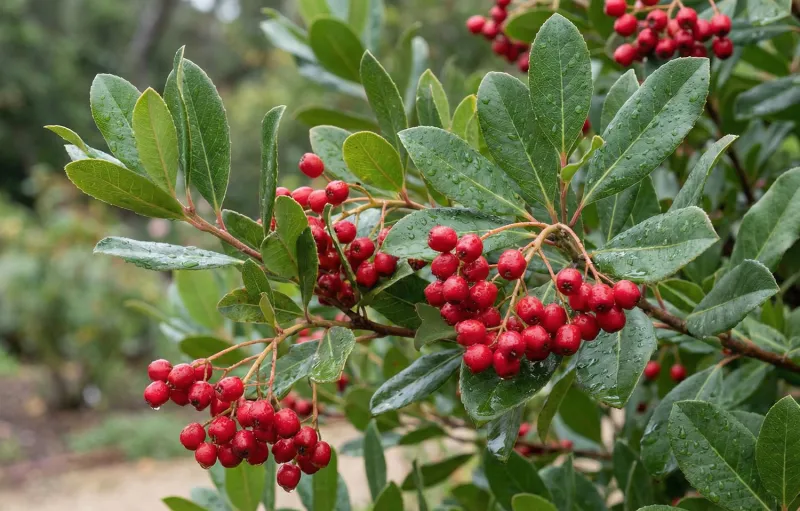
Start with identification. Make sure the shrub in your yard really is toyon, with its evergreen, saw-toothed leaves and red berry clusters, rather than guessing from color alone.
Identification is only a way to know what you have, not a reason to taste it.
Skip any unripe fruit, since green berries are the stage with the highest levels of the troublesome compounds. Also resist the idea that a red berry is automatically fine or that cooking automatically fixes things.
Neither has been shown to guarantee safety.
The most direct guidance comes from UC ANR’s Plant Safely in Drought-Tolerant Landscapes page, which advises avoiding the berries and supervising children and pets around the plant. A simple habit is to teach kids that landscape berries are for looking at, and to rinse hands after pruning.
There is also a mismatch among UC sources that is left unresolved here. The Sonoma County Master Gardener page warns against eating unripe fruit and seeds, while UCLA’s recipe cooks whole berries.
Both are UC-affiliated, and they do not line up.
UCLA also notes that harvesting toyon on public land, or on private land without permission, is illegal in California. Even before safety, that rule means picking from a hillside or a neighbor’s shrub is off the table.
What the evidence supports—and what it leaves unproven
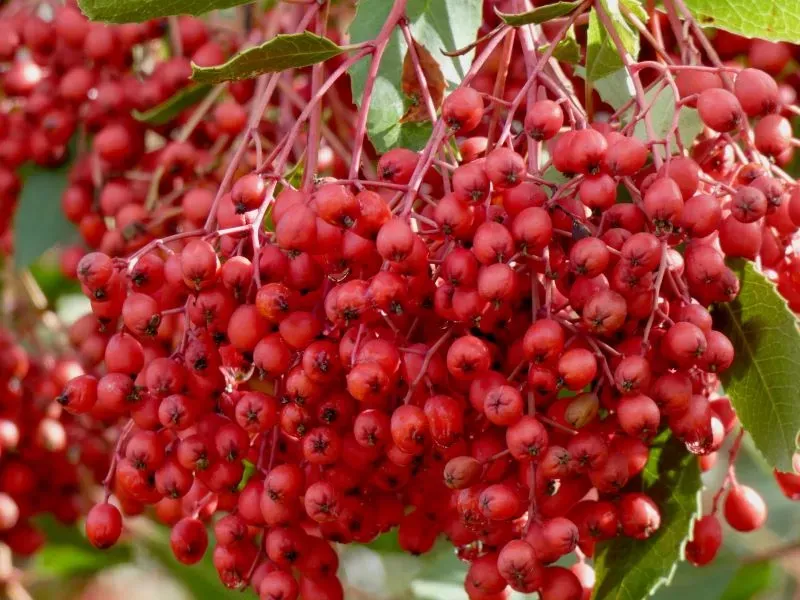
Toyon berries do have a documented history as food, and UCLA publishes a recipe that uses them. What is missing is proof that any cooking time makes backyard berries safe, so no simmering clock can be treated as a guarantee.
UC ANR’s safety guidance remains the plain answer: avoid eating the berries.
The birds will gladly take your share.