
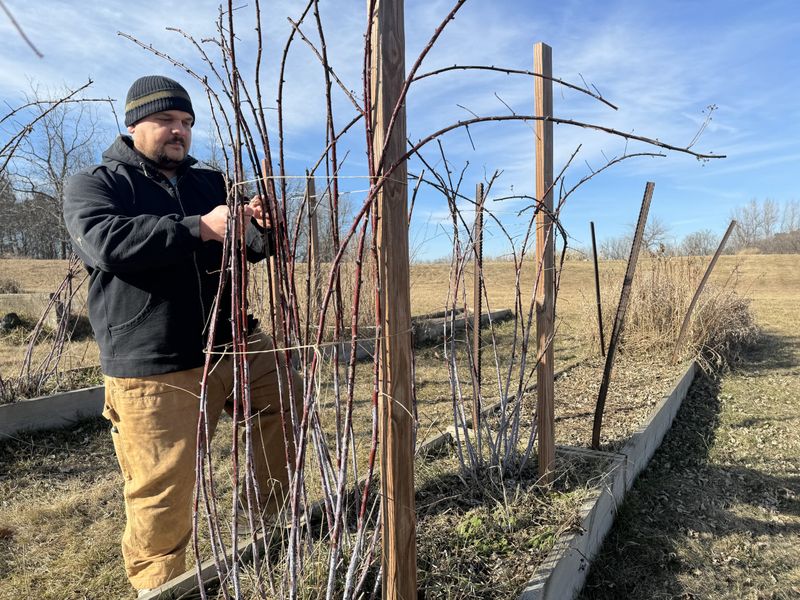
Raspberry canes live on a two-year schedule, and the cut you make can change which berries show up next. Some plants want to be cut to the ground, while others need their young canes left alone.
A wrong snip can wipe out a whole summer crop. Here is how to sort out your plants and pick the cut that matches the harvest you want.
Identify the raspberry before you prune
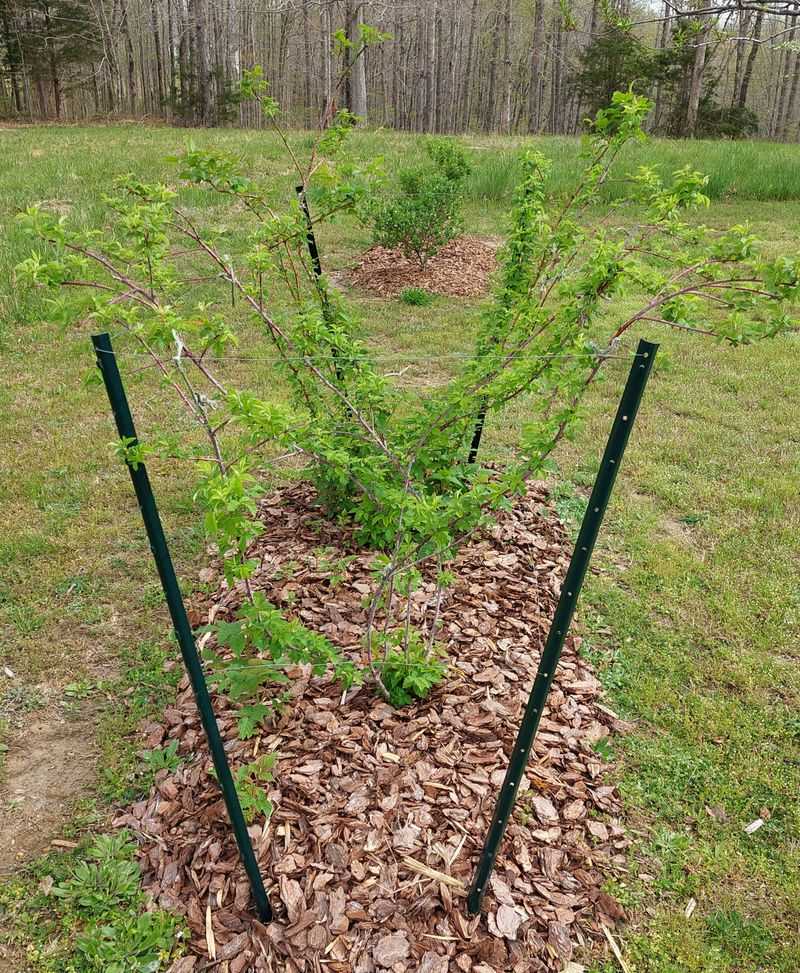
Before any pruner comes out, figure out what kind of raspberry you have. Plant tags, nursery receipts, and the variety name are your best clues.
Two words matter here: primocanes are first-year canes, and floricanes are the same canes in their second year.
A home-garden guide from Oregon State Extension explains that the fruiting pattern and the pruning method both depend on the plant type. Summer-bearing types fruit on second-year canes.
Primocane-fruiting types, often called fall-bearing or everbearing, can fruit on first-year canes.
Why does this matter? University of Minnesota Extension notes that summer-bearing plants need their healthy first-year canes kept for the next summer.
Cut everything to the ground on those plants and you remove the canes that would have carried next year’s berries. If you cannot tell which type you have, hold off on pruning until you can find out.
Cane age creates two possible harvest windows
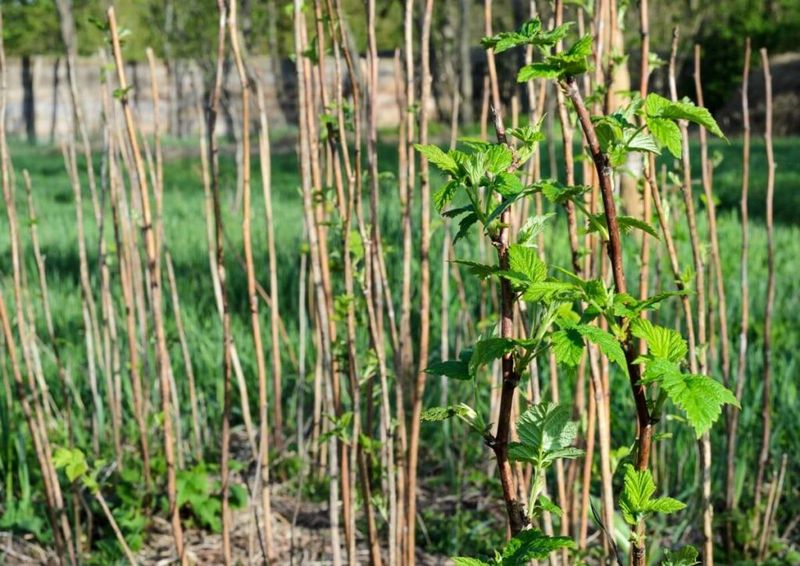
Picture a fall-bearing raspberry in September. Berries hang near the tips of the new, first-year canes.
That is the first harvest window, and it comes in late summer or fall.
Here is the twist. According to Oregon State Extension, the lower part of that same cane can survive winter and fruit the following summer.
So one cane can carry fruit in two different seasons, but at two different ages.
The word everbearing causes confusion. It does not mean the plant fruits nonstop, and it does not mean double the berries.
The summer crop grows on overwintered canes, and the later crop grows on brand-new canes. Think of them as two separate shifts rather than one long one.
That growth pattern is the whole reason you have a pruning choice. What you do with the old canes decides whether you aim for one crop or two.
Choose one fall crop or two seasonal crops
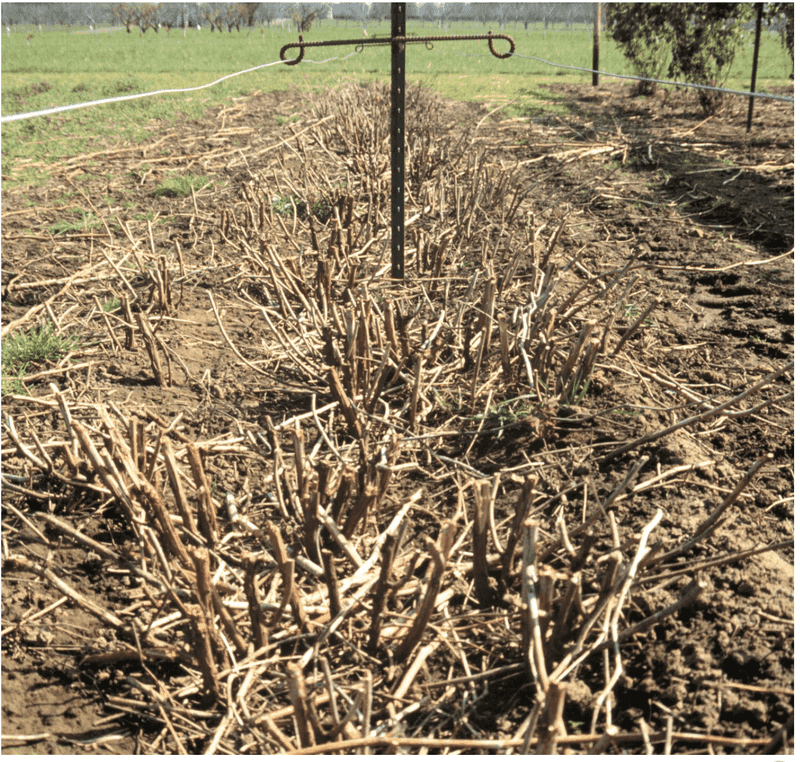
Gardeners with fall-bearing raspberries face a trade-off. The simple route is one fall crop: cut the canes down and let fresh ones grow and fruit.
The other route keeps some cane so you can try for a summer harvest too.
The two-crop path asks more of you. You have to keep the lower cane through winter and manage extra growth.
University of Minnesota Extension calls the practice uncommon and unlikely to improve overall yield.
Expect the summer berries to be modest. Maryland Extension says the second-year summer harvest is significantly smaller than the late-summer harvest on first-year canes.
Two harvest periods are not the same as twice the fruit.
If you like a tidy yearly reset, the single fall crop is easier. If you want berries spread across two seasons and do not mind the extra work, the two-crop method, described by Oregon State Extension, is an option.
Neither choice guarantees a bigger total haul.
For one fall crop, cut primocanes to the ground while dormant
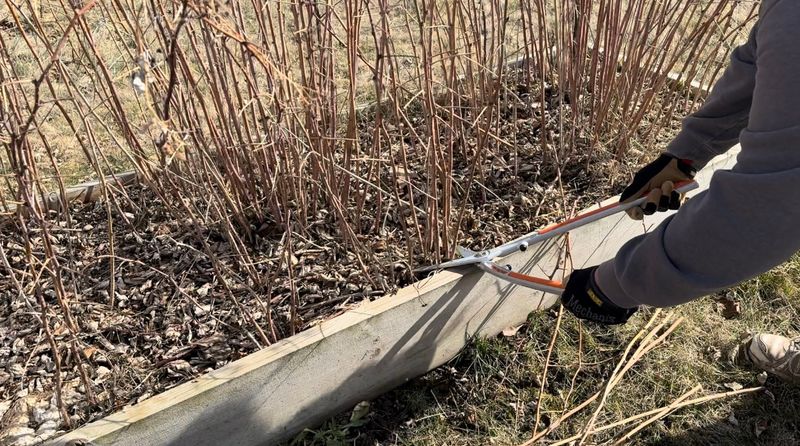
For a single fall crop from primocane-fruiting raspberries, the job is straightforward: cut all the canes to ground level while the plants are dormant. New canes then sprout, grow, and fruit later in the season.
This applies only to this crop system, not to every raspberry.
When is dormant? The sources do not agree on one date.
University of Minnesota Extension lists late fall or early spring, while Oregon State’s home-garden guide specifies late winter. Watch your plants and your local conditions instead of the calendar.
Cleanup counts too. Maryland Extension ties removing debris to disease management.
Haul the cut canes out of the planting area, especially any that are dead or diseased, rather than leaving them on the ground.
For two crops, keep the lower cane and remove the fruited tip
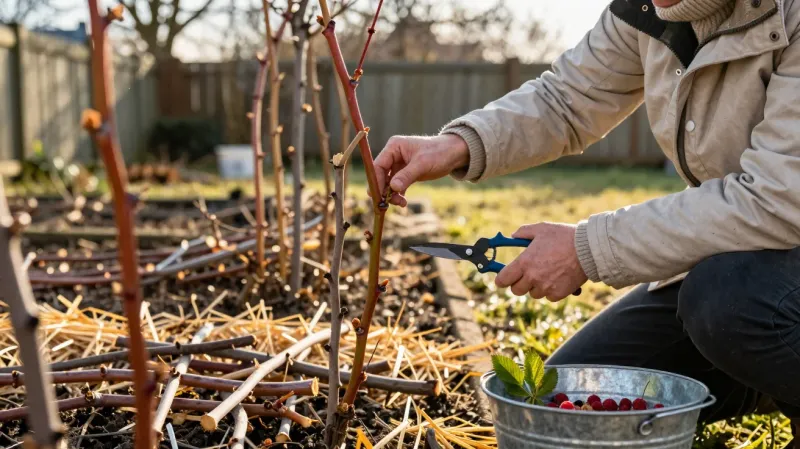
Going for two crops means a gentler cut. After the fall harvest, look at each cane.
The top section, where berries grew, will be dead or spent. Remove only that tip and leave the unfruited lower cane in place.
Do not cut the whole cane down. As Oregon State Extension describes it, the overwintered cane can produce a summer crop, while new primocanes that grow this year produce the later one.
Set your expectations honestly. Maryland Extension reports the summer harvest is significantly smaller, and the method needs extra management because old and new canes share the row.
Treat the summer picking as a bonus rather than a doubling. You gain a second window to pick, not a promise of more berries overall.
Summer-bearing raspberries need their first-year canes
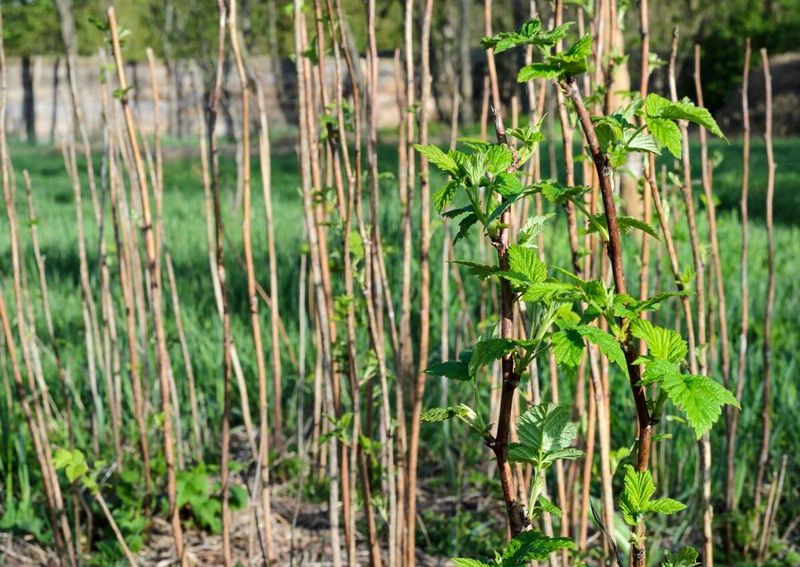
Summer-bearing raspberries play by different rules. Their berries come on second-year canes, so the young canes growing this year are next summer’s crop in the making.
The job is to be selective. Per University of Minnesota Extension, remove the canes that have already fruited and keep healthy first-year canes for next summer.
A quick way to tell them apart: spent canes tend to look brown and dry, while first-year canes look greener and fresher. Pick out the old ones at the base and leave the young ones standing.
Cutting every cane to the ground, which suits a single-fall-crop primocane planting, would wipe out the canes that carry the summer harvest here. It is the most common way to lose a whole year of berries by accident.
Southern gardeners should check local suitability
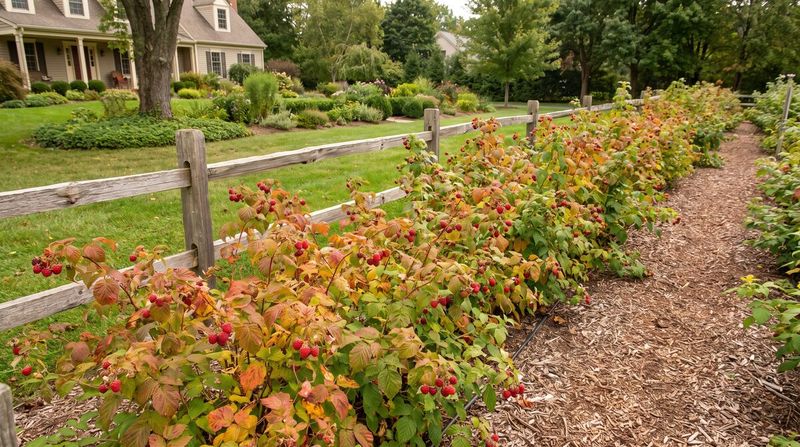
The South is not one growing region, and raspberries do not suit every yard in it. Check before you invest time in pruning plans.
University of Georgia Extension advises confining its listed red primocane-fruiting varieties to Georgia’s Piedmont and Mountain regions. In Florida, UF/IFAS Gardening Solutions says raspberries are not generally recommended for southeastern home gardens, and it notes limited cultivar options and challenges.
Texas readers have a resource to browse: the Texas A&M AgriLife publication on raspberry production for Texas and southern climates. Its accessible page is promotional, though, so it does not confirm specific pruning directions or a statewide recommendation.
Your best next step is to call or visit your county extension office. Ask which raspberry varieties, if any, are known to perform where you live, then prune according to that advice.
Match the cut to the crop you want
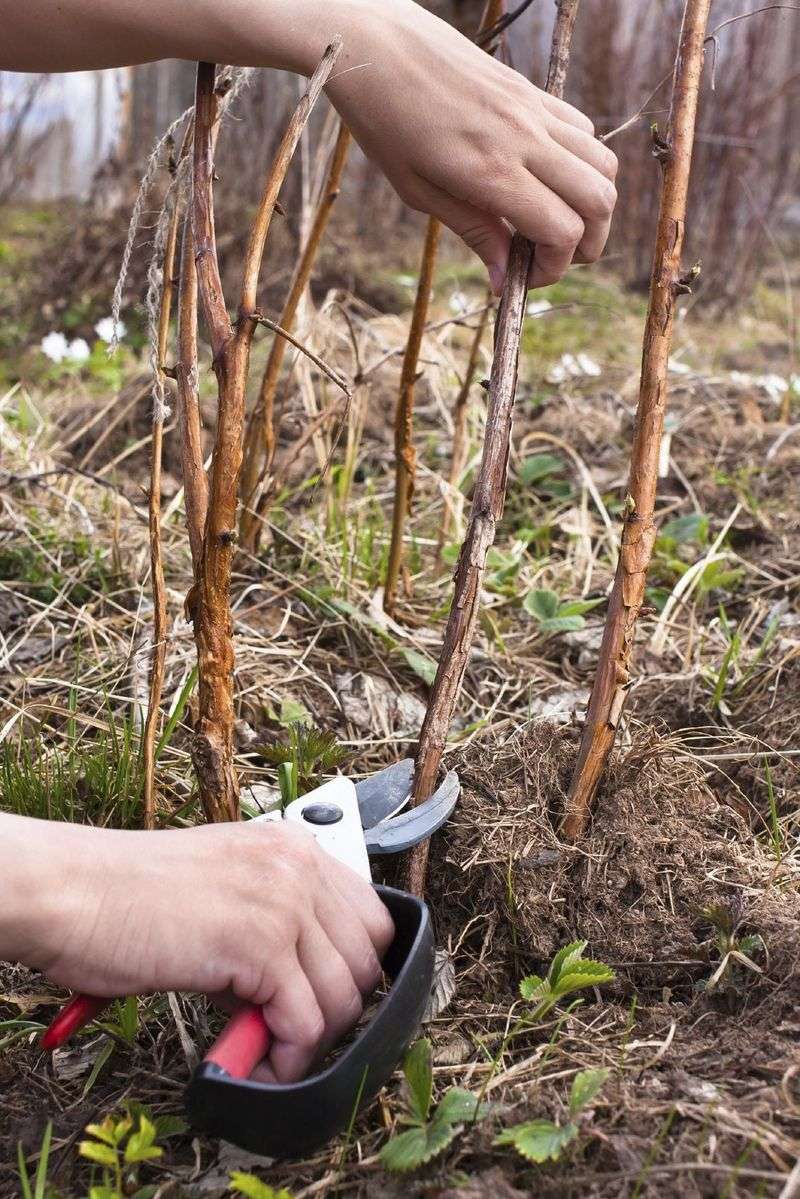
Start with the plant: find out whether it is summer-bearing or primocane-fruiting. For a primocane type, choose between one fall crop, cut to the ground while dormant, or two crops, keeping the lower cane and removing only the fruited tip.
Guidance from Oregon State and Minnesota ties the timing to dormancy and local conditions, so let your plants and your extension office set the date.
Pruning picks a cropping pattern for your patch. It cannot promise twice the berries.