
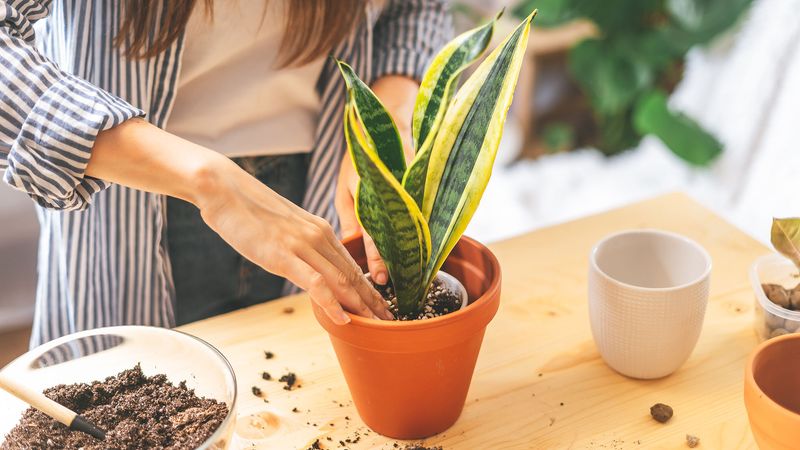
Snake plants have a reputation for being almost impossible to kill, so it feels extra frustrating when the leaves start yellowing and falling over. The good news is that the problem usually comes from a handful of simple care slips, not some mystery disease.
If you catch the cause early, you can often save the plant and get those tall, stiff leaves standing proud again. Here are the six mistakes that show up most often, plus what to do about each one.
1. Watering Too Often
Picture a plant that stores water in its leaves like a camel stores it in its hump. Snake plants come from dry parts of Africa, so they are built to go weeks without a drink.
When you water on a schedule instead of checking the soil, the roots sit in moisture they never asked for.
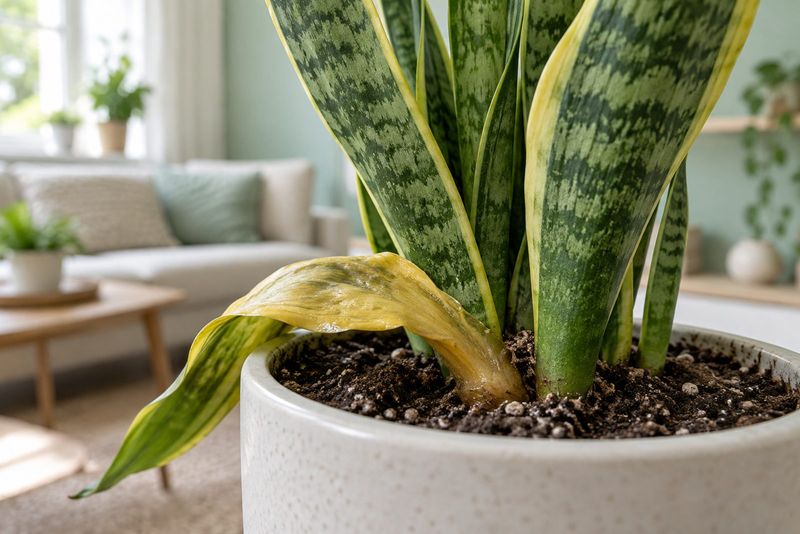
Overwatering is the number one reason snake plant leaves turn yellow and flop. The base of the leaf often feels soft or squishy, and the yellow color may start low and creep upward.
In humid places like Florida and the Texas Gulf Coast, soil dries even slower, which makes the problem sneak up faster.
Here is a simple fix. Push your finger about two inches into the soil, and only water when it feels completely dry.
For most homes, that means every two to three weeks in summer and roughly once a month in cooler months.
If the leaves are already mushy, stop watering and let the pot dry out fully. Trim off any leaves that have collapsed at the base, since they will not stand back up.
Healthy leaves left behind can often recover once the soil finally gets a break.
2. Using a Pot Without Drainage
That pretty ceramic pot you found on sale might be quietly drowning your plant. Many decorative containers have no hole in the bottom, so every bit of extra water collects where you cannot see it.
Over time, the roots end up soaking in a hidden puddle.
Even careful waterers get caught by this one. You might give only a small amount, but without an escape route, that water builds up week after week.
The roots begin to rot, and the leaves above respond by yellowing, wrinkling, and tipping sideways.
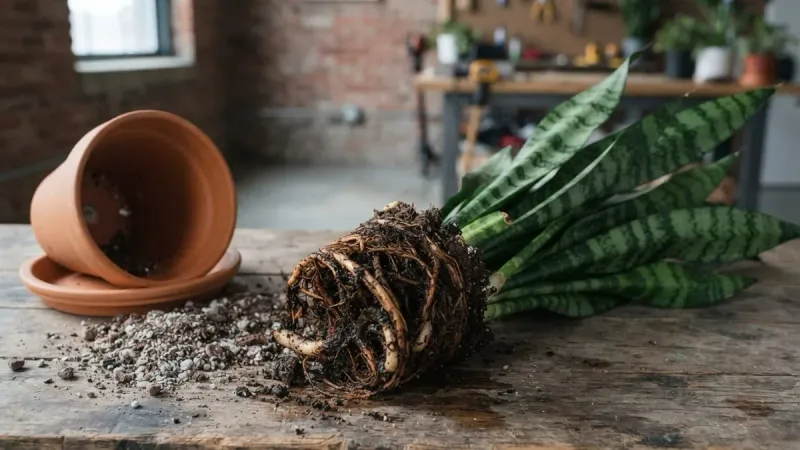
Checking is easy. Lift the plant out of its container and look at the bottom of the root ball.
Dark, smelly, or slimy roots are a warning sign, while firm, light-colored roots usually mean things are fine.
For a lasting solution, move your snake plant into a pot with at least one drainage hole. If you love the decorative pot, use it as an outer cover and set a plastic nursery pot with holes inside it.
Just remember to empty any water that drips into the outer pot after watering. Terracotta is a smart choice in steamy Southern homes because the clay can help pull extra moisture away from the roots.
3. Planting in Heavy, Dense Soil
Ever squeezed a handful of wet potting soil and watched it hold together like cookie dough? That clumpy texture is great for ferns but rough on snake plants.
Their roots want air as much as they want water.
Regular potting mix and especially bagged garden soil hold moisture for a long time. When soil stays packed and damp, oxygen cannot reach the roots, and they may start to break down.
The result above ground often looks like yellowing leaves that lean or fold over near the soil line.
A better option is a fast-draining blend. Cactus and succulent mix works well on its own, or you can stir in perlite, pumice, or coarse sand to loosen regular potting soil.
A good rule is roughly half potting mix and half gritty material.
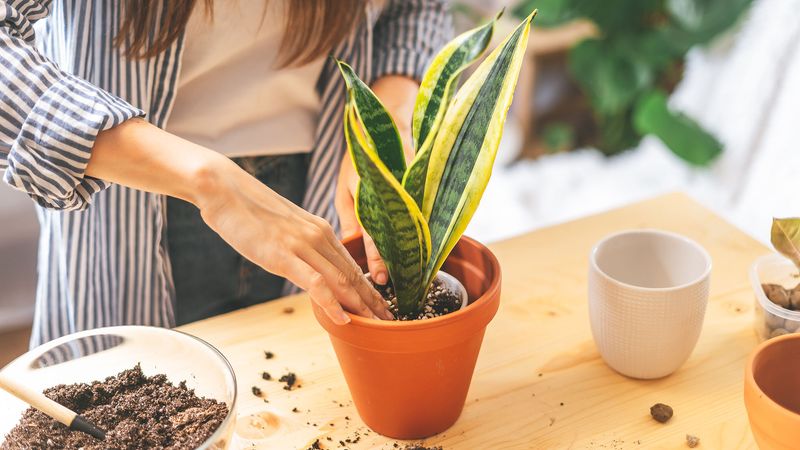
Repotting is best done in spring or early summer, when Southern heat helps the plant settle in quickly. Gently shake off the old soil, trim any brown or mushy roots, and set the plant into its new mix.
Wait about a week before watering so any cut roots can seal over first. This one change can make future watering mistakes much more forgiving.
4. Too Little Light
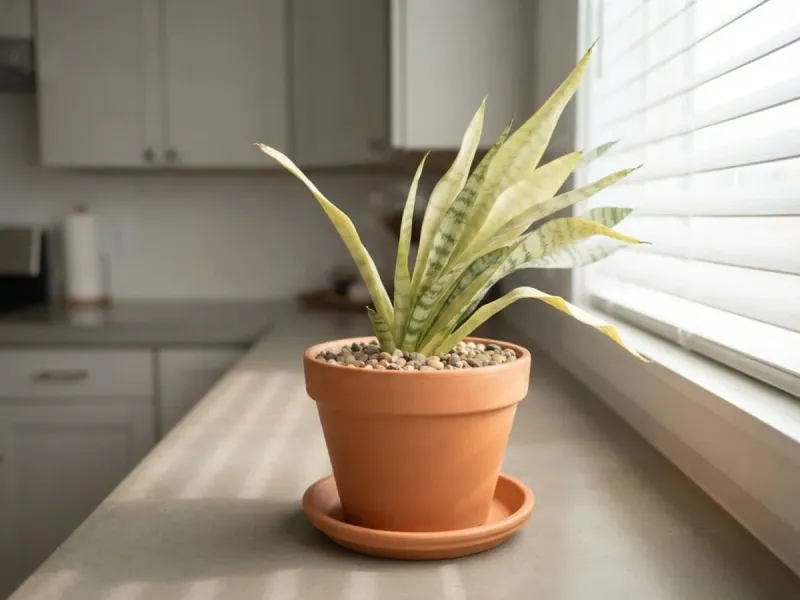
Snake plants are often sold as the plant that can live in a dark closet. They can survive low light, but surviving is not the same as thriving.
A plant stuck in a dim corner for months often grows weak and floppy.
Without enough light, the leaves may stretch, lose their deep green color, and turn pale or yellowish. New growth tends to be thin and soft, so it bends under its own weight.
Low light also slows down how quickly the plant uses water, which makes overwatering problems even worse.
The sweet spot is bright, indirect light. A spot a few feet from an east or west window works nicely in most homes.
Many Southern gardeners also move snake plants to a shaded porch during the long warm season, which can help them firm up.
Make changes slowly, though. Shifting a plant from deep shade straight into a sunny spot can scorch the leaves.
Move it closer to the light over a week or two. You cannot fix leaves that have already flopped from weak growth, but new leaves often come in sturdier once the plant gets the light it craves.
5. Harsh Sun or Cold Drafts
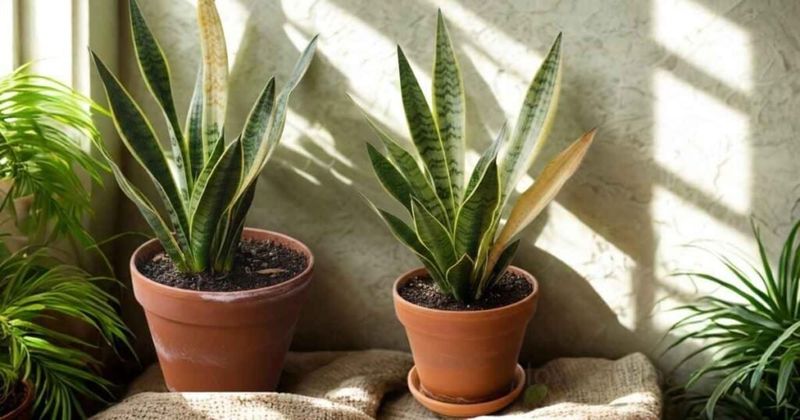
Funny thing about snake plants: they can sulk from too much heat and too much cold. Both extremes stress the leaves, and the damage often looks surprisingly similar at first.
Out on a Texas patio in July, direct afternoon sun can bleach and yellow the leaves, sometimes leaving crispy tan patches. Plants that spent winter indoors are especially likely to burn if moved outside without a slow adjustment period.
Morning sun with afternoon shade is usually much safer.
Cold is the other trouble spot. Snake plants generally dislike temperatures below about 50 degrees, and a frost can turn leaves mushy and floppy almost overnight.
Even inside, a spot right next to a blasting air conditioner vent or a drafty door may cause yellowing over time.
Keep an eye on the weather. When a cold front heads toward Florida or Central Texas, bring outdoor snake plants inside before night temperatures drop into the 40s.
Indoors, place them away from vents and leaky windows.
Leaves damaged by cold will not bounce back, so cut them at the base with clean shears. The roots often survive, and fresh shoots may appear once the plant warms up again.
6. Overfeeding with Fertilizer
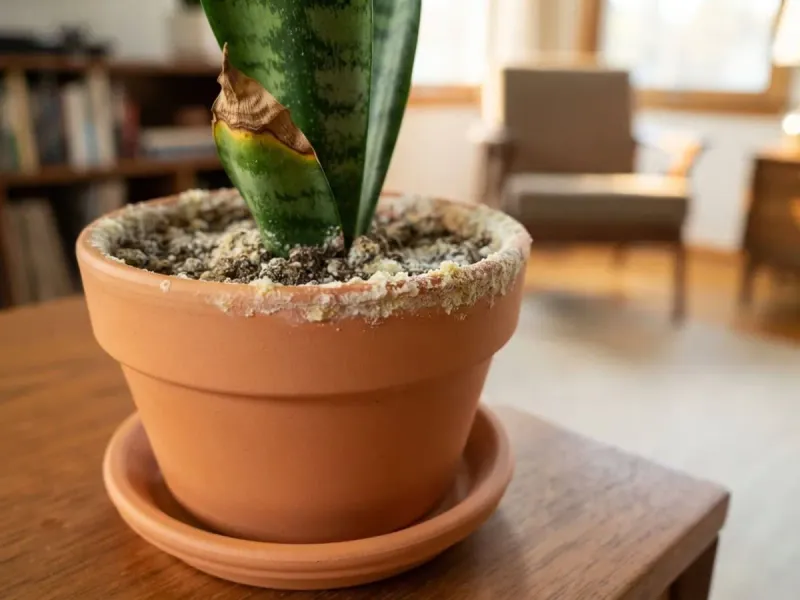
Love can be measured in plant food, but snake plants prefer a light touch. These slow growers simply do not need much fertilizer, and giving too much can actually hurt them.
When extra fertilizer builds up, salts collect in the soil and can burn the roots. You might notice yellowing leaves, brown tips, or a white crust on top of the soil or around the pot rim.
Stressed roots struggle to hold the plant upright, so leaves may start to lean too.
A simple routine works best. Feed with a balanced houseplant or cactus fertilizer diluted to half strength, and only once every month or two during the growing season.
In the South, that window can stretch from spring well into fall, but skip feeding in winter when growth slows.
Already overdid it? Flush the soil by slowly running water through the pot for a few minutes, letting it drain completely out the bottom.
Then let the soil dry fully before watering again. Scrape off any visible salt crust as well.
Fun fact: some snake plants grown in nurseries go a full year without fertilizer and still look great. Less really is more with this tough plant.