
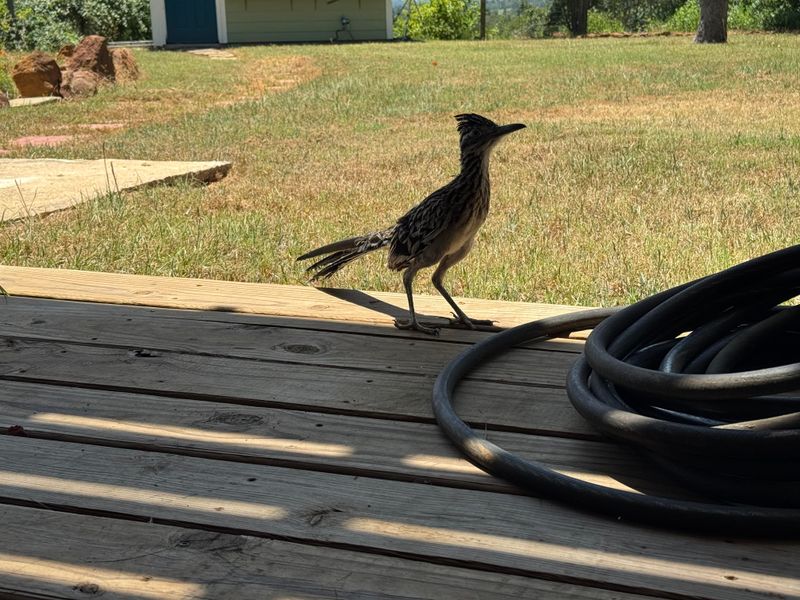
A roadrunner sprinting across your patio can stop you mid-sip. When the same bird keeps coming back, it is natural to wonder what it wants.
A repeat visitor can tell you a little about the land around you, but not as much as many people think. Here is what the sightings can and cannot say, and what you can do that is safe for your home and kind to wildlife.
A returning roadrunner is a clue, not a yard diagnosis
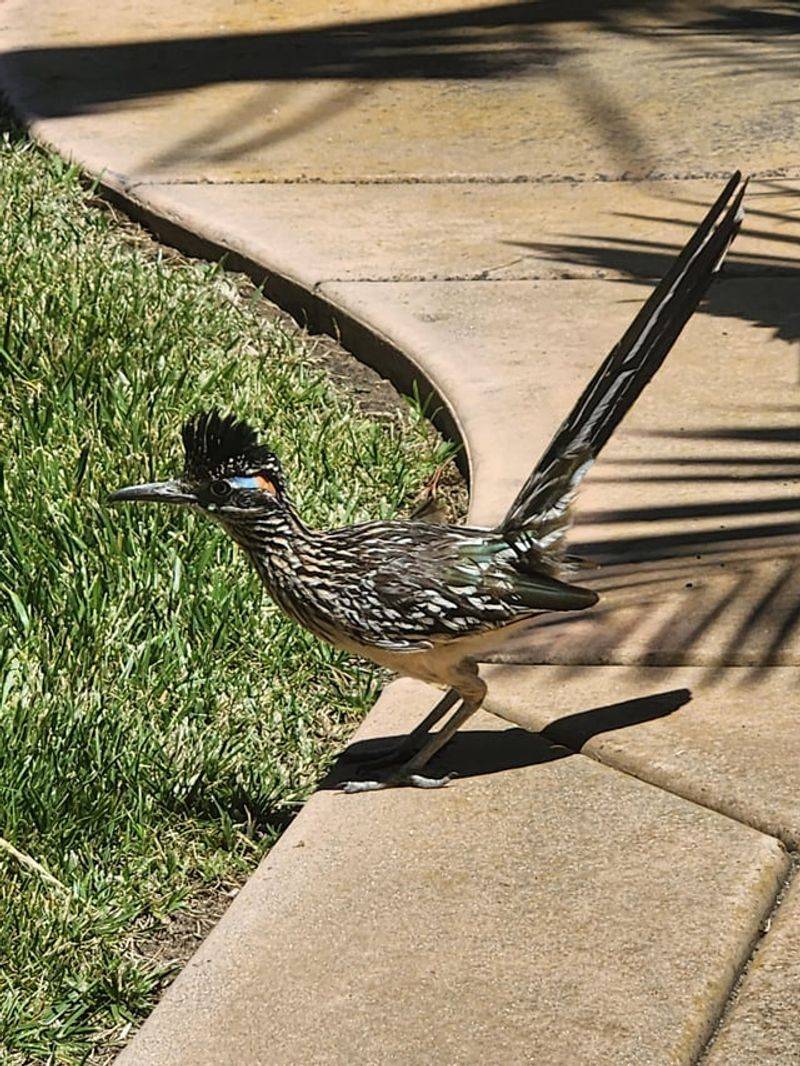
Seeing the same roadrunner again and again feels personal, but a repeat visit mostly tells you the bird uses the surrounding area. Your yard may be one stop on a regular route.
It may also be a place where the bird hunts or rests, but a sighting alone cannot sort out which one.
Roadrunners cover a lot of ground. In a radio-telemetry study in north-central Texas, estimated median home ranges were roughly 80 to 90 hectares.
Those numbers come from that Texas study area and are not California measurements. Still, they show why a bird seen in your yard may spend most of its time well beyond your fence line.
Habitat does matter. California’s wildlife habitat account describes roadrunners hunting ground-dwelling prey and using thickets, large bushes, or small trees for shade, refuge, and roosting.
So your property might fit the bird’s needs, and that is a reasonable guess.
A guess is not proof, though. Nothing about a visit shows that the bird picked your yard over the neighbor’s, ate anything there, or is nesting nearby.
Treat the sightings as a pleasant clue about the neighborhood, then watch for details like what it does while it is there. Does it hunt, rest in shade, or just keep moving?
A mix of open ground and cover can fit roadrunner habitat
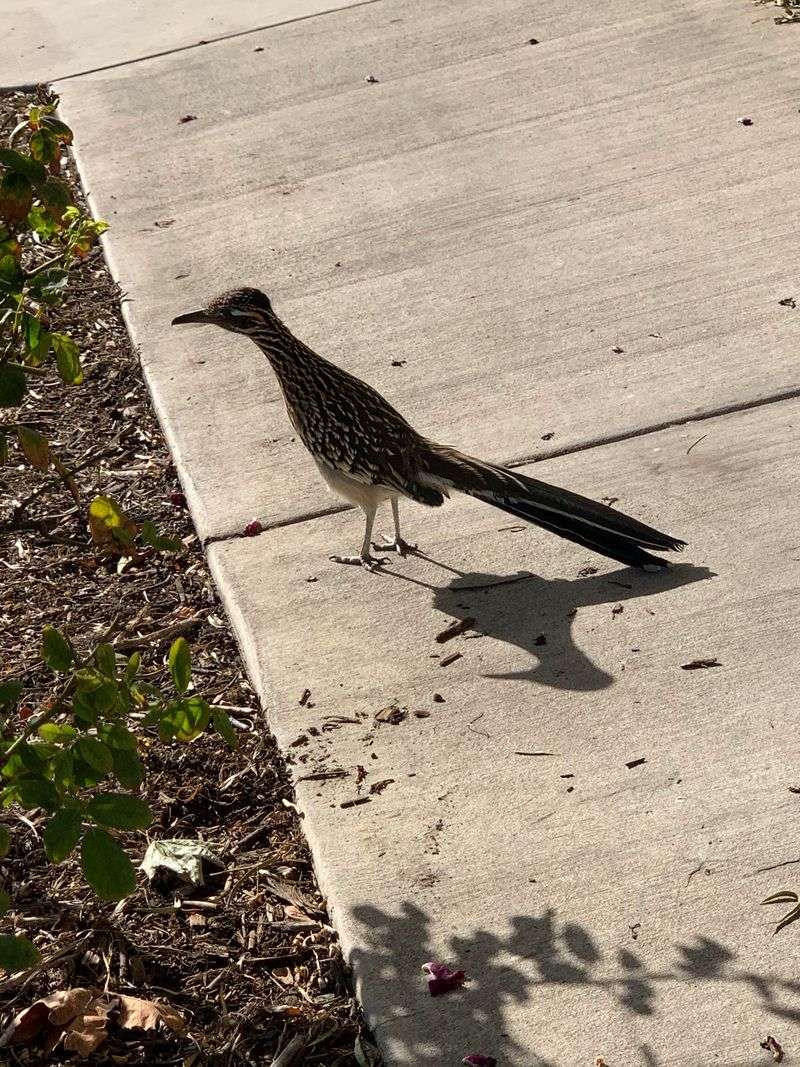
Picture a roadrunner at work: it runs across bare or sparse ground, scanning for something to catch. Then it ducks into shade when the day heats up.
That pairing of open space and cover is the heart of its habitat.
California’s habitat account says roadrunners hunt prey that lives on the ground. They use thickets, large bushes, or small trees for shade, refuge, and roosting.
The same account says they are most numerous in open areas mixed with brush.
Think of that as a broad pattern across the landscape, not a recipe for your lot. It does not mean every yard needs more brush.
It also does not explain this one bird’s route through your neighborhood. A property with a gravel path, a sunny slope, and a few established shrubs may simply sit inside a larger area the bird already uses.
One more caution: the account is an older species description. Its statements about where roadrunners lived or how common they were should not be read as today’s population picture.
Use it for what it does well, which is describing what the bird looks for in a place to hunt and rest.
If your yard is mostly lawn and tall fencing, a roadrunner may still cross it on the way somewhere else. That is fine.
Your view of the bird does not need a landscaping overhaul.
What can the bird’s menu tell you?
Roadrunners are not picky. Cornell Lab of Ornithology notes a varied diet that includes reptiles, insects and other invertebrates, small mammals, and birds, plus some plant material.
For California specifically, the state habitat account lists lizards, snakes, grasshoppers, other large invertebrates, mice, and sometimes birds as prey. That is a long menu, and it shifts with what is available in a given place and season.
Here is a good example of that variation. In a study at one Texas mesquite-thornscrub site, most identified food items were invertebrates.
That finding is specific to that site. It does not describe California birds or the species as a whole.
So what does a sighting tell you? Very little about dinner.
A bird that trots through your yard may have eaten a beetle, a lizard, or nothing at all. Without seeing it catch something, you cannot say what it was after or whether your yard supplied it.
If you want clues, watch behavior. A bird that pauses, stalks, and strikes at the ground is likely hunting.
A bird that moves steadily along a wall is probably just traveling.
The rattlesnake reputation needs a reality check
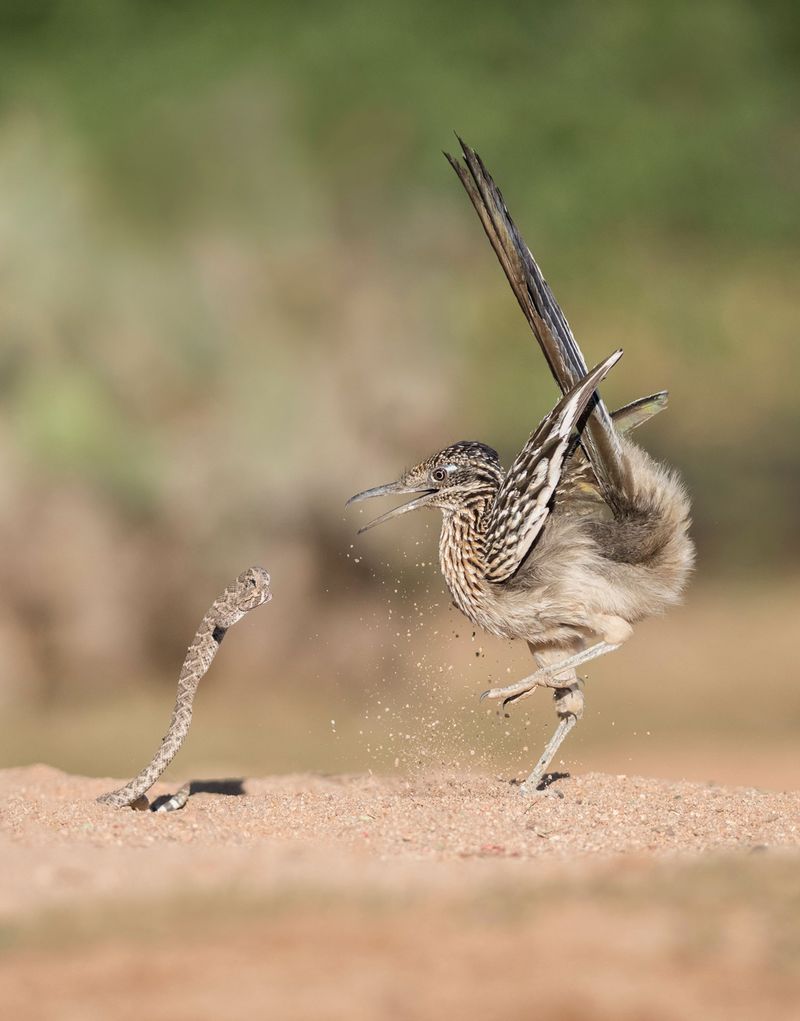
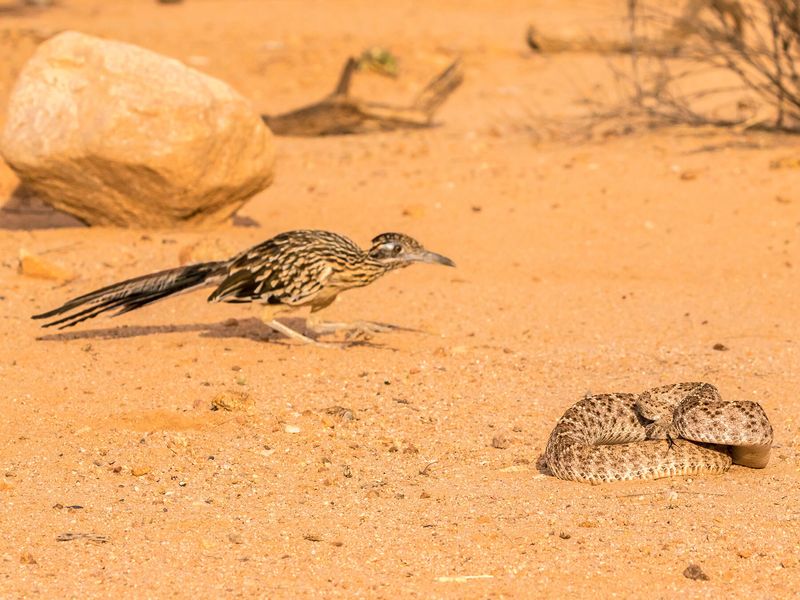
Cartoons and folk stories paint the roadrunner as a snake slayer. That image sticks, so it is easy to leap from “roadrunner in my yard” to “snakes nearby.” The leap does not hold up.
Snakes can be prey. California’s habitat account includes them on the list.
But Audubon says the roadrunner’s reputation as a rattlesnake fighter is exaggerated.
That leaves two plain conclusions. First, a roadrunner sighting does not mean your yard has a rattlesnake problem.
The bird eats many other things and may be passing through for reasons that have nothing to do with snakes.
Second, you should not count on a roadrunner to keep rattlesnakes away. Even if one catches a snake now and then, that is not a dependable form of control.
The takeaway is simple. Enjoy the bird for what it is, a quick and curious hunter with a wide menu.
If snakes are a concern where you live, treat that as its own question, separate from whether a roadrunner stops by. A sighting is a poor stand-in for a snake survey.
Support wildlife without compromising defensible space

You can make small choices that help wildlife without raising fire risk. None of them guarantee a roadrunner will return, but they can support the insects, lizards, and shelter that many birds rely on.
Start with plants. Where it is safe and practical, keep suitable native or locally appropriate vegetation.
Then go easy on pesticides. Audubon advises reducing pesticide use to protect insects and the birds that eat them.
Spraying broadly to wipe out bugs can thin the food web you are trying to support.
Fire safety comes first, especially on hillsides and at the wildland edge. CAL FIRE’s defensible space guidance calls for clearing dead or dry vegetation and spacing vegetation around homes.
Follow your local requirements, which can differ by zone and distance from the house.
That means skipping the urge to pile up brush or plant dense shrubs against the house for the sake of cover. A brush pile can become fuel.
Instead, think about spacing, with open ground between well-maintained plants, and keep the closest zone to your home lean.
A practical example: if you already have a mature, healthy shrub well away from structures, leaving it in place is a modest habitat gift. If you are unsure what your area requires, ask your local fire authority before you add or remove anything.
If you find a nest, leave it undisturbed
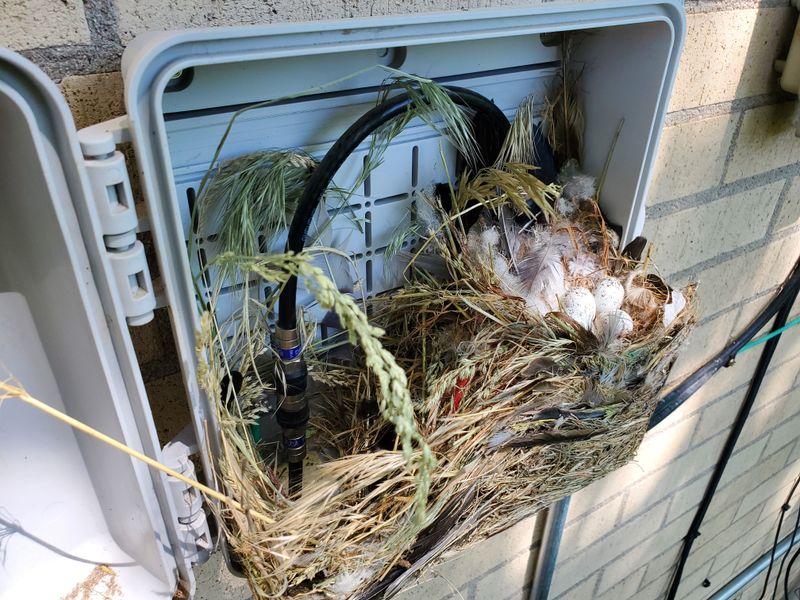
Finding a nest is exciting, and the best response is to back away. Do not handle the nest or eggs, move them, or poke around to get a better look.
Keep pets and children at a distance too.
The law backs this up. According to California Department of Fish and Wildlife, Fish and Game Code section 3503 prohibits taking, possessing, or needlessly destroying a bird’s nest or eggs.
That rule is subject to exceptions set out in the statute, so it is not an absolute ban in every situation.
CDFW also describes a separate idea. Under the regulation it cites, intentionally disrupting a bird’s normal behavior counts as harassment.
That is different from the nest law, because it focuses on what a person does to the bird’s behavior rather than on the nest itself.
This article only relies on what that source says. It does not cover every rule that might apply to your property or situation.
If a nest is in a spot that worries you, such as near a work area, a call to CDFW or a licensed wildlife professional is a sensible next step.
In the meantime, postpone trimming, construction, or other noisy work nearby if you can. Watch from a window or from far across the yard, and let the birds go about their business.
Keep the habitat, skip the guesswork
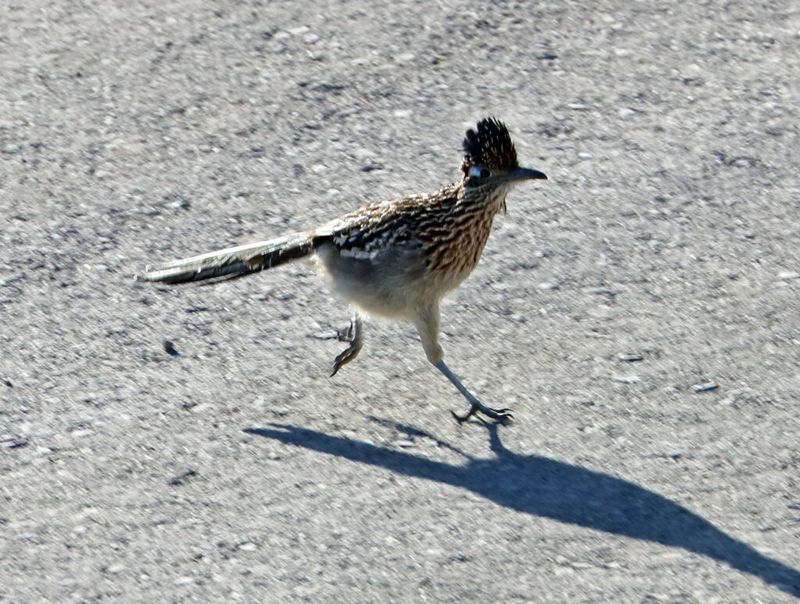
A roadrunner that keeps turning up probably finds the wider area useful, but one visit cannot name its food, its route, or whether it is nesting. Treat it as a welcome clue, not a verdict on your yard.
Support wildlife where it makes sense, keep your defensible space in good order, and leave any nest alone.
The bird will keep its own schedule, and your best move is to be a good neighbor along its path.