
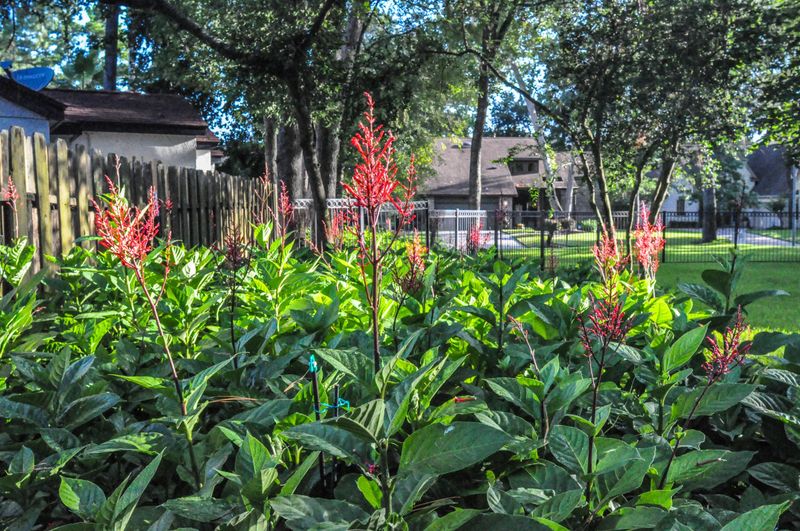
A shady corner of a Florida yard can feel stuck in a rut once summer color fades. Firespike is a tall plant with bright red flower spikes that opens up that spot just as fall arrives.
Its blooms can offer nectar to hummingbirds passing through or settling in for the winter. Here is where it fits, where it struggles, and how to care for the beds around it.
Firespike brings fall color to a partly shaded Florida bed
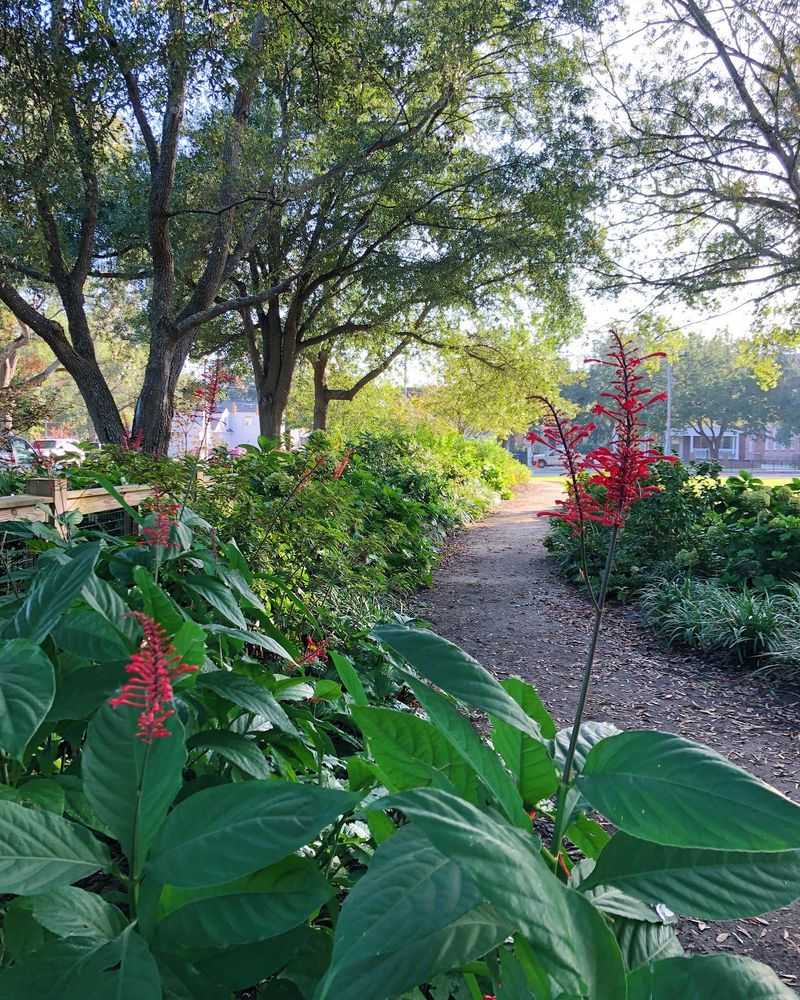
Few plants light up a dim garden corner the way firespike does. Known by its current UF/IFAS scientific name, Odontonema cuspidatum, it sends up long spikes of tubular red flowers on a bold, glossy-leaved shrub.
It is a tall, upright plant, so it works as a focal point instead of a filler.
The timing is what makes it handy. According to UF/IFAS Gardening Solutions, firespike produces its flowers in fall and winter in North and Central Florida, and those flowers attract hummingbirds.
In South Florida, it may flower year-round. So a gardener in Pensacola and one in Miami should expect different bloom calendars from the very same plant.
Many Florida beds go quiet after the summer rains taper off. A clump of firespike can fill that gap with strong color when many other perennials are winding down.
Red, tubular blooms are the kind of shape hummingbirds are known to investigate, which is part of why gardeners like it near a patio or window where the action is easy to watch.
Light matters, though, and it is worth being honest about that up front. Firespike will grow in part shade, but it does not flower equally well in every light condition.
A bed that gets some sun during the day is a good candidate. A bed tucked under dense live oaks all day is a different story, and the next section explains why.
Think of firespike as a tall, colorful anchor for a bed with a decent amount of light, not a cure-all for every gloomy spot. If you match it to the right site, it can turn a forgettable bed into one worth stepping outside to see, and it may give visiting hummingbirds a place to sip.
Part shade works, but deep shade can limit the flowers
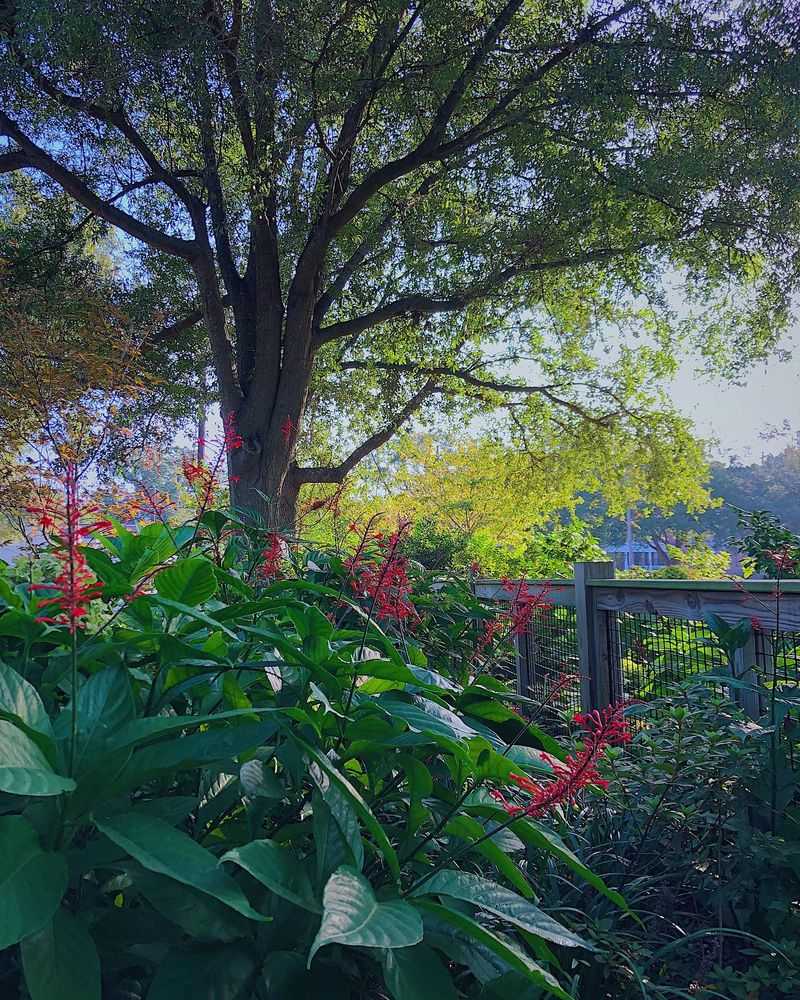
Shade comes in degrees, and firespike cares about the difference. UF/IFAS says the plant tolerates part shade but blooms best in full sun.
That means a bed with a few hours of direct sun, or bright dappled light through a high canopy, is a reasonable home. A bed that stays dark from morning to evening is not.
Here is a simple way to size up your own spot. Watch the bed on a sunny day in early fall and note when light actually reaches the ground.
Morning sun or a good stretch of bright filtered light is a promising sign. If the area stays in deep shadow for most of the day, expect a leafy plant with fewer flower spikes, or maybe none.
Plants in too little light often tell on themselves. Stems stretch toward brighter spots, the growth looks loose, and flower buds are slow to show up.
If you see that pattern, moving the plant to a brighter edge of the bed is a better fix than extra fertilizer.
Remember that Florida shade changes with the seasons. Deciduous trees let in more light once leaves drop, while evergreen oaks and palms cast steady shade year-round.
A bed that looked bright in March may be darker by July when the canopy fills in.
The takeaway is simple. Firespike is a good option for part shade, not deep or heavy shade, and it will not promise a big display where light is thin.
If your bed is truly dark, look for shade-loving foliage plants there and save firespike for the sunnier edge of the yard.
Give firespike room and plan for Florida freezes
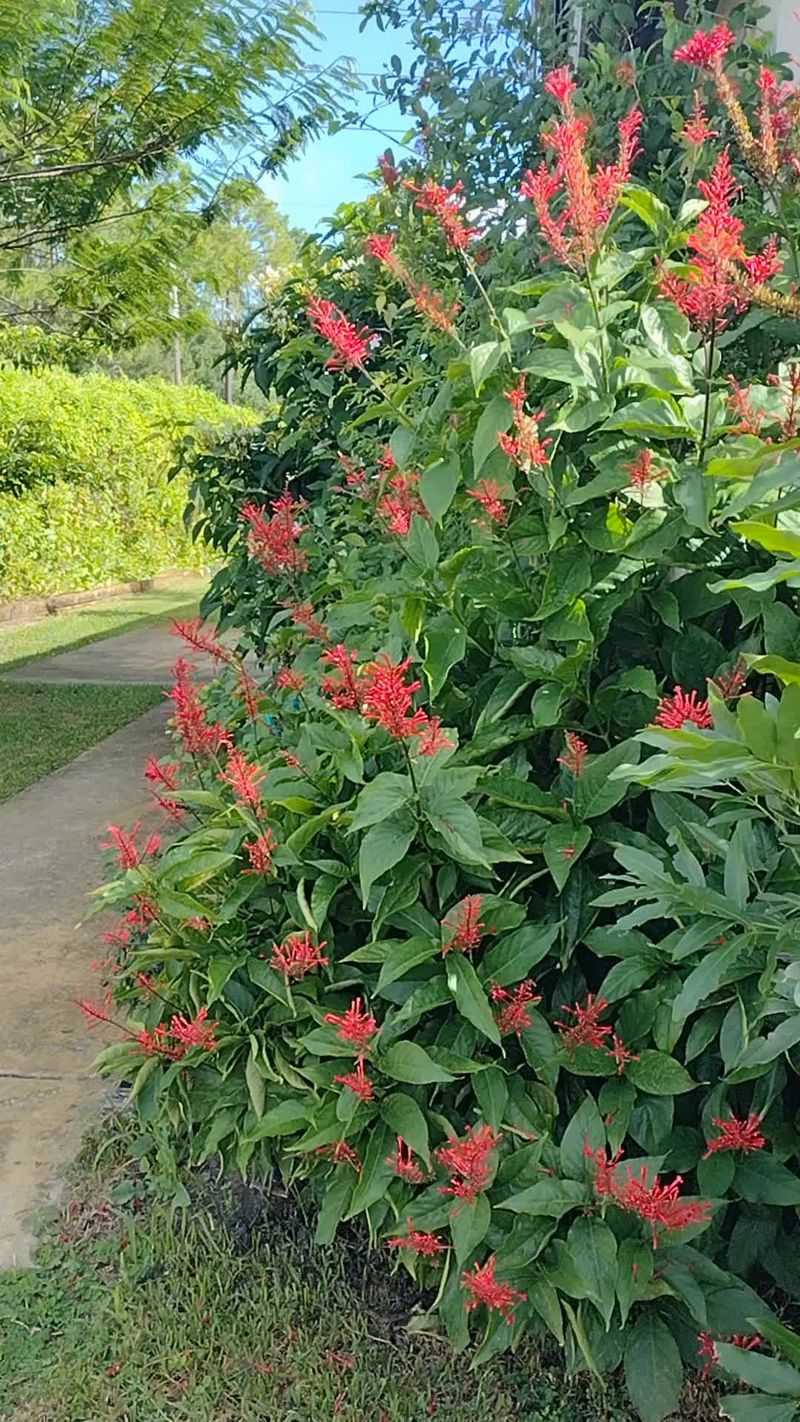
Plan on a big plant. UF/IFAS lists firespike at roughly 4 to 6 feet tall, so it belongs toward the back of a bed or in a group that can serve as a backdrop for shorter plants.
Setting plants 24 to 36 inches apart gives each one space to fill out without crowding its neighbors.
Soil is rarely a problem here. UF/IFAS notes it tolerates sandy to loamy soils, which suits Florida yards.
Once established it is moderately drought-tolerant, though new plants still need regular watering while the roots settle in. You can plant it at any time of year in Florida, which makes it easy to fit into your schedule.
Freezes are the main hazard, and risk varies a lot across the state. A hard freeze can kill the above-ground growth.
In many cases the plant returns from its roots in spring. In the Panhandle or north Florida, expect to cut back damaged stems after the cold passes and wait for new growth.
In South Florida, freezes are rare enough that this seldom comes up.
One more point deserves attention. Firespike is not a Florida native.
A recent UF/IFAS Extension Charlotte County article says it originated in Central America and has naturalized in some Florida areas. It is not considered invasive, but the article advises gardeners to watch for escapes near natural areas.
A practical habit is to check the edges of the planting each spring and pull any seedlings or stray shoots that pop up outside the bed. If your property backs up to a preserve, wetland, or woodland, that extra attention matters even more.
Keeping the plant where you put it is part of being a responsible gardener.
Winter flowers offer nectar, not a promise of repeat visits

A blooming plant is an offer, not a contract. Firespike flowers can provide nectar to hummingbirds that happen to visit, but no single plant can guarantee a visit or bring a particular bird back to your yard.
Birds follow food, weather, and habitat across a wide area, and your yard is just one stop in their day.
Winter context helps set expectations. According to UF/IFAS Gardening Solutions, the ruby-throated hummingbird is the species Floridians see most often.
Black-chinned and rufous hummingbirds occur only occasionally in winter, so seeing one is a treat, not a routine event.
Where you live also shapes the odds. Cornell Lab of Ornithology range information notes that some ruby-throats winter at Florida’s southern tip and along parts of the Gulf and southern Atlantic coasts.
Many of those birds come from farther north. Gardeners in those areas have a better chance of winter sightings than those far inland in the northern part of the state.
That is no reason to skip planting. Migrants passing through in fall and any birds that settle in for the winter need dependable nectar, and a bed of blooming firespike can be one small piece of that.
The more flowers, seasons, and sheltered spots a yard offers, the more useful it becomes.
Keep your hopes grounded and your eyes open. Sit near the bed on a calm, sunny morning and watch for quick, buzzing visitors.
If one stops by, consider it a bonus, and if none appear, the plant is still adding color to your fall garden.
Add nectar plants that match the yard
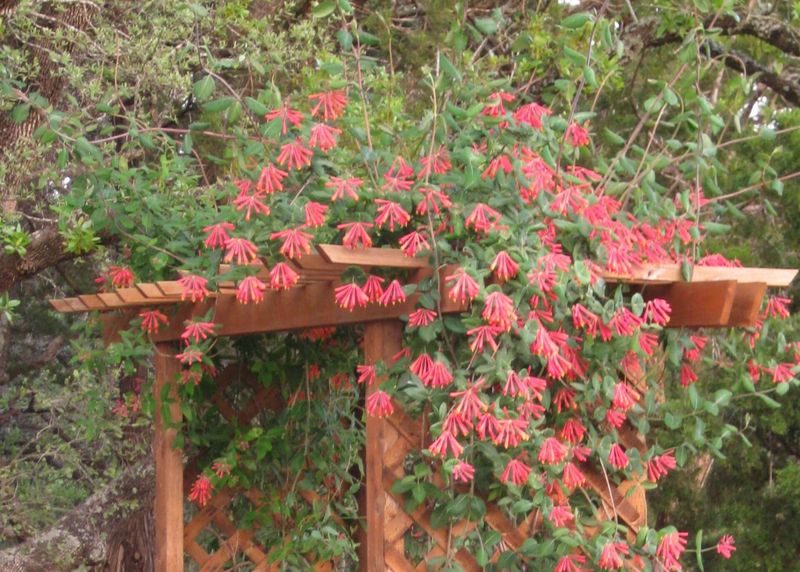
One plant makes a thin menu. UF/IFAS recommends growing a range of nectar plants for hummingbirds, and its hummingbird garden guidance gives examples including native coral honeysuckle, firebush, scarlet sage, and cardinal flower.
They are not interchangeable, so check each one against your yard before buying.
Start with light, then moisture, then bloom season. Coral honeysuckle is a vine that needs something to climb.
Firebush is a shrub that thrives in warm sunny spots. Scarlet sage is a smaller plant for beds and borders.
Each has different needs, and mixing plants that bloom at different times helps spread nectar across more months.
Cardinal flower deserves a closer look for shadier sites. UF/IFAS describes it as a Florida native that grows in full sun or partial shade, but it favors wet places such as rain gardens, pond edges, and stream banks.
In a dry sandy bed it will likely struggle. It is not an automatic stand-in for firespike, which handles drier conditions once established.
A simple test saves money. Dig a small hole after a rain and see how long water stays in it.
If it drains quickly, pick drought-tolerant companions. If the spot stays soggy, cardinal flower becomes a much better candidate.
The UF/IFAS bird-friendly plants page is a handy place to browse more ideas. Choose a few that suit your site, plant them in groups, and you will have a more varied and dependable nectar bed than any single plant could provide.
Protect nectar beds with pesticide-aware care
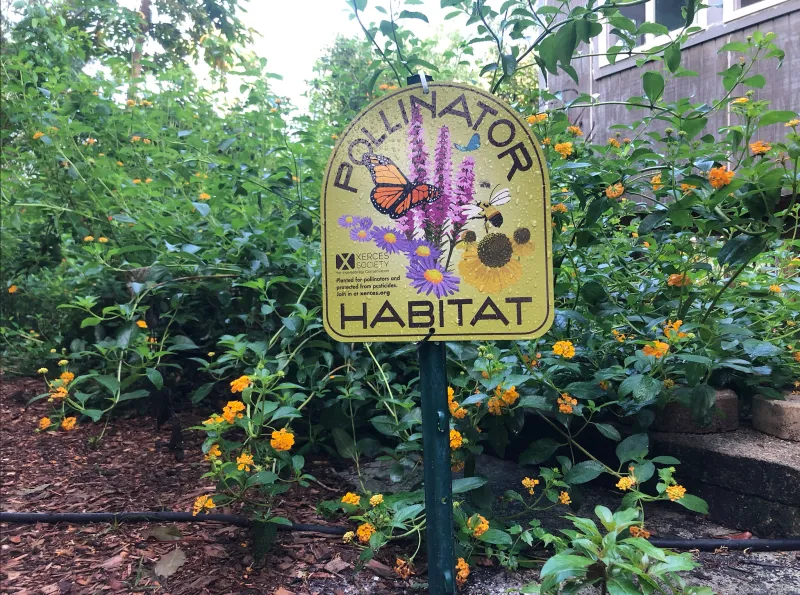
Keeping a nectar bed healthy starts with restraint. Avoid routine pesticide use around plants that hummingbirds and pollinators visit.
Spraying on a schedule, with no clear problem, puts chemicals where wildlife feed and often kills helpful insects along with the pests.
UF/IFAS promotes integrated pest management, and its guidance on managing landscape pests lays out a sensible order. First, identify the pest, since many leaf spots and chewed edges are harmless or caused by something else.
Second, consider alternatives, such as pruning damaged growth, spraying a pest off with water, or tolerating minor damage. Third, if you decide a pesticide is needed, follow the directions on the product label exactly.
A few habits make this easier. Check plants weekly during the growing season so small problems stay small.
Take a photo or a sample to your county UF/IFAS Extension office if you cannot tell what you are seeing. Apply any product when flowers are not open and visitors are not around, and only as the label allows.
Now for the planting decision. Choose firespike only when your bed has enough light and room for a plant that grows 4 to 6 feet tall.
As UF/IFAS notes, it blooms best in full sun, so part shade is its limit, not its ideal. If the spot is deeply shaded, pick something else.
A well-sited plant, clean care, and a little patience are all you can offer. Whether the birds arrive is up to them.