
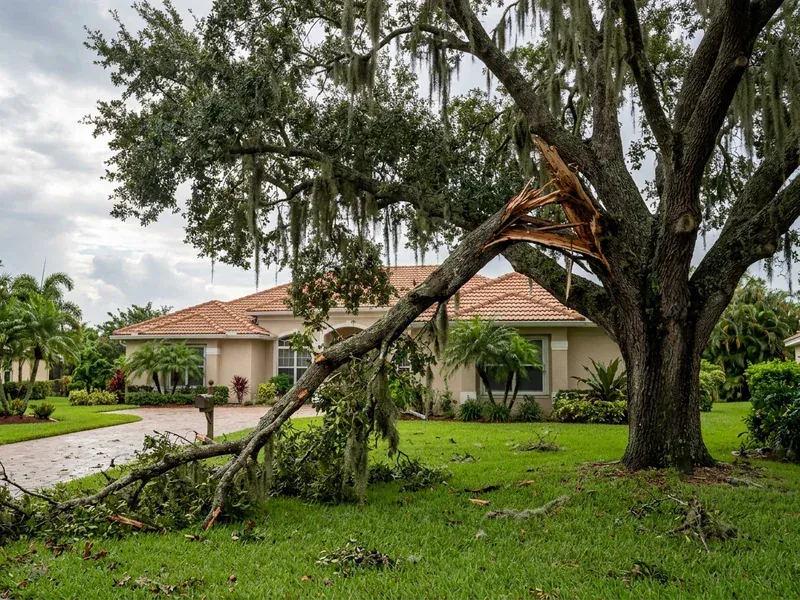
A big oak leaning over your roof after a storm can keep you up at night. Florida has a state law that can spare some homeowners from local permit hassles when a tree is truly dangerous.
But the law works only when you have the right paperwork in hand before the saw starts. Here is how it works and what to do first.
The exemption covers only qualifying residential property
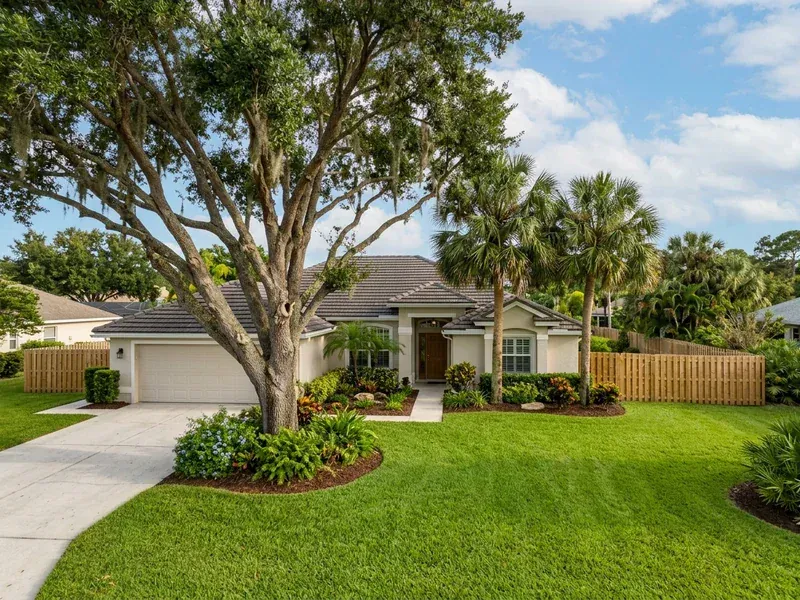
Florida Statutes § 163.045 does not cover every tree on every kind of lot. The statute defines residential property as a lot with a detached, single-family building that is actively used for single-family residential purposes.
The use must also be conforming or legally recognized as nonconforming.
That definition is narrow on purpose. Owners of apartments, condominiums, commercial properties, and other lots that do not fit the description should not assume they qualify.
A house that is described casually as residential may still fall outside the statute.
When a property does qualify, the law limits what a local government can require. Where the statutory conditions are met, a city or county may not demand notice, an application, approval, a permit, a fee, or mitigation for removing the tree.
It also may not require replanting for work done under the exemption.
Notice what the law leaves out. It does not hand owners a blanket right to remove any tree they dislike or worry about.
The exemption applies to specified local-government requirements, and only when the tree is documented as posing an unacceptable risk to people or property.
So the first question is simple: does your lot match the statute’s description? If it does, the next question is whether you can produce the right documentation, which is the subject of the next section.
Get the signed onsite assessment before removal
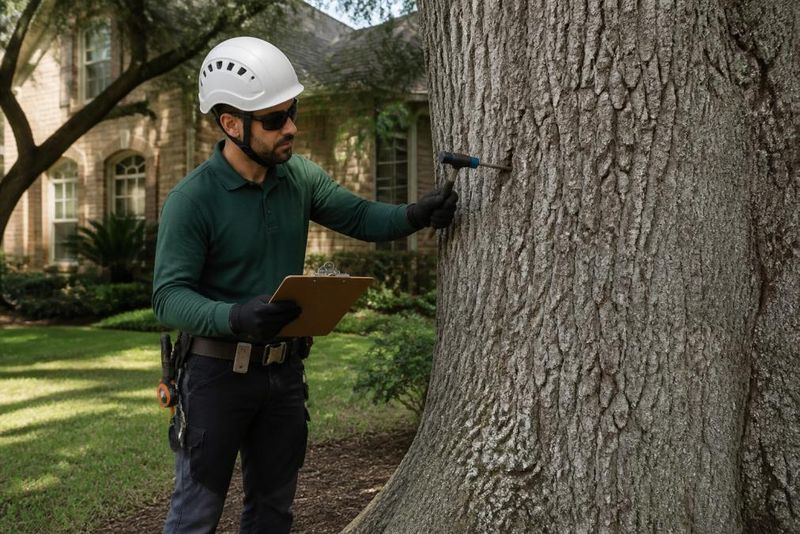
Here is the step that makes the exemption hold up: a written assessment, done onsite, before any removal begins. The statute names who can do it: an ISA-certified arborist or a Florida-licensed landscape architect.
The person must sign the assessment.
The professional has to look at the tree in person. They also must follow the tree-risk-assessment procedures the statute specifies, not just offer a general opinion.
That means a walk around the tree, a look at the roots, trunk, and canopy, and a written conclusion about the level of risk.
Keep the signed report. Put a copy in a folder or on your phone and file it with your property records before work starts.
If a city or county official ever asks why you did not file an application or pay a fee, that document is your answer.
Several things do not count in its place. Your own photos, even good ones, are not the assessment the statute describes.
Neither is your own judgment, however confident you feel. A tree-service quote or a contractor’s verbal opinion does not meet the requirement either, unless the person is one of the named professionals and completes the specified onsite assessment and signs it.
Think of it as the receipt for your decision. Without it, the exemption has nothing to stand on.
Removal must be the only means of reducing the risk
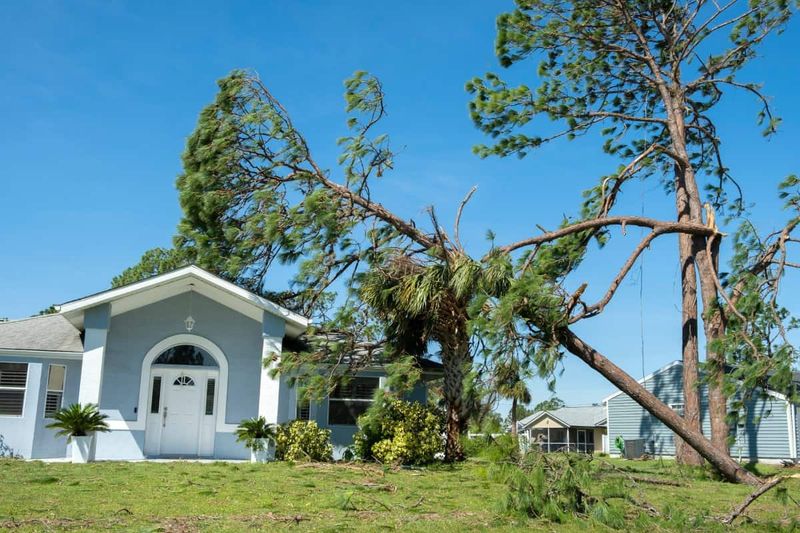
The statute sets a specific bar. The assessment must find that the tree poses an unacceptable risk, and it must conclude that removal is the only means of reducing the risk below moderate.
Both parts matter, and the statutory text controls the wording.
That is a higher standard than most people expect. Removal being the preferred option, the cheaper option, or the option that lets you sleep better does not meet it.
If pruning, cabling, or another step could bring the risk below moderate, the assessment cannot say removal is the only way.
Worry alone does not meet the standard. A lean alone does not either, since some trees grow at an angle for decades and stay stable.
Visible damage by itself does not settle the question, because the assessor weighs the whole picture, including the tree’s structure, its roots, and what it could hit if it failed.
Picture two neighbors with similar storm-bent trees. One tree has a cracked trunk leaning toward a bedroom.
The other has lost some branches but holds firm roots and good structure. The assessor may reach opposite conclusions, and only a finding that matches the statute opens the exemption.
If the report recommends something short of removal, take that advice seriously. It means the law’s threshold has not been met.
What a lean or storm damage can—and cannot—tell you
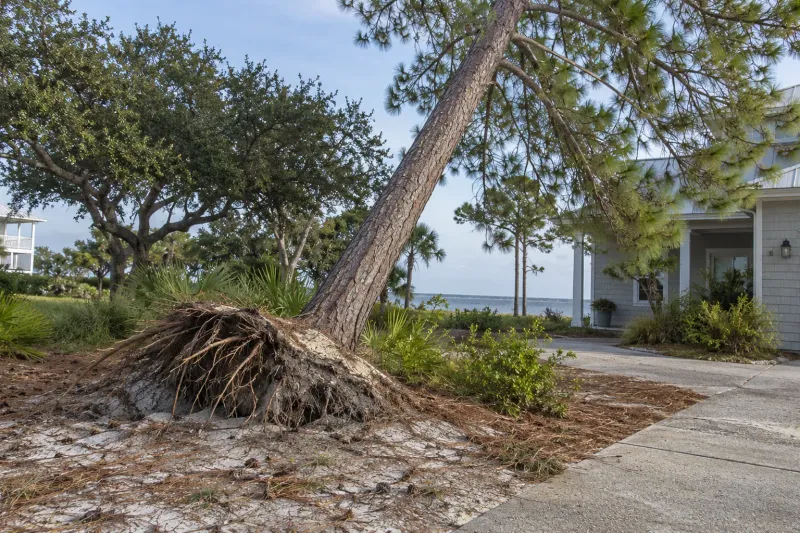
Certain signs say it is time to call a professional. UF/IFAS tree-risk guidance points to a lean that develops quickly, broken or lifting roots, cracks in the trunk, and a lean toward a house or another target.
Any of these deserves prompt attention from an ISA-certified arborist.
A gradual lean still deserves a look. Slow lean may be less urgent, but it should still be assessed rather than ignored.
A rapidly developing lean calls for immediate attention.
These are warning signs, not proof. They tell you to get an evaluation, but they do not mean the tree qualifies for the exemption.
Only the signed assessment, with its statutory risk finding, can do that.
Storm damage works the same way. Wind and water can leave a tree looking rough while it still has a future.
UF/IFAS hurricane-damage guidance notes that many damaged or defoliated trees can recover, and that the decision to remove or restore depends on structure, roots, the type of damage, and the risk to people or property.
Florida’s sandy soil adds a wrinkle. After heavy rain and wind, roots can shift in loose ground without much obvious sign above.
That is one more reason to have a professional look rather than guess from the driveway.
Keep people clear and leave hazardous work to qualified professionals
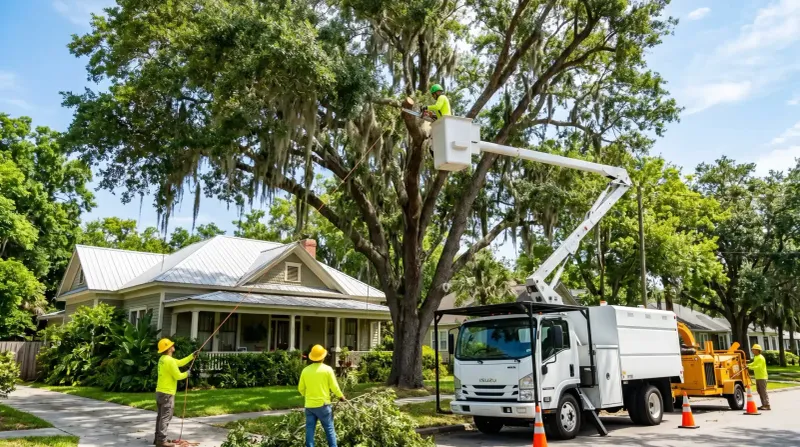
While you wait for an assessment, safety comes first. Keep children, pets, and visitors away from any storm-damaged tree, especially areas under hanging or broken limbs.
Park cars and move patio furniture out of the fall zone if you can do so without going near the tree.
Leave the cutting to qualified professionals. UF/IFAS guidance on choosing tree care professionals stresses using trained, qualified people for hazardous removals.
Chainsaws, ladders, and heavy limbs under tension injure people every storm season.
Broken limbs near people or structures fall in the same category. UF/IFAS storm-damage advice recommends professional help rather than do-it-yourself work.
That includes a limb hanging in the canopy or a trunk resting against a roof.
Trees on or near power lines call for a different first call. Contact your utility, and do not go near the tree or the lines.
Line work belongs to qualified line-clearance professionals.
Keep in mind that the exemption deals with local permits, not safety. Holding a signed assessment does not make dangerous cutting any safer for an untrained person.
Private rules and mangrove protections remain separate concerns

The state exemption has edges. By its terms, § 163.045 speaks to requirements imposed by local governments.
It does not itself resolve obligations created by a homeowners association or a deed restriction.
If you live in an association, read your governing documents and rules before any work. Some associations require approval, notice, or specific procedures for tree removal.
A signed assessment does not settle those matters, though it may be useful information to share with your board.
None of this weakens the exemption where it applies. Where the statutory conditions are met, the listed local requirements fall away.
The point is only that private rules are a separate track.
Mangroves are a clear carveout. The statute does not apply to the specifically delegated authority for mangrove protection under Florida Statutes §§ 403.9321 through 403.9333.
Section 403.9326 deals with mangrove exemptions in that separate framework.
If your shoreline has mangroves, do not treat a tree assessment as a pass to trim or remove them. Mangrove work has its own rules, so check them before anyone picks up a saw.
Make the assessment the first step
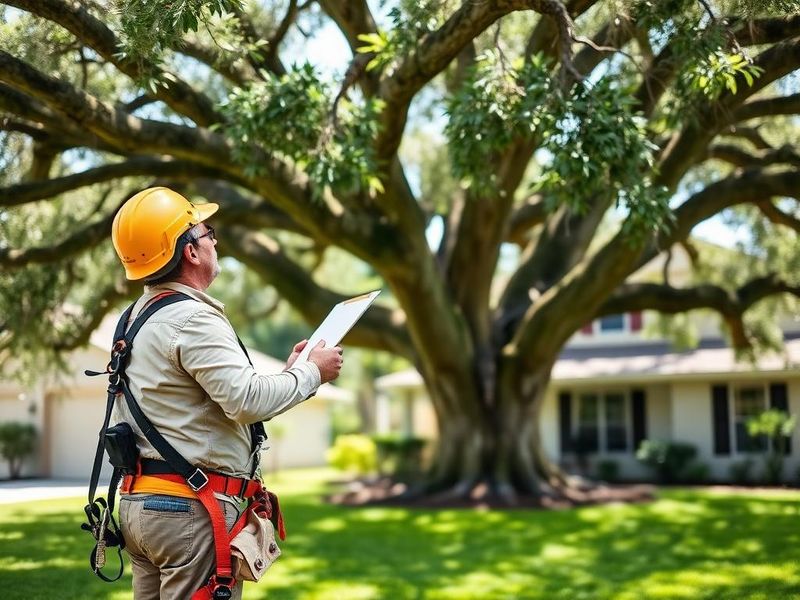
Before you call a crew or file anything with the city, book the onsite assessment. Hire an ISA-certified arborist or a Florida-licensed landscape architect, and keep the signed report with your records before any removal begins.
The exemption rests on three things: a qualifying property, proper documentation, and the statutory risk finding. A tree that merely looks scary does not meet them.
A paper trail does.