
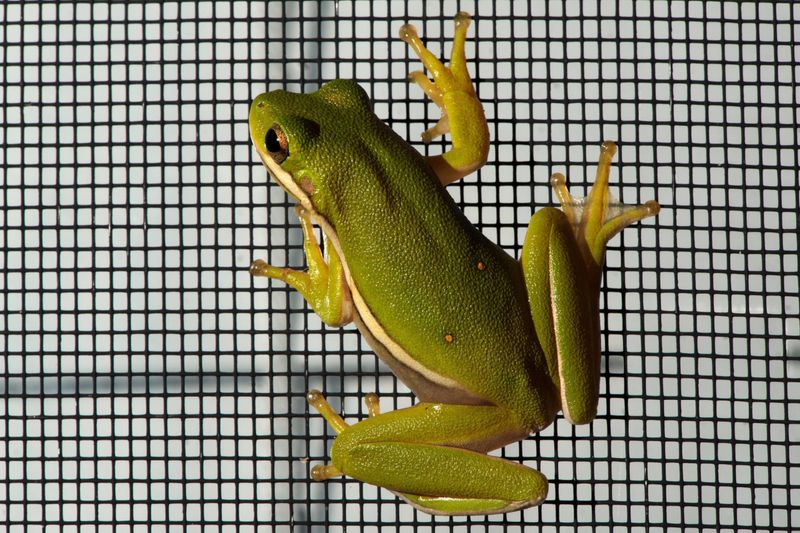
You flip on the porch light after dark and spot a small frog stuck to the window glass, belly out and toes spread wide. It looks like a message, but what is it really saying?
The answer is simpler than a weather forecast or a yard report card, and it points to what the frog may be doing right outside your door. A few easy habits can help you enjoy the visit and avoid the myths.
The frog may be hunting near the house
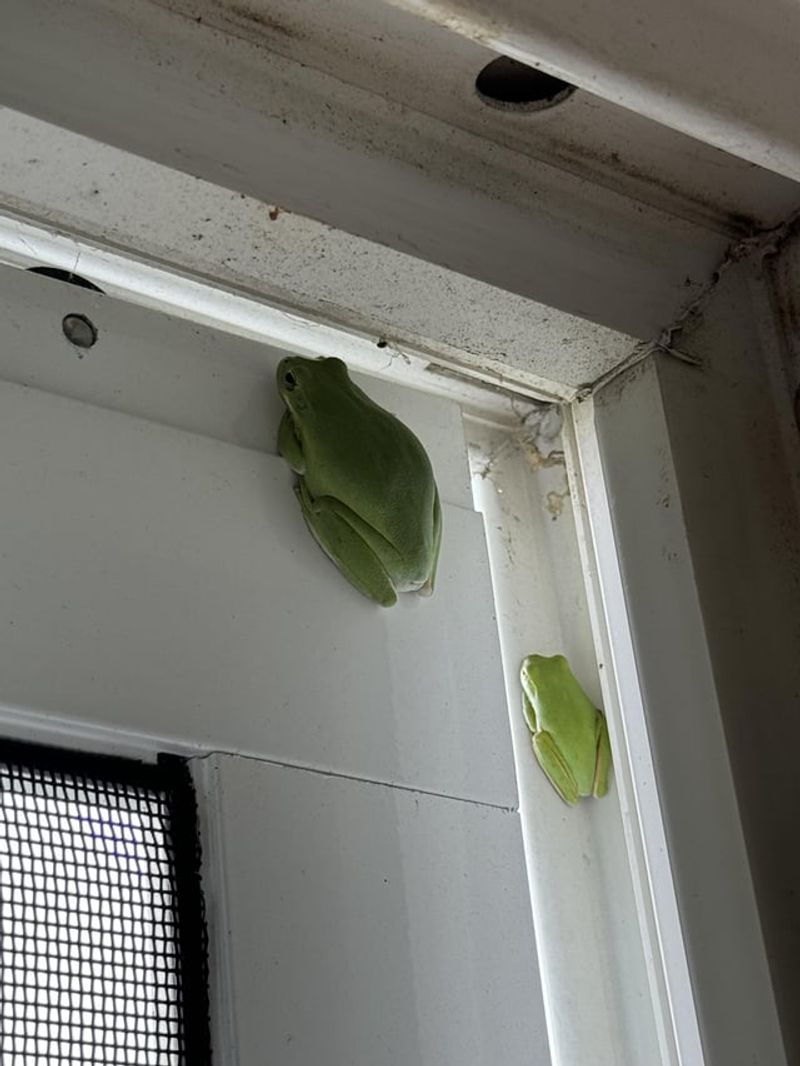
Treefrogs eat insects, and they do most of their hunting after dark. A wall, screen, or window near a house can make a handy perch for a frog that is waiting for a meal to flutter by.
Texas references describe Cope’s gray treefrogs as nocturnal hunters that forage in trees and shrubs, so a frog on glass fits the usual nighttime routine.
University sources describe a similar habit in another species. A green treefrog profile from the University of Georgia notes that these frogs may forage around porch lights.
That makes insect hunting a sensible explanation for your visitor. It is still a plausible guess, not a confirmed account of what this particular frog is doing.
Here is the practical reading. A frog on your window most likely tells you it found a good spot to catch food right now.
It may be the one night the moths and beetles are thick near your glass, or it may be a frog that simply wandered by.
What it does not tell you is the bigger picture. One frog is not a survey of your yard, a sign of a bug problem, or a grade for your garden.
It is a single animal making a single choice on a single evening. Outdoor lighting may be part of what made that spot appealing, and the next section looks at how.
Porch lights can create a hunting opportunity
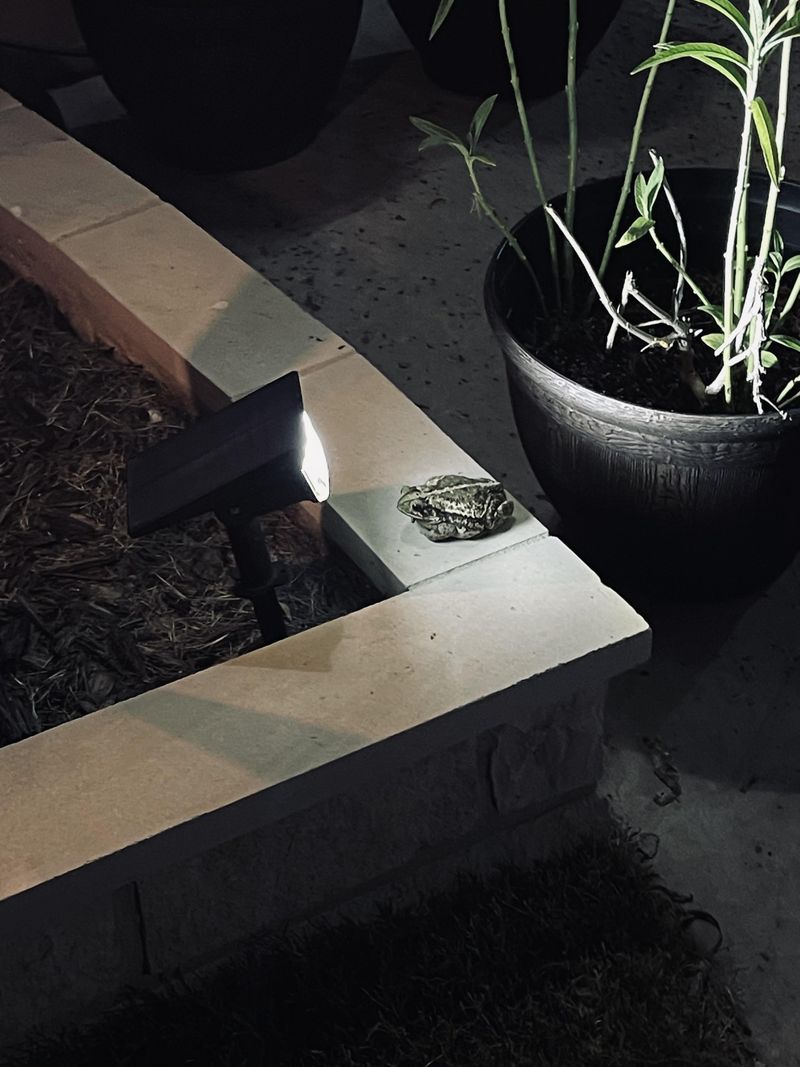
Anyone who has watched bugs circle a porch bulb has seen the idea in action. Outdoor lights can concentrate flying insects in one small area, and a hungry frog may take advantage of that.
A UF/IFAS Extension article on exterior lighting explains how night lighting affects insects and why lighting choices matter.
The reason may be less about attraction than confusion. A 2024 study in Nature Communications found that insects flying near artificial lights can get trapped in looping flight because the light disrupts their sense of orientation.
Insects that stay around the glow become easy targets for anything waiting nearby.
Keep the claim modest, though. Not every insect reacts to every bulb the same way, and the effect changes with the type of light and the type of bug.
A lit window does not guarantee the same menu on every house.
Light also cannot explain any one visit by itself. A frog might perch on a dark window one night and a bright one the next for reasons you cannot see.
Think of the porch light as one possible piece of the puzzle, not the whole answer.
How treefrogs cling to glass
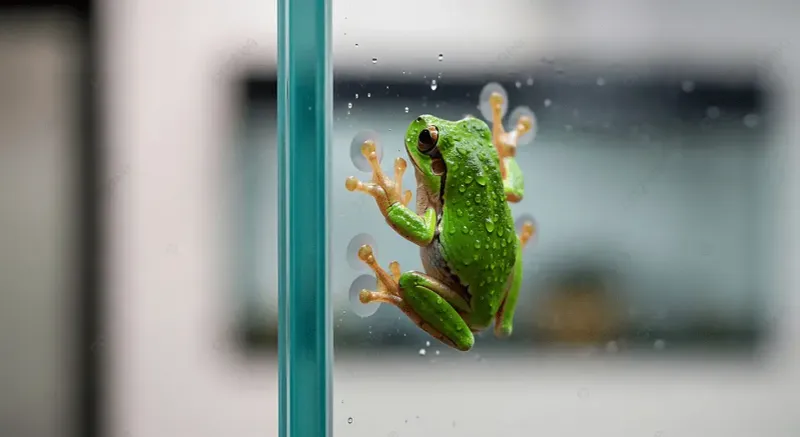
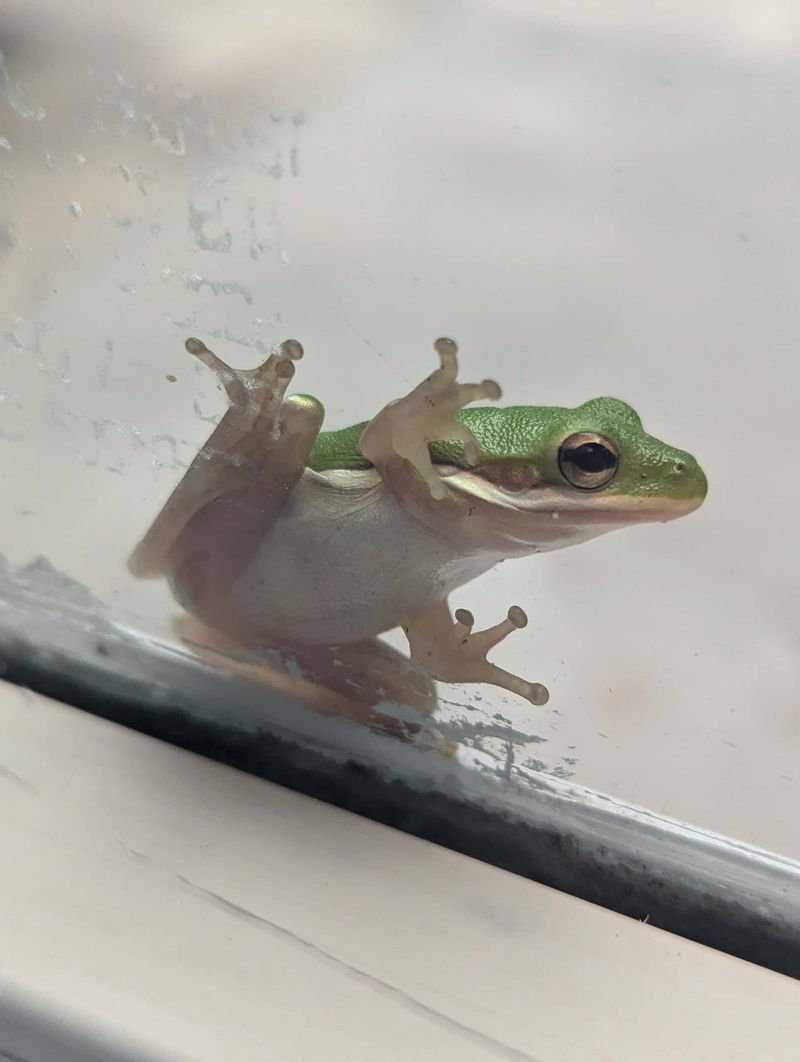
Flip your view to the inside of the glass, and you get a rare look at a frog’s toes. Treefrogs have expanded toe pads that let them grip smooth surfaces, including windows that would send most animals sliding.
The pads look soft and slightly sticky, which is why many people call them suction cups.
That nickname is too simple. A 2018 review in Frontiers in Zoology on tree frog attachment describes several mechanisms working together rather than a single suction trick.
Researchers are still studying how those pieces interact.
For a homeowner, the takeaway is easy. The frog is not stuck, and it is not struggling.
Its toes are built for this, so a frog resting on your window is probably doing exactly what its body is designed to do.
A window visit cannot identify the species
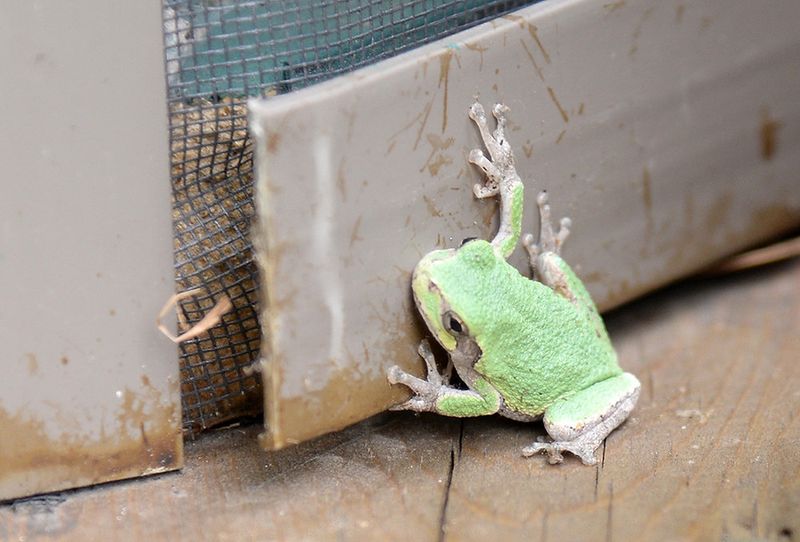
Texas is home to more than one kind of treefrog, and the names are not interchangeable. The Texas Parks and Wildlife list of frogs and toads includes several species, and green treefrogs, gray treefrogs, and Cope’s gray treefrogs are all separate labels.
Behavior will not settle the question. Hunting near a porch light is described for green treefrogs in a southeastern U.S. profile, and Cope’s gray treefrogs are also nocturnal hunters.
A frog on your window could fit more than one description, so the perch itself says very little about who is sitting on it.
Looks can be tricky too. According to the Herps of Texas entry for Cope’s gray treefrog, Cope’s and gray treefrogs can be difficult to tell apart by sight.
If you want a name, gather more clues. A clear photo, a recording of the call, and the location where you saw it all help.
Until then, calling it a treefrog is accurate and honest.
A fall sighting does not prove breeding or predict rain
The solid fact is simple: a frog was active on your window this fall. Nothing in the sources I reviewed shows that Central Texas treefrogs visit windows more often in autumn, so treat the season as the time you noticed, not as a trend.
Breeding is a separate matter. The Herps of Texas entry lists a March to July breeding period for Cope’s and gray treefrogs, with timing that depends on temperature.
That describes those species, and it does not explain why one frog sat on your glass in October.
Rain forecasting is another popular idea. A 2022 citizen science study looked at weather and frog calling, which is different from a frog sitting quietly on a window.
Do not count on your visitor as a weather app.
Moisture is worth a quick thought as well. Amphibians rely on moist habitat and need water for reproduction, but one frog cannot diagnose a leak, a damp foundation, or a pond nearby.
If you suspect a moisture problem, check the house itself.
Try lighting changes before any other intervention
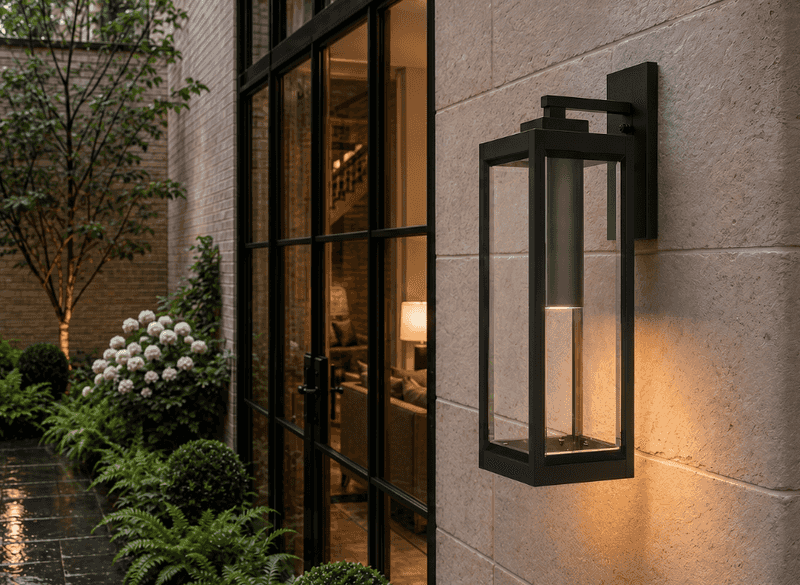
If the frog’s presence bugs you, or you simply want fewer insects swarming your glass, start with the lights. Switch off exterior lights you do not need, add motion controls, and shield fixtures so light falls only where you want it.
The UF/IFAS Extension guidance also suggests warmer-colored bulbs.
Set your expectations honestly. Research on insects and artificial light shows responses vary with lighting and insect species, so these changes may reduce activity rather than end it.
Fewer insects at a fixture may mean fewer frogs hunting there.
Skip sprays. Do not spray frogs or apply pesticides at the window, since amphibians can be sensitive to chemicals.
The best way to enjoy the frog is to watch from a distance. If someone does touch one, wash hands afterward, because CDC guidance notes amphibians can carry Salmonella even when they look healthy.
Capturing wild animals is also regulated, and Texas rules apply, so leave catching to the permitted.
Treat one visitor as a clue, not a diagnosis
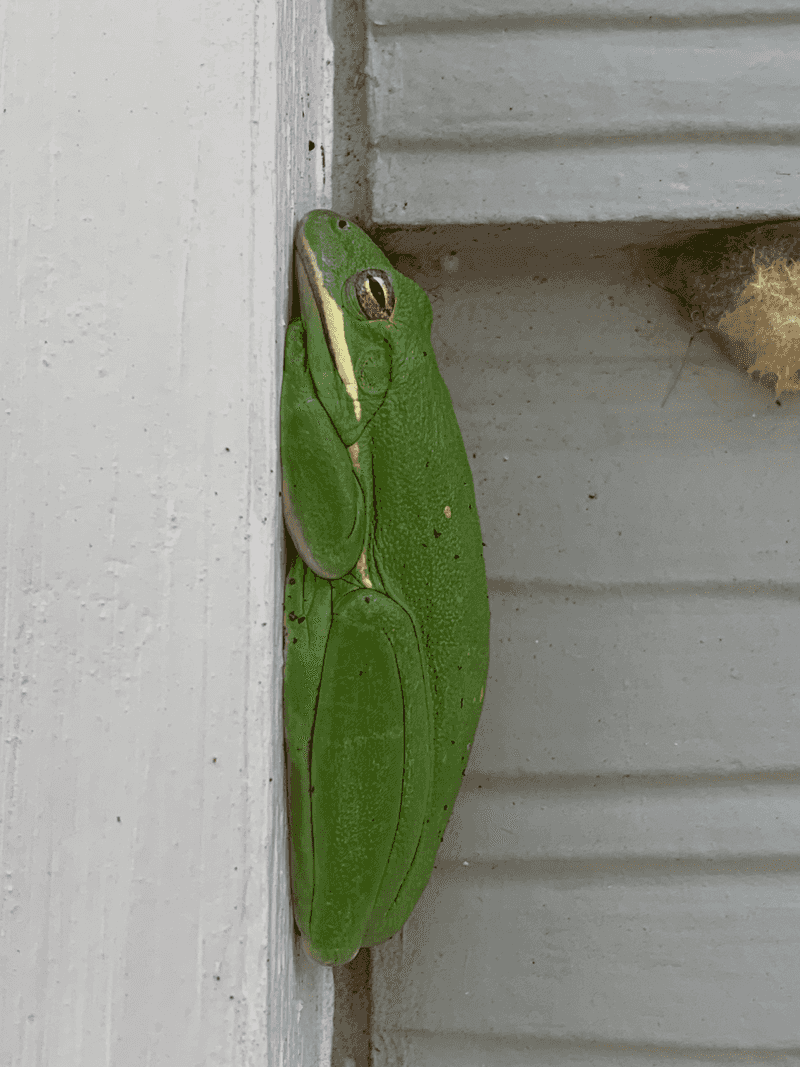
A frog on your window is a small glimpse of nightlife. It may point to a nearby chance to catch insects, and Texas treefrogs are known to hunt after dark.
It does not describe the health of your yard, your house, or tomorrow’s weather.
Watch for a minute, dim a light you do not need, and let the frog get on with its night. Some visitors are best left as a good story.