
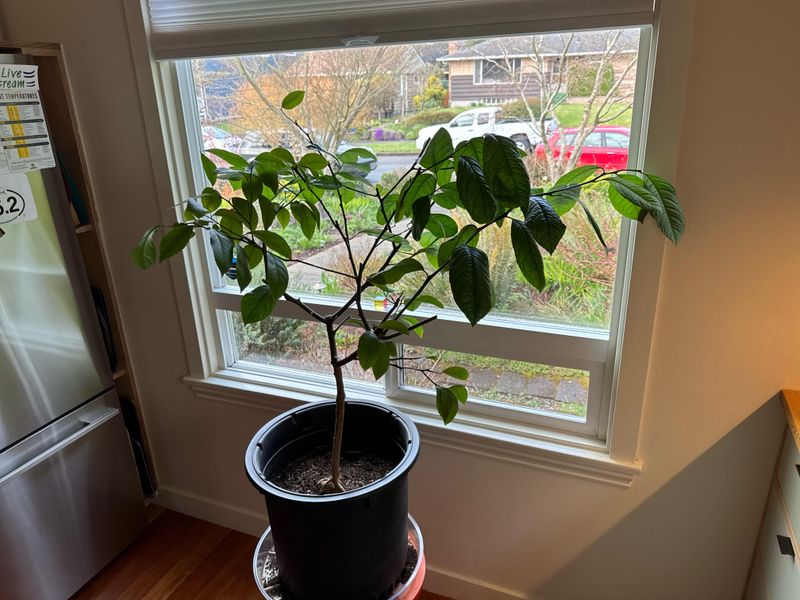
You carry your potted lemon tree inside to keep it safe, and a few days later there are leaves all over the floor. It feels alarming, but the tree is giving you clues.
Light, water, temperature, humidity, and pests can all play a part. A few simple checks can help you figure out what is going on and what to change first.
A sudden drop is a symptom, not a diagnosis
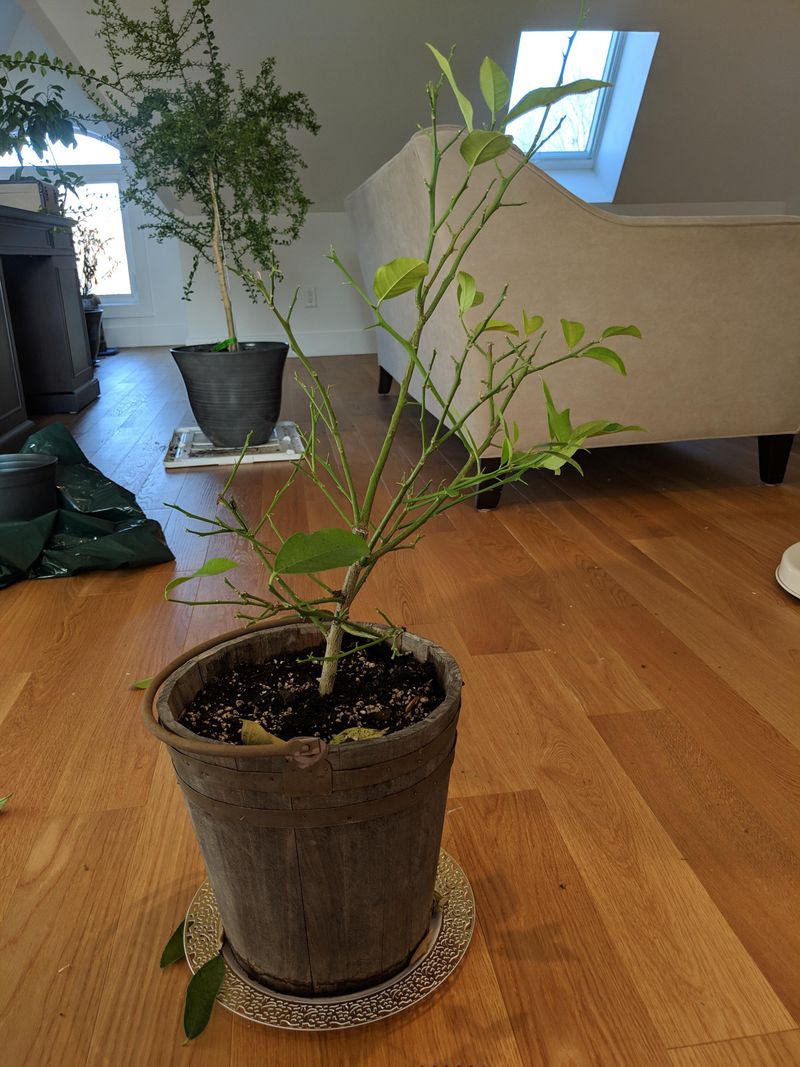
Finding a pile of leaves under your lemon tree is stressful, especially right after you moved it inside. The move is a fair suspect, since adjusting to new conditions is a common reason citrus sheds leaves indoors.
Still, leaf drop is a symptom, and several different problems can cause it.
According to University of Maryland Extension guidance on dwarf citrus, a recent move makes adjustment plausible, but soil that is too wet or too dry, temperature stress, and pests also deserve a look. A related Ask Extension answer lists too much or too little water and temperatures that run too warm or too cold among the possibilities.
So rather than guessing, run through five quick checks: light, soil moisture, temperature, humidity, and pests. Nobody can promise that a certain amount of loss is harmless, and no one can name a recovery date.
If the drop is heavy or keeps going, treat it as a sign to keep investigating instead of waiting it out.
A sudden drop in light can stress a lemon tree
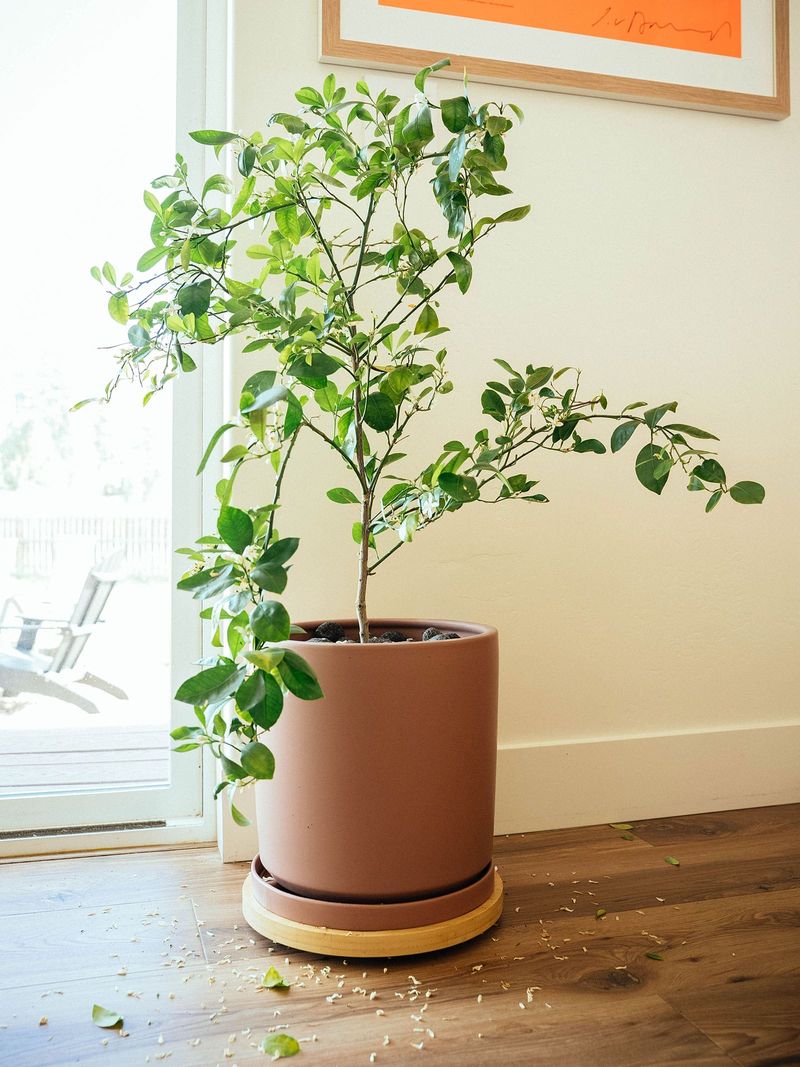
Picture the difference between a sunny patio and the corner of a living room. Even a bright room is usually much dimmer than the outdoors, and a lemon tree that was soaking up full sun can feel that change quickly.
Texas A&M’s citrus fact sheet recommends acclimating light gradually to help prevent excessive leaf drop. That advice points to light as a real factor when a tree is moved abruptly.
Light is not the only thing that shifts. Indoor air is often warmer and drier, and the University of Maryland Extension dwarf citrus guide lists adjustment to different light and humidity levels as a common reason citrus drops leaves indoors.
These are possible contributors, not a verdict. Your tree may be reacting to one change or several at once, and that does not mean you made a mistake.
Treat light, temperature, and humidity as items to check, then look at the other causes before settling on an answer.
Give the tree the brightest suitable indoor spot
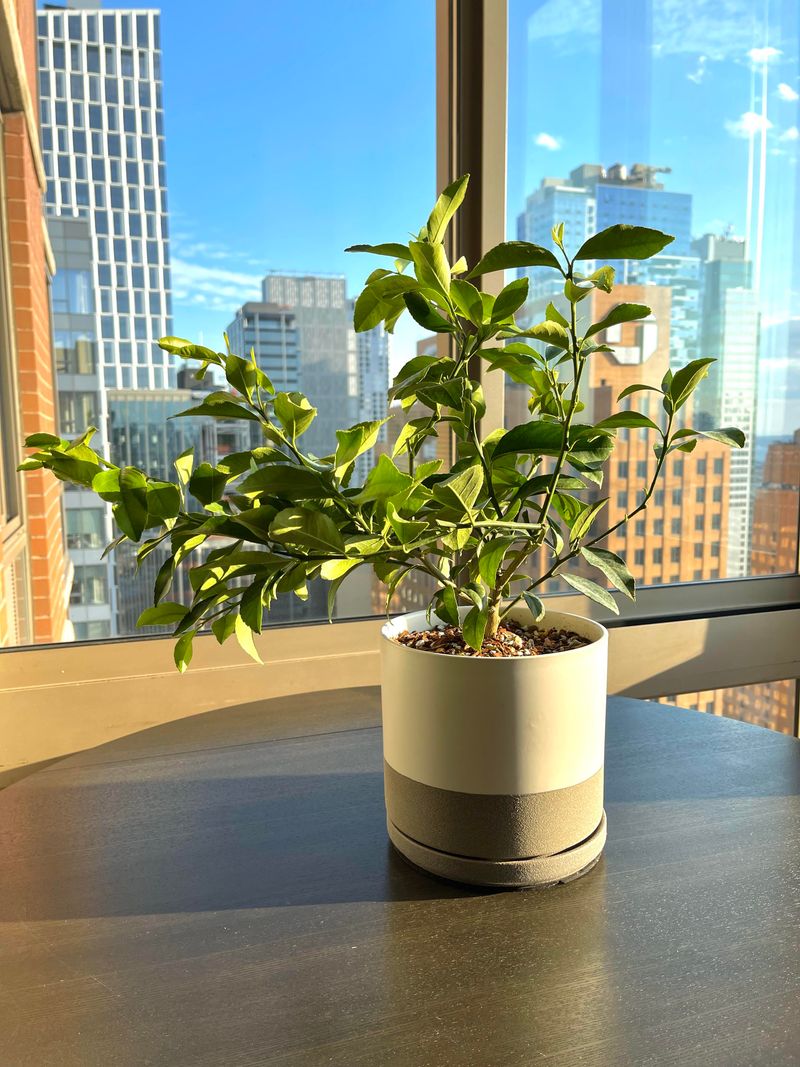
Where you park the pot matters a lot. Iowa State’s guide to growing citrus indoors recommends bright, direct light and says a south- or west-facing window offering 6 to 8 hours of direct light is often needed.
Walk through your home during the day and notice which window gets the longest stretch of sun. Pull back sheers, move furniture that blocks the glass, and keep the tree close to the window without letting leaves press against cold glass.
If no window comes close, supplemental grow lighting may help. The same Iowa State resource points to it when window light is not enough, so a grow light can fill the gap in a dim room.
Every house is different, so use the brightest spot you can offer and watch how the tree responds. Light improvements will not explain every case of leaf drop, which is why the next checks still matter.
Let soil moisture—not a calendar—guide watering
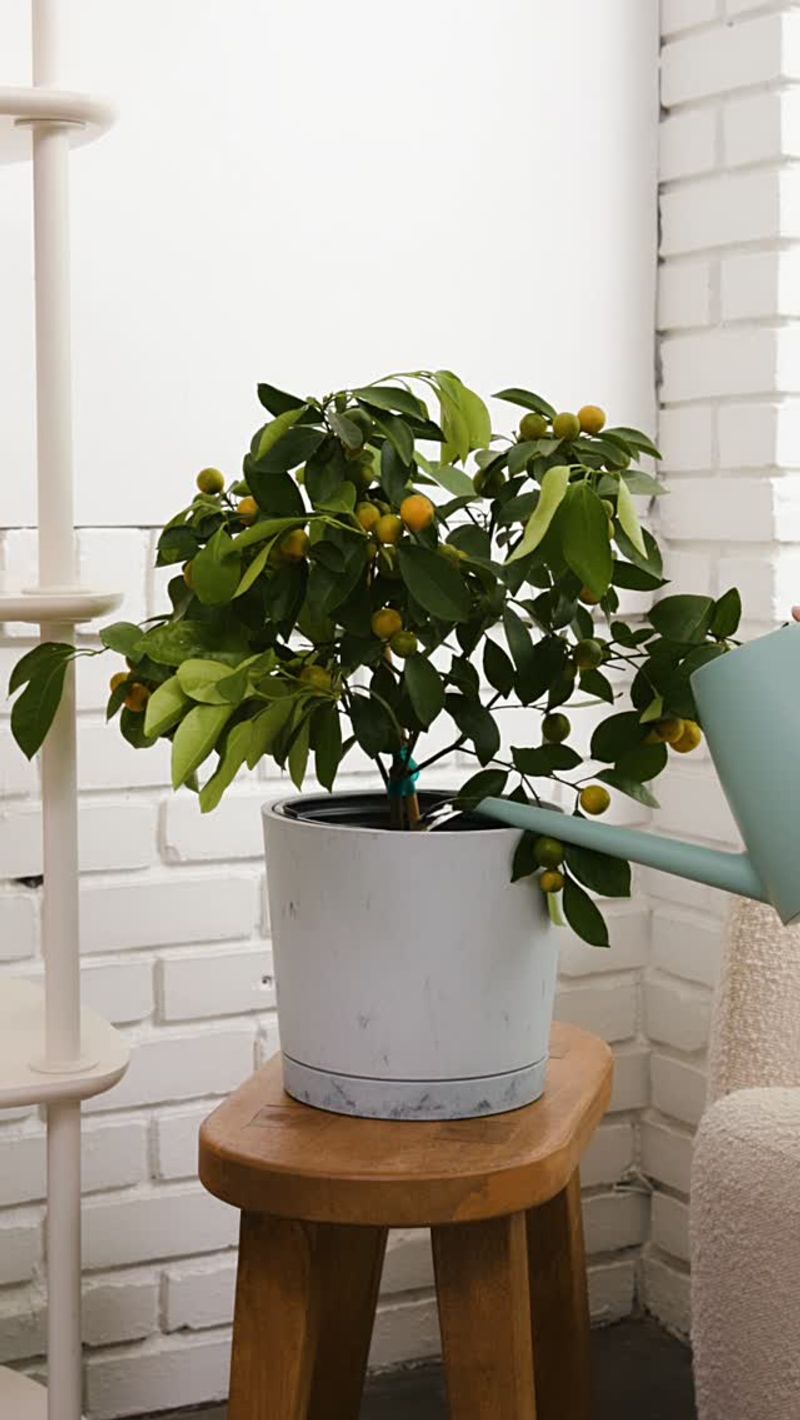
Outdoors, your lemon tree may have needed water often. Indoors, growth usually slows, so it may use less, and keeping up the old routine can leave the pot too wet.
Skip the calendar and check the soil. Texas A&M’s citrus fact sheet advises letting the upper inch of potting mix dry before watering, while University of Maryland Extension suggests checking about 2 inches down.
Pot size, potting mix, and room conditions change how fast soil dries, so treat these depths as guides, not rules.
When the soil is dry at that depth, water thoroughly until it drains from the bottom, then empty the saucer so the pot is not sitting in water. Do not hold back water from a dry pot just because it is winter.
Too much and too little water are both listed as possible causes in an Ask Extension answer, so the soil check helps you rule one in or out.
Check for temperature, humidity, and pest problems
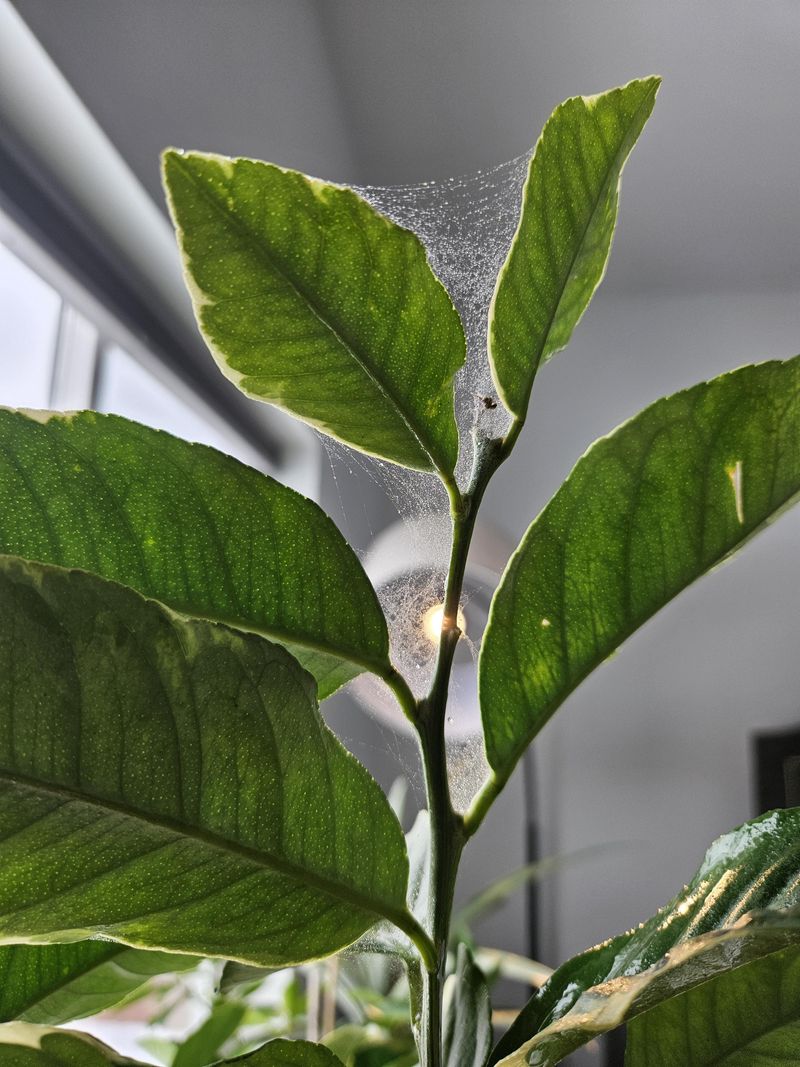
Start with the air around the tree. A heating vent or a drafty door can stress a plant, and Iowa State’s indoor citrus guide notes that temperatures below 50°F can cause citrus leaf loss.
That figure is guidance from one indoor-growing resource, not a universal damage line for every tree.
Dry indoor air is another possibility. The University of Maryland Extension suggests about 50 percent humidity, and an Ask Extension answer mentions a humidifier when indoor air is low.
Think of that as one extension’s recommendation, not a proven minimum that prevents leaf drop.
Next, look closely at leaf undersides and stems. Maryland’s dwarf citrus guide names scale, aphids, and spider mites.
Sticky residue or black sooty mold can go with scale or aphids, while fine stippling and webbing can point to spider mites.
Inspect first and do not treat by routine. If you do choose a product, use one labeled for the intended use and follow its directions.
Make the next move indoors gradual
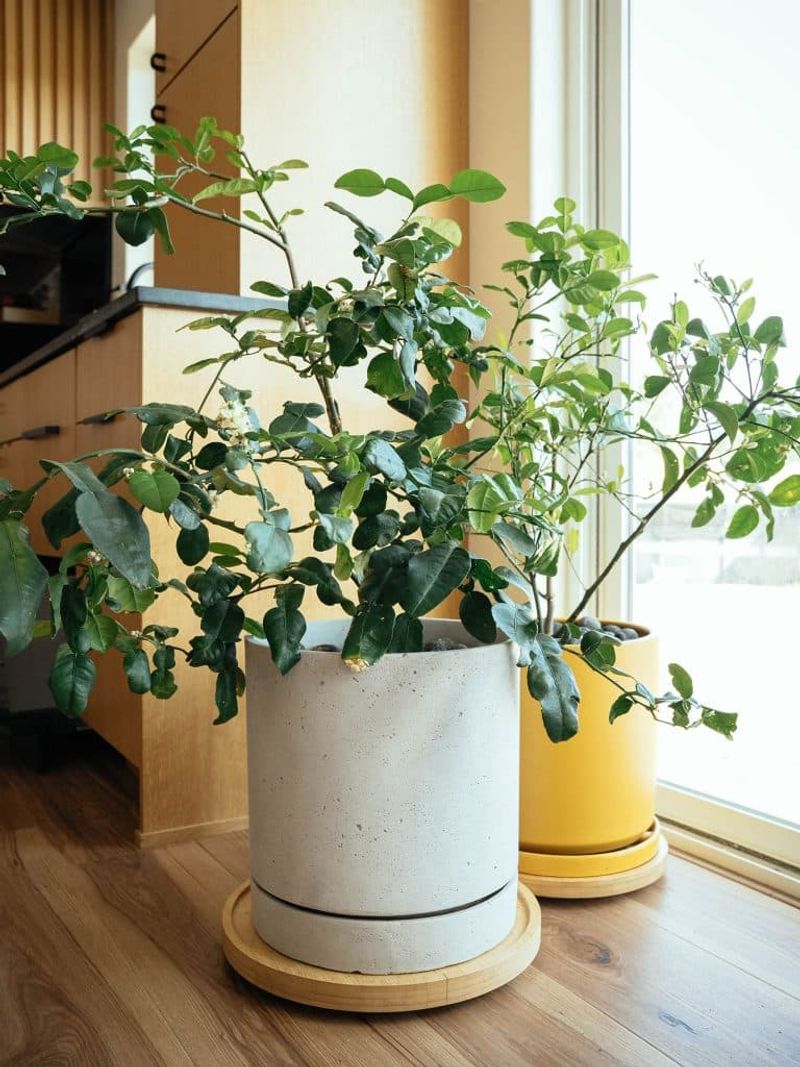
Next fall, give the tree time to adjust before it comes inside. Texas A&M’s citrus fact sheet suggests acclimating a tree that will spend winter indoors over 2 to 4 weeks, for example by gradually shading it before the move.
Iowa State’s indoor citrus guide also suggests placing the tree in shade for about a week first. Either way, the idea is to shrink the gap between bright outdoor sun and a dimmer room.
Timing depends on where you live and what you are growing. Mississippi State’s container citrus publication recommends moving or protecting potted citrus when forecasts hit 28°F or below.
In much of the South, that means a container tree may only need to come in for cold snaps, and an in-ground tree has different needs.
Watch your forecast, not the calendar. A tree that eases in is simply one less thing to worry about.