
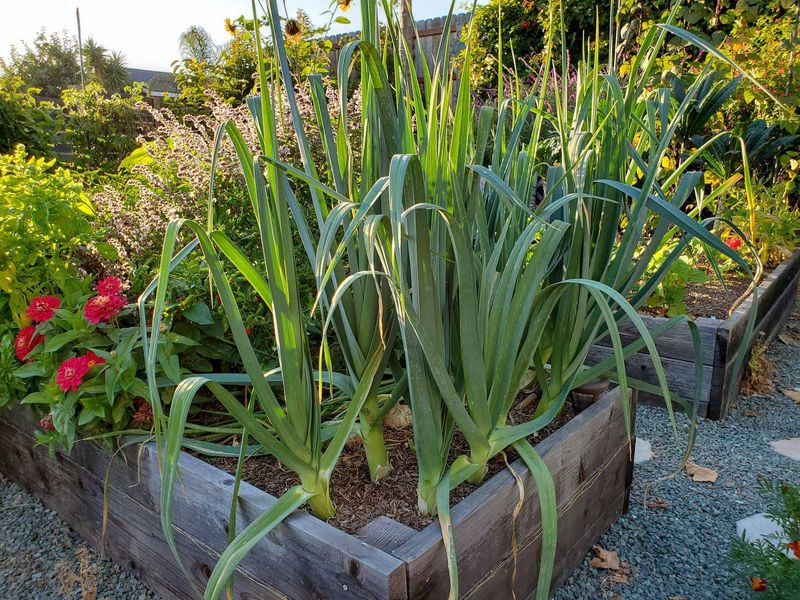
Pull a leek from your fall bed and find it no wider than a pencil, and it is easy to feel like the crop failed. Many gardeners hear that piling soil around the stalk will fatten it up before frost.
Hilling does something useful, but it is not quite that. Here is what it really does, when to do it, and what to check first.
Are pencil-thin leeks still immature?
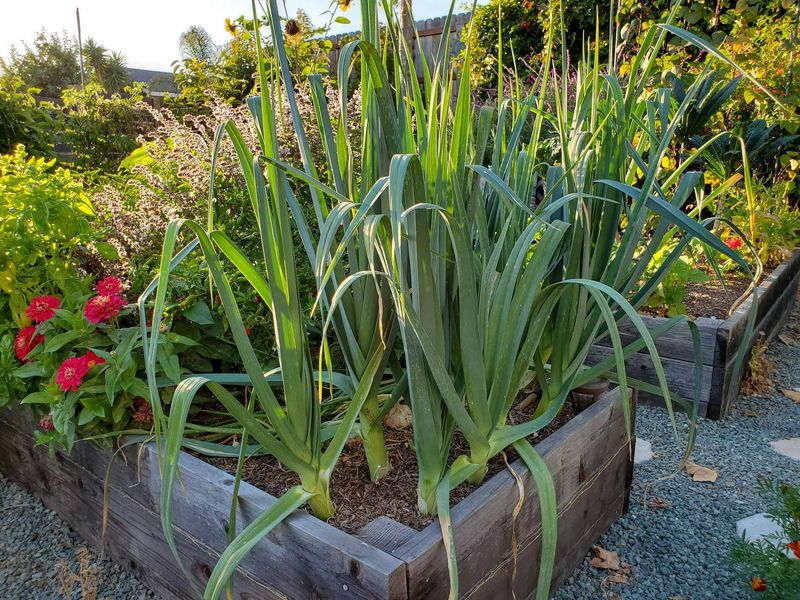
A skinny stalk does not mean the crop is ruined. Leeks are slow growers, and UF/IFAS leek guidance puts maturity at roughly 100 to 130 days, with many plants needing close to 120.
Arkansas Extension says leeks need 120 days or more to reach about 1 to 1.5 inches across, according to its leek fact sheet. Maryland Extension gives a slightly shorter range of 100 to 120 days.
Count back to your transplant or seeding date. If you are well short of those numbers, your leeks may simply be young.
About 1 inch is a common harvest size, but it is a benchmark, not a deadline. Some cultivars run slender, and plenty of cooks happily use smaller leeks.
Hilling blanches the shank; it is not a proven quick fix
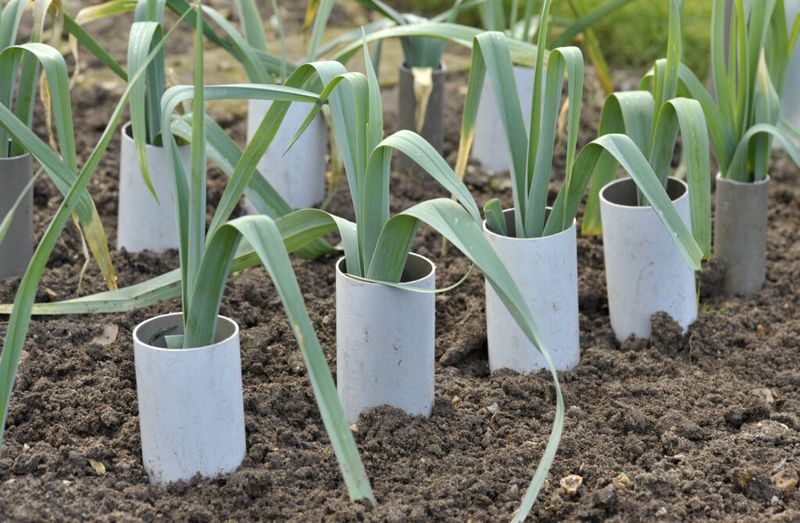
Here is the honest version of the hilling story. Mounding soil around the stem blocks light, and that gives you a longer, whiter, more tender shank.
Arkansas Extension describes blanching as making leeks longer and whiter.
Longer and whiter is not the same as thicker. The guidance reviewed does not show hilling to be a quick way to widen a stalk before frost, so it is better to treat it as an optional blanching step than a rescue for thin plants.
That does not mean it can never affect girth, only that you should not count on it.
Hilling is also not the only route. Maryland Extension notes it makes stems more tender and mild, and says planting transplants in deep holes blanches the base too.
Wait until plants reach pencil-width to mound soil
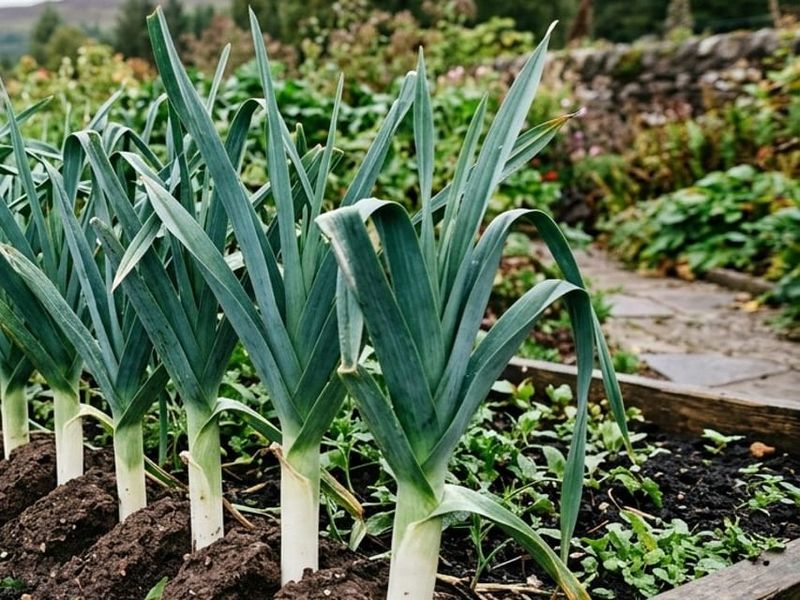
If you want a blanched shank, timing matters. Start when the plants are about pencil-width, as UF/IFAS Gardening Solutions advises, then add soil a little at a time as the leeks grow.
Keep the soil below the point where the leaves fan out, so it does not fall into the center. Use loose, dry soil and brush off any that lands in the leaf folds.
Smaller plants should be left alone. Arkansas Extension warns that banking soil around seedlings smaller than pencil-size can cause rot and plant loss.
One big mound late in the season will not fix thin growth. And if you do not care about a long white shank, you can skip hilling and still grow good leeks.
Check growing conditions before blaming the hill
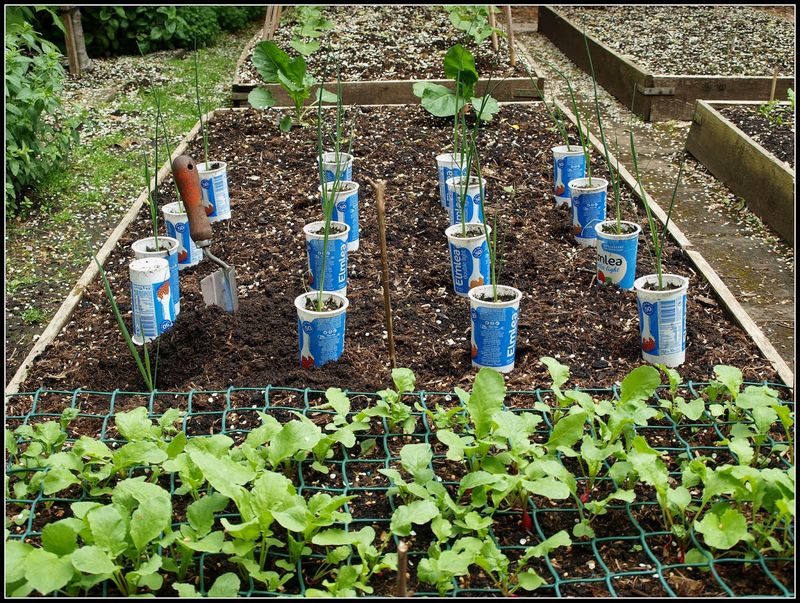
When leeks stay slim, run through a short checklist. Start with age, then cultivar, spacing, and water.
For spacing, UF/IFAS recommends 4 to 6 inches between transplants. Crowded plants compete for light, water, and nutrients and may stay narrow.
Water counts too. UF/IFAS notes leeks are susceptible to water deficit, and Maryland Extension warns that drought stress decreases yield.
In a dry Texas fall or a sandy Florida bed, check that the soil stays evenly moist.
Treat this as diagnosis, not a promise. Fixing one factor now may help the plants going forward, but it will not reliably thicken stalks in a few weeks.
Plan for frost and winter protection by region

Fall timing depends on where you garden. The dates from UF/IFAS are for Florida only: direct seeding from mid-September to mid-November in North Florida and in October in Central and South Florida, with transplants later, November to January in the north and December to January farther south.
Texas is different. Texas A&M AgriLife stresses that fall timing follows regional frost dates and crop cold tolerance, but it gives no leek-specific schedule, so check your local first frost.
Blanching hills and winter protection are separate jobs. Maryland Extension suggests soil and mulch for overwintering, and South Dakota State Extension advises heavy mulch as temperatures near 20°F.
That protects plants; it does not mean they will grow thicker.
UF/IFAS says winter leeks tolerate about 23°F, but hardiness varies by leek type and local conditions.
Choose hilling for the shank you want
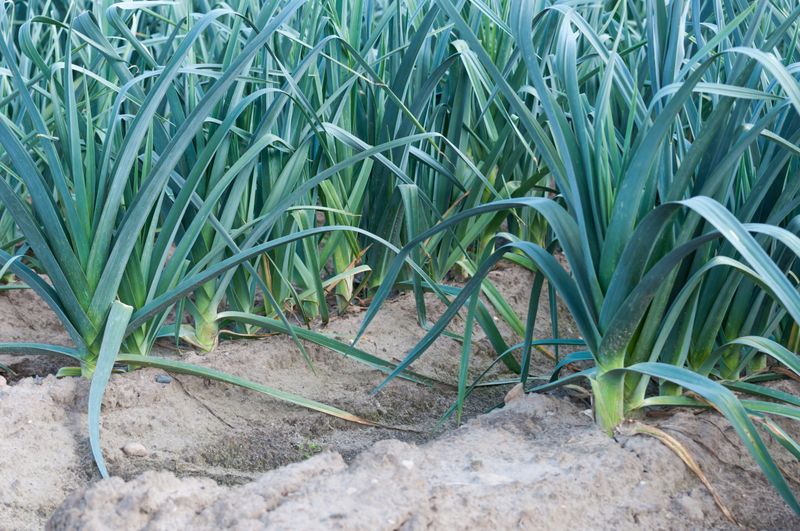
Here is the choice. First check how long your leeks have been growing and whether spacing and water were on target.
If the plants have reached pencil-width and you want a longer, paler shank, mound soil gradually, as Arkansas Extension describes.
If you would rather skip it, Maryland Extension makes clear hilling is not essential. Just do not expect it to rescue thin stalks before frost.
A slim leek still tastes like a leek.