
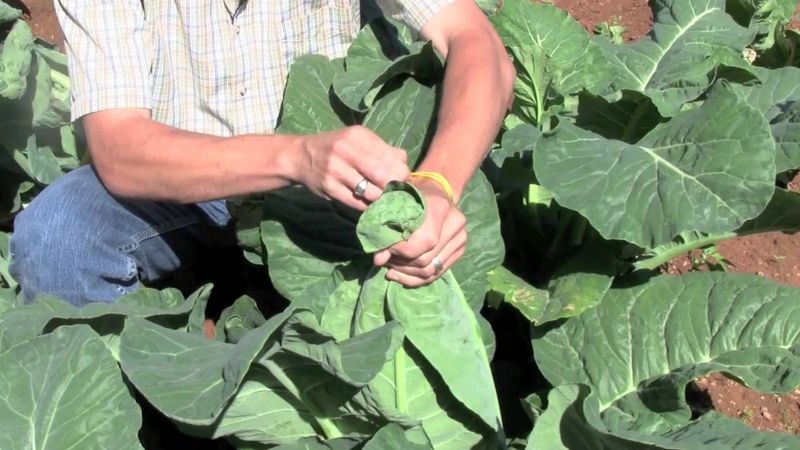
A fall cauliflower head can go from creamy white to yellow or greenish faster than you expect. Sunlight is one common reason, and the plant’s own leaves can help shield the curd.
Tying them over a young head is a simple habit that may keep it paler, but it works only as prevention. Here is when to do it, how to do it, and which problems a tie will never fix.
What leaf tying can—and cannot—prevent
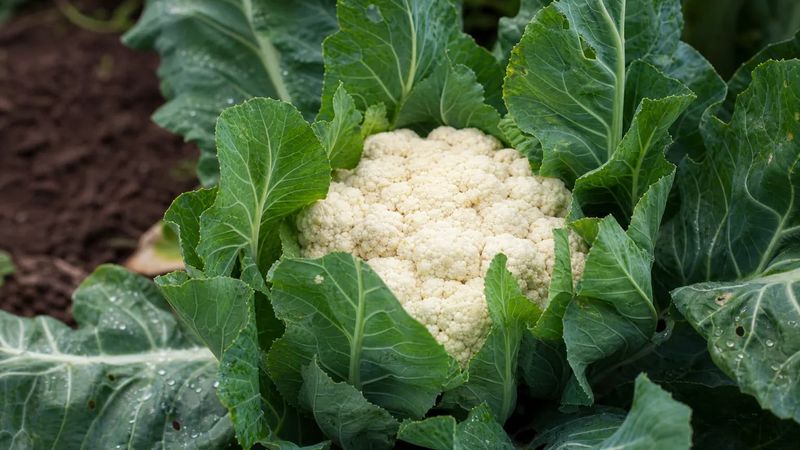
Sunlight can turn a developing white cauliflower curd yellow or green, and UF/IFAS guidance describes covering the head with its own outer leaves to block that light. The practice is called blanching.
It shades a head that is still developing, so the curd has a better chance of staying pale.
Timing matters because a tie works as prevention only. Once a curd has already turned yellow, covering it will not bring the white back.
A tie also cannot repair a head that looks fuzzy, ricey, diseased, or rotting.
It helps to be careful about what you blame, too. Yellowing alone does not prove the sun did it.
Oregon State University lists both sunlight and overmaturity as possible causes of yellow or green curds, and other disorders can discolor heads as well.
Think of leaf tying as a low-cost shield, not a guarantee. It can reduce the chance of sun-related color change, and it gives you a reason to check on each head regularly.
Tie the leaves during early curd development
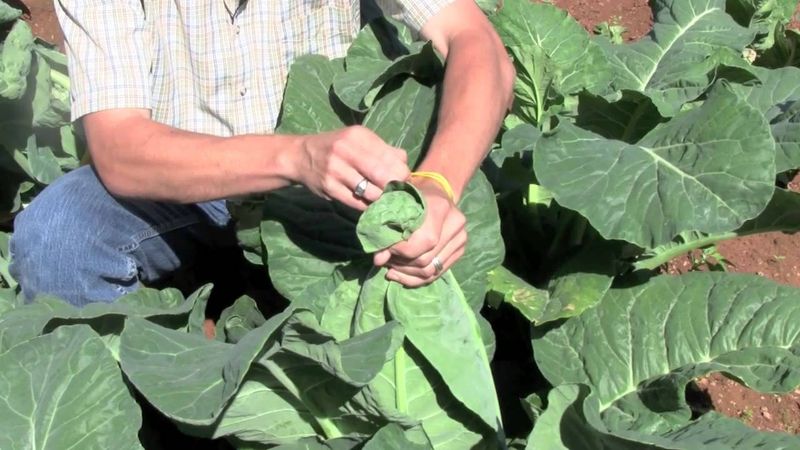
Walk your rows often once small curds begin to show in the center of the plant. The goal is to cover each head before it has had much time in direct light.
Waiting until the head is big and already tinted is too late.
Extension sources give a range rather than one magic size. UF/IFAS suggests tying when the curd is about 3 inches across, while NC State Extension points to 1 to 2 inches.
Oklahoma State University says at least 1 inch.
A practical approach is to treat that whole span as your window. If a head is sitting open to the sun at 1 or 2 inches, covering it then is reasonable.
If the leaves already shade it well, you can keep watching and wait.
Gather the leaves without closing off airflow
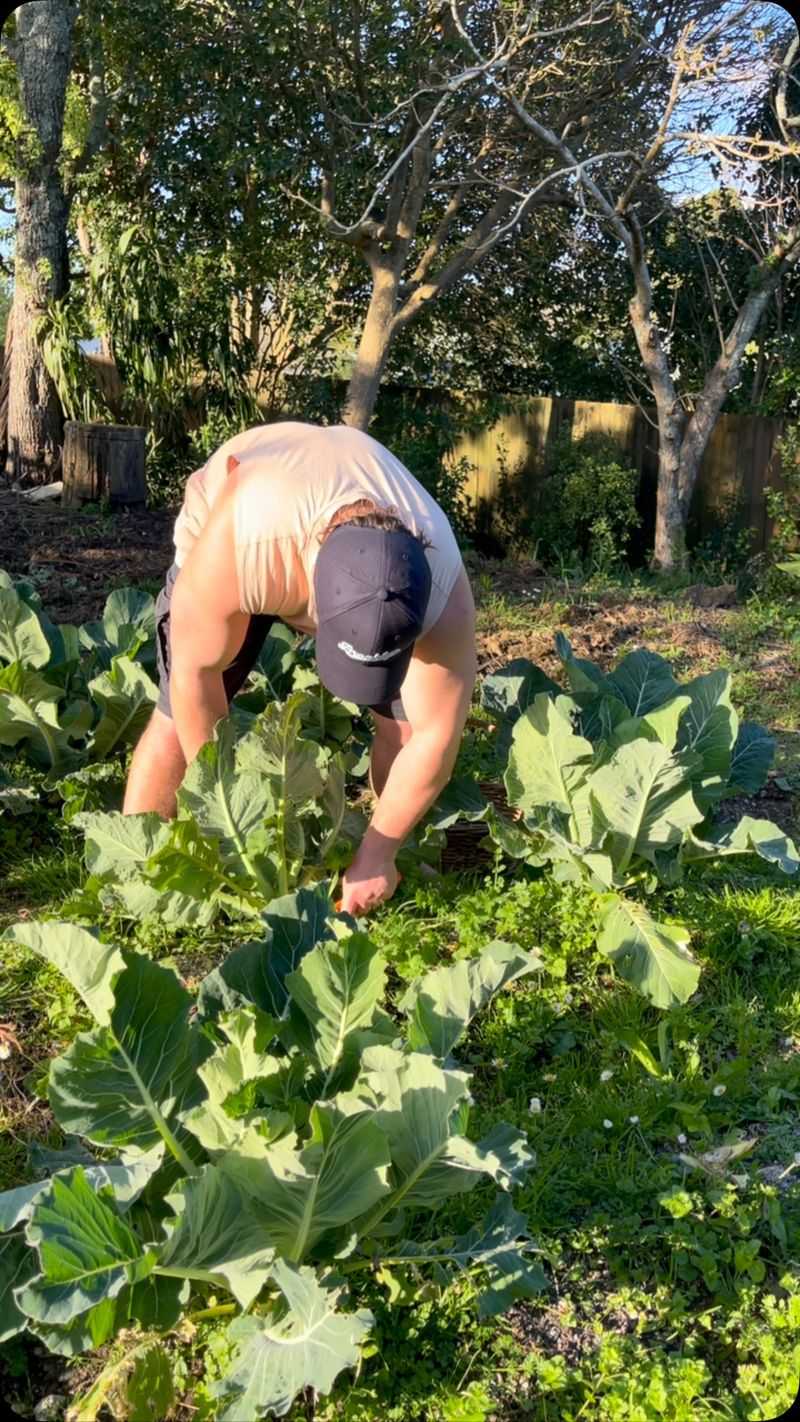
Pick several healthy outer leaves and bring them up over the curd like a loose tent. Hold them with soft twine, raffia, tape, or a rubber band.
Be gentle so you do not tear or crack the leaves, since you want them to keep working for the plant.
The covering should block light, but it should not squeeze the head. UF/IFAS advises securing the leaves loosely rather than wrapping them tight.
Humid or damp fall weather calls for extra care. Oklahoma State University warns that tightly tying leaves around the curd can raise the risk of rot.
Tie the leaf tips together above the head instead, so air can move around the curd.
Peek under the leaves every few days. If you see moisture sitting on the head or soft spots, loosen the tie.
Check whether the variety covers itself
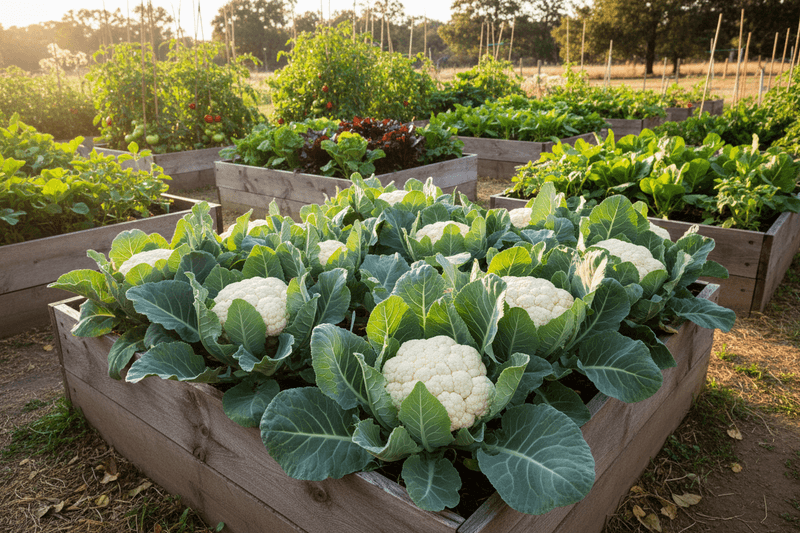
Not every cauliflower needs your help. Some varieties are self-blanching, which means their leaves naturally curl over the developing head and keep the light off.
Variety labels and seed packets can tell you what to expect, but the plant in front of you gives the real answer. UF/IFAS notes that tying is generally unnecessary when leaves cover the curd adequately.
A quick test is to look straight down at the plant around midday. If you can see white curd through gaps, sun can reach it, and a loose tie may help.
If the leaves hide the head fully, leave them alone and keep checking as it grows.
Remember that tying guidance is meant for white varieties that need protection from light. Skip it on plants that do not need it.
Fuzzy or ricey texture needs a different diagnosis
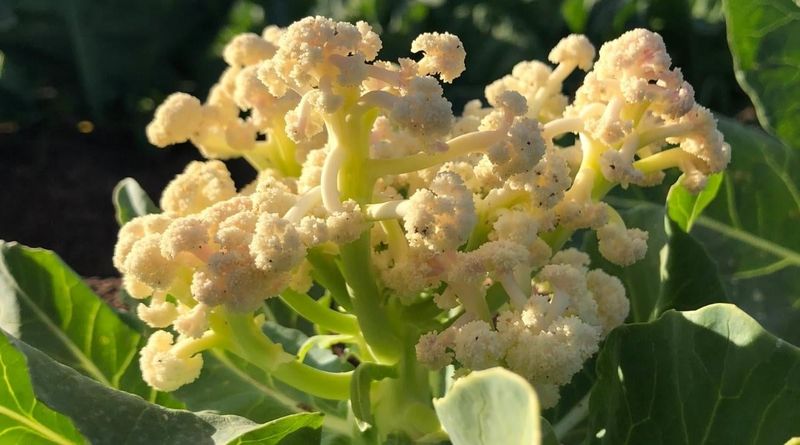
A fuzzy, velvety, or ricey curd is a texture problem, not a sun-color problem. Oklahoma State University connects that look with heat, and overmaturity can also make a curd open up and turn ricey.
A leaf tie will not correct it.
Do not assume it is mold. The USDA cauliflower standard lists fuzziness, riciness, mold, and soft decay as separate defects.
True mold or wet, soft breakdown looks and feels different from a dry, granular surface.
Downy mildew is another separate possibility. NC State Extension describes gray-white spore growth on leaf undersides and gray or brown discoloration on curds.
Check the backs of leaves before you decide.
Tying is not a disease treatment. If you suspect disease or rot, remove the affected head and look to disease guidance rather than shading.
Harvest while the curd is firm and compact
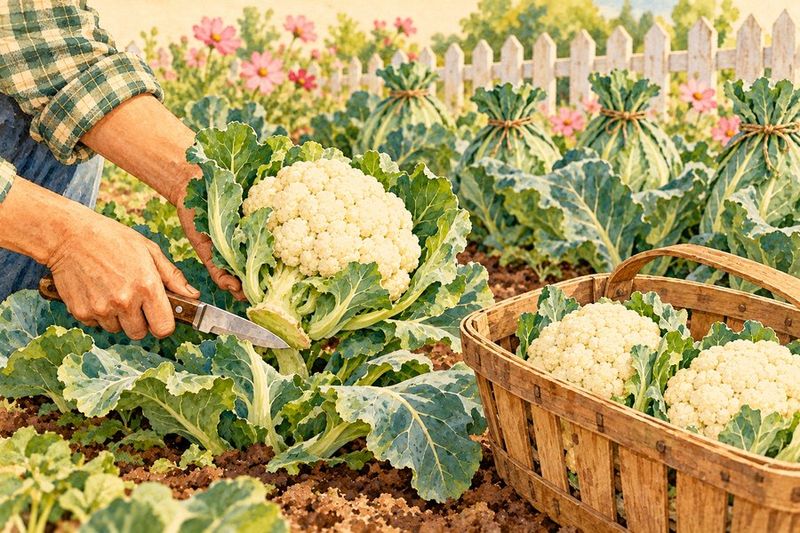
Check each head every few days as it nears full size. A good curd is firm and tight, with a smooth surface.
Once it begins to loosen or looks ricey, quality is already slipping.
Oklahoma State University advises harvesting while the curd is compact. Iowa State Extension offers harvest timing tips too, so use both as a guide for when to cut.
This is where the whole plan comes together. Shading protects a head while it develops, but nothing repairs a defect after it appears.
Cutting at the right moment keeps you from watching a good head decline.
Fall timing differs across the South, so follow a schedule for your own area, since Florida and Texas calendars are not interchangeable. Cover early, check often, and cut on time.