
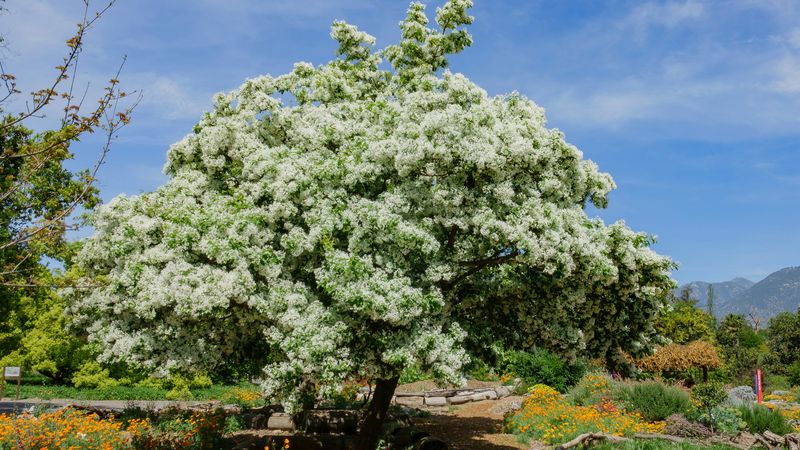
Some of the best chances to add a tree to your yard come when the summer heat finally lets up. In North Carolina, cooler fall weather can give a young tree a calmer stretch to settle in.
One native choice, with fragrant spring blooms and golden fall leaves, deserves a closer look. Here is how to decide if it suits your yard and when to plant it.
American fringetree is a candidate, not a proven champion
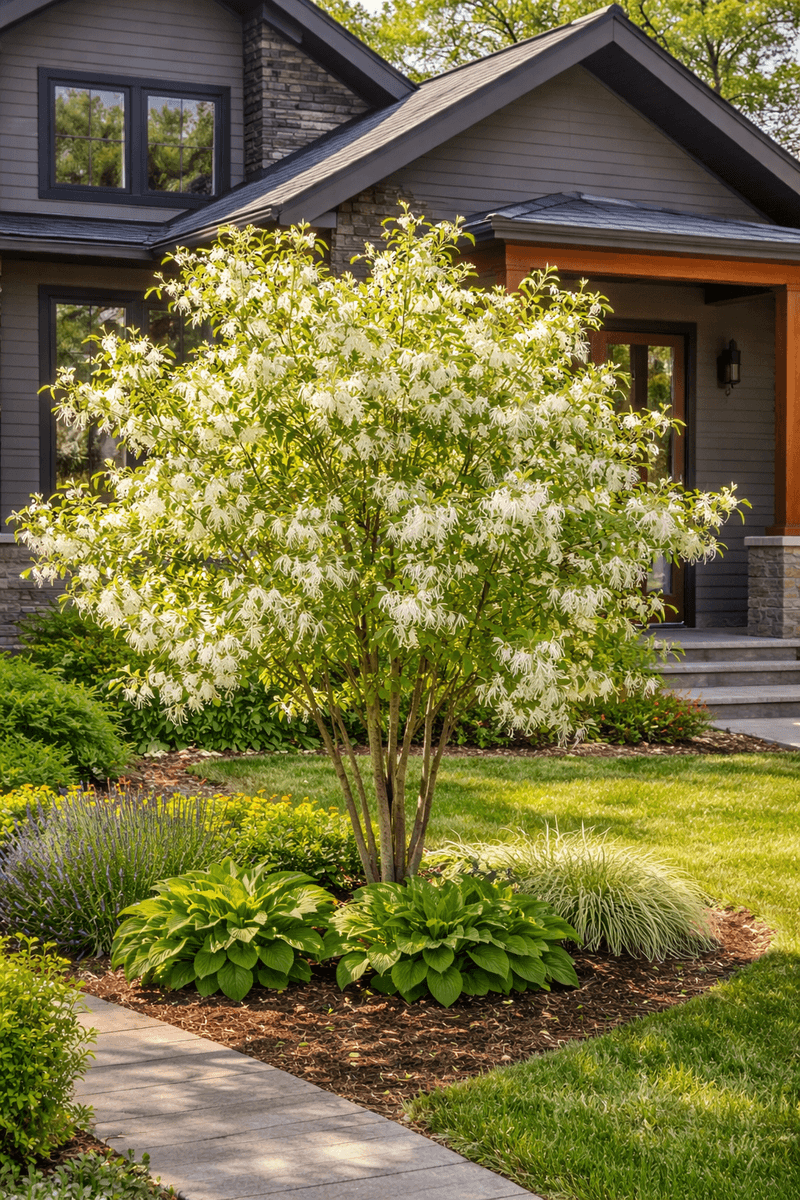
Picture a small tree covered in soft white tassels each spring. That is American fringetree (Chionanthus virginicus), a native that NC State Extension lists as suitable across the coastal, Piedmont, and mountain regions of the state.
It offers fragrant spring flowers, fruit that wildlife eat, and yellow fall color.
Is it the most underrated native tree in North Carolina? That is a matter of opinion, and no survey or side-by-side study has ranked our native trees.
Think of it as one appealing option among several, not a champion.
The same goes for planting season. Nothing in the research shows that fringetree roots better in fall than other trees do.
Fall simply offers conditions that can help many trees get established, and fringetree can benefit from that like its neighbors.
A few cautions help keep expectations realistic. Not every nursery-grown fringetree will produce fruit, so do not count on berries for the birds.
Drought stress can also leave the tree more open to scale insects and borers, which is one more reason to plan for watering.
Listing a tree as suitable for the whole state also does not mean every yard fits it. Your soil, sunlight, and available space matter just as much as the map.
The next sections walk through timing, site, planting, and aftercare so you can decide whether a fringetree belongs in your yard and when to put it in the ground.
Cool-season conditions can support root establishment
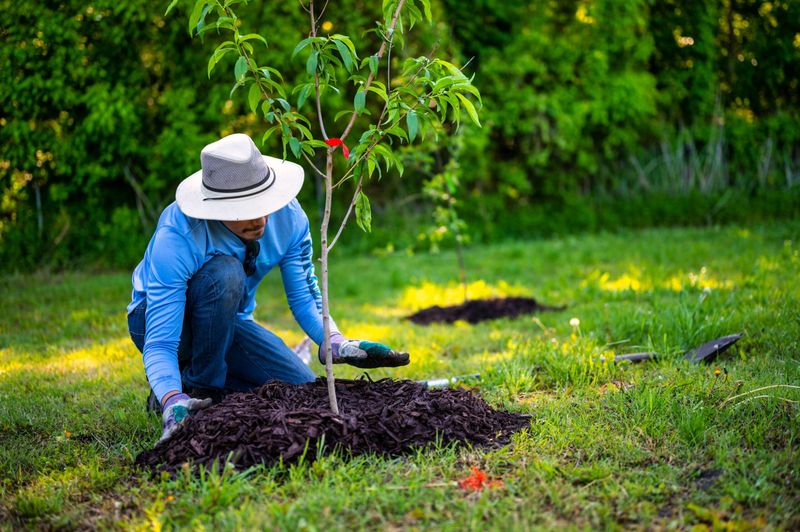
Roots do not take the winter off the way the branches seem to. According to the NC State Extension Gardener Handbook, root growth is most active in cool weather, in fall and again from late winter into early spring.
That is the main reason fall planting gets so much attention.
The same handbook says most container-grown woody plants can be transplanted at any time. They generally do best in late fall or early spring, when they need less watering attention than they would during a stressful stretch of summer.
For a homeowner, the practical meaning is simple. A tree planted in fall may get a few cooler months to start spreading roots before the first hot summer arrives.
That head start can help, but it is a possibility, not a promise.
Fall planting does not guarantee survival, prevent transplant shock, or make a tree drought-proof by next July. It also gives fringetree no special edge over a red maple or a dogwood planted the same week.
You may come across soil temperature numbers of 50 to 55 degrees Fahrenheit for winter root growth. Those figures come from an orchard guide for fruit and nut trees, so skip them as a rule for ornamental trees.
For a landscape tree, use the seasonal guidance above and check the particular plant you bought.
Eastern North Carolina has a local fall planting window
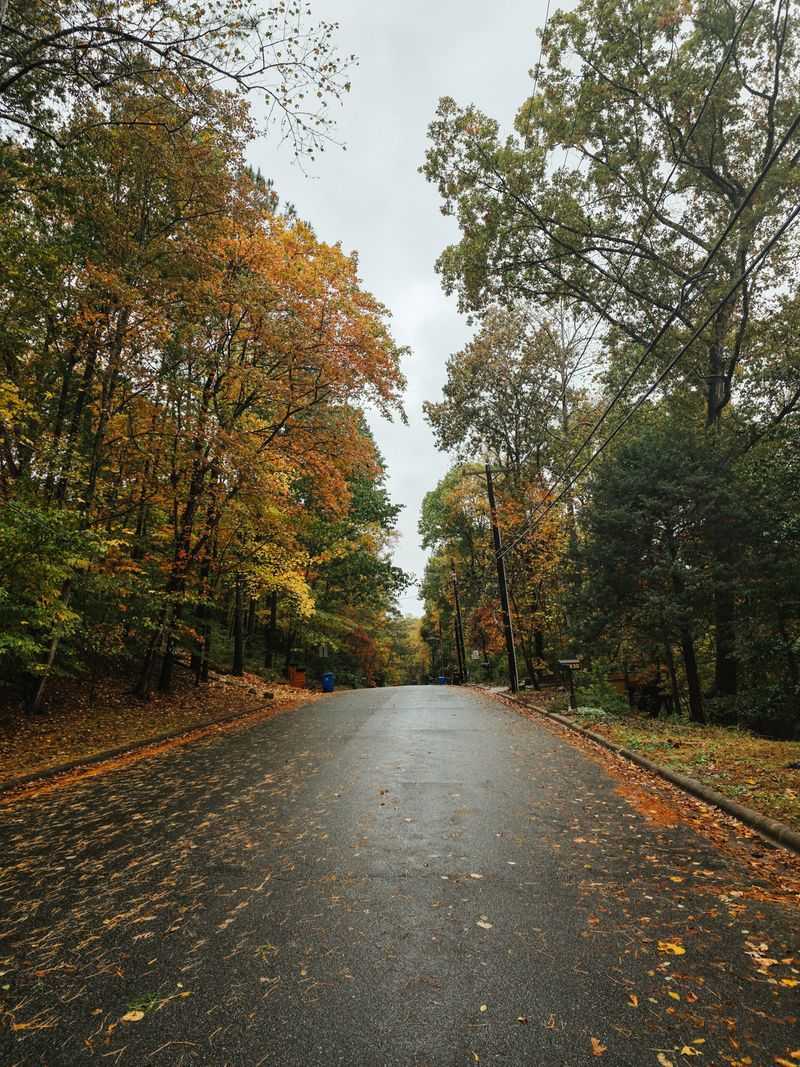
If you garden near the coast, you may have seen a specific date range. An N.C.
Cooperative Extension article recommends planting woody ornamentals in Eastern North Carolina from mid-September through early December. It points to warm soil, cooler air, and seasonal moisture as helpful for root establishment.
That is local guidance, not a statewide calendar. It also does not mean every date inside the window suits every tree.
Compare it with the broader advice from NC State. Its handbook says most container-grown woody plants generally do best when planted in late fall or early spring.
That wording is wider and says nothing about exact dates, which fits a state with such different growing conditions.
Mountain and Piedmont gardeners should be careful here. Cold arrives at different times in Boone, Charlotte, and Wilmington, and the available guidance does not say the Eastern dates carry over unchanged.
Do not borrow mid-September and early December as a rule for your own yard without checking.
A sensible next step is to call your county Cooperative Extension office. Staff can tell you how local conditions and typical first-frost timing fit your plans.
Then match that advice to the kind of nursery stock you buy.
Check whether your yard suits a fringetree
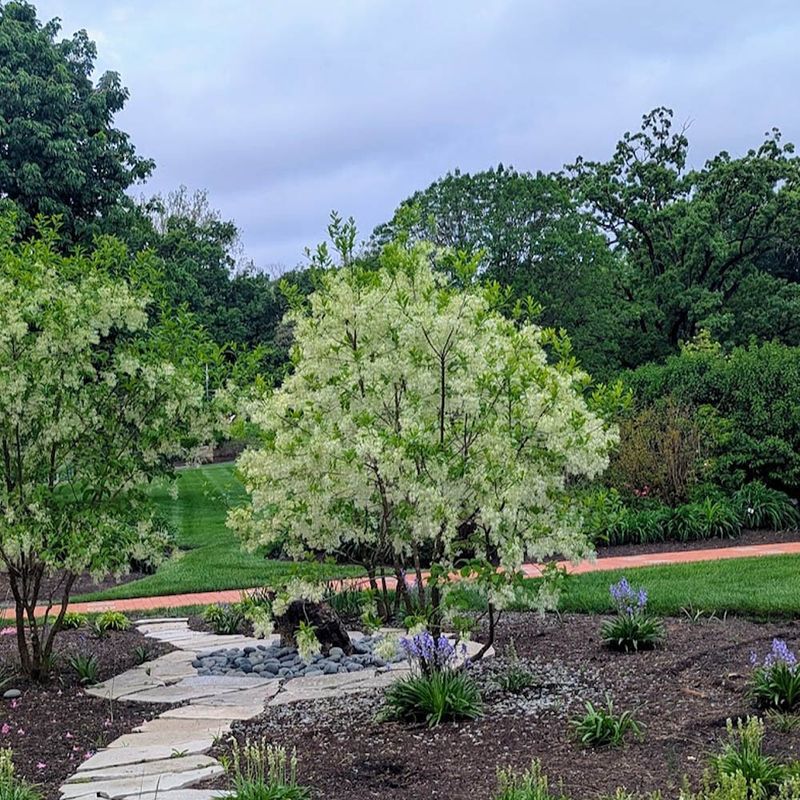
Before you buy anything, walk your yard in the afternoon. Fringetree grows best in full to part sun and in well-drained soil, according to NC State’s plant profile.
A spot that stays soggy after rain or sits in deep shade is a poor match.
A simple test helps. Dig a small hole, fill it with water, and see how quickly it drains.
If water lingers for a long time, look for a higher or better-draining place.
This fits the broader advice in the NC State handbook, which stresses matching plants to the space, soil, and light you actually have. Measure the room overhead and to the sides, and keep the tree clear of wires, walls, and walkways.
Size at purchase matters too. Young fringetrees transplant best, because larger plants resent root disturbance.
A modest container-grown tree is often a better bet than a big, expensive specimen.
If your yard does not fit, that is useful to learn before spending money. Another native that suits your conditions will likely do better than a fringetree forced into the wrong place.
Make room for the root ball without burying the root flare
Start with a phone call. Dial 811 before you dig so buried utility lines can be marked, and do it a few days ahead of planting day.
Then dig wide, not deep. The Eastern North Carolina extension article suggests a hole two to three times the width of the root ball.
Treat that as that source’s recommendation rather than a universal rule.
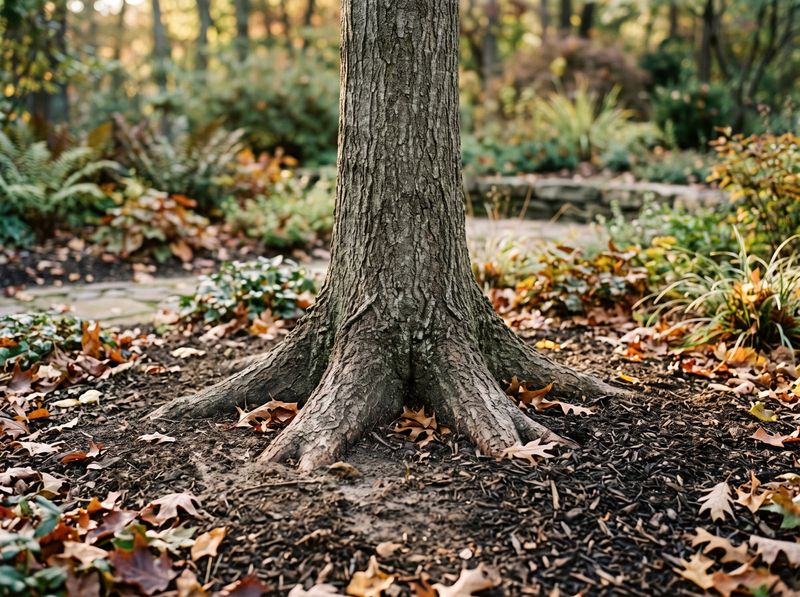
Depth is where many plantings go wrong. Set the tree no deeper than the root flare or the height of the root ball.
The Clemson Cooperative Extension fact sheet warns against planting too deeply.
The root flare is the spot where the trunk widens as it meets the roots. If you cannot see it, brush away a little soil from the top of the root ball to find it.
It should sit at or just above the surrounding ground.
Burying it does not help roots establish. A tree set too low can have trouble getting the oxygen its roots need, so a slightly high root ball is better than a sunken one.
Backfill with the soil you removed, and press it down gently to remove large air pockets.
Keep monitoring moisture after planting
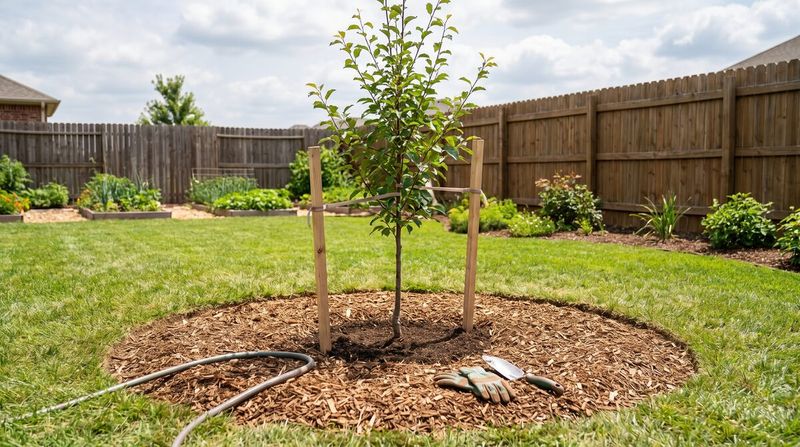
Once the tree is in, water it thoroughly. Soak the whole root zone so moisture reaches below the surface, then keep checking the soil rather than assuming rain will handle it.
Fall planting does not remove the need to watch a new tree. The Eastern North Carolina guidance still calls for attention during dry spells, and that includes warm spells in winter.
There is no single schedule that works for every yard. Rainfall, soil type, and sun exposure all change how fast the ground dries out.
Push a finger a few inches into the soil near the root ball, and water if it feels dry.
Mulch helps hold moisture, but keep it off the trunk. Spread it in a wide ring and leave a small gap around the base so the bark stays dry.
Hold off on fertilizer at planting time. NC State’s Extension Gardener Handbook advises waiting until spring to fertilize fall-planted trees.
Because drought stress can leave fringetree more open to scale and borers, steady moisture checks are worth the few minutes.
Species and nursery stock can change the timing
General fall advice has limits. Not every plant is happiest going in the ground at the same time, and the form it is sold in matters.
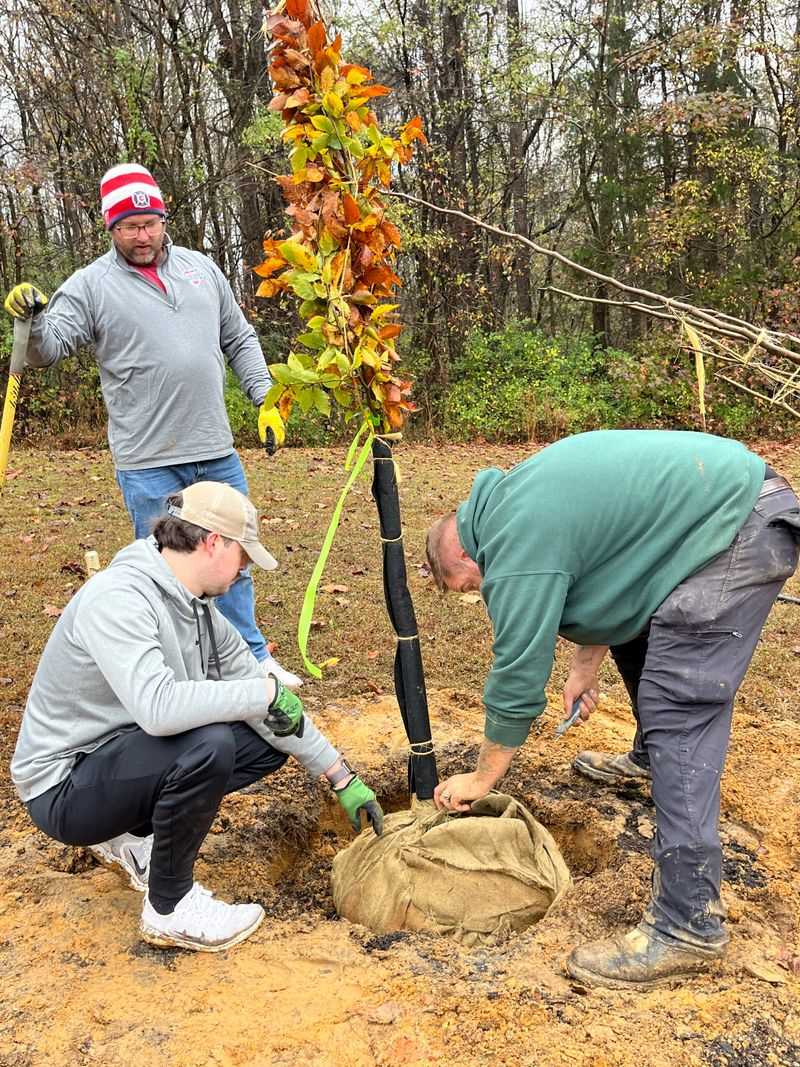
Container-grown, balled-and-burlapped, and bare-root plants can each have different needs.
Extension guidance from Oklahoma State University separates these stock types. It treats them differently when it comes to planting time, so read the tag on your plant.
Species matters as well. The Morton Arboretum notes that some slower-to-establish plants may do better planted in spring.
Evergreens may need an earlier fall planting, since they keep their leaves and lose moisture through them all winter.
These sources come from outside North Carolina, so use them as general cautions, not as a calendar for our state. They do not give dates for each stock type.
So before you apply the Eastern North Carolina window, check what your particular tree needs. Ask the nursery staff how the plant was grown and when they suggest putting it in the ground.
If they or your county extension office point to spring, waiting is a perfectly good choice.
Treat fall as an opportunity, not a guarantee
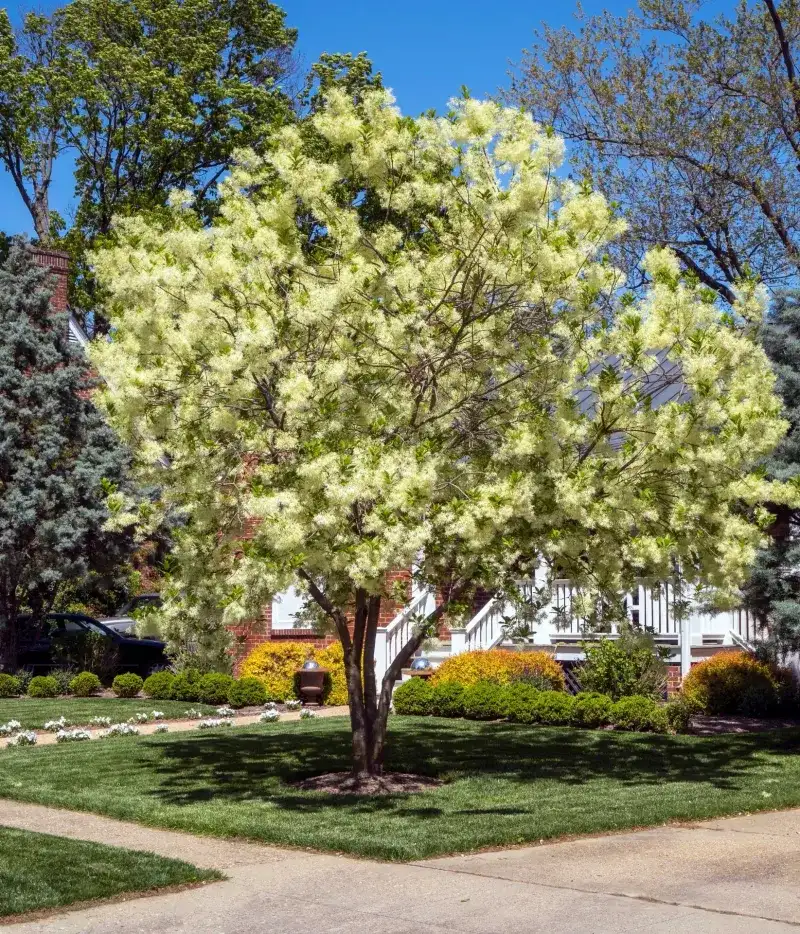
If your yard has sun, drainage, and room, American fringetree is worth a spot on your short list. Follow timing guidance that fits your part of the state, and keep an eye on soil moisture afterward.
Fall can give a tree useful conditions to establish, but it cannot promise that any tree will root best or thrive, a point the NC State handbook keeps in view.
A tree is a long conversation, and the first season is only the opening line.