
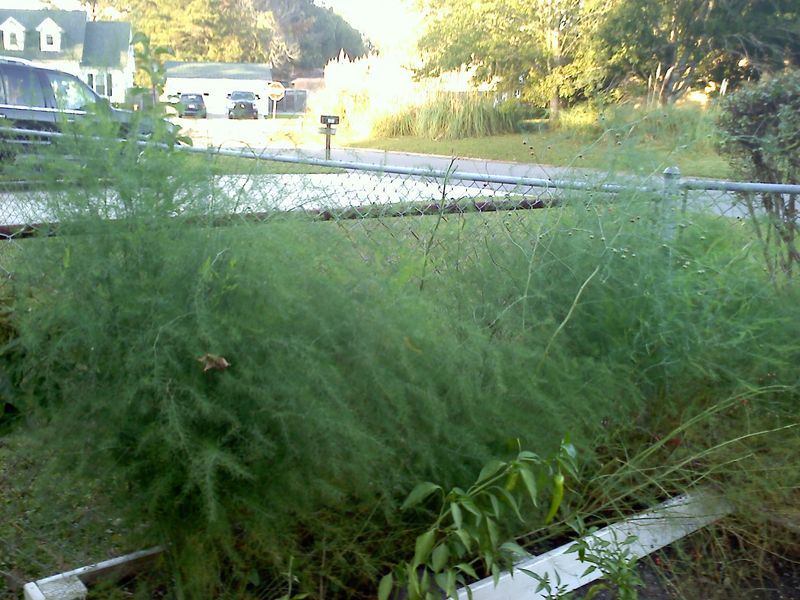
Those tall, feathery asparagus tops start to fade just when the rest of the garden is winding down. It is tempting to grab the clippers and tidy up right away.
But the timing of that cleanup affects how well your plants rest and recharge for spring. Here is how to read the ferns, pick a time that fits the South, and cut them back safely.
Green ferns help replenish the plant’s reserves
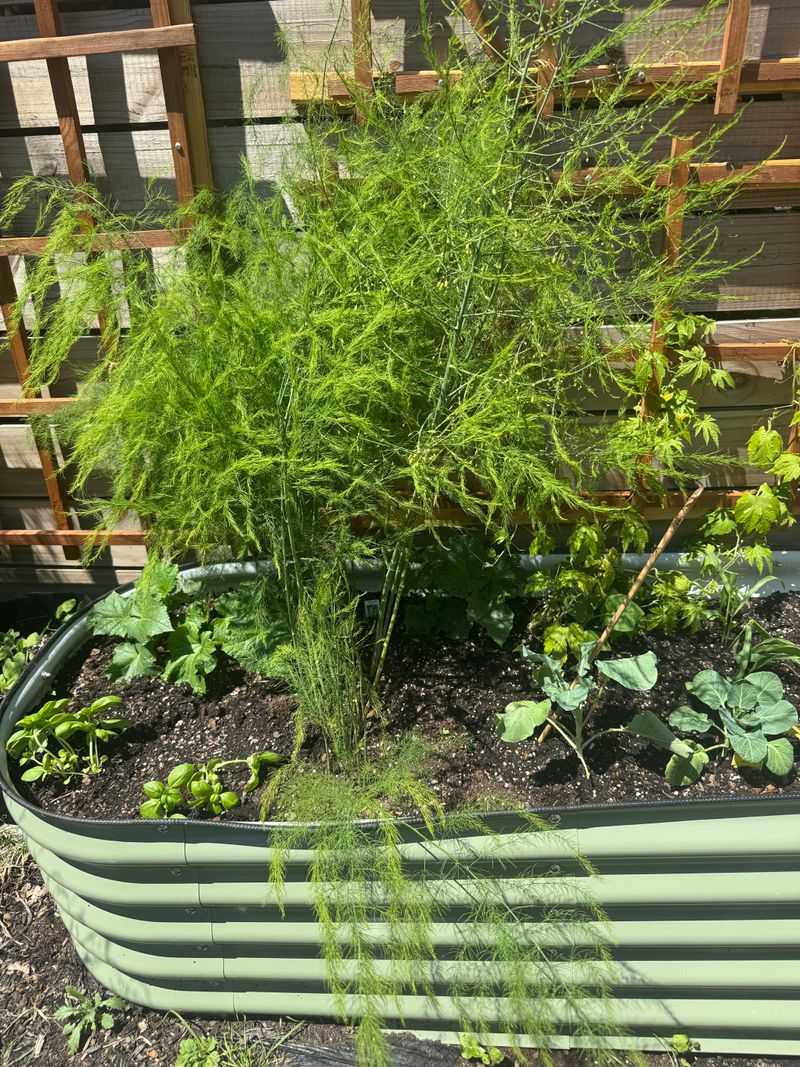
Those feathery stalks are not just decoration. Once spring harvest ends, edible asparagus (Asparagus officinalis) lets its spears grow into ferns, and the ferns act like solar panels.
As long as they stay green, they keep photosynthesizing, and Missouri Extension explains that the food they make is stored in the crown and roots to support the following season’s spears.
That is why cutting healthy green tops early can cost the plant. Fewer green days means less time to build up stored energy.
Cutting early just to make the bed look neat reduces the plant’s chance to restock, and University of New Hampshire Extension likewise advises leaving the ferns to grow.
One quick clarification: this advice is for the edible vegetable. Plants sold as asparagus fern, such as ornamental houseplants and landscape species, are different plants with different needs, and they are not the crop covered here.
Leaving ferns in place protects the plant’s opportunity to build reserves. It is not a promise of bigger or thicker spears, but it gives your bed its best footing.
Wait for the plant, not a fixed date
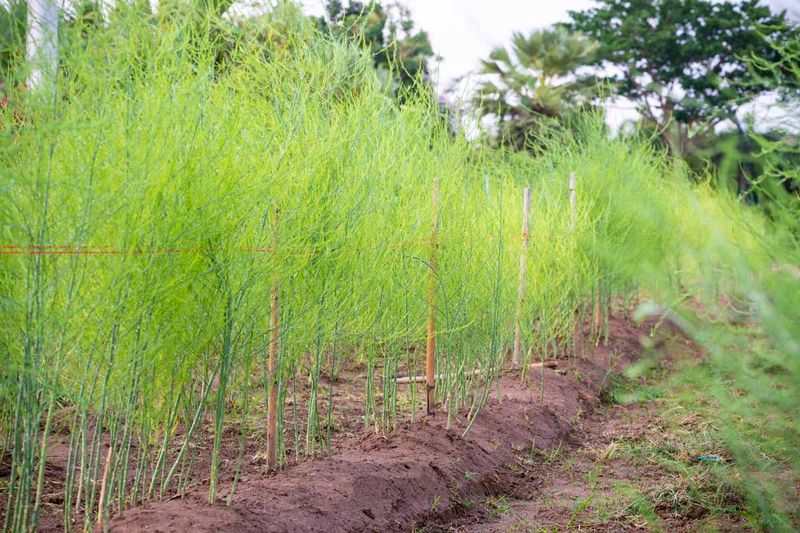
Your best cue is the plant itself. Hold off until healthy ferns are fully yellow or brown, not just starting to fade at the edges.
University of Minnesota Extension notes that the ferns move carbon and nutrients down to the roots as they die back, so a half-yellow fern is still working.
Calendar dates vary a lot across the South. Texas A&M AgriLife says that in southern Texas, where a freeze may not kill the ferns, gardeners can remove them in late November once they turn yellow.
Elsewhere in Texas, it suggests cutting after the first hard frost or freeze. Treat those as regional examples, not rules for every yard.
You also have some flexibility. Fully brown tops can come off in late fall or late winter, and Clemson Extension recommends cutting brown foliage in late winter.
The one firm deadline is to finish before new spears start poking up.
Cut the dead tops without nicking the crown
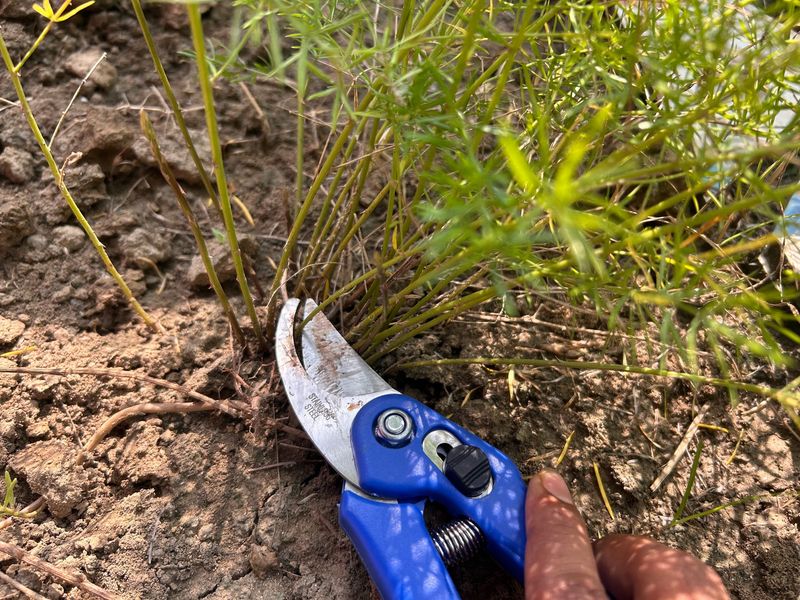
Once the tops are fully dead, grab sharp pruners, hedge shears, or even a mower set high for a large patch. Cut the stalks low, close to the ground.
The goal is to clear the old growth without hurting what is underneath.
Clemson Extension advises leaving short stubs rather than slicing at soil level. Those stubs give you a safety margin.
Low does not mean digging in, scraping the soil, or cutting into the crown, the thick knot of roots and buds that makes next year’s spears.
Purdue Extension also describes cutting or mowing the old tops low as part of routine bed care.
Work on a dry day so stalks cut cleanly, and take your time near the base of each clump. If a few stalks are still green, leave them for now and come back later.
A little patience is easier on the crowns than a rushed trim.
Remove debris when pests or disease have been a problem
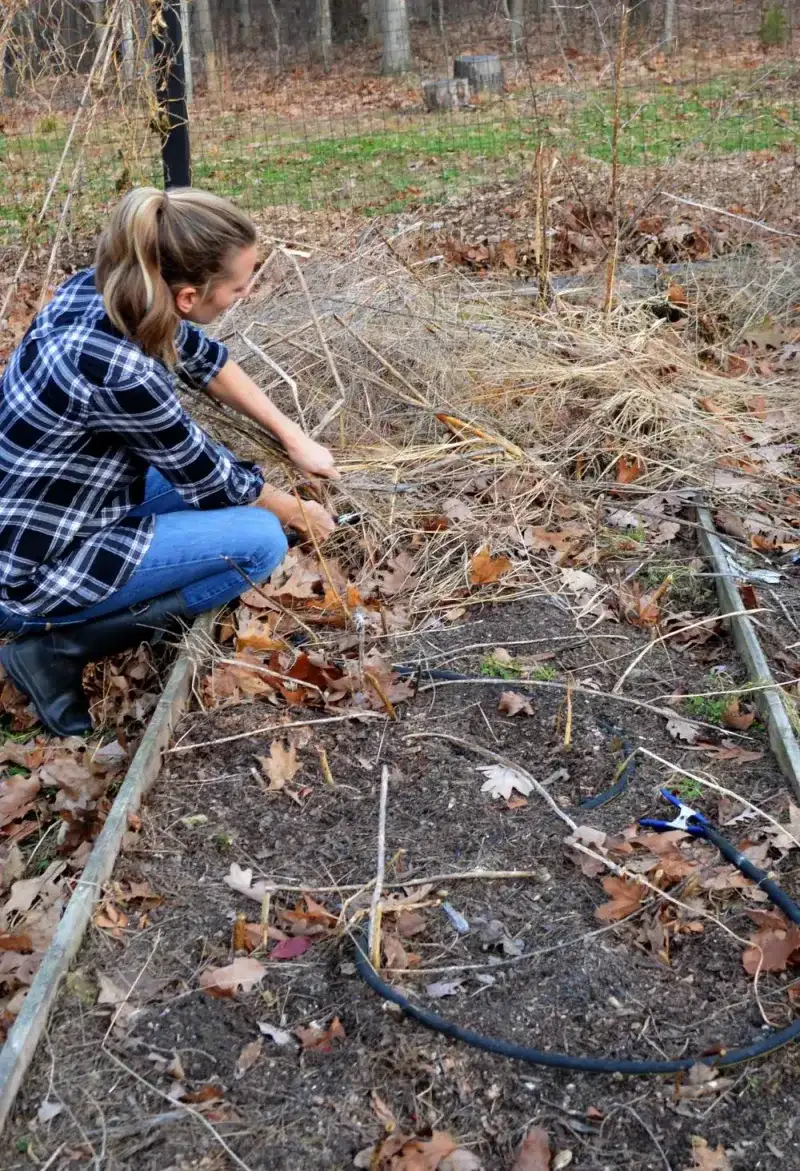
Cleanup does not end with the clippers. If aphids, beetles, spots, or rust troubled your asparagus this season, rake up the cut tops and carry them away from the bed.
Old foliage can shelter insects and disease over winter, so clearing it out gives problems fewer places to hide, as University of Maine Extension points out.
Dispose of the debris away from the planting. Bagging it for trash pickup or hauling it well off to a spot away from your vegetable garden are both options.
University of Minnesota Extension also suggests removing old tops from the bed where pests or disease have been an issue.
Removal can reduce risk, though it will not guarantee a trouble-free year.
If your plants stayed clean and healthy all season, you have more room to choose. Not every gardener needs to treat healthy debris the same way, and some may be comfortable using clean material elsewhere.
When in doubt about last season’s problems, play it safe and haul the tops away.
Is the browning seasonal—or a warning?
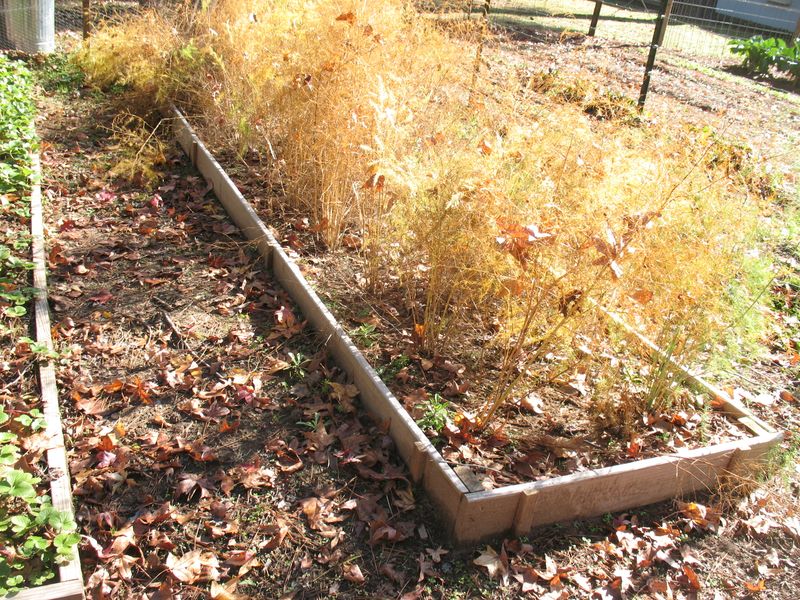
Not all brown ferns mean the same thing. End-of-season yellowing arrives gradually, when the growing season is winding down.
Browning that shows up unusually early, while neighbors in the garden are still lush, deserves a closer look.
Check the stalks and branches. Spots, lesions, or a pattern of dieback spreading through the patch can point to trouble, and Oklahoma State Extension describes several asparagus diseases that cause these symptoms.
Insects can also damage ferns, as covered in asparagus pest management guidance.
Early browning is not automatically normal dormancy. University of Maine Extension treats premature browning as something to investigate.
Color alone cannot tell you the cause, so avoid guessing at a disease or reaching for a spray. Take photos, note when it started, and contact your local Extension office if the cause is unclear.
They can help you match the symptoms to what is common in your area.
Protecting reserves cannot promise thicker spears
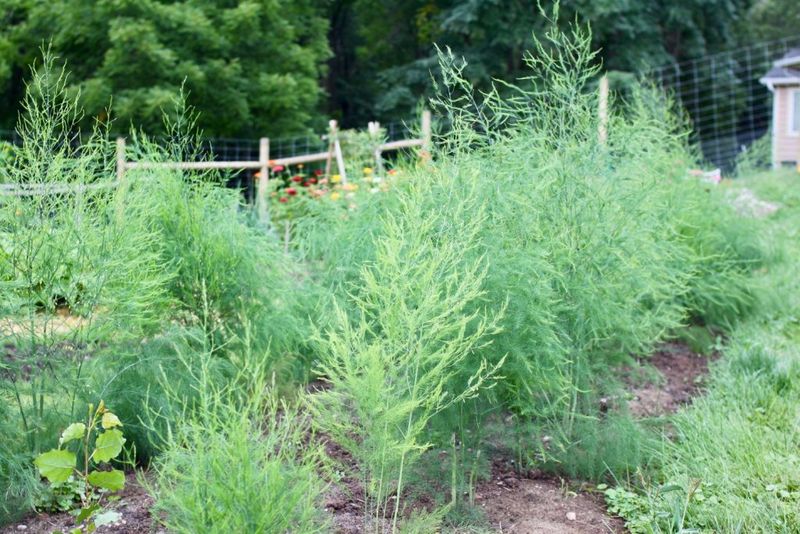
Here is the honest part. Letting healthy ferns die back naturally protects the plant’s reserves, but fall cleanup alone cannot guarantee more or thicker spears.
Yield also depends on fern health, harvest length, water, weeds, disease, and growing conditions, as Oklahoma State Extension outlines.
Climate matters too. In Florida, UF/IFAS says the warm, wet conditions often fail to give asparagus the dormant period it needs for substantial spear production.
Texas varies as well, and Texas A&M says asparagus suits cooler North and West Texas best and can struggle where winters are mild and summers are long and hot.
So wait for fully yellow or brown tops, then clean them up before new spears emerge. Treat it as good care, not a magic trick.
A rested crown gets its chance, and the rest is up to the season.