
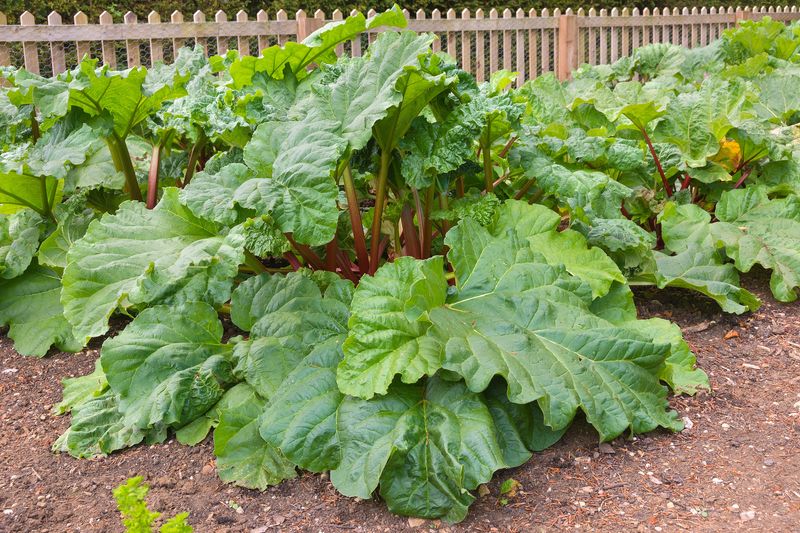
Those torn, spotted, and chewed-up rhubarb leaves can make a gardener want to grab the shears right now. But the plant may still be working hard underground.
Knowing what to look for can keep you from cutting back too soon. Here is how to read your rhubarb’s condition and decide what to do.
Ragged leaves do not always mean the plant is failing
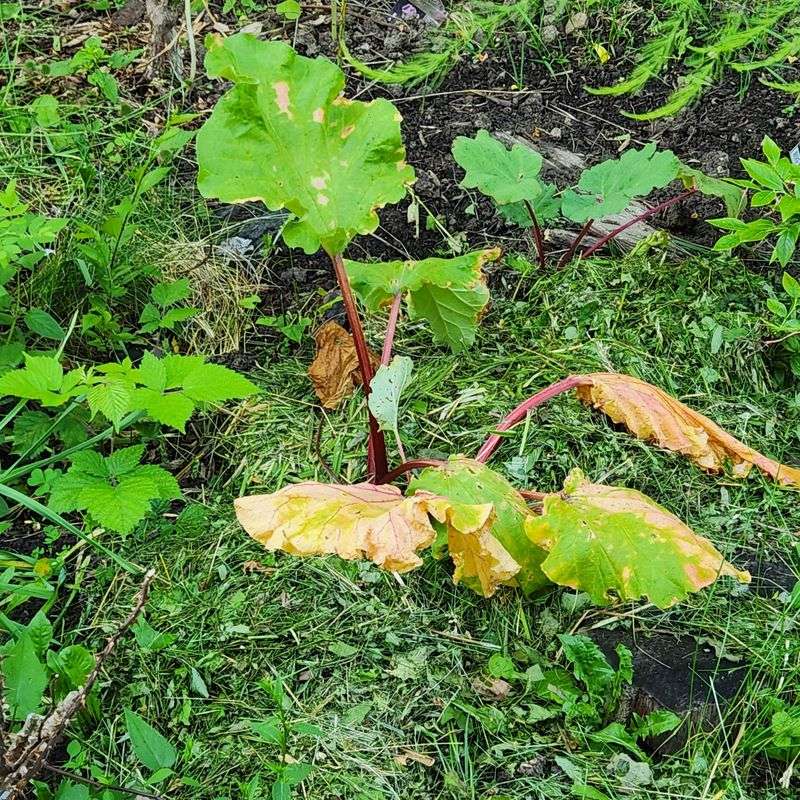
A rhubarb patch that looks beaten up in autumn can still be doing its job. Torn edges, small holes, and some yellowing at the margins are common as the season winds down, and ragged is not a diagnosis.
What matters is whether the leaf is still green and firm.
Healthy but battered leaves keep working, so check the plant’s condition before you reach for the shears. Press a leaf gently.
If it feels sturdy and the stalk is upright, the foliage is likely still functioning. Leaves that have gone brown, dried, or collapsed are a different story, and Iowa State guidance on cutting back rhubarb ties removal to that kind of decline.
Also look for possible disease symptoms, such as spreading spots or soft, rotting tissue. University of Minnesota Extension covers rhubarb problems in home gardens.
Advice to keep leaves applies to healthy foliage, not to leaves you have confirmed are diseased.
Wait until the foliage dies, not merely until fall arrives
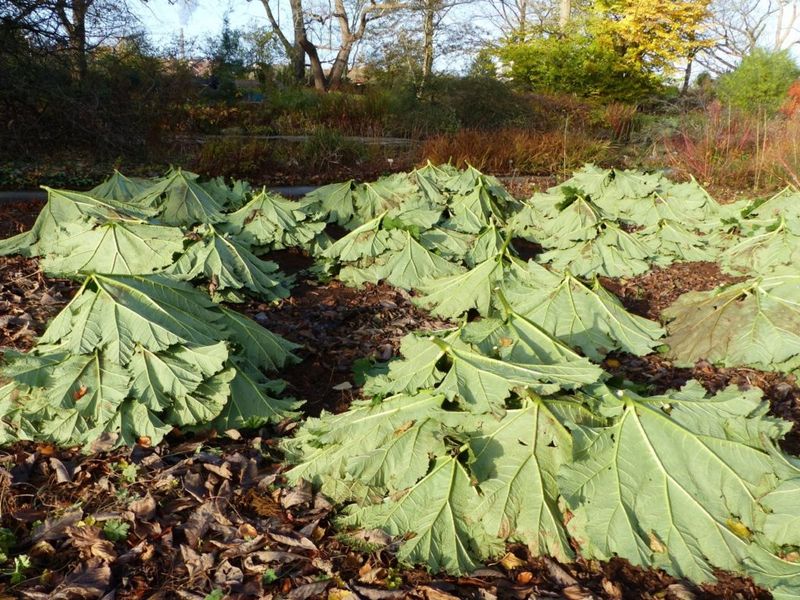
The calendar is a poor guide here. If the leaves are still green and working, leave them.
Once they have died or turned brown, it is time to clear them.
Sources phrase this a little differently. Iowa State advises waiting until a hard freeze destroys the foliage and stalks, while Washington State University Extension says to remove leaves once they have turned brown.
A good working rule is to wait until the foliage has actually died.
A first light frost is not the same as a hard freeze. Rhubarb can tolerate temperatures in the upper 20s or low 30s, and Iowa State notes that serious damage usually takes a hard freeze in the mid-20s or lower.
If leaves shrug off a chilly night and stay green, they can stay on the plant.
Healthy leaves help the plant build reserves
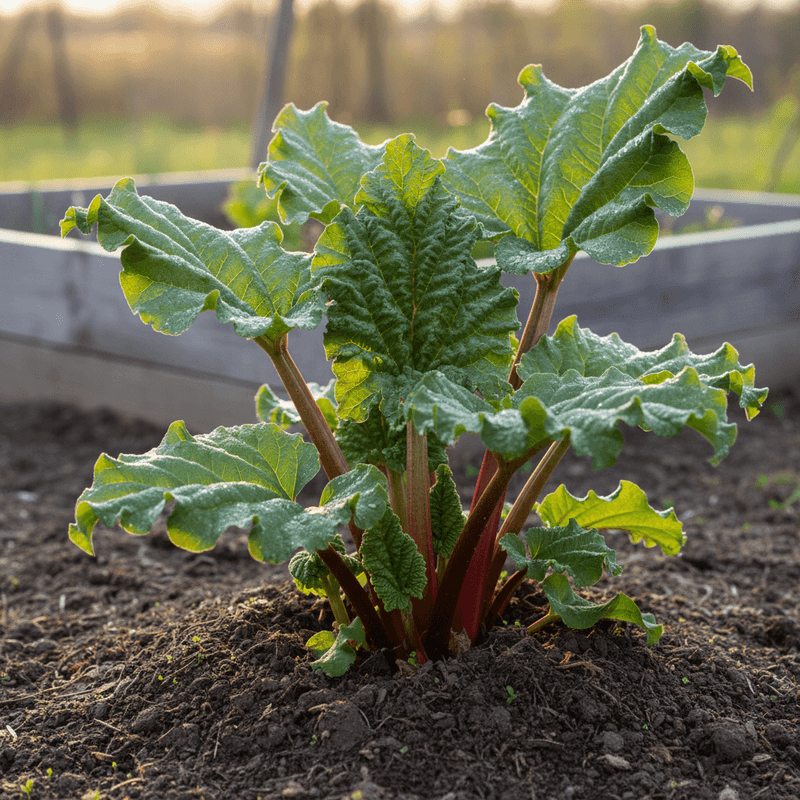
Rhubarb leaves are the plant’s food factories. As long as they stay healthy, they keep making sugars that the plant moves down and stores in its roots.
That stored energy helps fuel growth later on.
This is the reason behind the advice to leave functioning foliage in place. Purdue Extension’s rhubarb publication and Iowa State both point to healthy leaves as a way for the plant to build up reserves.
Here is the limit of that advice. Sources do not show that waiting until frost will make next spring’s stalks thicker.
Stalk size depends on other things too. Think of leaving healthy leaves as giving the plant a fair chance, not as a guarantee.
Clear dead growth carefully and treat damaged stalks cautiously
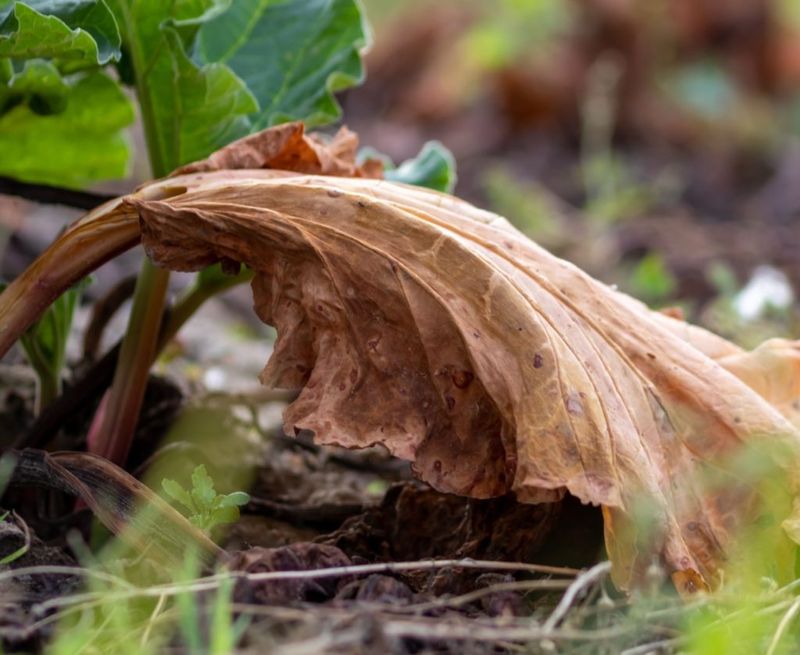
Once the foliage has died, pull or cut away the dead leaves and stalks. Work gently and keep tools away from the crown, the knobby center where new buds form.
A nicked crown can invite trouble in spring.
If you mulch for winter, spread it around the crowns rather than on top of them, as Purdue Extension describes. Follow your local extension advice for your area.
Cleanup of dead material also removes a spot where problems can linger. Iowa State recommends clearing it after the plant dies back.
Food safety comes up every fall. Oregon State Extension says oxalic acid can move into stalks after leaf damage, while Iowa State calls that a common perception.
The practical step is the same either way: discard stalks that look blackened, soft, or limp. Never eat rhubarb leaves.
Thin stalks can have causes beyond fall cleanup
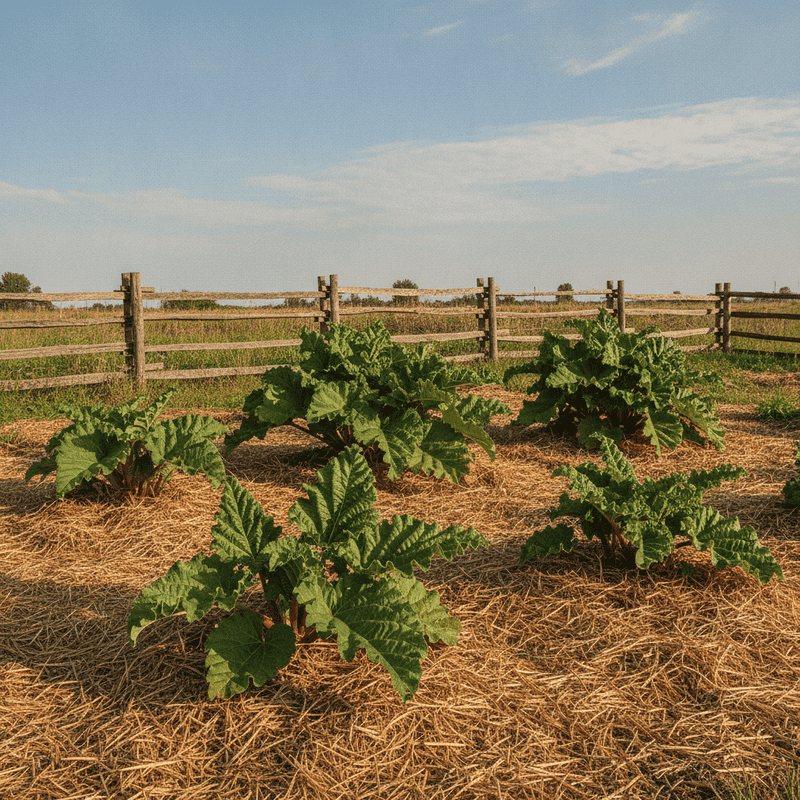
Skinny stalks are frustrating, but cleanup timing is only one possible factor. A plant’s stalk size alone will not tell you what is going on.
Cultivar matters. Oregon State Extension notes that stalk size varies among types.
Age and crowding matter too, since old plants packed tightly can send up small, slender stalks. Dividing an overcrowded clump is one remedy extension sources identify.
Harvest timing is another clue. Purdue says harvesting before the third season reduces stalk size and yield.
Iowa State advises a two-year establishment period before picking. If your plant is young, patience may be the fix.
Rhubarb can be difficult to grow in parts of the South
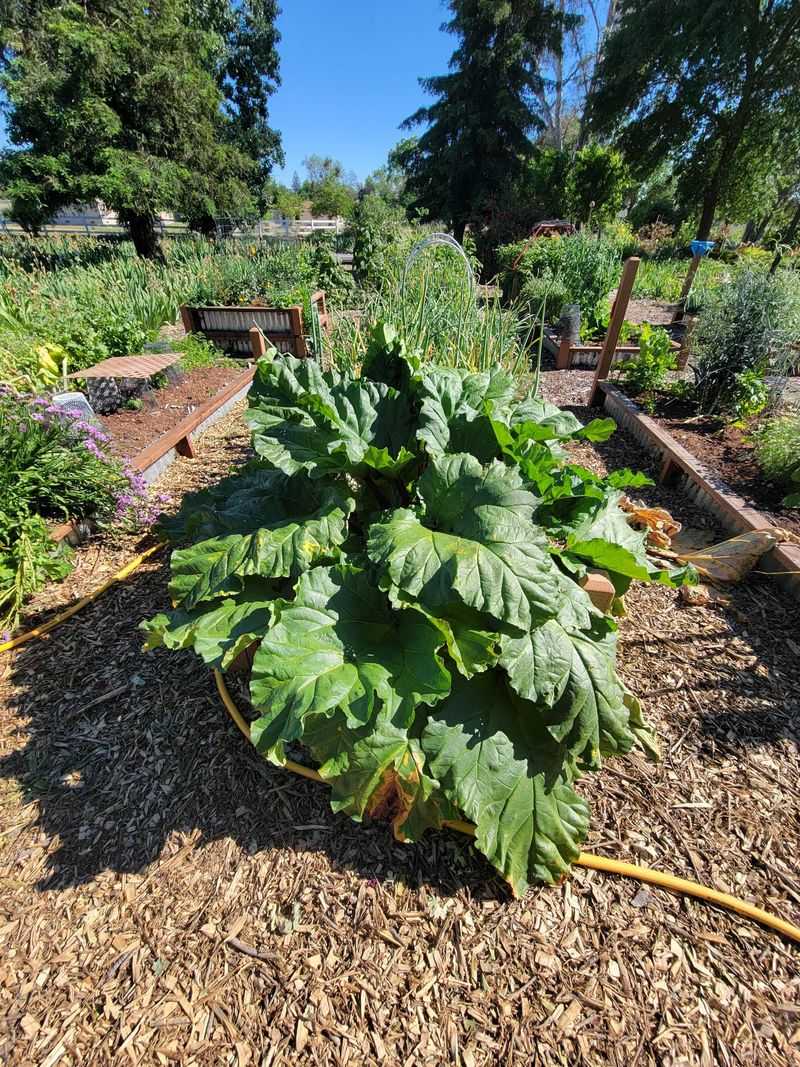
Rhubarb is a cool-climate plant, so Southern gardeners may face limits no cleanup routine can fix. Care advice here assumes the plant is growing well to begin with.
Texas A&M AgriLife Extension says rhubarb does not grow well in most of Texas, with an exception noted for an unidentified variety in the Panhandle north of Amarillo.
In Florida, UF/IFAS Extension in Nassau County describes growing it in Northeast Florida as difficult because warm conditions do not suit it. If your plant is struggling through the heat, that may be the cause rather than anything you did in fall.
These findings cover those specific areas, so check with your local extension office about your own location.
Use the plant’s condition as your cleanup cue
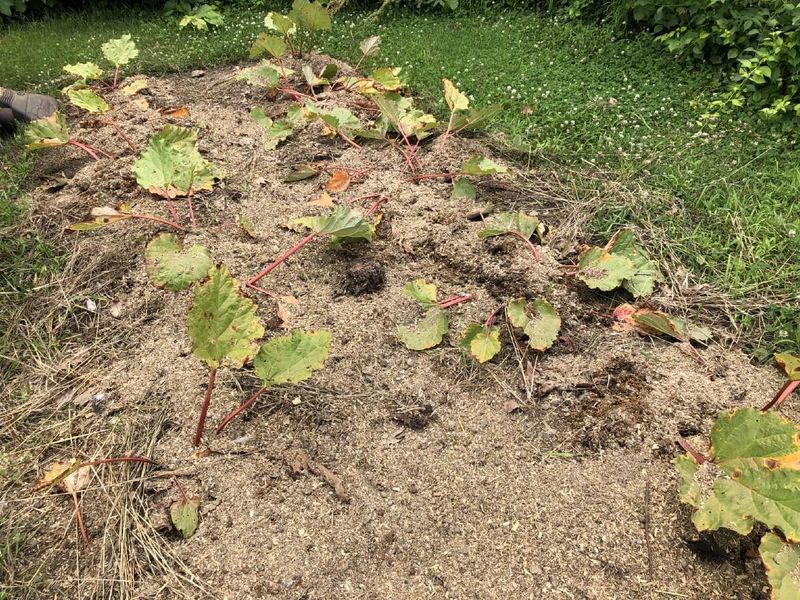
Here is the short version: keep healthy leaves until they die, then clear them with care and protect the crown. Iowa State and WSU both tie cleanup to the foliage’s condition.
Leaves support the plant’s reserves, though that does not promise thicker stalks.
If stalks stay thin, look at plant age, crowding, cultivar, and when you started harvesting, as Purdue describes.
Your rhubarb will tell you when it is finished for the year. Let the leaves show you.