
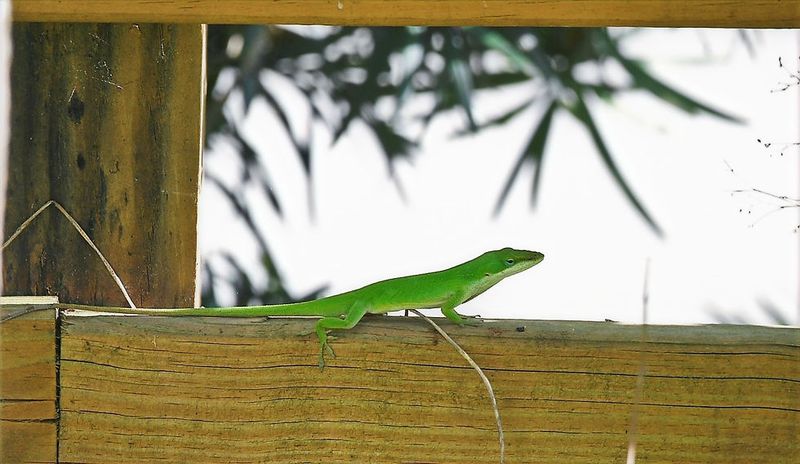
A small green lizard on your porch rail in late fall can make you stop and look twice. Green anoles slow down as the weather cools, and where they go next is a bit of a puzzle.
A porch sighting tells you something, but not as much as you might think. Here is what it can and cannot tell you.
A porch sighting is a clue, not a winter map
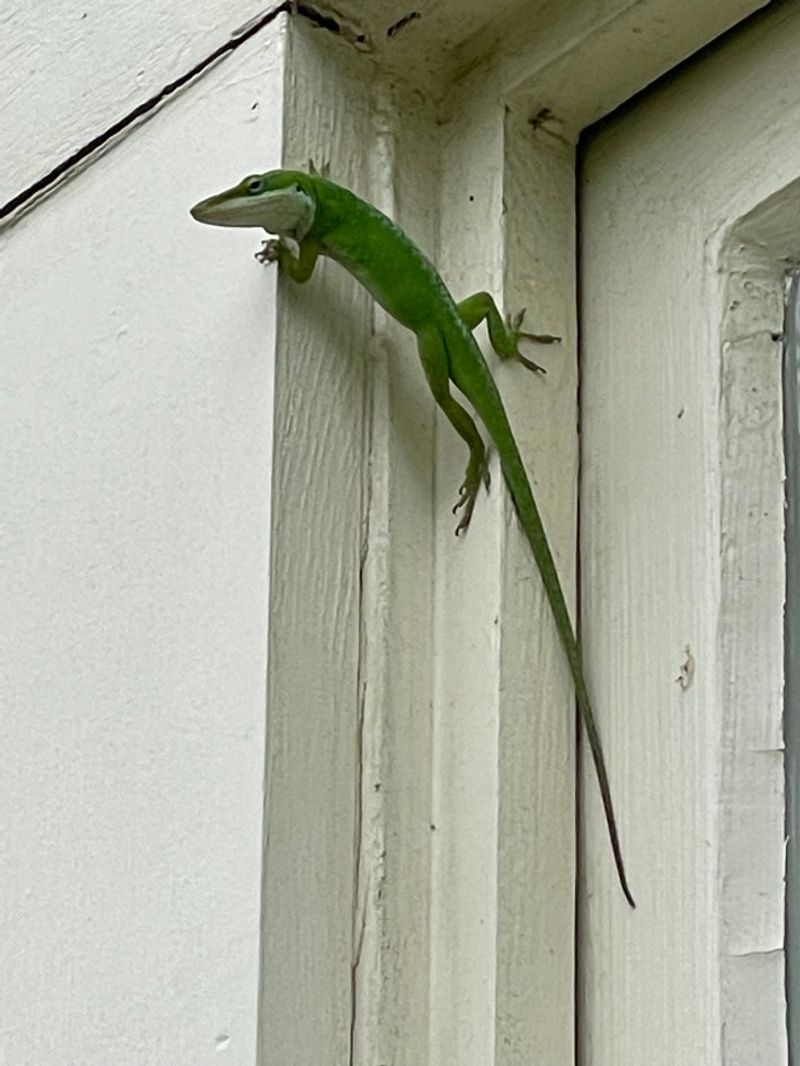
Seeing a green anole near your porch in November is a fair sign that the lizard is looking for something: sun, a climbing surface, or a protected spot as its activity slows. That much fits what we know about the season.
It does not tell you where that lizard will spend the winter.
Here is the catch. Researchers have documented anoles using shelters in cold weather.
A University of Tennessee study of winter behavior looked at a population near the northern edge of the species’ range, not at North Carolina porches. So it shows that refuge-seeking is real, but it cannot tell us that porch walls are where anoles gather in our state.
You may have heard that anoles crowd onto warm porch walls all across North Carolina each fall. No source I found shows that pattern or how common it is.
The state’s reptile reference notes that green anoles sometimes use buildings, which makes a porch visit believable. Treat the sighting as a single clue about one lizard on one mild day, nothing more.
Autumn slows activity without bringing true hibernation
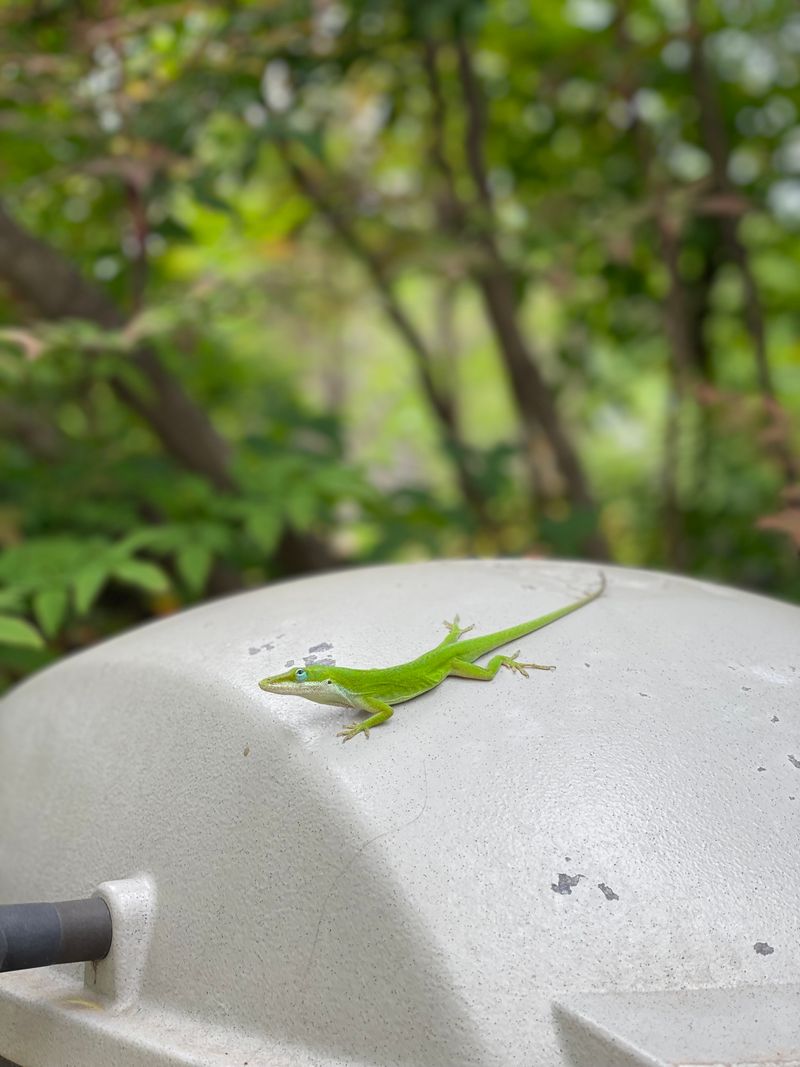
Cool weather changes how anoles behave. According to a reptile research review in the ILAR Journal, green anoles are relatively inactive in autumn and winter.
They do not hibernate in the deep, sleep-through-it-all sense.
Instead, they may tuck into a sheltered spot for days or even weeks. When a warm spell arrives, some come out to bask in the sun, then retreat again when it cools.
That on-and-off pattern explains why you might see one on a sunny afternoon in December and then none for two weeks.
So if the lizards seem to vanish from your porch, do not assume they have left your yard. A lizard that is sitting still in a protected spot is simply hard to spot.
Likewise, a lizard moving slowly in the sun is not necessarily sick; cool-weather sluggishness is normal.
A practical tip: check sunny, sheltered walls and railings around midday on a mild day. That is when basking anoles are most likely to be visible, and a quick look from a distance is all you need.
Why an anole might use a porch wall
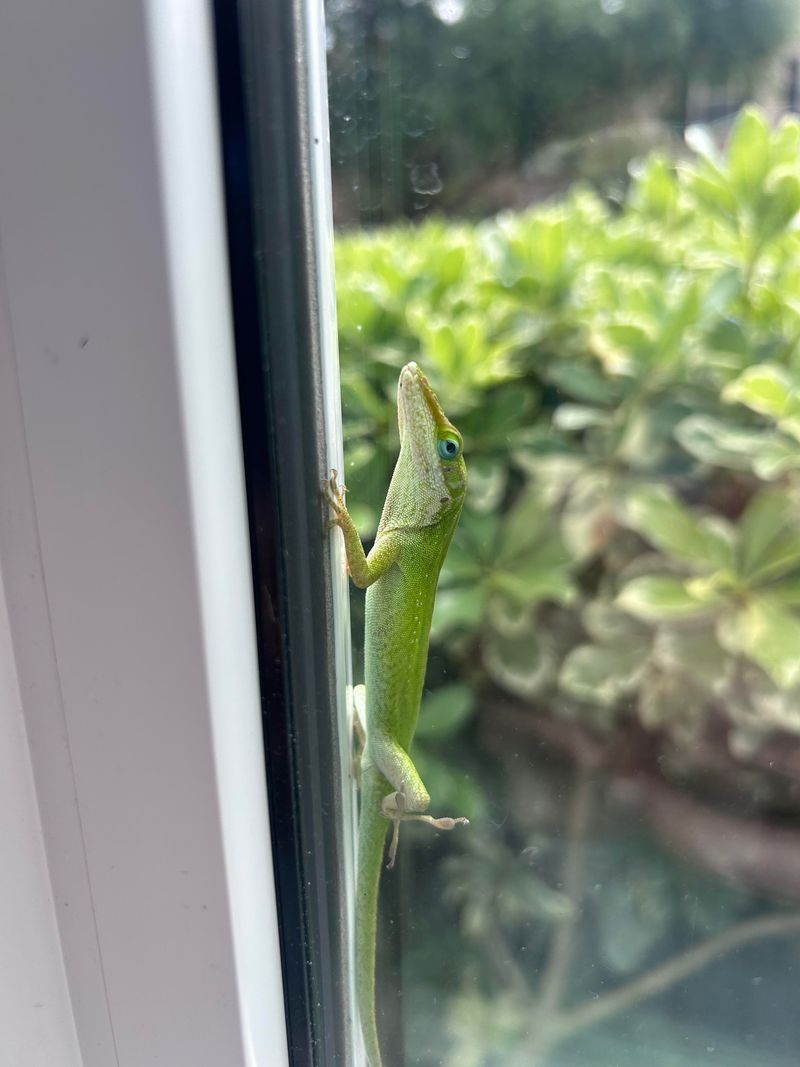
Porches have plenty to offer a climbing lizard. The Reptiles of North Carolina reference says green anoles use trees, shrubs, woody vines, and sometimes buildings.
Rails, posts, siding, and trim are all vertical surfaces they can scale.
A sun-warmed wall is another possible draw. Because anoles are slow in the cold but may bask on warm days, as the ILAR Journal review describes, a wall that soaks up afternoon sun could be a handy place to warm up.
Keep in mind that this is a reasonable guess, not a proven cause. No study I found tested why North Carolina anoles visit porches.
Other things could be at play, such as a nearby shrub, a vine climbing the post, or simply a lizard passing through its territory.
Color can add to the confusion. Green anoles can be brown as well as green, and the state reference says their color shifts do not match the background.
So a brown lizard on your siding is not proof of camouflage, and brown color alone does not tell you the species.
Winter refuge may lie beyond the porch
Where do anoles actually go when it gets cold? Sources describe places like tree cavities and spaces beneath fallen logs, sometimes with several lizards sharing a spot.
These are protected pockets that hold steadier conditions than open air.
The study at the species’ northern range limit found lizards using crevices on a south-facing rocky bluff. A south-facing slope catches more winter sun, which likely makes those crevices more appealing.
That last part is an inference, but it fits the picture of lizards choosing sheltered, sun-exposed refuges.
The same ILAR Journal review notes that anoles may shelter in groups. Still, a bluff in one study is not a template for your yard.
North Carolina anoles may use very different spots, and nobody has mapped them.
That is why a porch visit cannot mark a permanent den. The lizard you saw may be basking, exploring, or heading to a refuge somewhere else entirely, perhaps in a tree, a woodpile, or a gap in a wall.
Without tracking it, there is no way to know, and no need to try.
The yard offers context, not a health score
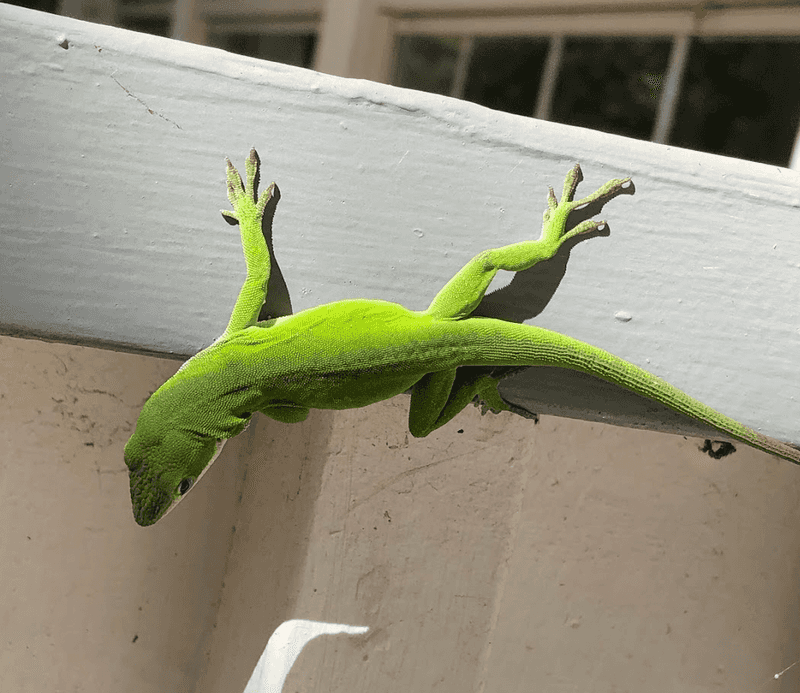
Green anoles are native to North Carolina. The state reptile reference records them from the low mountains to the barrier islands.
They climb trees, shrubs, and woody vines, sometimes use buildings, and eat small arthropods such as insects and spiders.
That statewide range does not mean they are equally common everywhere. You may see them often near the coast and rarely in a mountain county, so a sighting in your own yard depends heavily on where you live.
What can a porch visit tell you? Perhaps that there are climbing surfaces nearby, or some cover within reach.
That is about it. It is not a reliable score for how healthy your yard is or how many insects live there.
Likewise, anoles eating small arthropods does not make them a pest control service. Seeing more of them does not mean a pest-free porch, and seeing none does not mean something is wrong.
Enjoy the sighting for what it is: a native neighbor passing through on a cool day.
Keep some cover and leave the lizard alone
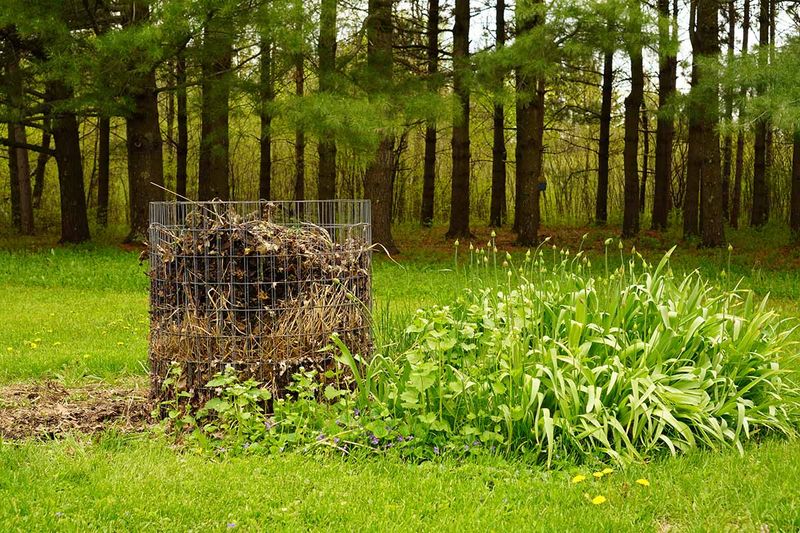
An easy step this weekend is to skip the full cleanup. Keep some layered shrubs or woody vines, which match the kind of vegetation the state reptile reference lists for anoles.
Consider leaving leaf litter or a small brush pile in a quiet corner, as suggested in Cooperative Extension advice to leave the leaves and the Extension Gardener Handbook’s wildlife chapter.
These features give wildlife cover in general. Nothing proves they will draw anoles specifically, so think of them as a low-effort bonus for the yard, not a lizard lure.
If you find an anole that looks healthy and is simply sitting or sheltering, leave it alone. NC Wildlife advises leaving wild animals be when in doubt.
Do not capture one or bring it inside for the winter.
If you do touch a reptile, wash your hands afterward. CDC guidance says children under five should not touch reptiles or their environments.
Contact a licensed wildlife rehabilitator only if an animal is obviously seriously injured.
A lizard on your porch rail is a pleasant moment, not a map or a report card. Let it warm up, and let it go.