
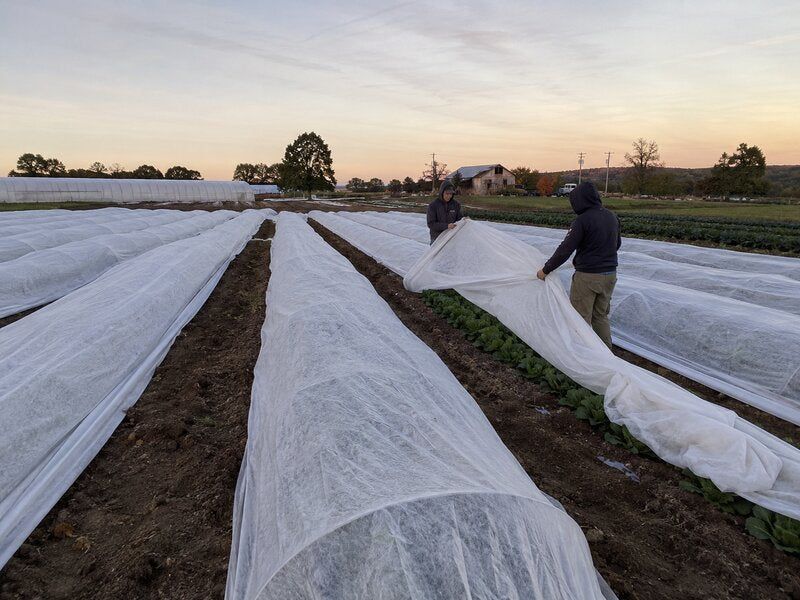
Fall salad greens love cool weather, but a hard frost can end the party fast. A thin sheet of floating fabric over your spinach and arugula bed may buy you extra weeks of picking.
In some Southern gardens, that could even stretch into December. Here is how to give your greens the best shot, and where the limits are.
Will the greens reach harvest size before cold weather?
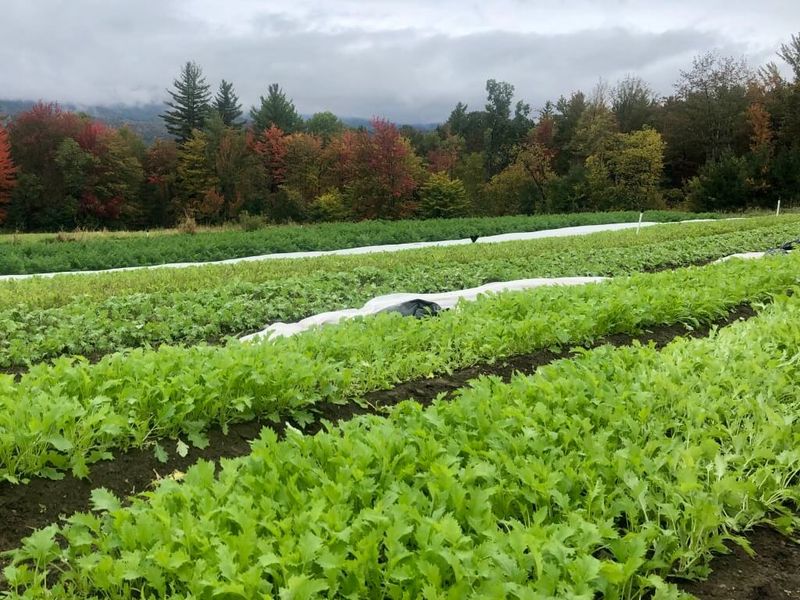
Plants grow on their own schedule, and a cover cannot skip that calendar. UF/IFAS lists spinach at about 45 to 60 days from seed to maturity, and its Florida vegetable planting guide gives arugula 35 to 60 days to harvest.
Cold slows growth, so those numbers can stretch as nights get chilly. Utah State University’s leafy greens guidance also points to timing as the key to fall-to-winter harvests.
Say you sow on October 23. Plants may still be small when the coldest weather arrives, and covering a brand-new bed does not guarantee December salads.
Count forward from your sowing date, then ask whether the plants will be harvest size before growth slows to a crawl.
Florida and Texas follow different fall calendars
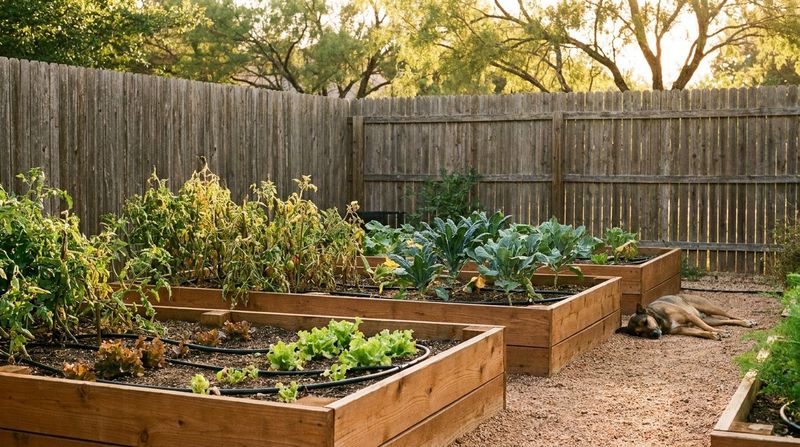
Florida’s planting windows are broad. UF/IFAS lists spinach for September through March in North and Central Florida and October through February in South Florida.
For arugula, the Florida planting guide shows September through March in North and Central Florida and October through March in South Florida.
In Central Texas, Texas A&M AgriLife suggests planting greens from September to November, with full-grown harvest roughly two months later. Texas is huge, though, and timing varies a lot from one area to another.
Treat these dates as starting points for your own county, not a statewide schedule. A late October sowing may fit one region well and fall short in another, so check with your local extension office.
A fabric cover softens frost but cannot stop winter
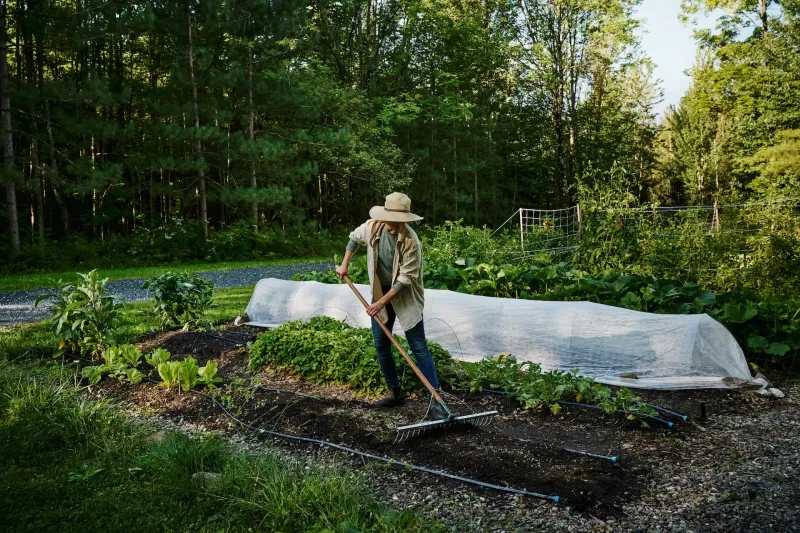
Think of breathable fabric as a light blanket, not a heater. It traps a little warmth and can leave conditions under it somewhat milder.
Utah State University reports roughly 3 to 5 degrees F warmer nighttime air under floating covers, and it warns that frost damage can still happen, especially where fabric touches leaves.
Fabric weight and weather change the results. A severe freeze can overwhelm the cover, a limit that UGA Cooperative Extension also notes for floating covers.
Even cold-loving greens are not immune to hard cold.
Clear plastic low tunnels are a different tool. They can heat up far more on sunny days, so do not borrow their temperature claims for fabric.
Illinois Extension’s season extension advice backs up the idea that covers have limits.
Choose fabric weight and install it securely
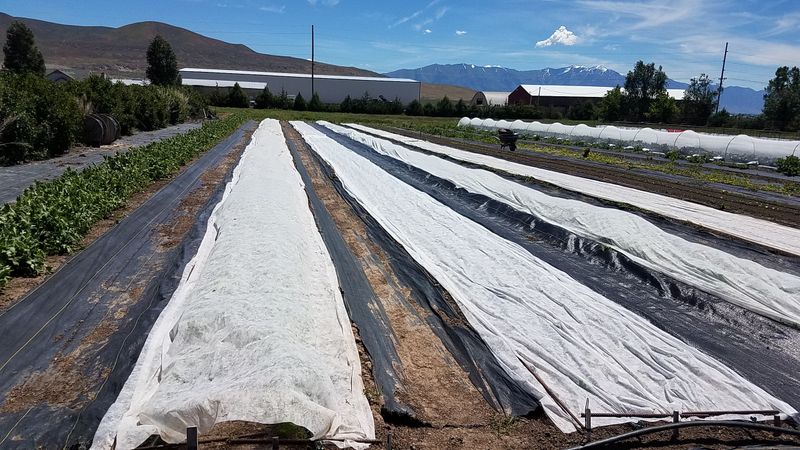
Start with a breathable fabric that lets air, water, and light through. University of Maryland Extension explains that medium and heavier fabrics give more frost protection but allow less light in.
Maryland estimates about 2 degrees F of protection for lightweight cover, 4 to 6 degrees for medium weight, and up to 8 degrees for heavy weight. Treat those as approximate guidance, not a promise for your bed or any one freeze.
Leave plenty of slack so leaves can grow without pushing the fabric tight. Hoops help keep fabric off the foliage.
Bury or pin the edges with soil, boards, or staples so wind cannot lift the cover. Pick the lightest fabric that matches your local cold, since heavier cloth cuts light the greens need to keep growing.
Keep watering and checking the greens under cover
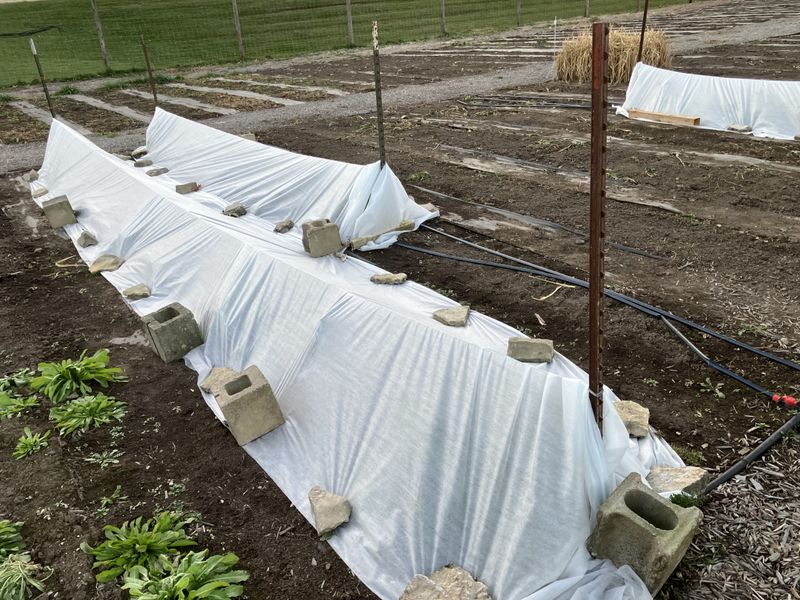
Covered does not mean carefree. Spinach likes steady moisture, as Illinois Extension notes in its spinach guide, and the soil under fabric can dry out without you noticing.
Make a habit of peeking under the cover every few days. Press a finger into the soil, look for leaves pressed against the fabric, and see whether wind has loosened an edge.
Row cover setup does not replace ordinary crop care, a point Utah State University’s row cover research also stresses.
Before a forecast cold snap, check that the edges are tight and the fabric is lifted off the plants. Afterward, look for limp or darkened leaves.
Quick checks like these help you catch small problems before they cost you a salad.
Succession sowing can stagger the harvest
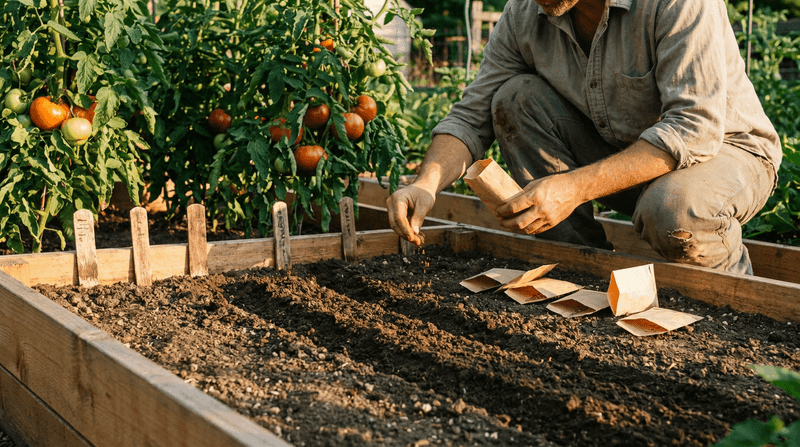
Sowing everything at once means everything ripens at once. Short rows planted at intervals spread the picking out.
For Texas, Texas A&M AgriLife recommends sowing short rows of spinach 10 to 14 days apart, which is regional guidance rather than a rule for every garden.
Mark each row with its sowing date so you can track which one is next. Later rows may grow slowly as days shorten and nights cool, a timing issue that Utah State University’s planting guidance also touches on.
Staggering helps, but it is not a guarantee. Weather can still stall a row, and no schedule promises greens through a specific date.
Think of it as spreading your chances across several rows.
Treat December picking as a chance, not a promise
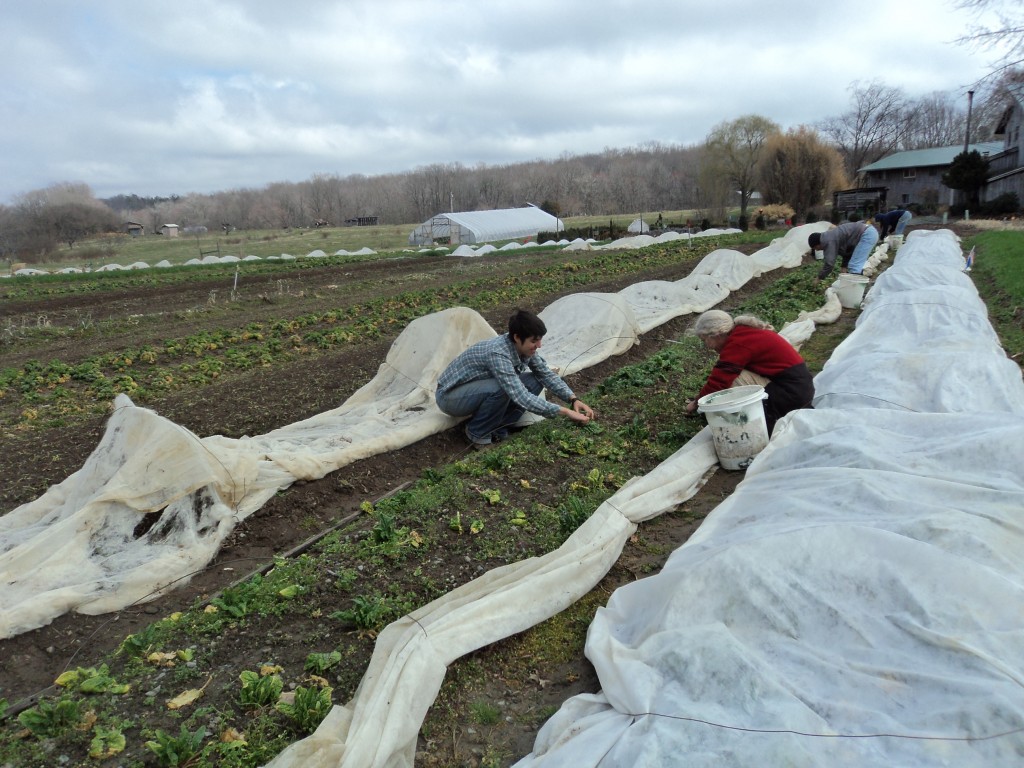
Your results will come down to four things: when you sowed, what the weather does, how big the plants are, and which cover you chose. A heavier fabric adds protection, as Maryland Extension’s row cover guidance shows, but it cannot rewrite the calendar.
Florida gardeners can lean on broad windows in the UF/IFAS spinach guide and its arugula timing. Central Texas growers can compare their plans with Texas A&M’s September to November greens window.
Sow early enough, cover wisely, and keep checking the bed. Some years you will be picking in December, and other years the freeze wins.
Either way, a few extra weeks of fresh leaves is a good trade for a sheet of fabric.