
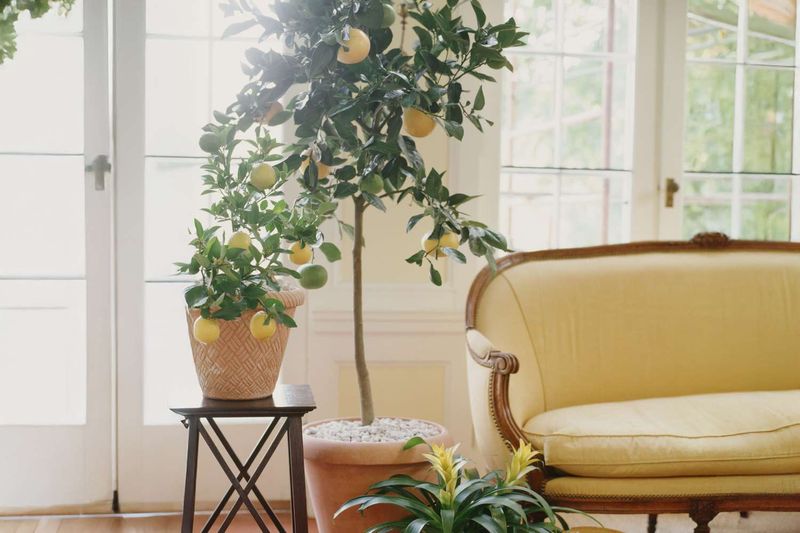
A potted lemon tree can look perfect on the patio in October and start dropping leaves a few weeks after it comes inside. Seeing green leaves pile up under a tree you have cared for is worrying.
A fast move into dim indoor light can be one reason, though it is rarely the only one. Here is how to sort out the possible causes and give your tree a smoother winter.
A fast move indoors can contribute to leaf drop
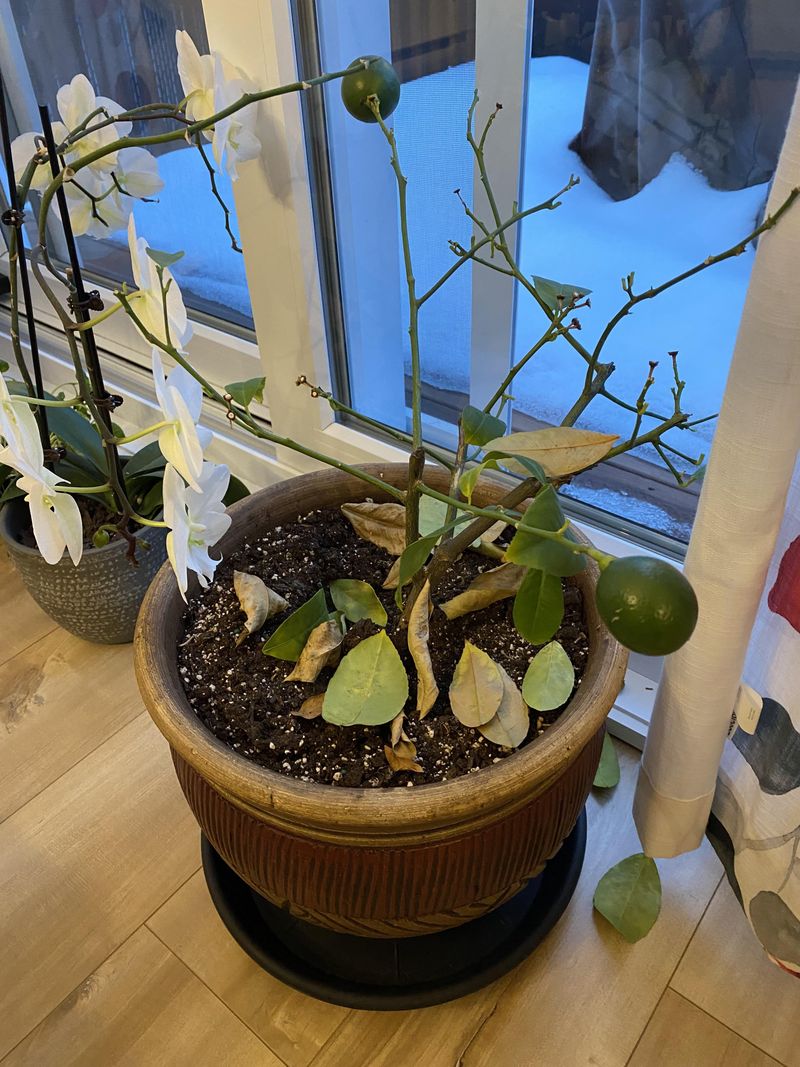
Outdoor sun is far stronger than the light inside a house. When a citrus tree moves from a bright patio to a dim room in one step, it may respond by shedding leaves.
Texas A&M AgriLife advises gradually reducing light for 2 to 4 weeks before citrus goes indoors for winter, to avoid excessive leaf drop.
Sudden changes can also affect flowers and young fruit, which may fall as the tree adjusts. Wisconsin Extension notes that environmental shifts can trigger this kind of drop.
Think of the move as one possible stressor, not a certain cause. Temperature, water, humidity, and pests can all play a part too, and we will look at each one below.
A gradual transition may reduce stress, but it cannot promise that every leaf, flower, or fruit stays attached. Some loss can still happen even when you do everything well.
Reduce outdoor light gradually when conditions allow
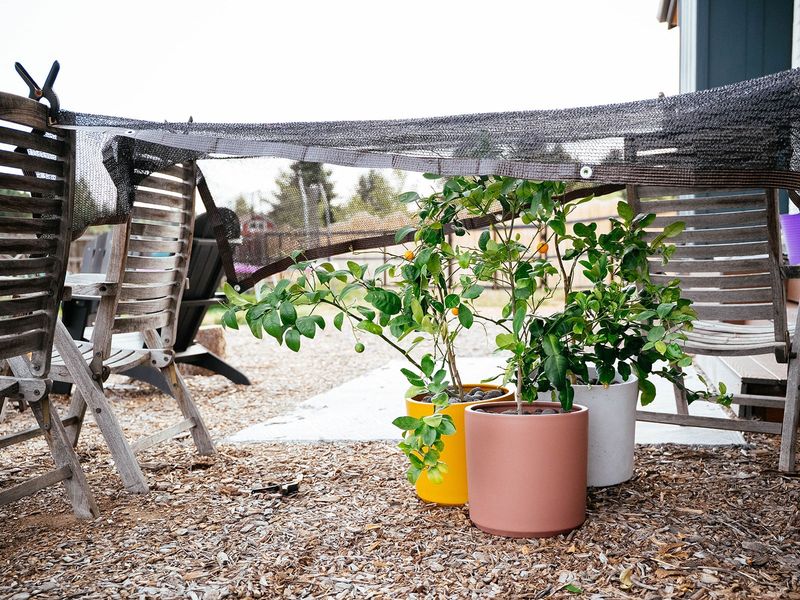
Ease the tree toward lower light before it comes inside. Moving it to partial shade, such as under a porch roof, a patio cover, or the shadow of a tree, can help it adjust.
Each week you can shift it a bit deeper into shade.
Texas A&M recommends a reduction in light over 2 to 4 weeks. That is guidance specific to citrus, not a universal schedule.
Advice from other sources differs, and University of Minnesota Extension also describes a gradual shift to indoor conditions.
You may not have a full month, and that is fine. Use as much time as the forecast allows, and shorten the plan if a cold night is coming.
Even a careful routine only lowers the odds of trouble. Your tree may still drop some leaves, and that does not mean you did anything wrong.
Protect the tree from cold before finishing the transition
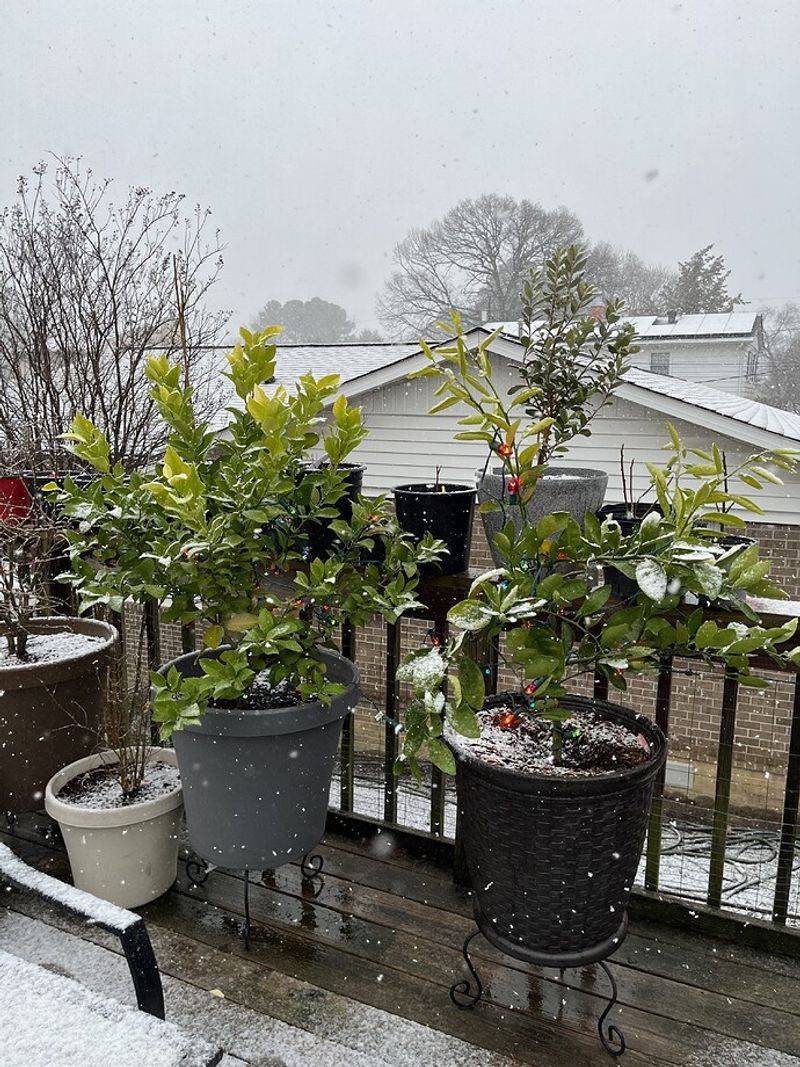
Cold comes first. If a freeze is in the forecast, protect the tree right away, even if your light transition is only half done.
A few extra shaded days are not worth risking frost damage.
Roots in containers sit above ground and feel the cold more than roots in the soil. Texas A&M recommends cold protection for container citrus.
Mississippi State Extension warns that lemons and limes can be severely damaged or killed by temperatures in the mid-to-high 20s°F.
That number applies to lemons and limes, not to every citrus type. Check your local forecast, notice how exposed the spot is, and consider your cultivar.
Not every Southern tree has to winter indoors. UF/IFAS notes that some citrus grown in northern Florida is comparatively cold-hardy, while potted trees can be brought inside before freezes.
Give indoor citrus the brightest practical location
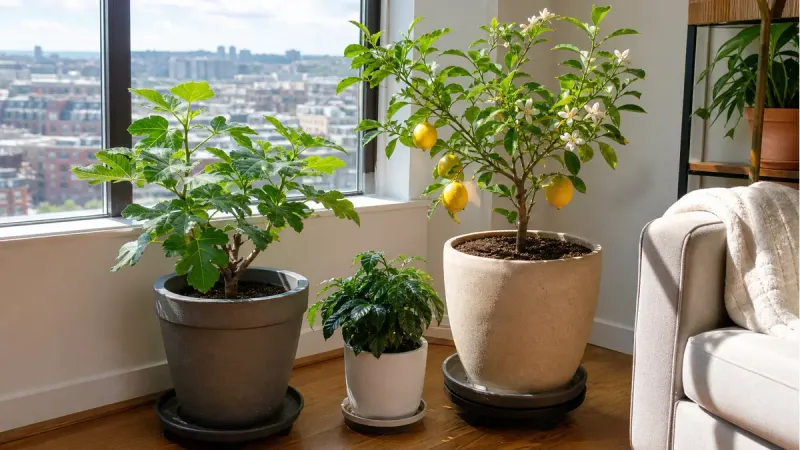
Once indoors, light is the big shortage. Pick the brightest spot you have, ideally a south- or southwest-facing window with nothing blocking the glass.
If your window falls short, a grow light can fill the gap. Wisconsin Extension says supplemental light is needed for fruit production if the tree does not get at least six hours of direct light each day.
Try watching the sun’s path across your rooms for a day. A spot that looks bright at noon may be shady by afternoon.
Good light supports the tree, but it is not a promise. Fruit can still drop for reasons that have nothing to do with the window.
Adjust watering after bringing the tree inside
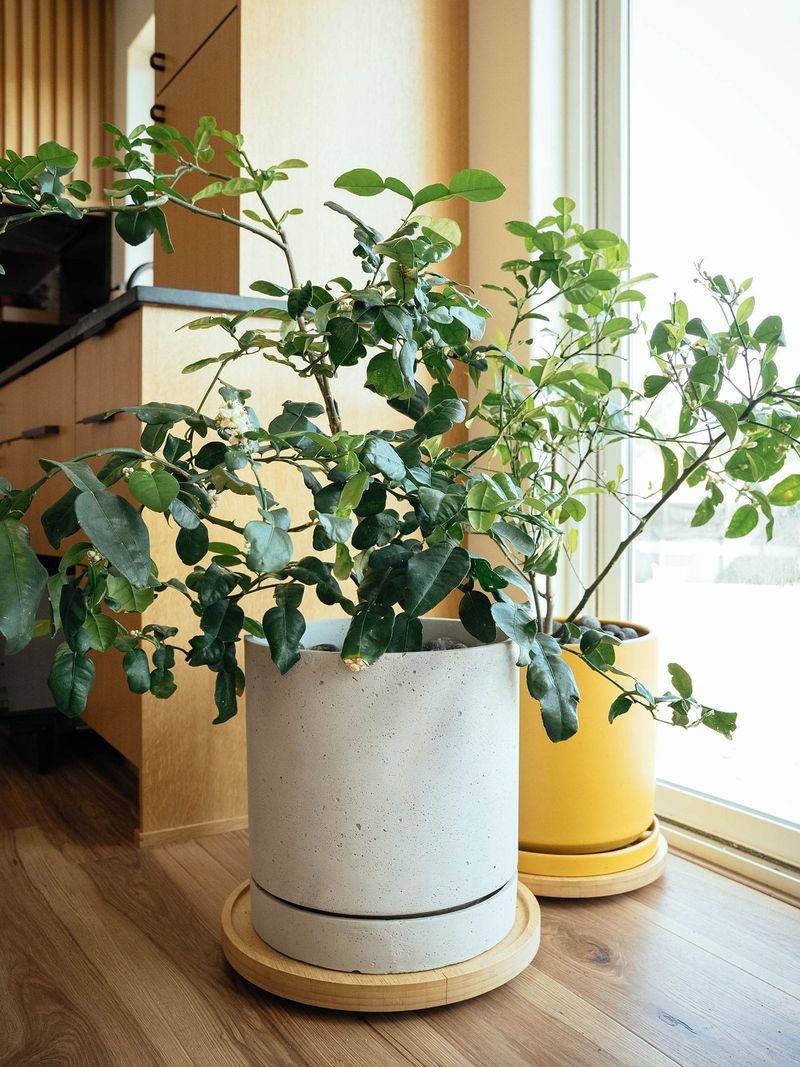
Indoor air is cooler and the light is weaker, so the tree uses less water than it did on the patio. Keeping the outdoor schedule can leave the roots sitting wet.
Texas A&M gives simple guidance. Let the top inch of growing medium dry before you water.
Allow excess water to drain out of the pot. Water less often in cool weather.
Poke a finger into the mix to check instead of going by the calendar. If it feels damp, wait a day or two and test again.
Watering changes can reduce stress, but they will not stop leaf drop on their own. Think of them as one piece of a bigger picture.
Check for pests before the tree comes inside
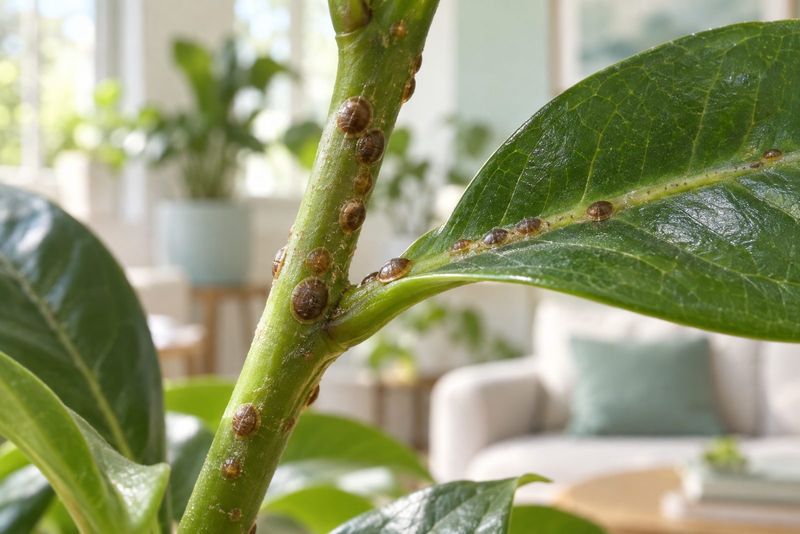
Hitchhikers love a warm house. Before the move, look over the leaves, stems, and especially the undersides of leaves.
Scale, mites, mealybugs, whiteflies, and aphids can trouble indoor citrus, as noted by University of Maryland Extension. Clemson Extension also describes citrus insects and related pests.
Look for sticky residue, cottony spots, small bumps on stems, or fine webbing. A hand lens can help.
If you find pests, use any pesticide only as labeled for the plant and the setting where you are using it. A careful check may catch problems early, but it cannot guarantee a pest-free tree.
If leaves or fruit still fall, consider other causes
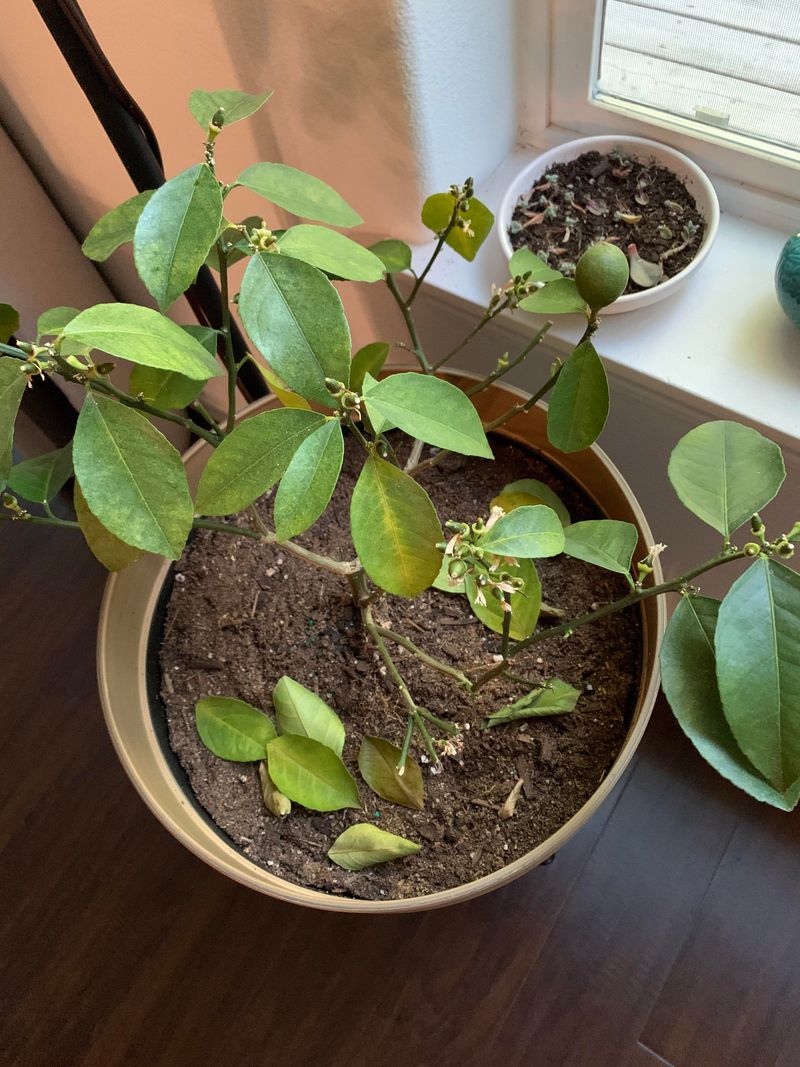
Leaf drop is not proof that you moved the tree too fast. Maryland Extension lists temperature stress, too much or too little water, and adjustment to changed light and humidity as possible explanations.
Texas A&M identifies overwatering as a common problem in container citrus.
Look for clues. Soggy mix points toward water, a drafty spot suggests temperature swings, and sticky leaves suggest pests.
A tree sitting in a dim corner may simply need more light.
Fruit drop is its own question. University of Vermont Extension explains that potted citrus can set more fruit than it can support and shed some naturally.
Temperature extremes and other conditions can also contribute.
A gradual move, cold protection, bright light, and careful watering may reduce stress, but they cannot guarantee leaves or fruit stay put. A few fallen leaves are often the tree adjusting, not giving up.