
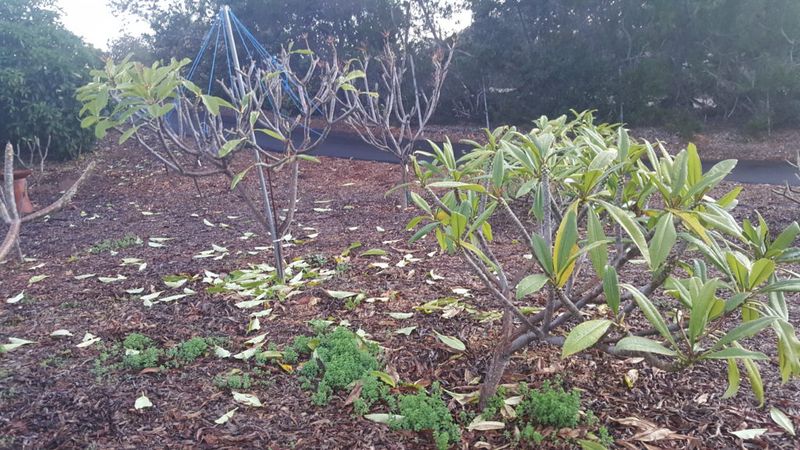
Your plumeria leaves are turning yellow, and the pruning shears are calling your name. Before you cut, it helps to know what your plant is actually doing.
In California, winter can mean frost on one street, soaking rain on another, and mild weather near the coast. A little patience and a quick look at your plant’s condition can save you from cuts you did not need to make.
Yellow leaves can be part of normal dormancy
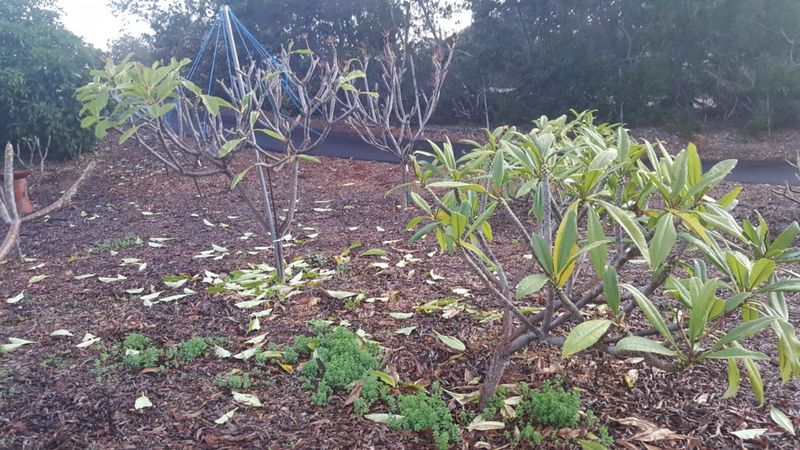
Walk out to your plumeria in November and you may find leaves turning yellow and dropping fast. It looks alarming, but UF/IFAS reports that most plumerias lose their leaves during winter dormancy.
A Texas Master Gardener article describes the same fall yellowing and leaf drop as a seasonal pattern.
So yellow leaves alone are not a reason to grab the pruners. The plant is often just settling in for a rest.
Cutting a resting branch will not make the leaves look better, and it may remove growth you wanted to keep.
Not every plumeria follows this script. Wisconsin Extension notes that some types stay evergreen in warm climates.
A plumeria in a sheltered, mild spot near the coast may hold its leaves much longer than one in a cooler inland yard.
What matters is whether the change fits the season. Leaves yellowing in autumn on a plant that is otherwise firm is typical.
Leaf loss in the middle of summer, or yellowing along with soft, dark, or oozing stems, deserves a closer look because disease or pests can cause out-of-season symptoms.
Yellow leaves by themselves do not tell you which problem you have, if any. Treat them as a cue to observe first.
Check the stems, check the soil moisture, and prune only when you have a clear purpose.
Wet-weather cautions do not prove that fall cuts cause rot
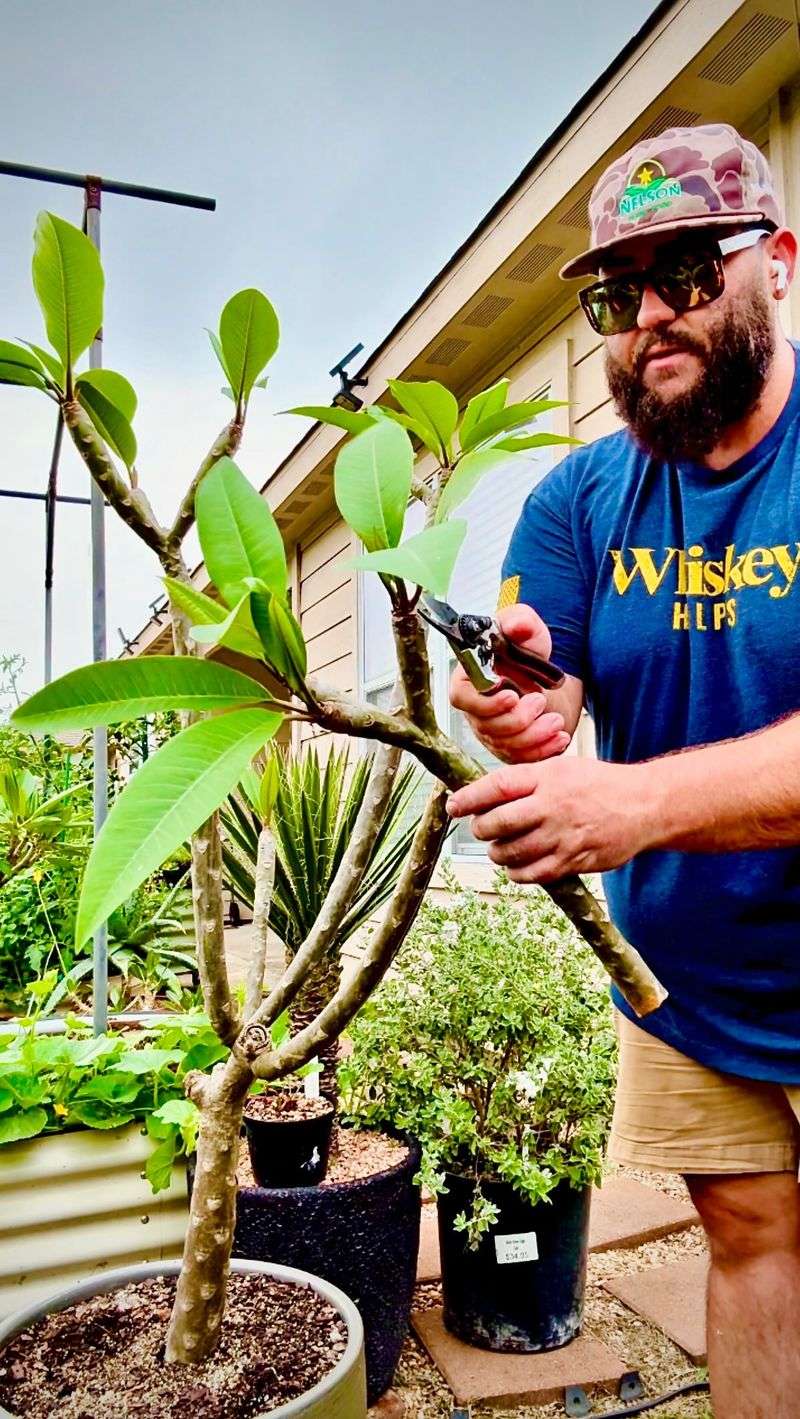
The idea that fall pruning makes plumeria rot is tidier than the facts. No source we reviewed shows that a fall cut, by itself, causes a plumeria to rot.
What the sources do support is a narrower warning about needless cuts in wet conditions.
A pruning cut is an open wound. Wisconsin Extension explains that cuts can serve as entry points for plant pathogens.
Wet weather adds to the concern, since UF/IFAS links heavy rain and warm, damp conditions with fungal and bacterial problems.
Put those two facts together and you get a sensible habit, not a prediction. If a cut is not needed, skip it, especially when the plant is wet or the forecast keeps it wet for days.
It also helps to keep two kinds of trouble apart. Rot that starts in soggy roots is one problem.
Infection entering through a pruning wound is another. Mixing them up leads gardeners to blame the shears when the real culprit may be a waterlogged pot or a heavy clay bed.
In practice, a Bay Area gardener facing weeks of drizzle has a stronger reason to hold off than someone in a dry desert yard. Your own rain and drainage matter more than the calendar.
Decide based on what your plant is sitting in, not on a rule about months.
When should you schedule planned shaping?
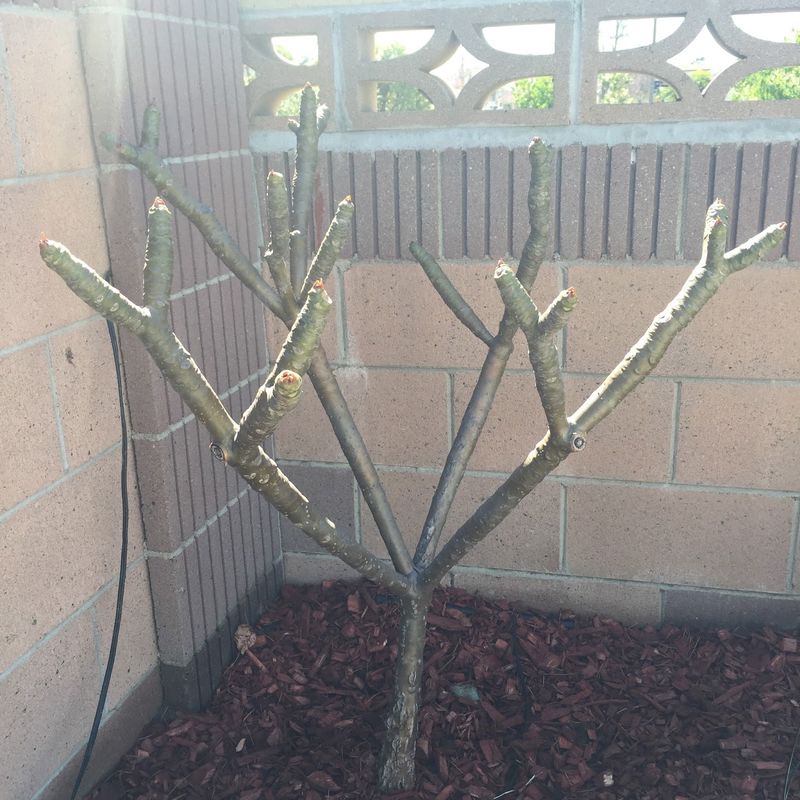
Ask two plumeria experts when to prune and you may get two answers. Wisconsin Extension recommends pruning in spring before deciduous plumerias leaf out.
University of Hawaii CTAHR says pruning is easiest after the leaves drop in winter.
Neither answer is wrong, and they do not combine into one universal date. They reflect different climates and different goals.
Think of them as two options within the dormant stretch, not a single safe day.
California makes a single calendar even less useful. The Southern California Plumeria Society describes distinct frost exposure from one local site to another and recommends different levels of protection.
A plant against a warm south wall in San Diego lives in a different winter than one in a frost pocket in the Inland Empire or Sacramento Valley.
Ask yourself a few questions before you schedule shaping. Is the plant dormant and leafless?
Is frost still possible where you live? Is the plant dry, and will it stay reasonably dry for a few days?
Do you actually need the cut, or does it just feel tidy?
If the answers point toward waiting, waiting costs you little. If a branch is crossing, leaning over a walkway, or too tall for a pot you move indoors, a planned cut in a dry window can be reasonable.
Match the timing to your yard, your weather, and your reason for cutting.
A heavy cut can remove next season’s flowering tips
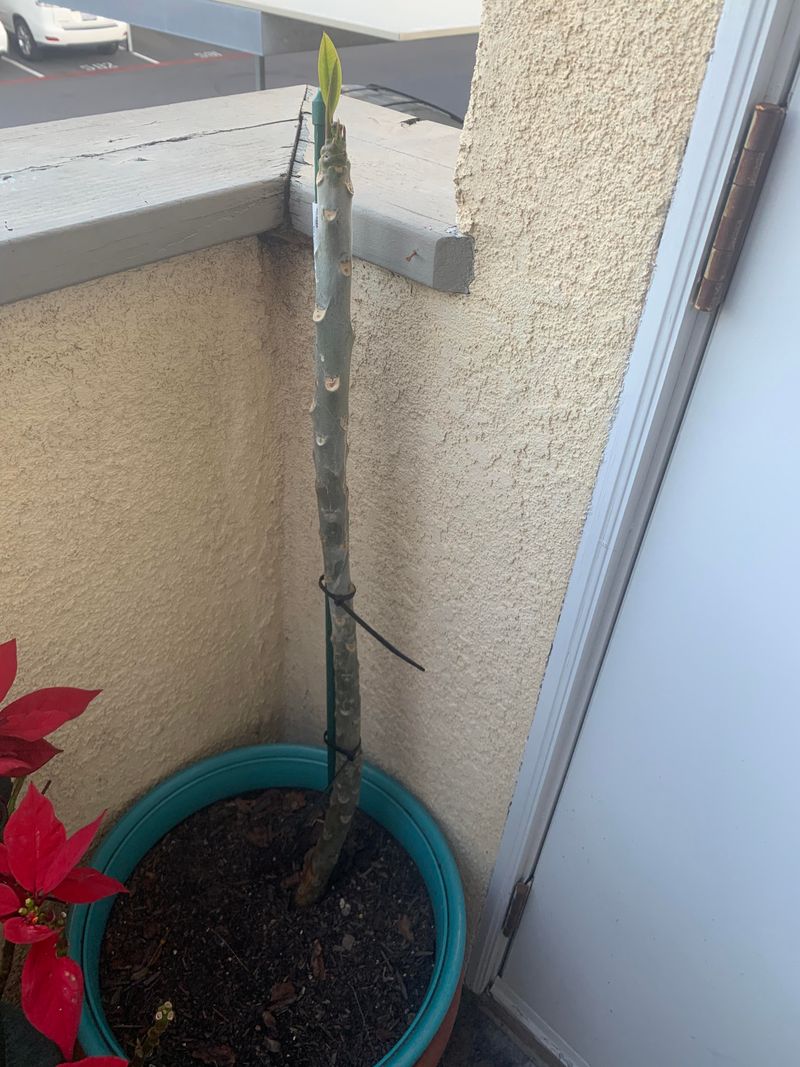
Plumeria blooms at the ends of its branches. Wisconsin Extension notes that flowers form in terminal clusters at stem ends.
That means a cut across a branch tip can take off the very spot where flowers would have appeared.
The bigger the cut, the bigger the trade. CTAHR warns that heavy pruning sacrifices the spring bloom.
Light trimming is a smaller gamble than chopping a tree down to a few stubs.
Here is a way to picture it. Say you have a six-foot plumeria and you want it at four feet.
Cutting each main branch back removes the tips that would have carried flowers. You may gain a more compact shape, but you may lose some of the show.
Nobody can promise that waiting until spring will save a specific number of blooms. Bloom depends on sun, feeding, plant age, and weather, too.
What you can control is how many tips you remove.
So decide what matters more this year. If flowers come first, prune lightly or only where you must.
If a smaller shape comes first, accept that some tips will go. Either choice is fine as long as you make it on purpose rather than because the leaves turned yellow.
Damaged stems call for a different decision
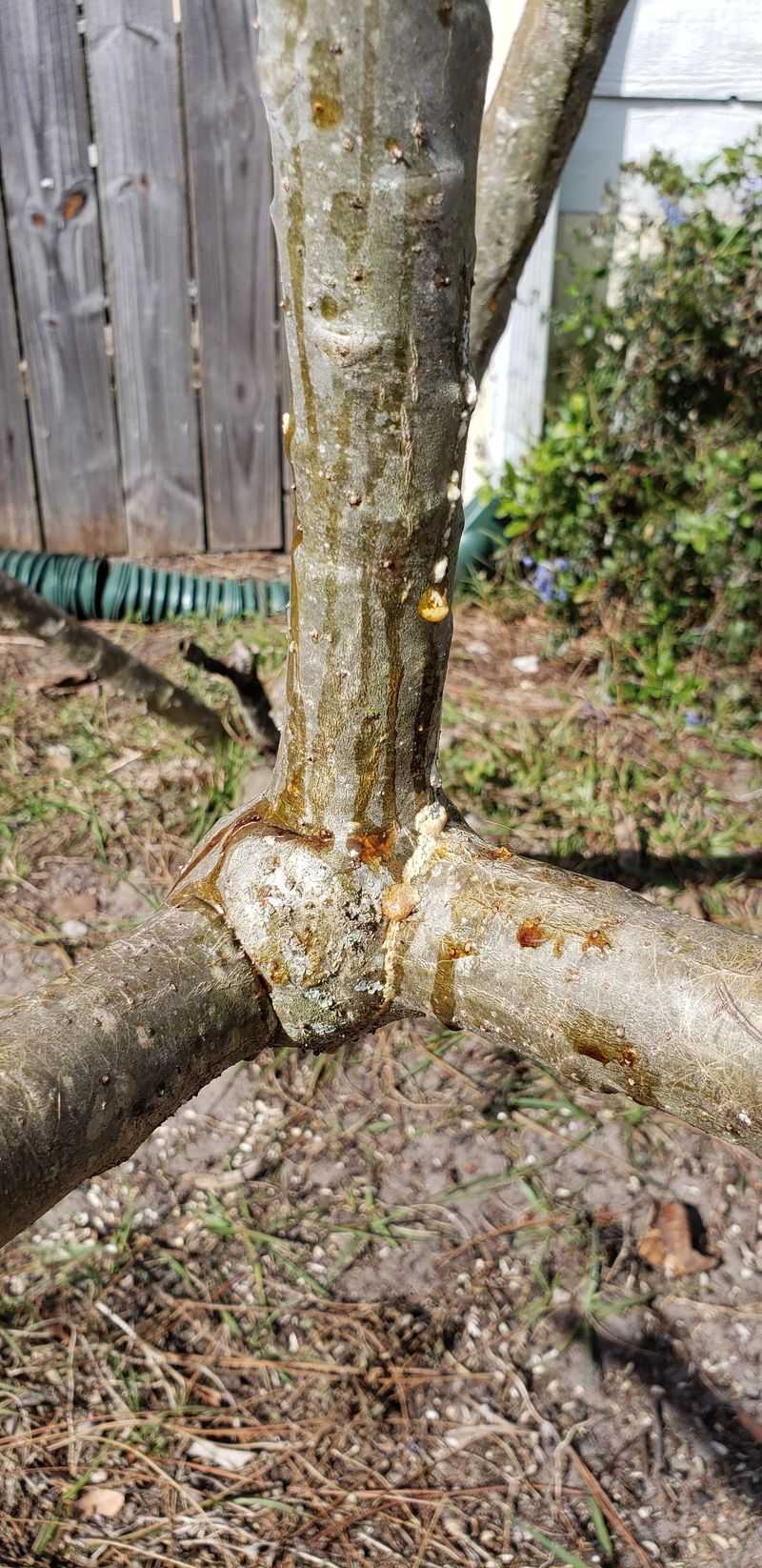
Routine shaping is optional. Dealing with damage is not.
If a stem is clearly hurt by pests or frost, leaving it alone is not the cautious choice.
For pests, CTAHR recommends removing and destroying stems that show signs of plumeria stem-borer damage. Look for holes, sawdust-like debris, or oozing on the stem.
Bag and discard the cut pieces rather than leaving them in the yard.
Frost injury calls for patience first. The Southern California Plumeria Society advises waiting until frosty weather is over, then cutting the damaged tissue back to healthy white interior.
Trimming too early can expose fresh wood to another cold night.
Frost-blackened or mushy tips can look dramatic right after a cold snap. Give the weather time to settle, then cut a little at a time until the inside of the stem looks clean and white.
Treat these jobs as separate from shaping. You are removing a health problem, not designing a tree.
Keep the cuts as small as the damage allows, and follow the dry-plant and clean-tool steps in the next section.
Make necessary cuts on a dry plant with clean tools
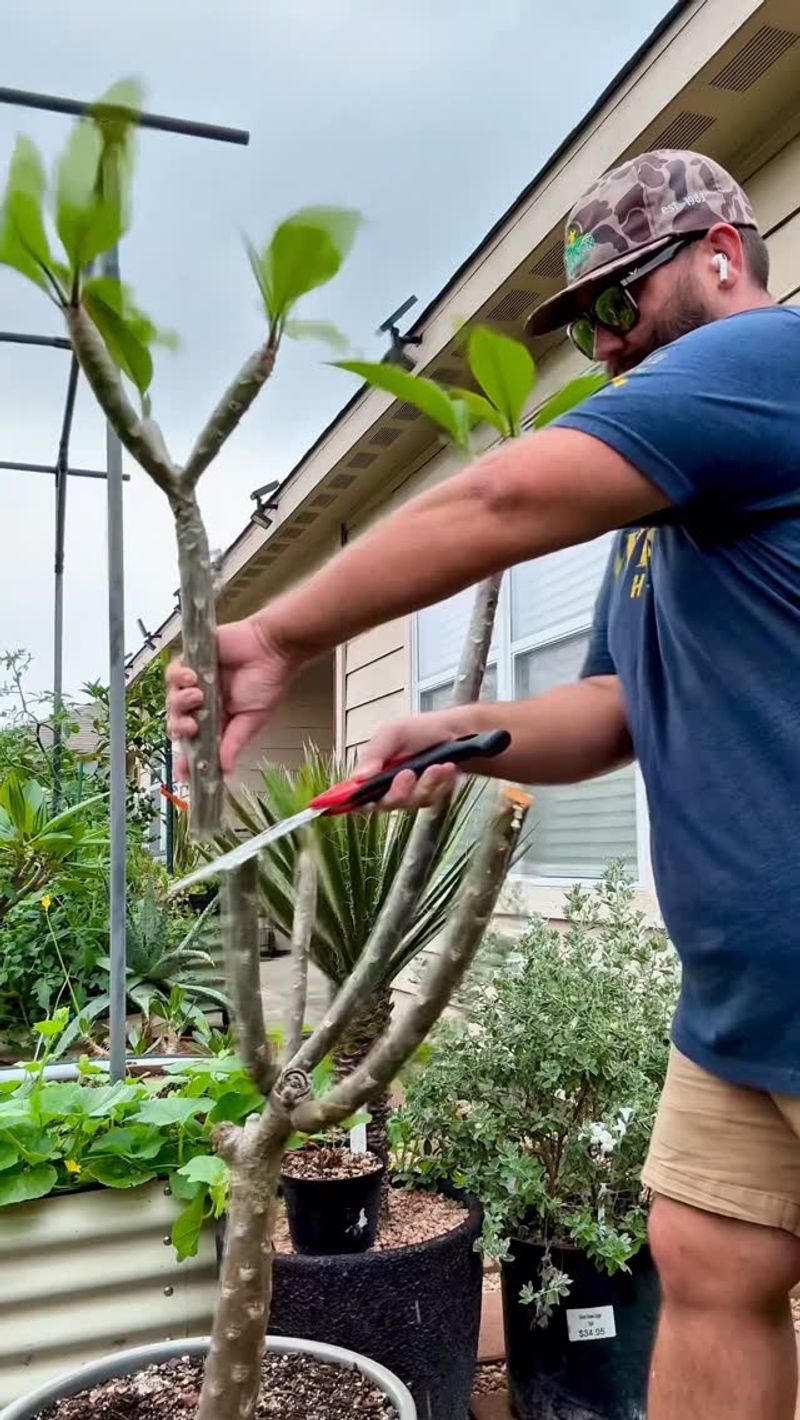
Once a cut is truly needed, how you make it matters. Start by choosing a dry day and a plant that has had time to dry off.
UF/IFAS advises making sure plants are dry before pruning because disease can spread easily in water.
Clean tools come next. Wisconsin Extension advises cleaning tools between cuts or plants.
Wiping the blades with rubbing alcohol or a disinfectant works well, and it is especially helpful after cutting anything that looks diseased.
Make each cut clean and deliberate. Sharp blades leave smoother wounds than dull ones.
Cut only what you planned to remove.
Protect yourself, too. CTAHR says that damaged plumeria exudes milky sap that may irritate skin and eyes.
Wear gloves and long sleeves, and keep your hands away from your face until you have washed up.
If sap reaches your skin, rinse it off promptly. Keep pets and kids away from fresh cuts and cut pieces while you work.
A few simple habits make a small job safer for you and the plant.
Keep dormant roots from staying soggy
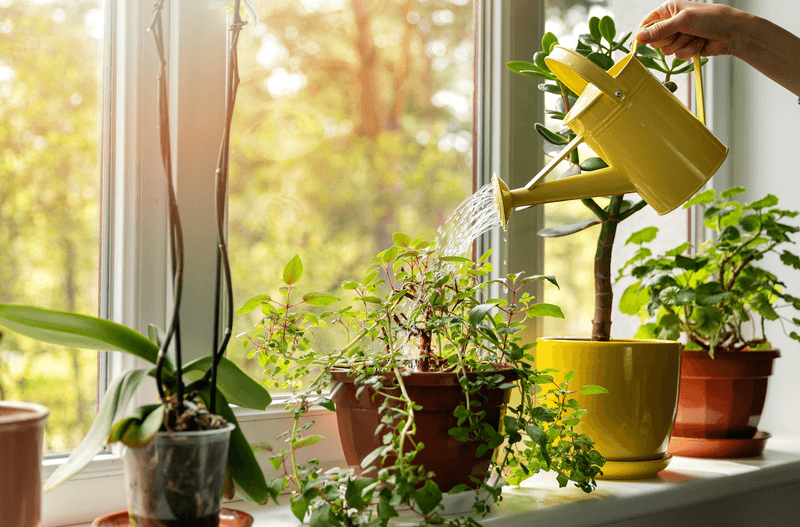
Wet feet are a bigger worry for many dormant plumerias than any pair of shears. Wisconsin Extension warns that overwatering can cause root rot and recommends reducing watering in cooler conditions.
A resting plant with no leaves uses far less water than a growing one.
This is a separate issue from pruning wounds. Soggy growing media and root rot do not prove a cut caused branch rot.
If a stem turns soft after a wet spell, check the roots and soil before blaming the last time you pruned.
Wet conditions in general carry disease risks, as UF/IFAS describes in its guidance on heavy rains. Your yard’s conditions decide how much that applies to you.
Think about where your plant lives. In-ground plants in heavy clay may hold water after a storm.
Containers can be moved under an eave or onto a stand so rain drains away. Raised mounds help in-ground plants shed water.
There is no single watering schedule that fits every California yard. Check the soil before you water, and let the weather do some of the work.
If the mix is still damp from rain, skip the hose.
Let the plant’s condition—not yellow leaves alone—set the plan
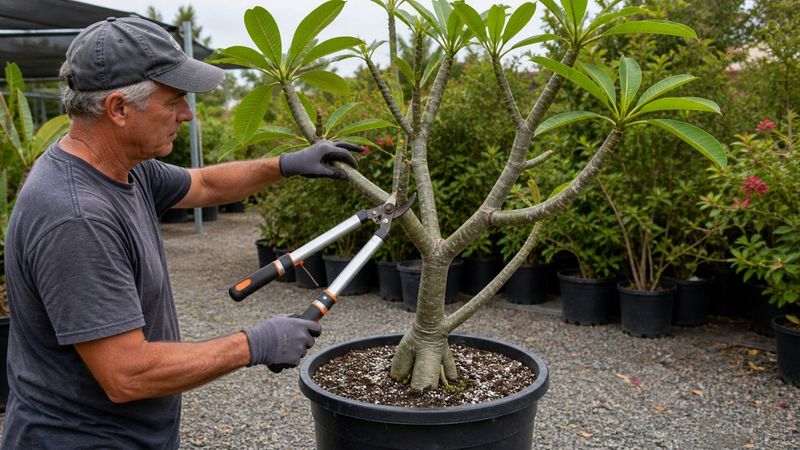
Here is the rule of thumb. Let normal leaf drop run its course, hold off on shaping until you have a dry window and a timing that suits your yard, and handle real damage on its own track.
Wisconsin Extension and CTAHR offer different timing, so choose what fits your frost and rain.
Keep soil from staying soggy no matter what you decide, as UF/IFAS cautions about wet conditions. No timing choice guarantees healthy branches or a flood of blooms.
A sleeping plumeria asks for very little, and sometimes the best cut is the one you skip.